Gemini 3.5 Pro Top Secret Leak, Front-end Capabilities Surpass Fable 5

marsbitPublicado em 2026-07-06Última atualização em 2026-07-06

Resumo

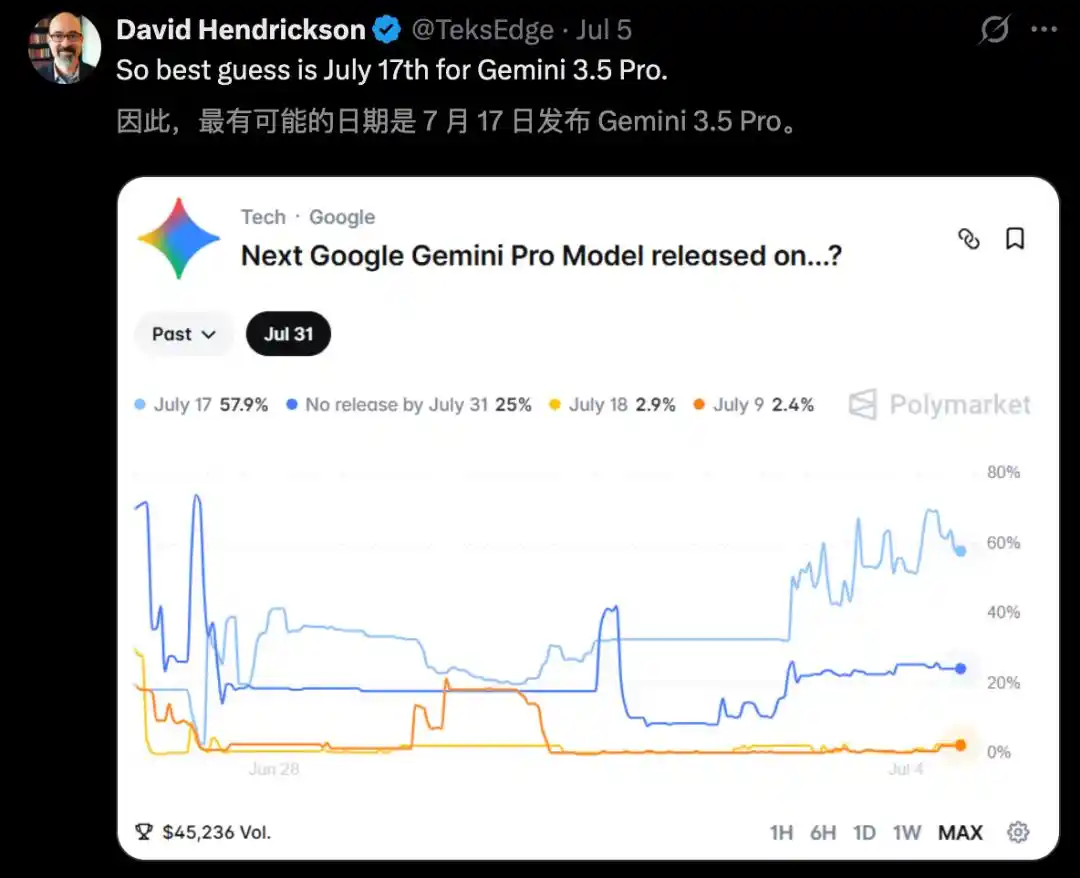
"Gemini 3.5 Pro Leak: Frontend Surpasses Fable 5, Official Launch Expected July 17th. After a two-month silence, Google's Gemini 3.5 Pro appears poised for release. Leaks highlight its significant leap in frontend and visual code generation, reportedly surpassing competitor Fable 5. Key improvements include better design aesthetics, cleaner UI, enhanced SVG generation, and higher completion rates for full-page generation from single prompts. Tests show capabilities like creating detailed SVG portraits, complex UI elements, and 3D scenes with Three.js. However, the model reportedly still lags behind Fable 5 and GPT-5.6 in hardcore reasoning, agentic tasks, and long-range software engineering. The delay is attributed to Google reportedly conducting a new pre-training run with a fresh base model, rather than simply scaling up Gemini 3.5 Flash. Rumors also suggest this new base is being used for an image model, 'Nano Banana Pro,' targeting GPT-Image 2. The AI race intensifies as the industry awaits the potential July 17th reveal."

【Guide】After a full two months of anticipation, Gemini 3.5 Pro is finally coming! Front-end code generated in one go, rumored to officially debut on July 17th.

What might overturn Fable 5 could be Google's trump card!

Today, the internet was flooded with leaks about Gemini 3.5 Pro. Rumored to be officially released on July 17th.
What truly makes people sit up is its performance in front-end generation: one-shot generation, pixel-perfect accuracy, zero errors.

Most crucially, leaked performance data shows Gemini 3.5 Pro has surpassed Fable 5.
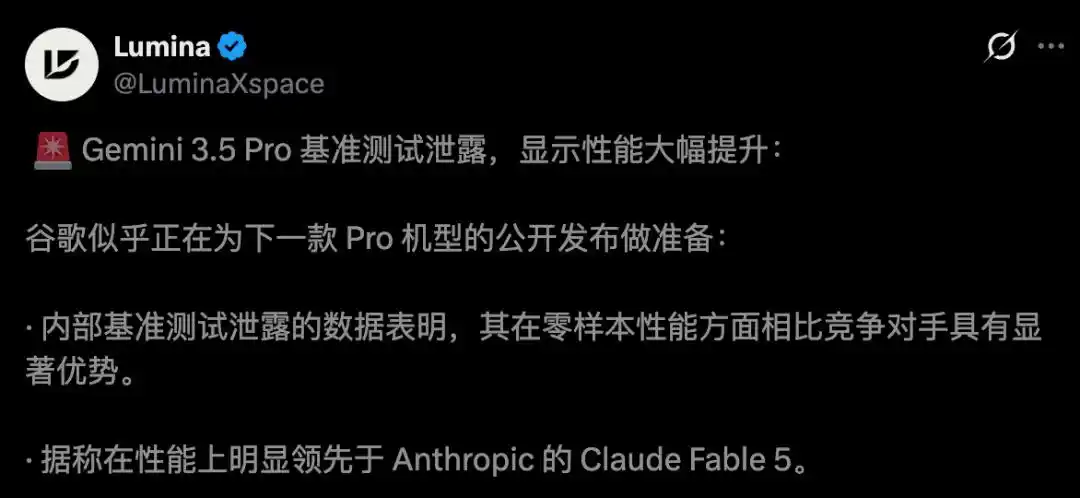
Gemini 3.5 Pro's Front-end Prowess Surpasses Fable 5

After a full two months of holding back, Google's ace card, which they've been reluctant to release, is finally about to be born.

At the I/O conference, they unveiled the Gemini 3.5 series in one go:

But on the day itself, only the lightweight Gemini 3.5 Flash went live; the "premium" Pro was kept in the background.

Sundar Pichai promised on stage, "Give us another month."
June passed, and Pro didn't arrive; now Google has changed their timeline to "July," but still hasn't given a specific calendar date.

Thus, during this information vacuum of official silence, leaks became the sole source of information.

And the Gemini 3.5 Pro pieced together from these fragments presents a rather distinct and somewhat "specialized" picture.

Let's start with the conclusion, which is the strongest and most consistent signal in this round of leaks:

Gemini 3.5 Pro has shown a clear capability leap in "front-end and visual code generation."
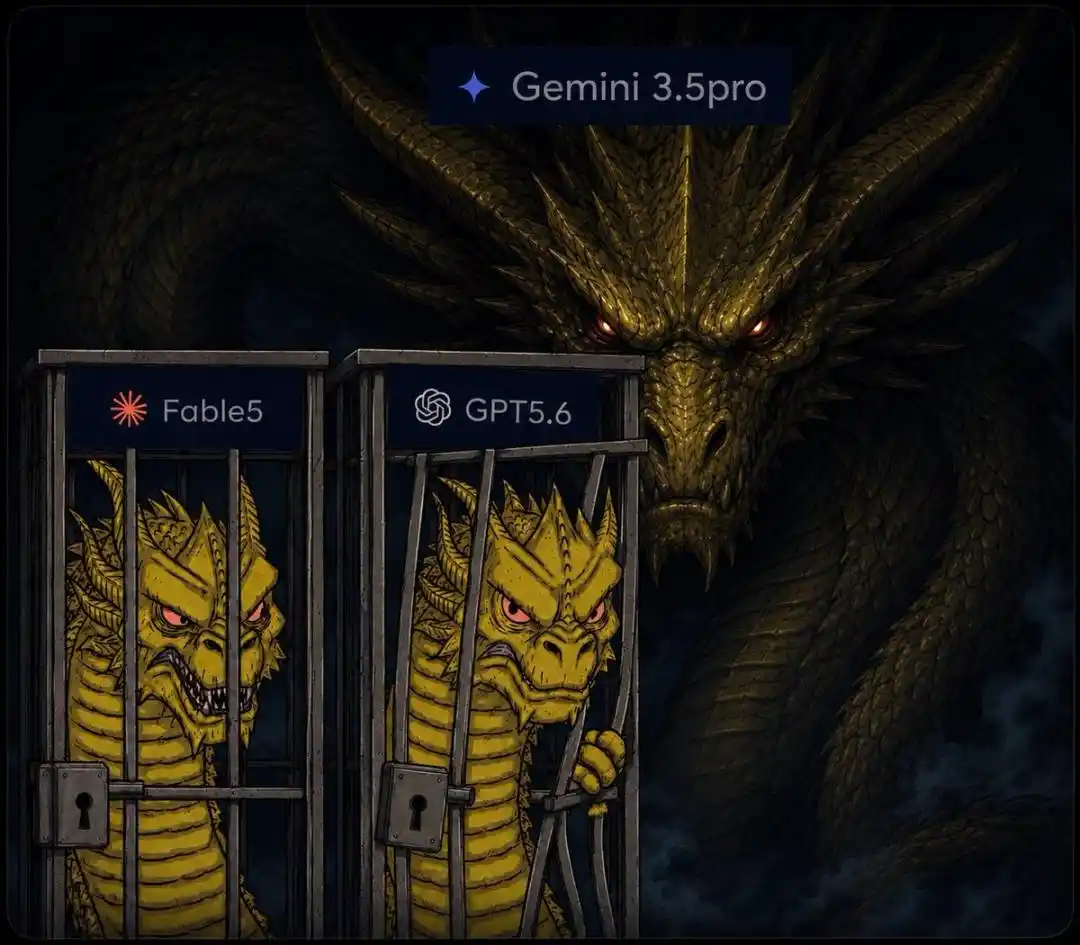
Based on feedback from multiple developers on X, the leaked version has visibly improved in these areas—

  • Better Design Taste: Generated interfaces are no longer "programmer aesthetic"; color schemes, whitespace, and hierarchy are closer to a professional designer's touch;
  • Cleaner UI: One-shot generated front-end pages have clearer structures and less redundancy;
  • Significant Enhancement in SVG Generation: This is a repeatedly highlighted area of improvement; complex vector graphics can be drawn correctly in one go with fewer missing pixels;
  • Higher "Completion Degree" for Front-end: A single prompt can generate a decent-looking page, not a half-finished product.

During testing, developer QASIM-livelifewithai couldn't help but exclaim:

Gemini 3.5 Pro actually generated an SVG image identical to Gemini lead Logan Kilpatrick himself!

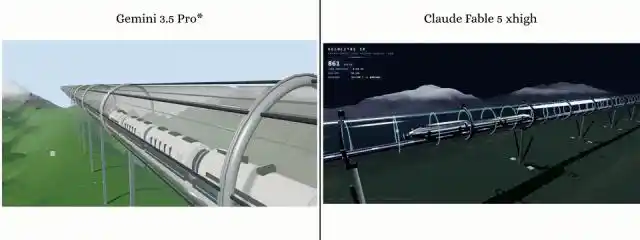
A comparison image between Gemini 3.5 Pro and Fable 5 shows the former slightly superior in artistic conception and atmosphere.


For example, generating a UI with just one sentence.

A hand-drawn SVG mechanical orrery was also achieved by Gemini 3.5 Pro with just one prompt.
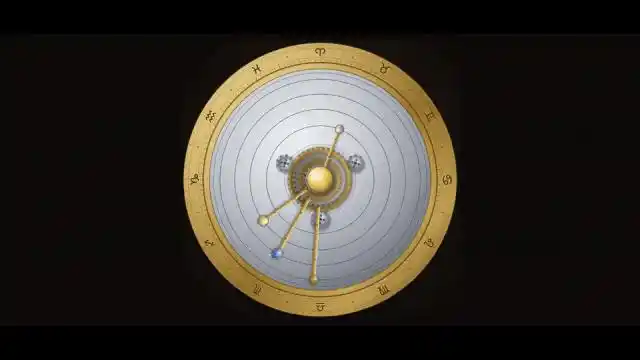
Gemini 3.5 Pro can also use Three.js to generate a floating steampunk island.
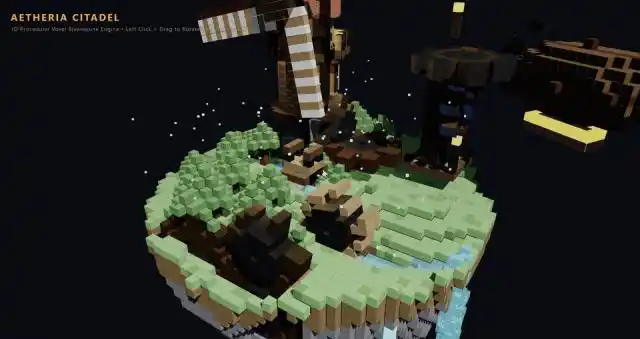
In developer circles, a slightly jesting term has even started circulating to describe Gemini 3.5 Pro's front-end performance—

"mogging" (completely dominating).

Hardcore Reasoning: Inferior to Fable 5, GPT-5.6

Dominating in front-end doesn't mean dominating in all areas.

In LM Arena's stealth testing, Gemini 3.5 Pro indeed suppressed a host of opponents on these tasks.

However, on the hardest Agent tasks, repository-level software engineering, and long-range tasks, 3.5 Pro still can't beat Fable 5, nor catch up to GPT-5.6.

Fable 5 is an absolute beast on heavy engineering tasks like "repository-level, deep debugging, high-ceiling architectural refactoring," scoring quite well on benchmarks like SWE-Bench Pro;

GPT-5.6 similarly holds a steady lead on the most challenging multi-step reasoning tasks.

And what level is Gemini 3.5 Pro on this line?

Even the leaker themselves stated frankly that even with a new foundation, it "still can't beat Fable 5 or GPT-5.6 on the hardest agent and long-chain tasks."
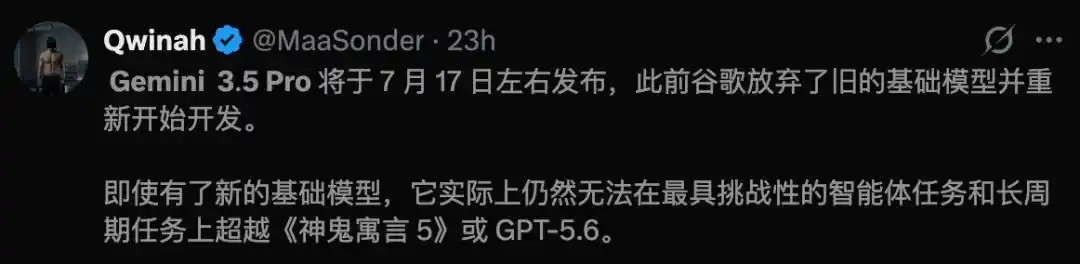
Earlier last month, a leaked benchmark was even less polite, directly ranking it behind Fable 5 and GPT-5.6.

Its weaknesses are concentrated in reasoning, coding, and long-term task execution.

Old Foundation Swapped, Retrained from Scratch

More intriguing than the front-end performance is why Gemini 3.5 Pro is delayed.

According to the leak, the reason Google is dragging into July is not that they spent the extra time on "parameter tuning and fine-tuning," but rather on doing something much heavier—

Conducting another round of "pre-training," no longer relying on the older foundation.

In other words, Pro is not a simple scaled-up version of Flash, but a rebuild on a new foundation.

Apart from the model itself, the leak also contains an easter egg:

Google is preparing an image model called Nano Banana Pro based on this new Gemini 3.5 Pro foundation, aiming to directly compete with OpenAI's GPT-Image 2.

If true, this means Google wants to strengthen simultaneously on both the "text + image" fronts.

One round of retraining, feeding two product lines: one to tackle front-end code, one to tackle image generation.

Google's plan is quite clever—using the same foundation to open fire on two battlefields at once. Now, the entire internet is waiting for July 17th.

And this is precisely the reality of the 2026 large model arms race. Everyone is desperately accelerating, yet no one has managed to completely overturn their opponent in one go.

Looking back at the past six months, the buzz in the AI circle has had little to do with Google, with OpenAI and Anthropic taking turns stealing the spotlight.
But those familiar with Google know they love to hold back, accumulate a wave, and then release everything in one go.

This time with Gemini 3.5 Pro, it's likely the same strategy: using a flagship model retrained on a new foundation to reclaim lost ground in one fell swoop.

Whether July 17th will actually happen, and if it does, whether it will be as the leaks say, the answer can only come from Google itself.

But one thing is already certain: in this war of the gods, no one dares to stop to catch their breath.

References:

https://x.com/ggg78g89/status/2073783990646149488?s=20

https://x.com/HarshithLucky3/status/2073767413494284754?s=20

https://x.com/ggg78g89/status/2073852747049517231?s=20

This article is from WeChat public account "New Zhiyuan" (新智元), author: ASI Apocalypse; Editor: Peach (桃子)

Perguntas relacionadas

QWhat is the main topic of the leaked information about Gemini 3.5 Pro?

AThe main topic is Gemini 3.5 Pro's significant leap in front-end and visual code generation capabilities, reportedly surpassing Fable 5 in this area. It is also mentioned to be scheduled for release on July 17th.

QAccording to the article, in which specific area does Gemini 3.5 Pro outperform Fable 5?

AAccording to the article, Gemini 3.5 Pro outperforms Fable 5 specifically in front-end and visual code generation, including generating cleaner UI, better design aesthetics, improved SVG generation, and higher completion rates for front-end pages.

QWhat are the key weaknesses or areas where Gemini 3.5 Pro is said to still lag behind competitors like Fable 5 and GPT-5.6?

AGemini 3.5 Pro's key weaknesses are in hardcore reasoning, long-context task execution, agent tasks, and large-scale, complex software engineering tasks. It reportedly still cannot beat Fable 5 or GPT-5.6 in these areas.

QWhat major change did Google reportedly make to Gemini 3.5 Pro that caused its delayed release?

AGoogle reportedly conducted a new 'pre-training' run for Gemini 3.5 Pro, rebuilding it on a new base foundation instead of just scaling up the Gemini 3.5 Flash model. This fundamental retraining is cited as the reason for the delay.

QWhat future model based on the Gemini 3.5 Pro base is mentioned in the leaks, and what is its target?

AThe leaks mention a future model called 'Nano Banana Pro,' an image model based on the new Gemini 3.5 Pro foundation. Its target is to more directly compete with OpenAI's GPT-Image 2.

Leituras Relacionadas

MSTR Discloses Sale of 3,588 Bitcoins, Stock Price Drops Over 5% at One Point During Trading

MicroStrategy, the world's largest corporate holder of Bitcoin, has significantly shifted its business model. Between June 29 and July 5, the company sold 3,588 bitcoins for approximately $216 million to fund quarterly dividends for its preferred stock. This marks its largest-ever Bitcoin sale and signals a strategic pivot: Bitcoin is transitioning from a "buy-and-hold" reserve asset to a liquidity management tool for the company. This move follows a recent authorization allowing Bitcoin sales when equity fundraising is less attractive. The announcement contributed to a more than 5% intraday drop in MicroStrategy's stock price, while Bitcoin fell to around $61,800—below the company's average holding cost of roughly $75,700. The sale represents a major departure from MicroStrategy's long-standing "never sell" commitment, which saw its first minor breach in May with a $2.5 million sale. The latest, hundred-times-larger transaction underscores growing financial pressures. Analysts note the company faces about $1.5 billion in annual preferred dividend obligations, far exceeding cash flow from its software business. As of July 5, MicroStrategy holds 843,775 bitcoins. Its current operational logic involves buying Bitcoin during favorable financing conditions and selling portions to cover dividends when needed, creating a flexible capital management cycle amidst a challenging market environment.

华尔街日报Há 1h

MSTR Discloses Sale of 3,588 Bitcoins, Stock Price Drops Over 5% at One Point During Trading

华尔街日报Há 1h

Q-Day Countdown: Will Quantum Computing End Cryptocurrencies?

Quantum Computing's Threat to Cryptocurrency: A Countdown to Q-Day Quantum computing, specifically Shor's algorithm, poses a fundamental threat to the public-key cryptography (e.g., ECDSA, RSA) that secures blockchain networks like Bitcoin and Ethereum. This critical juncture, known as Q-Day, is estimated to occur potentially within the next 5-15 years. The core vulnerability stems from the public and immutable nature of blockchains. Assets in addresses where the public key is already exposed on-chain (e.g., spent outputs) are at direct risk, as a sufficiently powerful quantum computer could derive the private key. This threatens the very trust model of cryptocurrencies. The response lies in Post-Quantum Cryptography (PQC)—algorithms like lattice-based ML-DSA and hash-based SLH-DSA, which are resistant to quantum attacks. NIST has standardized key PQC algorithms (FIPS 203, 204, 205), providing a migration path. However, the primary challenge is not technical but socio-economic and involves complex governance: * **Bitcoin's** path is constrained by its conservative ethos. Migrating requires a soft-fork to new address types, facing hurdles like significantly larger signature sizes and, most critically, the divisive governance question of how to handle at-risk legacy UTXOs without violating core principles. * **Ethereum** is pursuing a "cryptographic agility" strategy, with a multi-layered roadmap. It leverages account abstraction for user accounts and is developing compressed hash-based signatures (e.g., leanXMSS) for its consensus layer, aiming for a full-stack upgrade over time. In conclusion, quantum computing does not spell an instant end for cryptocurrency but initiates a critical countdown. The industry has a limited "engineering comfort window" to orchestrate a coordinated, ecosystem-wide migration to PQC. The ultimate bottlenecks are the immense coordination efforts and governance decisions required for this foundational transition.

marsbitHá 2h

Q-Day Countdown: Will Quantum Computing End Cryptocurrencies?

marsbitHá 2h

Trump, the President Who Knows Best How to 'Trade Stocks'

Former US President Donald Trump reported a record-breaking $2.2 billion in personal income for 2025, the highest annual income ever disclosed by a sitting president. This figure, from a 927-page government ethics filing, represented a 3.5-fold increase from his $600 million income in 2024 and boosted his net worth to $6.5 billion. The primary drivers were cryptocurrency (64% of income, approximately $1.4 billion) and real estate (26%, approximately $575 million). His crypto earnings stemmed largely from the launch of his personal meme coin, $TRUMP, generating over $600 million in licensing fees, and substantial profits from the WLFI token and its parent company. Despite a sluggish property market, his Mar-a-Lago resort and associated golf clubs saw revenue surges of 50% and 27%, respectively, attributed to their use as venues for presidential events. Trump's financial disclosure also revealed an unprecedented level of stock market activity, with over 22,000 trades executed in 2025, averaging 87 trades per market day. Media analyses noted several instances where significant trading coincided with major policy announcements, such as proposed tariffs, raising questions about potential conflicts of interest. While the White House stated these trades were handled by a family-managed trust fund and not Trump directly, critics highlighted this as a departure from the blind trusts traditionally used by presidents post-Watergate. The report has intensified debate over the commercialization of the presidency. Supporters view it as a success story of a businessman-president, while critics argue it demonstrates an unprecedented conversion of public influence into private wealth, with policy decisions potentially linked to personal financial gains. The controversy centers on whether Trump's earnings represent innovative entrepreneurship or a fundamental conflict of interest, sparking renewed calls for stricter ethics reforms in US governance.

marsbitHá 2h

Trump, the President Who Knows Best How to 'Trade Stocks'

marsbitHá 2h

Countdown to Q-Day: Will Quantum Computing End Cryptocurrencies?

The article explores the existential threat quantum computing poses to cryptocurrencies and the urgent need for "post-quantum" migration. It outlines that quantum computers, through Shor's algorithm, could break the elliptic-curve cryptography (ECC) underlying blockchain security, potentially allowing private keys to be derived from public keys. The core challenge is not a lack of post-quantum cryptography (PQC) standards—like NIST's ML-KEM and ML-DSA—but the immense complexity of upgrading entire ecosystems before "Q-Day" (when quantum computers become capable of such attacks, estimated around 2035-2045). Key points include: * **Bitcoin's** risk is concentrated in legacy UTXOs with exposed public keys (e.g., early P2PK outputs). Migration faces massive hurdles: PQC signatures are much larger, increasing transaction size and cost, and the governance dilemma of handling un-migrated assets threatens its "code is law" ethos. * **Ethereum's** strategy focuses on "cryptographic agility," using Account Abstraction for user accounts and developing compressed hash-based signatures (like leanXMSS with SNARK aggregation) for consensus. Its migration is a complex, full-stack overhaul of execution, consensus, and data layers. * The "security debt" is enormous. The comfortable engineering window for a coordinated, ecosystem-wide upgrade is only 5-8 years. High-value infrastructure (exchanges, bridges) may face pressure before mainnet protocols. In conclusion, quantum computing is not an instant "doomsday" event but a forcing function for systemic change. Bitcoin's ultimate test is social consensus and property rights governance, while Ethereum's is technical complexity. Failure to migrate in time could lead to a fundamental re-pricing of crypto assets.

链捕手Há 2h

Countdown to Q-Day: Will Quantum Computing End Cryptocurrencies?

链捕手Há 2h

Trading

Spot
活动图片