Security regulators in Texas and Alabama have intensified investigations into crypto lender Voyager following the recent slump witnessed by the platform.
Soon after the information emerged regarding the loans and the credit status of the borrowers, regulators expanded the investigation into the collapsed crypto lender platform.
Not just Voyager, even Celsius Network Ltd which also experienced a implosion recently has received the same treatment by the regulators. Currently securities regulators are looking into the information about the accuracy of the disclosed information provided by Voyager.
Texas State Securities Board, stated that,
What we’re seeing now is that a lot of these crypto-lending firms may not have fully disclosed what they were doing on the backside with investors’ money. The risks associated with those types of lending practices, or even the other types of transactions they are engaging in.
There has been concerns regarding information on the loans and even the creditworthiness of the borrowers, especially after Voyager Digital Ltd froze withdrawals the previous month.
Regulators from Texas, Albama and New Jersey has extended the investigation primarily due to the aforementioned reason.
Investigation Of Yield Product Offerings
Reports suggested that crypto regulators were focused on investigating yield-product offerings at Voyager. These also included the unregistered securities. Voyager was offering quite high rates of return. The platform still continues to offer these high rates of return.
Amanda Senn, chief deputy director at the Alabama Securities Commission, mentioned,
We are investigating these companies and trying to figure out what happened and why. We are making inquiries. It’s still the initial stages, but we have a responsibility on behalf of our investors in our states.
The State regulators had already begun their investigations in the middle of June and also early July right after Voyager suspended its withdrawal services. The investigations have been mainly surrounding the decision to cease the withdrawals.
Voyager Received A Huge Loan From Alameda Research
Voyager had ceased its withdrawal service beginning in the month of July. The platform has secured a $500 million loan from Alameda Research at the end of last month. Despite the loan, Voyager failed to wiggle out of the bankruptcy.
Voyager’s bankruptcy filing revealed that Sam Bankman-Fried’s Alameda Research had owed the platform over $377 million. Voyager had also mentioned that it would be announcing about its Chapter 11 bankruptcy on July 5.
The company has recently appeared in court for the first time. Celsius is also among one of the companies that froze its withdrawals since mid June.
Not just Voyager and Celsius, other crypto firms also suffered due to the downturn across the industry.
Recently, Three Arrows Capital, a crypto hedge fund, filed its bankruptcy. Other companies have also froze the withdrawals, these include, CoinFLEX, Vauld and Babel Finance.
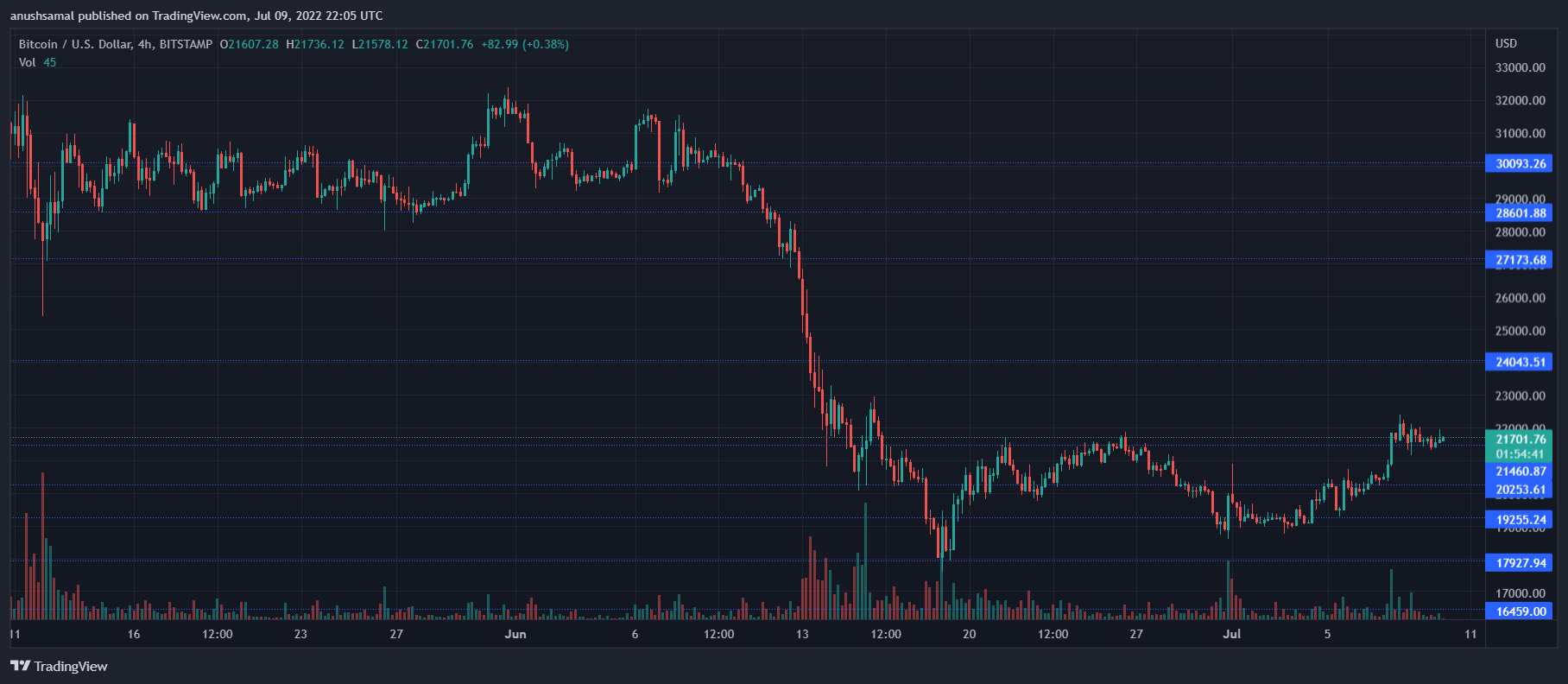
Bitcoin was priced at $21,700 on the four hour chart | Source: BTCUSD on TradingView Featured image from Bloomberg.com, chart from Tradingview.com