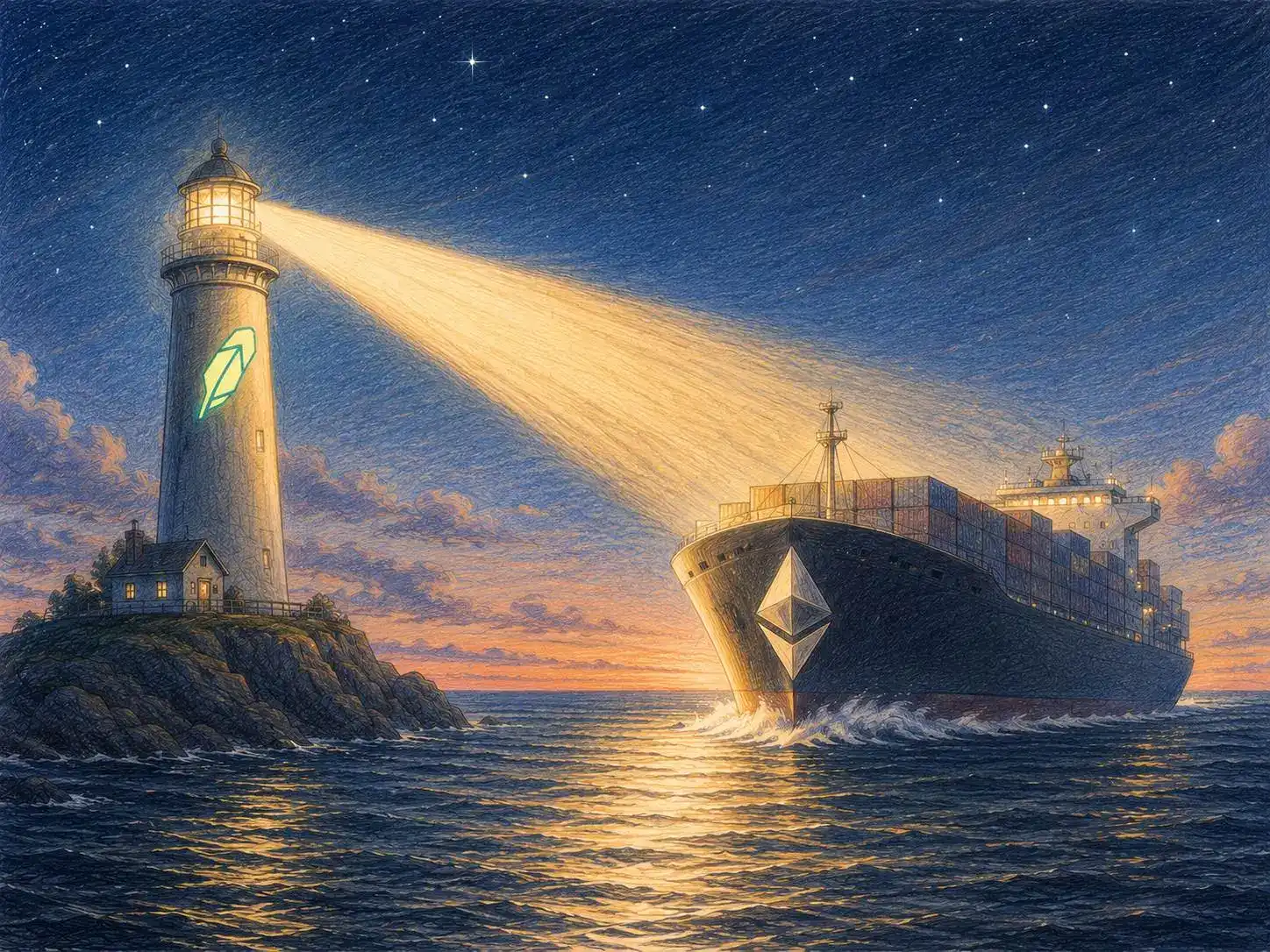
Beyond the Skew: A Structured Approach to Implied Volatility Data

insights.glassnodePublicado em 2025-12-03Última atualização em 2025-12-04

Options markets encode a substantial amount of information about expected volatility and tail risk. Within the industry, 25-delta skew remains the go-to metric for viewing the digital asset options market. Skew is a powerful signal – it indicates how much more investors are willing to pay for downside protection relative to upside exposure. However, it is ultimately just one slice of a much richer volatility surface.

To move beyond this single-point view and make the full surface analytically usable, we are introducing a new suite of Interpolated Implied Volatility metrics that map IV across deltas and maturities. Users can now work with a continuous, model-driven representation that preserves structure, reduces noise, and supports cross-asset and cross-tenor comparison.

Options data is a major focus for Glassnode's product development. We are scaling our coverage with new metrics that extend the depth of our volatility tooling, broaden analytical use cases, and give professionals a more complete view of positioning and risk across the market.

New Interpolated IV Metrics

We have converted the raw, noisy volatility surface into a clean, standardized grid, allowing you to isolate specific risks with precision:

  • Deltas: 5D, 10D, 15D, 20D, 25D, 50D
  • Tenors: 1 week, 1 month, 3 months, 6 months
  • Option types: Calls and Puts
  • Assets: BTC, ETH, and now SOL, BNB, XRP and PAXG
  • Resolutions: 10m, hourly, daily

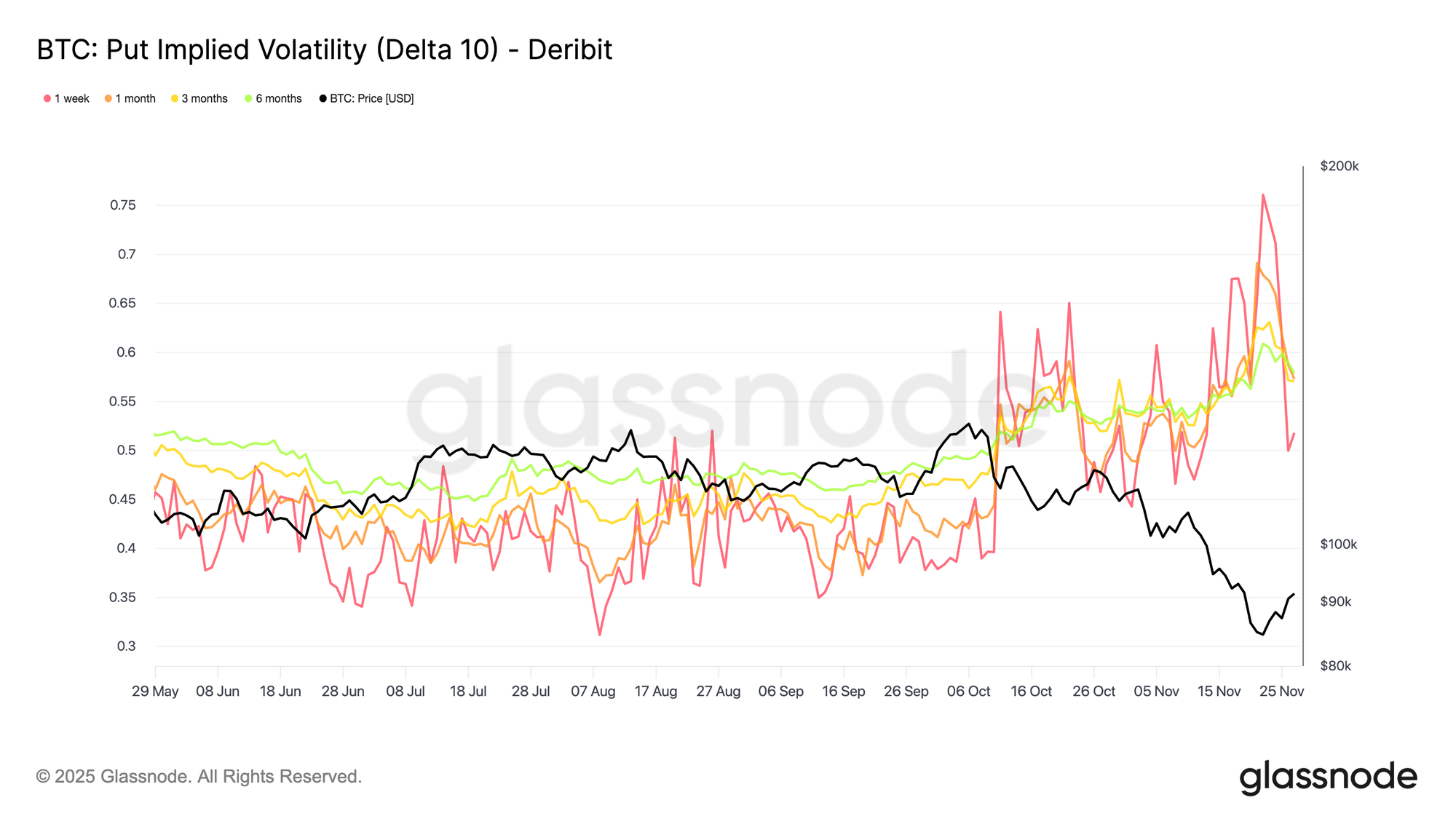
Each time series represents the model-interpolated IV at a target delta and tenor, for a specific asset, exchange and quote currency. For example, “BTC: Put IV Delta 10 (All)” is the 10-delta put implied volatility curve across tenors, cleaned and interpolated from the live surface.
Access live chart
Access Live Chart

Why Do We Need Interpolation?

Options data in the real world is irregular. Exchanges list many strikes and expiries, but liquidity is uneven and can shift throughout the day. As a result, the raw volatility surface contains structural gaps: certain deltas rarely trade, some maturities are thin, and the specific points analysts care about (e.g., a 10-delta Put at exactly 1 month) often do not appear in the quoted market at all.

Interpolation addresses this by reconstructing the missing parts of the surface in a disciplined and repeatable way.

Instead of relying on whichever contracts happened to trade at a given moment —which can introduce noise and instability — we use neighboring quotes to infer a consistent value for each target delta and tenor. The procedure, in simplified form, is:

  1. Identify the two quoted options bracketing the target delta (one slightly below, one slightly above).
  2. Infer the implied volatility at the target delta using these neighboring quotes.
  3. Apply the same logic across maturities to obtain standardized IV values at 1w, 1m, 3m, and 6m.

This produces a smooth, time-consistent volatility surface that avoids gaps, filters out abrupt jumps, and does not depend on illiquid or irregular strikes. Analysts can therefore reference the same points on the surface at every timestamp, independent of market microstructure effects.

A Move from Broad Indicators to Granular Analysis

This update moves the focus away from broad measures to a structured, point-by-point set of IV metrics to examine how the market prices risk across specific deltas, maturities, and option types.

Go beyond 25D skew: Separate call and put legs at 5D–50D and see exactly where the market is paying for downside protection or bidding for upside exposure. This allows you to evaluate risk sentiment more precisely than skew, which compresses all this information into one value.

Compare risk across assets: These metrics make it possible to assess whether the market is pricing more crash risk into BTC or ETH. By overlaying their 10-delta Put IV time series, you can directly observe which asset carries the higher downside premium at any point in time, without being affected by differences in strike listings or liquidity conditions.

Identify cross-asset opportunities: Standardized delta buckets also help reveal shifts in relative demand. For example, if SOL 25D Call IV is rising while BTC 25D Call IV remains stable, the interpolated series makes that divergence easy to detect and quantify, which may signal rotation toward higher-beta assets or a change in market expectations for altcoin volatility.

Monitor term structure: The normalized tenors (1-week to 6-months) let you observe how the market is pricing short-term stress versus longer-term repricing. A widening spread between front-end IV and longer-dated IV can indicate immediate uncertainty, while a flattening or inversion may reflect broader shifts in macro or structural expectations.

Build systematic strategies: Because the metrics are interpolated, each time series is cleaned, stable, and normalized to standard tenors. This removes noise introduced by irregular strikes and uneven trading activity, making the data suitable for direct integration into systematic strategies, backtests, and execution models without requiring additional preprocessing.

This new suite is the foundation for the next wave of options analytics at Glassnode and a more precise way for you to see how the market is really pricing risk.


Disclaimer: This report is for informational and educational purposes only. The analysis represents a limited case study with significant constraints and should not be interpreted as investment advice or definitive trading signals. Past performance patterns do not guarantee future results. Always conduct thorough due diligence and consider multiple factors before making investment decisions.

Criptomoedas em alta

Leituras Relacionadas

Apple Sues OpenAI Sparking Feud, Musk Slams Altman for Fraud, Altman Retorts with 'Space Data Center' Boast

Apple Sues OpenAI as Musk-Altman Feud Escalates The public feud between Elon Musk and OpenAI CEO Sam Altman intensified, coinciding with their respective AI companies launching flagship models in the same week, highlighting fierce competition. On July 11, Musk posted on X, accusing Altman of taking "fraud to the next level" regarding OpenAI's commercial practices. Altman fired back, sarcastically suggesting Musk was the one selling "short-term space datacenter" concepts to public market investors. Musk countered with allegations that Altman "stole an open-source AI charity" and, amid Apple's recent lawsuit, "stole all of Apple's phone tech." He mockingly referenced Altman needing a "parole officer's" approval to travel. This exchange occurred against the backdrop of a significant legal development: Apple filed a lawsuit against OpenAI in a California federal court, alleging the AI company deliberately solicited Apple employees to leak confidential information on unreleased products to aid its own hardware plans. Apple demands OpenAI cease this activity, destroy proprietary materials, and redesign upcoming products. OpenAI responded, stating it has no interest in other companies' trade secrets and remains focused on innovation. This lawsuit could profoundly impact their two-year partnership where OpenAI provides key tech for Apple Intelligence and Siri. The rivalry extended to product releases. OpenAI launched GPT-5.6, while Musk's SpaceXAI unveiled Grok 4.5. Both are positioned as AI agents capable of multi-step tasks. GPT-5.6 is noted for strengths in broad reasoning, business workflows, and cybersecurity. Grok 4.5 is highlighted for higher efficiency in autonomous programming and developer workflows, with lower usage costs than GPT-5.6, though OpenAI's model reportedly still leads in areas like abstract reasoning. The differing strengths offer distinct choices for enterprises and developers based on their specific needs.

marsbitHá 5h

Apple Sues OpenAI Sparking Feud, Musk Slams Altman for Fraud, Altman Retorts with 'Space Data Center' Boast

marsbitHá 5h

Trading

Spot

Artigos em Destaque

Como comprar O

Bem-vindo à HTX.com!Tornámos a compra de O1 exchange (O) simples e conveniente.Segue o nosso guia passo a passo para iniciar a tua jornada no mundo das criptos.Passo 1: cria a tua conta HTXUtiliza o teu e-mail ou número de telefone para te inscreveres numa conta gratuita na HTX.Desfruta de um processo de inscrição sem complicações e desbloqueia todas as funcionalidades.Obter a minha contaPasso 2: vai para Comprar Cripto e escolhe o teu método de pagamentoCartão de crédito/débito: usa o teu visa ou mastercard para comprar O1 exchange (O) instantaneamente.Saldo: usa os fundos da tua conta HTX para transacionar sem problemas.Terceiros: adicionamos métodos de pagamento populares, como Google Pay e Apple Pay, para aumentar a conveniência.P2P: transaciona diretamente com outros utilizadores na HTX.Mercado de balcão (OTC): oferecemos serviços personalizados e taxas de câmbio competitivas para os traders.Passo 3: armazena teu O1 exchange (O)Depois de comprar o teu O1 exchange (O), armazena-o na tua conta HTX.Alternativamente, podes enviá-lo para outro lugar através de transferência blockchain ou usá-lo para transacionar outras criptomoedas.Passo 4: transaciona O1 exchange (O)Transaciona facilmente O1 exchange (O) no mercado à vista da HTX.Acede simplesmente à tua conta, seleciona o teu par de trading, executa as tuas transações e monitoriza em tempo real.Oferecemos uma experiência de fácil utilização tanto para principiantes como para traders experientes.

128 Visualizações TotaisPublicado em {updateTime}Atualizado em 2026.06.29

Como comprar O

Como comprar PROS

Bem-vindo à HTX.com!Tornámos a compra de Pharos (PROS) simples e conveniente.Segue o nosso guia passo a passo para iniciar a tua jornada no mundo das criptos.Passo 1: cria a tua conta HTXUtiliza o teu e-mail ou número de telefone para te inscreveres numa conta gratuita na HTX.Desfruta de um processo de inscrição sem complicações e desbloqueia todas as funcionalidades.Obter a minha contaPasso 2: vai para Comprar Cripto e escolhe o teu método de pagamentoCartão de crédito/débito: usa o teu visa ou mastercard para comprar Pharos (PROS) instantaneamente.Saldo: usa os fundos da tua conta HTX para transacionar sem problemas.Terceiros: adicionamos métodos de pagamento populares, como Google Pay e Apple Pay, para aumentar a conveniência.P2P: transaciona diretamente com outros utilizadores na HTX.Mercado de balcão (OTC): oferecemos serviços personalizados e taxas de câmbio competitivas para os traders.Passo 3: armazena teu Pharos (PROS)Depois de comprar o teu Pharos (PROS), armazena-o na tua conta HTX.Alternativamente, podes enviá-lo para outro lugar através de transferência blockchain ou usá-lo para transacionar outras criptomoedas.Passo 4: transaciona Pharos (PROS)Transaciona facilmente Pharos (PROS) no mercado à vista da HTX.Acede simplesmente à tua conta, seleciona o teu par de trading, executa as tuas transações e monitoriza em tempo real.Oferecemos uma experiência de fácil utilização tanto para principiantes como para traders experientes.

121 Visualizações TotaisPublicado em {updateTime}Atualizado em 2026.06.29

Como comprar PROS

O que é VERONA

I. Introdução ao Projeto VERONA é uma blockchain construída para todos, em todo o lado, através da abstração da cadeia. Utilizando a sua camada de Abstração Generalizada, a VERONA distingue-se por integrar funcionalidades complexas de blockchain, como contas, assinaturas e interoperabilidade, diretamente ao nível do protocolo. Esta abordagem permite a interação com aplicações de blockchain sem a necessidade de compreender as tecnologias subjacentes.1) Informação Básica Nome: VERONA (VERONA)III. Links Relacionados Link do site oficial: https://xion.burnt.com/ Whitepaper: https://xion.burnt.com/whitepaper.pdf Exploradores: https://explorer.burnt.com/ Mídias Sociais: https://x.com/burnt_xion Nota: A introdução ao projeto provém dos materiais publicados ou fornecidos pela equipa oficial do projeto, que é apenas para referência e não constitui aconselhamento de investimento. A HTX não se responsabiliza por quaisquer perdas diretas ou indiretas resultantes.

716 Visualizações TotaisPublicado em {updateTime}Atualizado em 2026.06.22

O que é VERONA

Discussões

Bem-vindo à Comunidade HTX. Aqui, pode manter-se informado sobre os mais recentes desenvolvimentos da plataforma e obter acesso a análises profissionais de mercado. As opiniões dos utilizadores sobre o preço de A (A) são apresentadas abaixo.

活动图片