Глава Strike заявил о закрытии счетов в JPMorgan

cryptonews.ruPublicado em 2025-11-23Última atualização em 2025-11-24

Генеральный директор Strike и соучредитель Twenty One Capital Джек Маллерс сообщил, что банк JPMorgan Chase в одностороннем порядке прекратил обслуживание его личных счетов. По словам предпринимателя, представители банка отказались предоставить какие-либо объяснения.

Это событие вызвало новую волну обсуждений касательно практики отказа в банковском обслуживании руководителям криптовалютных компаний. Уолл-стрит сталкивается с растущим давлением регуляторов, что вынуждает крупные банки пересматривать отношения с представителями индустрии цифровых активов.

Отказ в обслуживании без объяснения причин

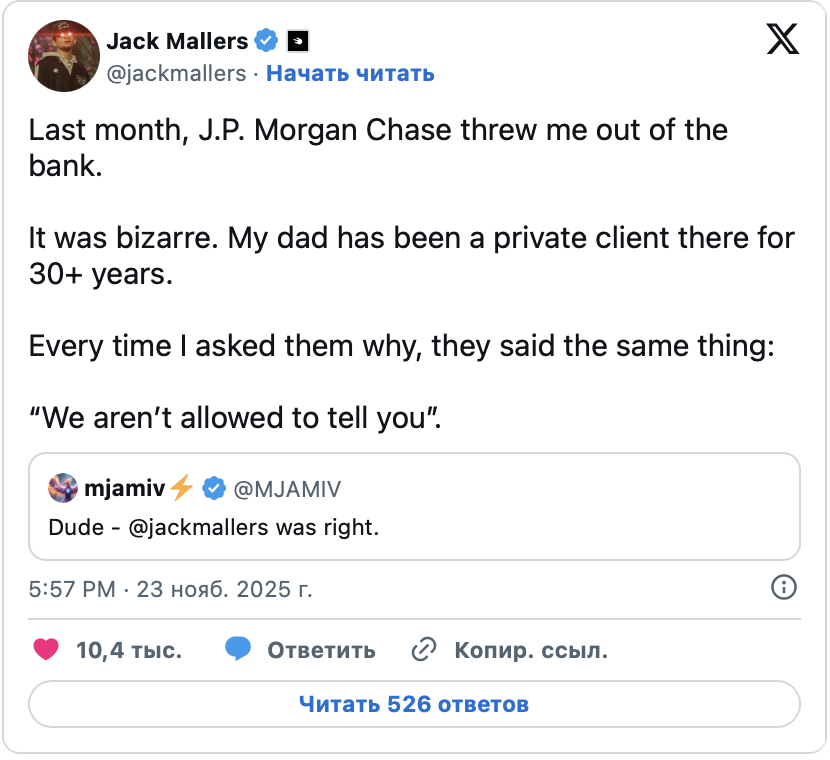
В серии публикаций в социальной сети X (ранее Twitter) Маллерс рассказал детали инцидента. В прошлом месяце JPMorgan уведомил его о расторжении договора. Предприниматель отметил, что его семья являлась клиентом банка на протяжении трех десятилетий.

Несмотря на длительную историю сотрудничества, банк не стал аргументировать свое решение. На все запросы Маллерса сотрудники отвечали одной фразой: «Нам не разрешено вам об этом говорить».
Также глава Strike опубликовал фотографию письма, предположительно полученного от JPMorgan. В документе говорится о выявлении «подозрительной активности». Кроме того, банк предупредил, что, вероятно, не сможет открывать новые счета для Маллерса в будущем.
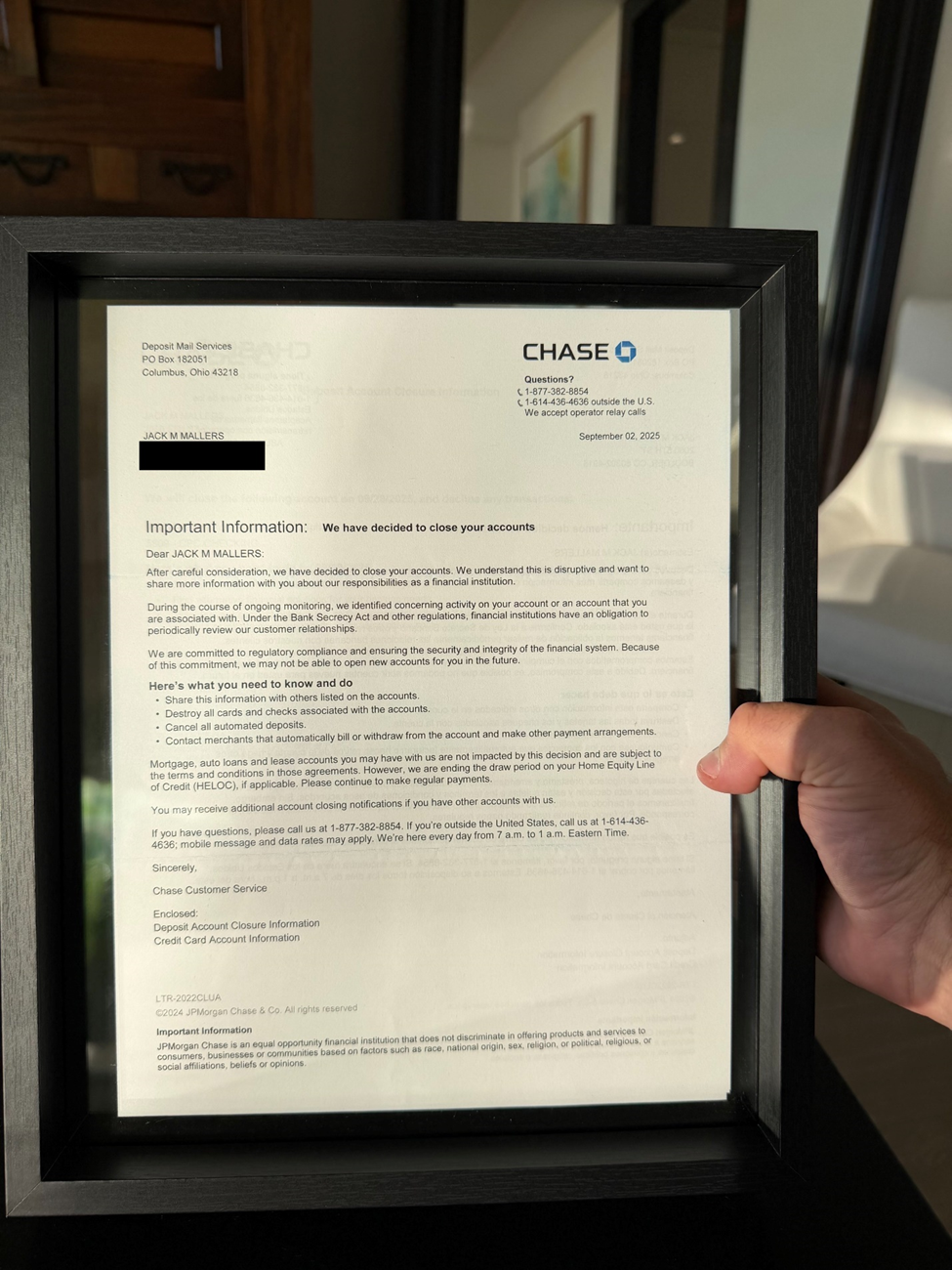
Предполагаемое письмо JPMorgan Джеку Маллерсу
Предполагаемое письмо от JPMorgan Джеку Маллерсу. Источник: Mallers on X

В сети активно обсуждают вероятность продолжения негласной политики давления на криптобизнес, известной как «Operation Chokepoint 2.0». Ряд пользователей предполагает, что банки вынуждены разрывать связи с криптовалютными предпринимателями под административным нажимом.

Генеральный директор Tether Паоло Ардоино прокомментировал ситуацию. Он выразил мнение, что это к лучшему, так как Маллерс последовательно выступает за финансовую независимость от централизованных структур.
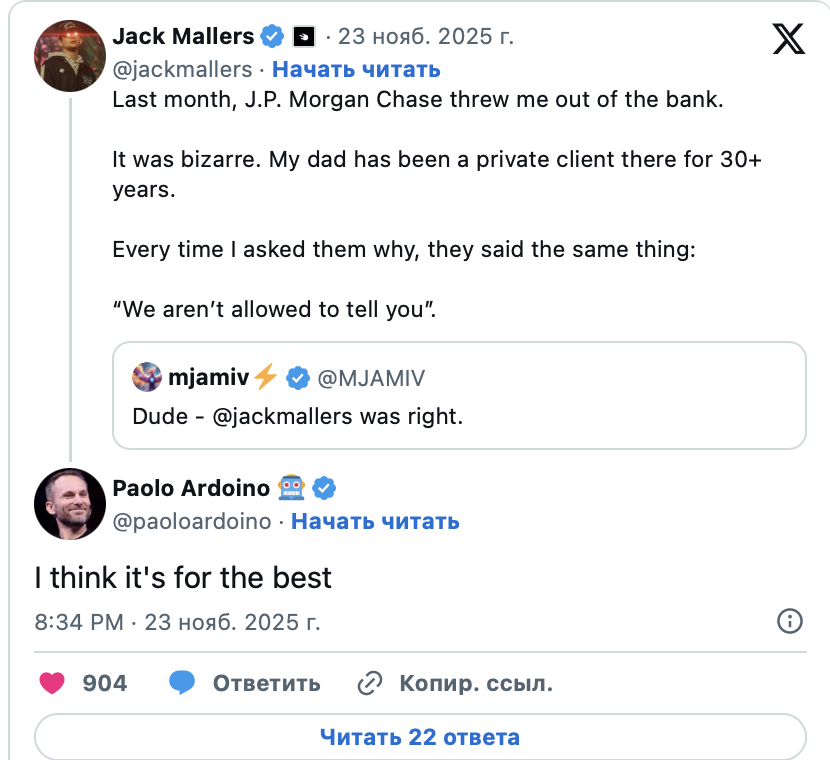
Дискуссия подчеркивает фундаментальный конфликт. Традиционные банки с трудом находят формат взаимодействия с лидерами биткоин-индустрии, которые рассматривают децентрализацию как форму сопротивления системе.

Конфликт интересов и давление на MicroStrategy

Закрытие счетов Маллерса совпало по времени с другим важным процессом. В настоящее время JPMorgan находится под пристальным вниманием из-за анализа возможной реклассификации индексов MSCI. Это может привести к исключению компании MicroStrategy из ключевых фондовых индикаторов.

Провайдер индексов MSCI рассматривает введение правила, исключающего компании, у которых цифровые активы составляют более 50% от общих активов. MicroStrategy, удерживающая 649 870 BTC по средней цене 74 430 $, попадает под этот критерий.

Аналитики JPMorgan подсчитали экономические последствия такого шага. Исключение может спровоцировать отток пассивного капитала в размере $2,8 млрд только из фондов, привязанных к MSCI. Если другие провайдеры индексов примут аналогичные меры, сумма оттока может достигнуть $8,8 млрд.

Вопросы к комплаенсу самого банка

Критика в адрес JPMorgan усилилась после обнародования новых выводов Сената США. Согласно отчету, банк годами занижал данные о подозрительных транзакциях, связанных с делом Джеффри Эпштейна.

Сенатор Рон Уайден обвинил финансовую организацию в попустительстве преступлениям и призвал к возобновлению уголовного расследования.

Для участников рынка ситуация с Маллерсом выглядит как проявление двойных стандартов и избирательного правоприменения. Блокировка счетов биткоин-предпринимателей без объяснения причин происходит на фоне серьезных вопросов к прозрачности операций самого банка.

The post Глава Strike заявил о закрытии счетов в JPMorgan appeared first on BeInCrypto.

Criptomoedas em alta

Leituras Relacionadas

A Guide to Grayscale’s ‘Bottom Fishing’: Using Cash Flow to Assess Cryptocurrency Value

**Title:** Grayscale's Guide to Bottom-Fishing: Valuing Cryptoassets Using Cash Flows **Summary:** This report by Grayscale Research presents a fundamental valuation framework for cryptocurrency assets, moving beyond pure speculation to analyze those with underlying cash flows. It distinguishes between "commodity-like" assets (e.g., Bitcoin) and "cash-flow" assets, primarily within DeFi. Using the leading decentralized lending protocol Aave as a case study, the analysis applies traditional financial methodologies like Discounted Cash Flow (DCF) and Price-to-Earnings (P/E) multiples. Key findings indicate that AAVE tokens are currently undervalued. Despite recent challenges, the protocol's strong revenue growth, ~50% net profit margin, and diversified treasury support a fundamental valuation range of $80-$100 per token (compared to a ~$75 market price at the time of writing). In a base-case scenario driven by stablecoin adoption and regulatory clarity, the fair value could rise to around $175 within a year. The report emphasizes that protocol success does not automatically translate to token value. It critically examines the "value capture" mechanisms—such as buybacks, burns, and staking rewards—that channel protocol profits to token holders. Furthermore, it addresses the legal and governance complexities of Decentralized Autonomous Organizations (DAOs), noting their difference from traditional corporate equity but highlighting how robust, transparent governance can align protocol economics with holder interests. The conclusion is that the crypto market is maturing, with capital increasingly flowing towards projects with demonstrable fundamentals, real adoption, and disciplined capital allocation, creating opportunities for value-based investors.

marsbitHá 9m

A Guide to Grayscale’s ‘Bottom Fishing’: Using Cash Flow to Assess Cryptocurrency Value

marsbitHá 9m

After semiconductors lead the gains, are funds buying into AI orders or a macroeconomic rebound?

After US-Iran talks led to a temporary ceasefire and framework for reopening the strategic Strait of Hormuz, U.S. stocks rose on June 18, with the Nasdaq gaining 1.9%. The semiconductor and AI hardware sectors outperformed. This rally stemmed primarily from reduced geopolitical risk, which lowered oil prices and inflation expectations, easing discount rate pressure on high-valuation growth stocks like tech. The key question is not whether tech rebounded, but the nature of the rebound. The market appears to be selectively repricing AI infrastructure plays rather than broadly chasing AI narratives. Gains were concentrated in chips, optical interconnects, memory, and domestic manufacturing—segments tied to tangible data center build-outs and capital expenditure. Intel's ~10% surge, fueled by a Trump statement about potential Apple collaboration, exemplifies this mixed dynamic. It reflects policy catalysts and domestic manufacturing sentiment more than confirmed fundamentals. Meanwhile, strong earnings from companies like Astera Labs (revenue up 93% YoY) provided concrete evidence of AI-driven demand in hardware. In essence, the rally represents a risk-premium recalibration. Lower Middle East tensions opened a valuation repair window, and capital flowed first into AI infrastructure segments with visible near-term revenue streams. The sustainability of this move hinges on upcoming Q2 earnings, specifically continued strength in cloud provider capex, AI server orders, and hardware company guidance. Policy hopes alone are insufficient; the cycle needs validation from orders and financials.

marsbitHá 15m

After semiconductors lead the gains, are funds buying into AI orders or a macroeconomic rebound?

marsbitHá 15m

The Entire Internet Hails Noam's Joining, But OpenAI's Loss Bill Just Got Thicker

While the AI community celebrates Noam Shazeer, co-author of the "Attention Is All You Need" paper, joining OpenAI as Head of Architectural Research, the company's audited financials reveal a starkly different reality. In 2025, OpenAI reported $13.07 billion in revenue but a massive $20.92 billion operating loss. Even excluding a one-time accounting charge, the cash burn is severe, with $3.7 billion consumed in Q1 2026 alone. This high-profile hiring occurs against a backdrop of significant internal research talent drain, with key founders and researchers departing as the company's focus shifts from exploratory research to product iteration. Meanwhile, OpenAI's fundamental business model faces a deep crisis. It paid Microsoft $10.59 billion for compute in 2025, while its vast user base of 9 billion weekly actives includes only 50 million paying customers, making growth a direct driver of escalating costs. The article argues Shazeer's recruitment is less about technical necessity and more about crafting a compelling narrative for OpenAI's upcoming IPO, aiming to justify a rumored $1 trillion valuation to future public market investors. It contrasts OpenAI's strategy with Anthropic's reported path to profitability, which relies on a strong enterprise customer base and cost control, rather than star-powered narratives. Ultimately, the piece concludes that while Shazeer's architectural work may take 1-2 years to materialize, OpenAI's financial clock is ticking much faster, with its massive losses undercutting the celebratory headlines.

marsbitHá 2h

The Entire Internet Hails Noam's Joining, But OpenAI's Loss Bill Just Got Thicker

marsbitHá 2h

Trading

Spot
Futuros

Artigos em Destaque

Como comprar ONE

Bem-vindo à HTX.com!Tornámos a compra de Harmony (ONE) simples e conveniente.Segue o nosso guia passo a passo para iniciar a tua jornada no mundo das criptos.Passo 1: cria a tua conta HTXUtiliza o teu e-mail ou número de telefone para te inscreveres numa conta gratuita na HTX.Desfruta de um processo de inscrição sem complicações e desbloqueia todas as funcionalidades.Obter a minha contaPasso 2: vai para Comprar Cripto e escolhe o teu método de pagamentoCartão de crédito/débito: usa o teu visa ou mastercard para comprar Harmony (ONE) instantaneamente.Saldo: usa os fundos da tua conta HTX para transacionar sem problemas.Terceiros: adicionamos métodos de pagamento populares, como Google Pay e Apple Pay, para aumentar a conveniência.P2P: transaciona diretamente com outros utilizadores na HTX.Mercado de balcão (OTC): oferecemos serviços personalizados e taxas de câmbio competitivas para os traders.Passo 3: armazena teu Harmony (ONE)Depois de comprar o teu Harmony (ONE), armazena-o na tua conta HTX.Alternativamente, podes enviá-lo para outro lugar através de transferência blockchain ou usá-lo para transacionar outras criptomoedas.Passo 4: transaciona Harmony (ONE)Transaciona facilmente Harmony (ONE) no mercado à vista da HTX.Acede simplesmente à tua conta, seleciona o teu par de trading, executa as tuas transações e monitoriza em tempo real.Oferecemos uma experiência de fácil utilização tanto para principiantes como para traders experientes.

314 Visualizações TotaisPublicado em {updateTime}Atualizado em 2026.06.02

Como comprar ONE

Discussões

Bem-vindo à Comunidade HTX. Aqui, pode manter-se informado sobre os mais recentes desenvolvimentos da plataforma e obter acesso a análises profissionais de mercado. As opiniões dos utilizadores sobre o preço de ONE (ONE) são apresentadas abaixo.

活动图片