Ethereum Supera un Livello Chiave Rispetto a Bitcoin, Alimentando le Voci di un Ciclo Rialzista

bitcoinistPublicado a 2025-08-15Actualizado a 2025-08-15

Resumen

Le recenti tendenze di mercato stanno creando lo scenario perfetto per un breakout del prezzo di Ethereum. In particolare, ETH...

Trusted Editorial content, reviewed by leading industry experts and seasoned editors. Ad Disclosure

Le recenti tendenze di mercato stanno creando lo scenario perfetto per un breakout del prezzo di Ethereum. In particolare, ETH sta guadagnando slancio in modo costante, con il prezzo che si avvicina sempre più a un nuovo massimo storico. Negli ultimi giorni, la principale altcoin ha registrato un’impennata dell’attività di rete, una domanda crescente e una diminuzione delle riserve sugli exchange — tutti fattori chiave per un potenziale movimento esplosivo.

La crescita della rete spinge il prezzo di Ethereum verso un nuovo ATH

Ethereum si sta rapidamente avvicinando al suo precedente massimo storico, grazie a un’impennata dell’attività di rete a livelli mai visti prima. Secondo la società di analisi on-chain CryptoQuant, il numero di transazioni giornaliere su Ethereum ha raggiunto un record di circa 1,875 milioni, evidenziando un forte aumento del coinvolgimento degli utenti e della domanda sulla rete.Questa impennata dell’attività ha coinciso con un forte rally del prezzo di ETH, passato da circa 3.150 $ a fine luglio a 4.563 $ in agosto, posizionando la criptovaluta a un passo dal suo picco storico. Attualmente, Ethereum viene scambiato a 4.737 $, quindi è solo al 2,67% dal superare l’ATH di 4.867 $, registrato durante il bull run del novembre 2021.

Nell’ultimo mese, Ethereum ha mantenuto una forte traiettoria rialzista, guadagnando circa il 60% secondo CoinMarketCap. Il momentum si è ulteriormente rafforzato nell’ultima settimana, con la criptovaluta in rialzo di oltre il 27% e capace di sovraperformare Bitcoin del 124% dai minimi di aprile. 

Se questa corsa rialzista dovesse continuare, ETH potrebbe essere sul punto di registrare un nuovo massimo storico, segnando un momento storico per il mercato crypto. Al momento della stesura dell’articolo Ethereum vale circa 4.500 dollari.

A rafforzare il sentiment positivo c’è anche il Netflow SMA30 di Ethereum, che secondo CryptoQuant è attualmente a -40.000 ETH. Come mostra il grafico, flussi in uscita sostenuti indicano che gli investitori stanno spostando i propri fondi in cold storage anziché lasciarli sugli exchange per vendite rapide, riducendo così la liquidità sul lato vendita e aumentando la pressione d’acquisto.

Questa tendenza è stata particolarmente evidente tra la fine di luglio e l’inizio di agosto. Il 12 agosto, Ethereum ha registrato un ingente afflusso netto di 186.000 ETH e, nello stesso giorno, il prezzo ha toccato i 4.589 $. Ciò supporta la tesi di CryptoQuant secondo cui ETH si sta avvicinando rapidamente a un nuovo massimo storico, spinto non solo dall’aumento dell’attività di rete ma anche dall’accelerazione dell’accumulazione.

Rischio di short squeeze e afflussi negli ETF aggiungono slancio

Mentre il prezzo di ETH è in forte ascesa, l’analista di mercato Coin Bureau avverte che un nuovo massimo storico potrebbe innescare una serie di liquidazioni di posizioni short, potenzialmente introducendo ancora più volatilità sul mercato. L’analista prevede che potrebbero essere spazzati via quasi 2 miliardi di dollari di posizioni short, costringendo i trader a ricomprare l’altcoin a prezzi più alti e accelerando ulteriormente il rally.

Interessante notare che la rapida ascesa del prezzo di Ethereum è amplificata anche da una crescente domanda istituzionale. L’analista crypto Ted Pillows ha riportato in un post su X che gli ETF Spot su Ethereum hanno registrato in un solo giorno afflussi per ben 729,1 milioni di dollari — un segnale che la FOMO istituzionale potrebbe essere tornata sul mercato. Insieme a questo boom degli ETF, anche la domanda da parte delle società di tesoreria Ethereum è cresciuta in modo marcato, rafforzando ulteriormente il momentum rialzista di ETH.

.

Editorial Process for bitcoinist is centered on delivering thoroughly researched, accurate, and unbiased content. We uphold strict sourcing standards, and each page undergoes diligent review by our team of top technology experts and seasoned editors. This process ensures the integrity, relevance, and value of our content for our readers.
Clara Rosati

Clara Rosati

Copywriter
Follow

Ha conseguito una laurea magistrale con una tesi sull’evoluzione della tecnologia blockchain, approfondendo in particolare le sue applicazioni nei sistemi economici digitali. Ha collaborato con diverse testate scrivendo articoli su criptovalute, finanza decentralizzata e innovazione tecnologica, e ha partecipato come relatrice a conferenze dedicate all’ecosistema Ethereum.

Criptos en tendencia

Lecturas Relacionadas

Grayscale: Zcash, Financial Privacy in the Age of AI

Grayscale Research suggests a third wave of public focus on financial privacy is approaching, driven by stablecoin/blockchain adoption and new AI-powered surveillance tools. In this context, Zcash emerges as a decentralized digital currency, similar to Bitcoin but with built-in, robust privacy mechanisms via its "shielded" transactions that conceal sender, receiver, and amount using zero-knowledge proofs. While privacy is often seen as a niche feature, it is argued to be a core requirement for functional money, needed by individuals and businesses alike. Zcash's optional privacy is distinct from mixers or default-private chains like Monero. After years of development (Sapling, Orchard/NU5, Ironwood upgrades) to improve usability, key metrics show growing adoption: shielded transactions comprise ~90% of network activity, and ~25% of circulating ZEC is in shielded pools—a historical high. Despite this, ZEC's market valuation remains low (~0.6% of the "digital currency" sector), implying the market prices privacy as a marginal concern. The investment thesis hinges on a potential re-rating if the value of financial privacy is recognized more broadly. Risks include regulatory challenges around shielded transactions, legacy trusted setup pools, quantum computing threats, and execution risks for upcoming upgrades like Tachyon for scaling. In summary, Zcash represents a significant, technologically mature option in the privacy currency space, with current valuation offering potential upside if privacy demand grows.

marsbitHace 12 min(s)

Grayscale: Zcash, Financial Privacy in the Age of AI

marsbitHace 12 min(s)

The Bear Market Has Ended, A New Bull Cycle Has Begun

**Title: Bear Market Over, New Bull Cycle Begins** Bitcoin surged over 20% in just three days, from a low of $64,100 on August 19th to a high of $79,500 by August 21st, marking a dramatic shift in market sentiment. This rapid rise triggered massive liquidations exceeding $4 billion, with short positions accounting for $3.7 billion—the largest short squeeze since 2021. The rally was fueled by several key factors. Macroeconomic conditions improved as the US Treasury doubled its long-term bond buyback size, easing pressure. Significant regulatory developments included a White House meeting where former President Trump urged Senate action on the CLARITY Act and hinted at potential US Bitcoin reserves, followed by the CFTC Chairman stating the agency would establish crypto market rules if the bill stalls. On-chain data revealed a fierce battle: large whales faced substantial liquidations on short positions, while others took profits or doubled down on longs. Major altcoins like ETH and XRP also saw impressive gains. Analysts are divided but increasingly bullish. Many, including CryptoQuant's founder, declare the bear market over and a new bull cycle begun. Price targets range from $100k by year-end to ambitious long-term projections of $200k. However, some caution against immediate chasing, noting overbought conditions and viewing the move as a potential "trap" ahead of the crucial September 15th Senate vote on the CLARITY Act. The market's next test is sustaining the momentum with real buying pressure, holding above key resistance near $78k-$80k, and watching ETF inflows and the upcoming regulatory vote.

marsbitHace 17 min(s)

The Bear Market Has Ended, A New Bull Cycle Has Begun

marsbitHace 17 min(s)

Xiaomi Defended Its Smartphone Gross Margin, Yet to Find a Profit Successor

Xiaomi's Q2 2026 financial report reveals a company navigating a complex transition. While smartphone gross margin held steady at 8.5% through strategic product mix and a record-high average selling price (ASP), this came at the cost of a 26.5% year-over-year decline in global shipments, pressuring its core user acquisition engine. This illustrates Xiaomi's central challenge: managing the "timing gap" between its established and emerging growth engines. Its smartphone business is pivoting from scale to premiumization, but it's unclear if high-end models can fully offset the volume loss from more price-sensitive segments, especially in markets like India and Africa. Meanwhile, the electric vehicle segment has become a significant revenue contributor, delivering 104,200 units and generating ¥23.9 billion. However, its profit contribution remains unclear as it, along with AI investments, is still in a scaling and investment phase. The AI and humanoid robot initiatives, though strategically prioritized and tested in Xiaomi's own factories, are in early-stage validation with no near-term commercialization timeline. Financially, the company remains stable, supported by a robust cash position and its high-margin internet services business, which hit a new high in monthly active users. Management emphasized continued heavy investment in AI, chips, and robotics to fuel the next growth cycle. The key question is whether these new engines—cars, AI, robotics—can achieve commercial scale and profitability before the smartphone engine's growth slows further.

marsbitHace 17 min(s)

Xiaomi Defended Its Smartphone Gross Margin, Yet to Find a Profit Successor

marsbitHace 17 min(s)

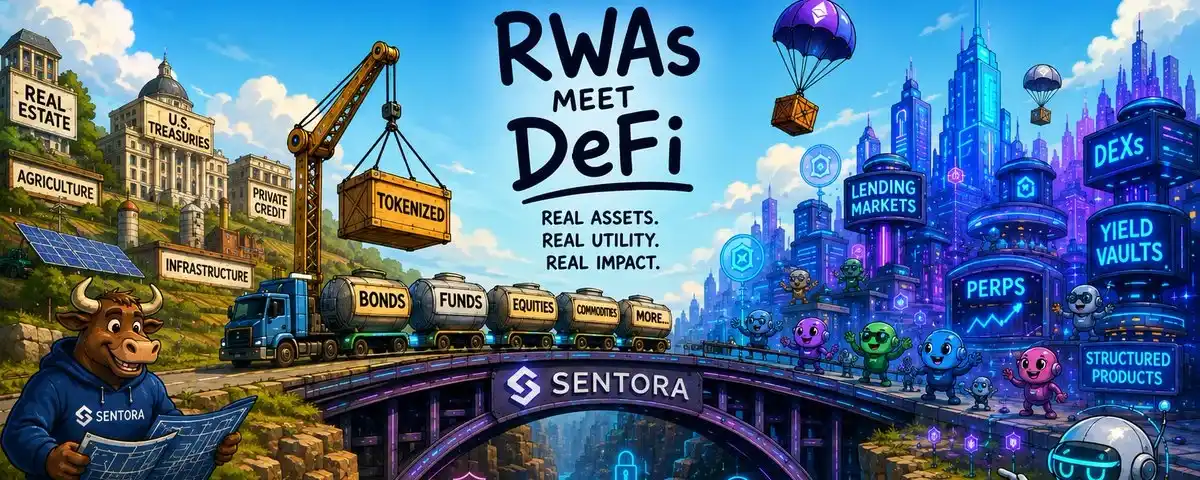
Is RWA Still Meaningful Without DeFi?

The article "Would RWA Still Matter Without DeFi?" argues that tokenizing real-world assets (RWA) alone, like putting a barcode on a container, is not transformative. True value emerges when these tokenized assets are integrated into decentralized finance (DeFi) ecosystems, enabling valuation, financing, hedging, trading, and loss management in a programmable, automated manner. Tokenization provides digital representation, but DeFi provides utility through leverage, liquidity, and composability. The core challenge lies in aligning the different "time clocks" of blockchain (fast, 24/7), traditional markets (limited hours), and asset redemption (slow processes), which creates liquidation risks and gaps. Effective RWA integration requires more than a token; it needs a full stack: legally enforceable rights, reliable data oracles, clear transfer rules, executable secondary liquidity, appropriate collateral parameters, and credible loss resolution paths. Liquidity is defined not by total value locked (TVL) but by the ability to exit a position under stress within a required timeframe. Risk management for RWAs must be modeled as a dependency graph, monitoring interconnected nodes like issuers, custodians, oracles, and liquidity pools for early warning signs beyond just price data. While tokenized government bonds serve as an initial "ping test," the future lies in more complex assets like computing power and energy, which require bespoke risk models. Tokenized stocks paired with perpetual futures present a major test, combining global equity ownership with crypto-native leverage, necessitating robust architectural safeguards like isolation and dynamic collateral rules. The conclusion is that without DeFi, RWA tokenization offers limited value—improving distribution and transparency. The significant opportunity arises when tokenized assets become functional components within open, programmable capital markets, where they can be used as collateral and facilitate complex financial strategies. The token is merely the barcode; the market operating system is the real machine.

marsbitHace 38 min(s)

Is RWA Still Meaningful Without DeFi?

marsbitHace 38 min(s)

Trading

Spot

Artículos destacados

Qué es KR200

KOSPI 200 es el índice de referencia de acciones de primera clase de Corea del Sur, que rastrea las 200 principales acciones de gran capitalización y alta liquidez que cotizan en la Bolsa de Corea (KRX). Cubre a líderes del sector como Samsung y SK Hynix, y sirve como el principal subyacente para los derivados de acciones coreanas y la evaluación institucional global.

47 Vistas totalesPublicado en 2026.08.19Actualizado en 2026.08.19

Qué es KR200

Cómo comprar KR200

¡Bienvenido a HTX.com! Hemos hecho que comprar KOSPI 200 (KR200) sea simple y conveniente. Sigue nuestra guía paso a paso para iniciar tu viaje de criptos.Paso 1: crea tu cuenta HTXUtiliza tu correo electrónico o número de teléfono para registrarte y obtener una cuenta gratuita en HTX. Experimenta un proceso de registro sin complicaciones y desbloquea todas las funciones.Obtener mi cuentaPaso 2: ve a Comprar cripto y elige tu método de pagoTarjeta de crédito/débito: usa tu Visa o Mastercard para comprar KOSPI 200 (KR200) al instante.Saldo: utiliza fondos del saldo de tu cuenta HTX para tradear sin problemas.Terceros: hemos agregado métodos de pago populares como Google Pay y Apple Pay para mejorar la comodidad.P2P: tradear directamente con otros usuarios en HTX.Over-the-Counter (OTC): ofrecemos servicios personalizados y tipos de cambio competitivos para los traders.Paso 3: guarda tu KOSPI 200 (KR200)Después de comprar tu KOSPI 200 (KR200), guárdalo en tu cuenta HTX. Alternativamente, puedes enviarlo a otro lugar mediante transferencia blockchain o utilizarlo para tradear otras criptomonedas.Paso 4: tradear KOSPI 200 (KR200)Tradear fácilmente con KOSPI 200 (KR200) en HTX's mercado spot. Simplemente accede a tu cuenta, selecciona tu par de trading, ejecuta tus trades y monitorea en tiempo real. Ofrecemos una experiencia fácil de usar tanto para principiantes como para traders experimentados.

36 Vistas totalesPublicado en 2026.08.19Actualizado en 2026.08.19

Cómo comprar KR200

Qué es SKDD

Diseñado para proporcionar rendimientos apalancados inversos de -2x de los movimientos diarios del precio de las acciones de SK Hynix, este es un ETF apalancado corto de un solo día bajo GraniteShares. Es adecuado para inversores con una perspectiva bajista a corto plazo sobre SK Hynix para asignación táctica.

90 Vistas totalesPublicado en 2026.08.19Actualizado en 2026.08.19

Qué es SKDD

Discusiones

Bienvenido a la comunidad de HTX. Aquí puedes mantenerte informado sobre los últimos desarrollos de la plataforma y acceder a análisis profesionales del mercado. A continuación se presentan las opiniones de los usuarios sobre el precio de A (A).

活动图片