SignalPlus宏观分析(20240506): 风险资产有机会再次开始缓慢爬升

Odaily星球日报Publicado a 2024-05-06Actualizado a 2024-05-06

Resumen

就业数据今年首度低于预期(没有意外走高),整体就业人口变动+17.5万(先前的平均增量约为27.5万左右)。上周五加密货币价格出现大幅反弹,周末BTC现货价格突破6.4万美元。

SignalPlus宏观分析(20240506): 风险资产有机会再次开始缓慢爬升

SignalPlus宏观分析(20240506): 风险资产有机会再次开始缓慢爬升

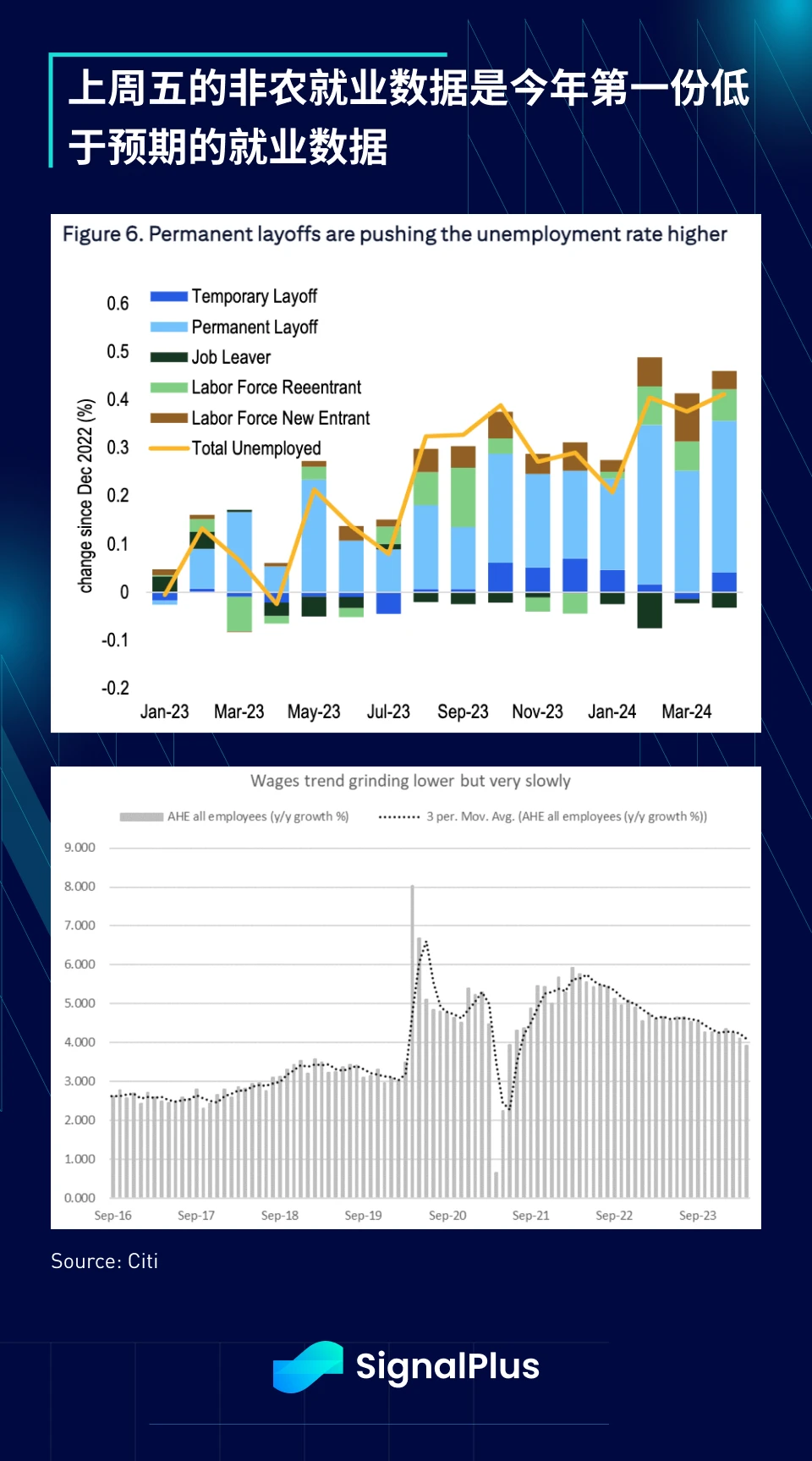
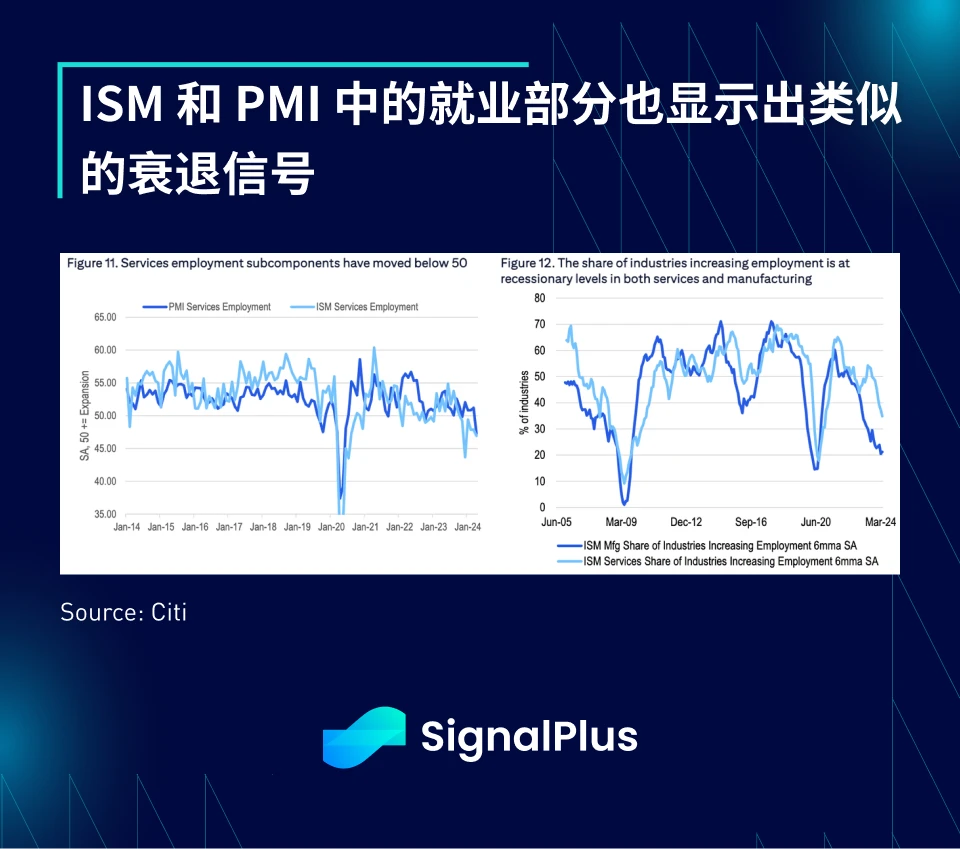
就业数据今年首度低于预期(没有意外走高),整体就业人口变动 + 17.5 万(先前的平均增量约为 27.5 万左右),失业率也意外从 3.83% 上升至 3.87% 。
SignalPlus宏观分析(20240506): 风险资产有机会再次开始缓慢爬升

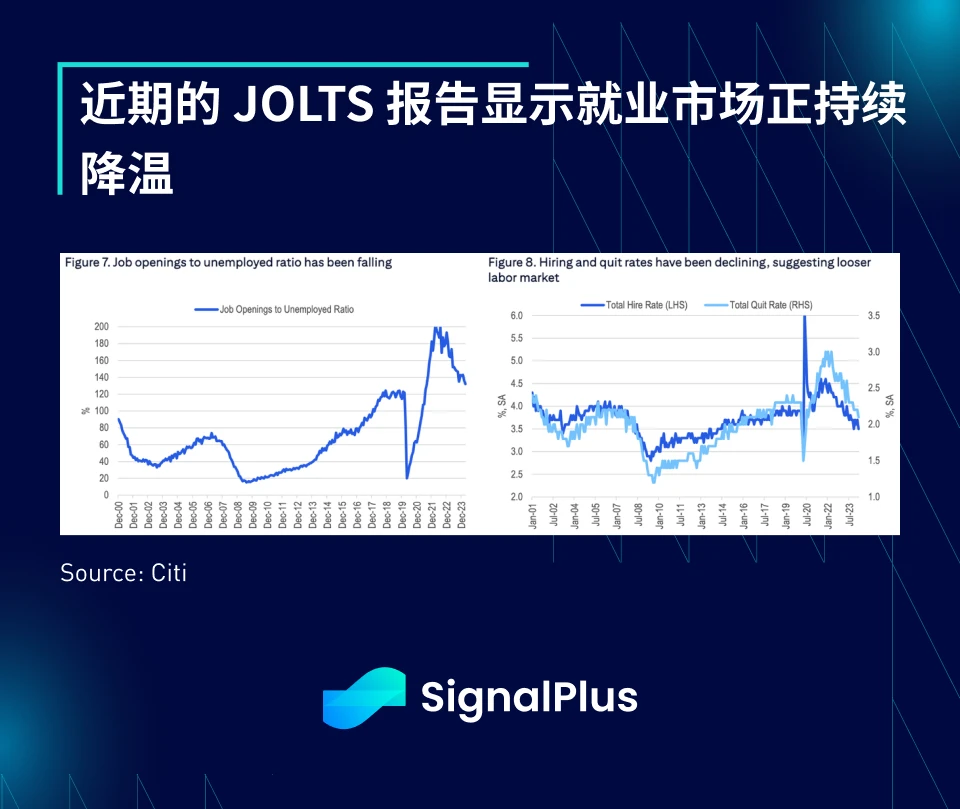
其他更高频率的就业市场指标也开始显示放缓迹象,例如近期的 JOLTS 报告显示职位空缺与失业人口比率降低,以及私营部门招聘和离职率处于多年来低点。
SignalPlus宏观分析(20240506): 风险资产有机会再次开始缓慢爬升

此外,小型企业的招聘趋势明显减弱,ISM 和 PMI 中的就业部分均表现疲软,正在进行招聘的服务业和制造业企业比例下降至通常在经济衰退时才出现的水平。
SignalPlus宏观分析(20240506): 风险资产有机会再次开始缓慢爬升

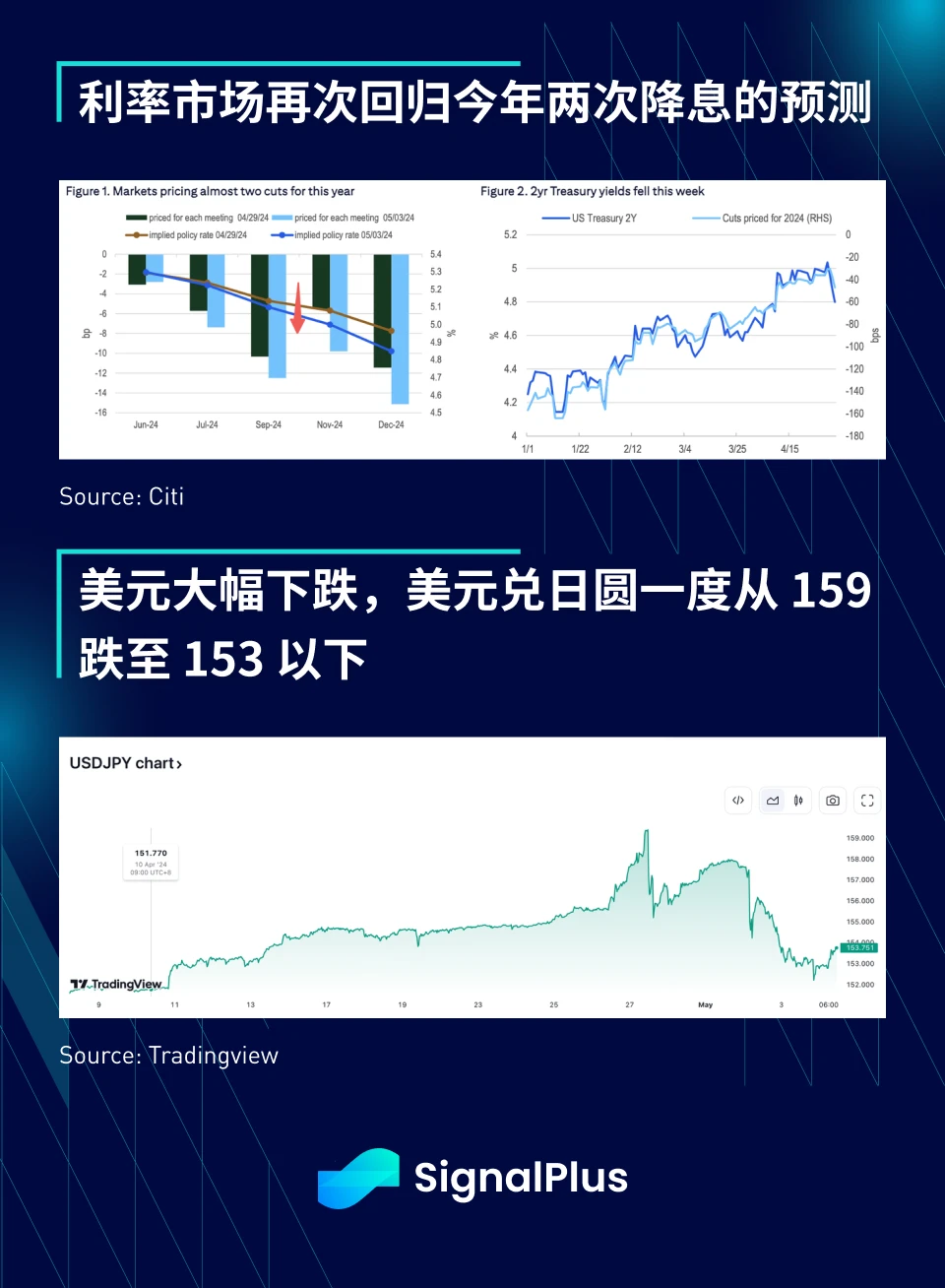
上周五我们指出非农就业数据结果较有可能倾向鸽派,特别是考虑到美联储 FOMC 明确表示他们正提高对就业市场走软的关注,并愿意忽视近期的通胀情况。如今,就业数据确实疲软,降息预期回归市场再度引发一波风险反弹。

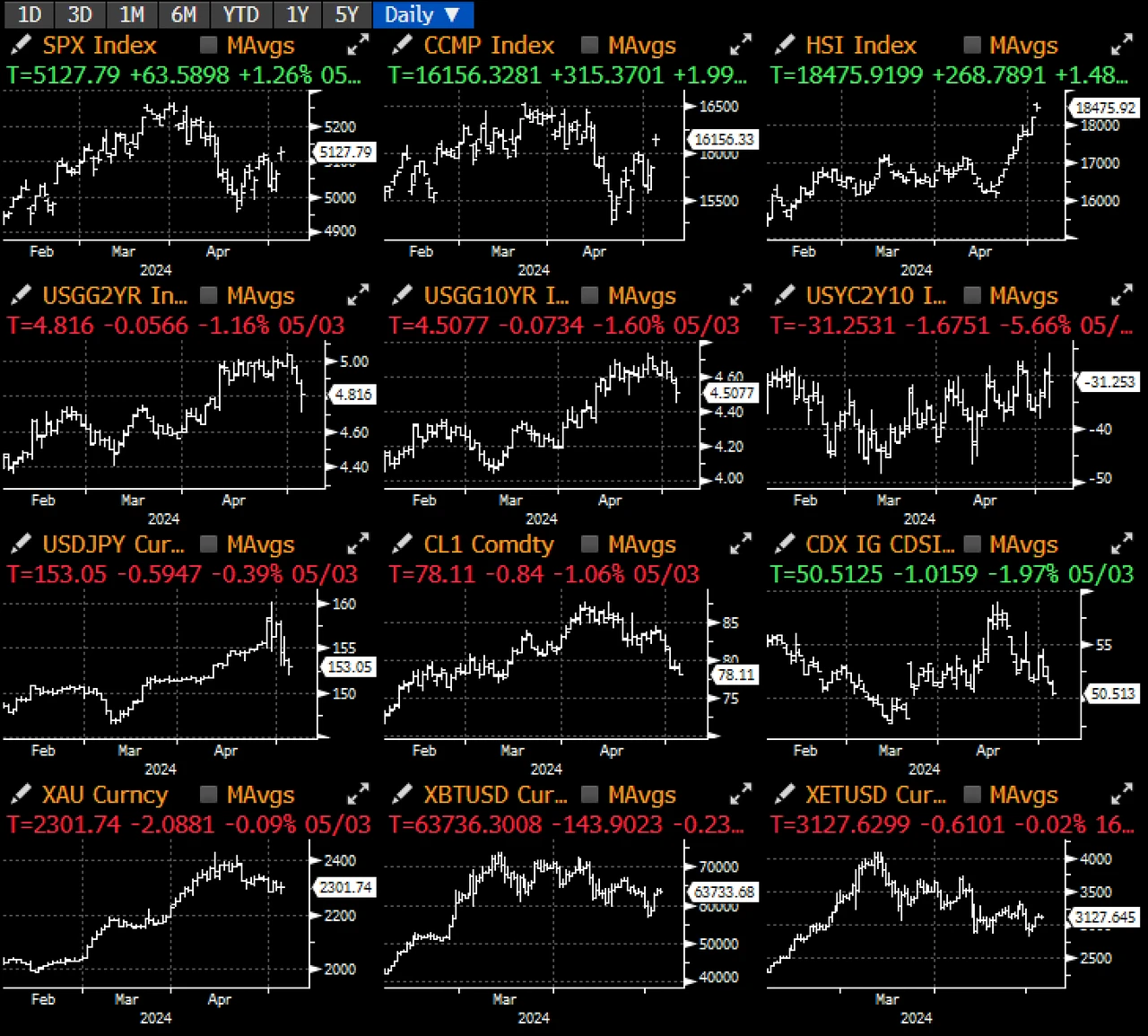
收益率出现牛陡走势, 2 年期收益率从 5% 回落至 4.8% , 10 年期收益率回到 4.5% ,市场定价再度预测今年有近 2 次降息。股市方面,科技股上涨 2% ,SPX 收在 5, 100 点上方,美元兑日圆在 48 小时内从上周高点 159 跌至 152.5 。总而言之,市场情绪受到鸽派利率背景的提振,以强劲的风险反弹结束上周。
SignalPlus宏观分析(20240506): 风险资产有机会再次开始缓慢爬升

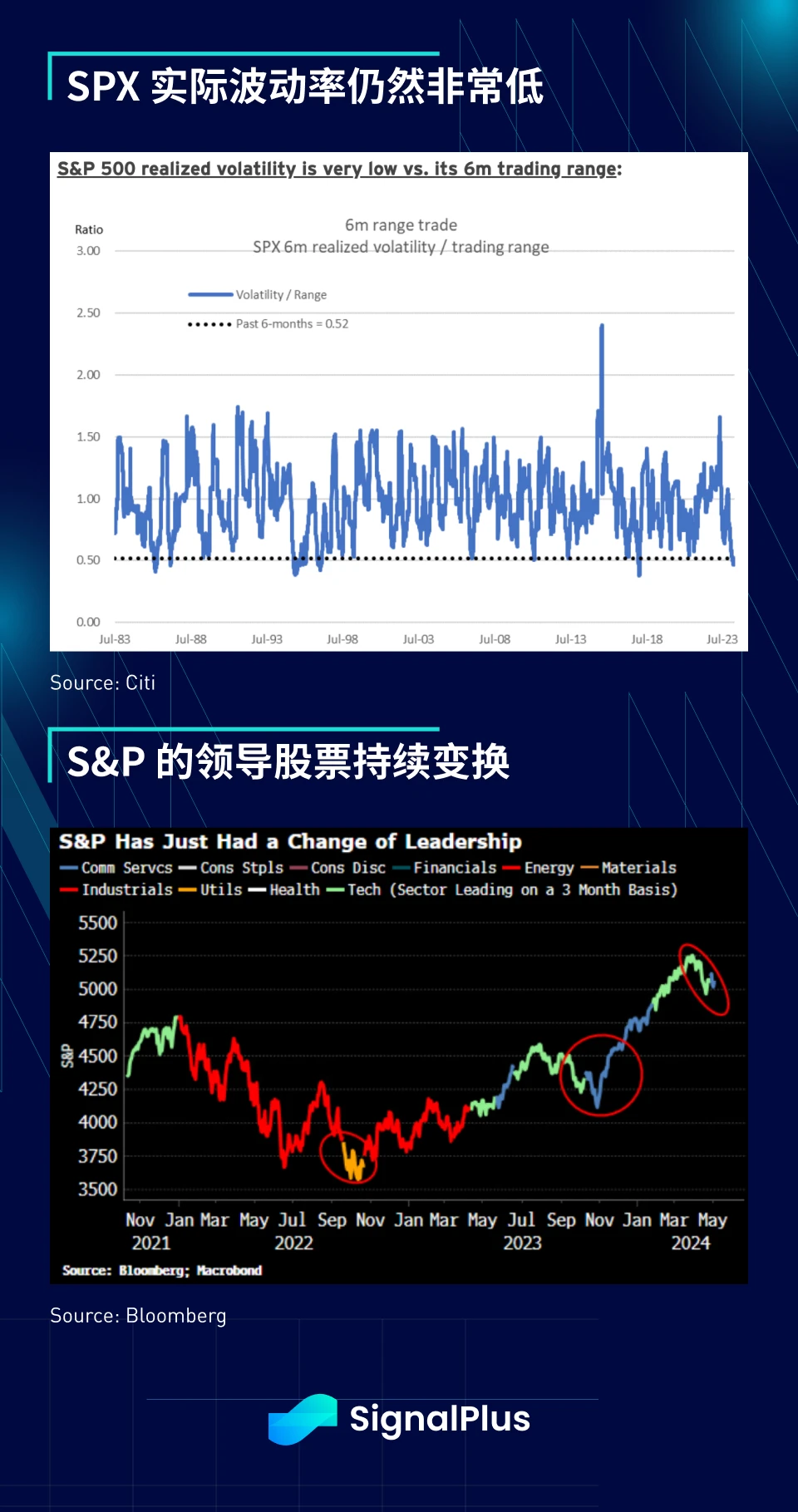
本周宏观数据将相对清淡,美联储官员们的发言可能会比数据本身来得重要,中国将发布货币供给/融资数据,而美国将有 Barkin、Williams、Kashkari、Jerrferson、Collins、Cook 以及 Bowman 等轮流发表政策意见。经过几周的风险清洗,市场头寸相较于 3 月应该更加干净,风险情绪可能已经找到近期底部,至少在数据开始隐含更多“硬着陆”风险前会是如此。随着投资者持续调整投资组合而不是直接抛售股票,SPX 的实际波动率仍然非常低,Bloomberg 报导称,在当前的调整期间,SPX 的领导股票发生变化,虽然比较像是在 ‘magnificient 7 ’ 中轮流替换。预计风险资产有机会从这里开始缓慢爬升。
SignalPlus宏观分析(20240506): 风险资产有机会再次开始缓慢爬升

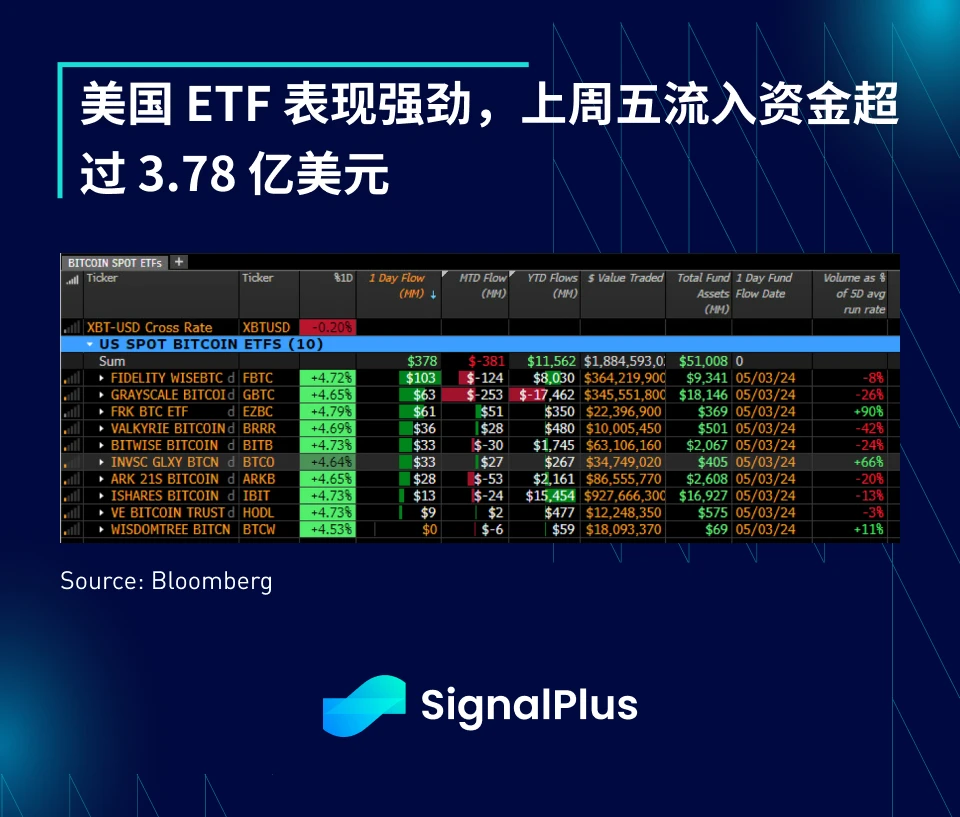
加密货币与宏观情绪的相关性越来越强,随着市场情绪重新转向宽松的美联储/远期利率走低/股市走强,尽管黄金现货表现疲软,上周五加密货币价格出现大幅反弹,周末 BTC 现货价格突破 6.4 万美元。上周五美国 ETF 流入强劲,达 3.78 亿美元,甚至连 Grayscale 也出现了 6, 300 万美元的资金流入。在当前宏观环境下,我们维持风险回报变得更加中性的看法,预计短期的价格回调更有利于逢低买入。
SignalPlus宏观分析(20240506): 风险资产有机会再次开始缓慢爬升

SignalPlus宏观分析(20240506): 风险资产有机会再次开始缓慢爬升

您可在 ChatGPT 4.0 的 Plugin Store 搜索 SignalPlus ,获取实时加密资讯。如果想即时收到我们的更新,欢迎关注我们的推特账号@SignalPlus_Web3 ,或者加入我们的微信群(添加小助手微信:SignalPlus 123)、Telegram 群以及 Discord 社群,和更多朋友一起交流互动。SignalPlus Official Website:https://www.signalplus.com

Lecturas Relacionadas

Chip Stocks Lead U.S. Market Decline: Is AI Trading Being Hit by Both Interest Rates and Returns?

Chip stocks led a broad decline in US markets, with the Nasdaq dropping 2.2% and the S&P 500 falling 1.4%. This selloff reflects a dual challenge for the once-high-flying AI hardware trade: rising interest rate expectations and growing investor impatience for clear returns from massive AI capital expenditures. The pressure was most acute on hardware leaders. Nvidia fell about 4%, dipping below a $5 trillion market cap, while Micron plunged 13.2% ahead of its earnings report. Declines across memory, storage, AI, and mobile chips indicated a sector-wide retreat. The selloff spread globally, with South Korea's KOSPI index dropping nearly 10% as key suppliers SK Hynix and Samsung recorded double-digit losses. Investors appeared to be taking profits from the most crowded trades first. Macro headwinds intensified as market expectations shifted toward a more aggressive Federal Reserve. Forecasts for multiple rate hikes in 2026 pressured high-valuation tech stocks, which rely on long-term growth projections that become less attractive as discount rates rise. Concurrently, investors are scrutinizing the profit potential of the immense AI spending by cloud giants like Alphabet, Amazon, and Meta. While these expenditures drive demand for chips and hardware, the market is now questioning whether AI services will generate sufficient returns to justify the ongoing costs. This adjustment is not necessarily a bubble burst but a recalibration. AI demand fundamentals remain, but the narrative of endless growth can no longer fully offset concerns over higher interest rates and a longer path to profitability. Near-term direction may hinge on Micron's upcoming earnings guidance and incoming inflation data, which will influence both the AI demand outlook and the Fed's policy path. The market is transitioning from blindly buying growth to demanding clearer visibility on returns.

marsbitHace 57 min(s)

Chip Stocks Lead U.S. Market Decline: Is AI Trading Being Hit by Both Interest Rates and Returns?

marsbitHace 57 min(s)

OpenAI's New Paper: How to Train an AI that "Doesn't Deteriorate Under Pressure"?

OpenAI's new paper "Reinforcement Learning Towards Broadly and Persistently Beneficial Models" explores training AI to maintain safe, helpful, and honest behavior even under pressure, in unseen scenarios, or after being fine-tuned for harmful purposes. Moving beyond simple rule-based "don'ts," the research focuses on cultivating "beneficial traits" like honesty, risk-awareness, corrigibility, and transparency. It investigates if reinforcement learning (RL), often prone to "reward hacking" where models exploit loopholes, can instead be used to instill robust, generalized positive behaviors. Researchers created a multi-domain synthetic dialogue dataset covering areas like healthcare and law. They trained a model by replacing 5% of standard RL data with "beneficial trait" data. This model outperformed the baseline in 83% of 53 evaluations, showing average gains of 9.1% in alignment, safety, and helpfulness. Crucially, improvements generalized: a model trained only on healthcare "good behavior" data also performed better in 17 out of 19 non-healthcare alignment tests. The paper also tests "alignment persistence." When subjected to adversarial prompts or harmful fine-tuning, the beneficial trait model showed greater resilience, with smaller performance drops and less "spillover" of bad behavior to unrelated tasks. While not a complete solution, this work suggests a shift from post-hoc correction to proactively shaping robust, principled AI behavior, a critical step for deploying models in high-stakes, complex decision-making scenarios.

marsbitHace 1 hora(s)

OpenAI's New Paper: How to Train an AI that "Doesn't Deteriorate Under Pressure"?

marsbitHace 1 hora(s)

Semiconductor Stock Rebound: Is the Technical Correction Over or a Trend Reversal?

The core of recent semiconductor stock volatility is not about daily price swings, but rather the market questioning whether AI-driven semiconductor pricing has entered a new phase. Following a sharp sell-off in Korean stocks on June 23rd, led by Samsung and SK Hynix, a subsequent rebound is seen more as a technical positioning adjustment rather than a confirmed trend reversal. The key variable is HBM (High Bandwidth Memory), essential for AI chips. Its supply-demand imbalance granted memory makers significant pricing power. The current market focus is on whether this dynamic remains strong enough to justify elevated valuations. All eyes are on Micron's upcoming earnings report. The critical factor is not whether results meet already high expectations, but whether the company's guidance confirms that AI memory pricing power, order visibility, and future margins are still expanding. Micron's outlook will serve as a crucial test for the broader AI semiconductor chain, including Samsung, SK Hynix, and other infrastructure players. The recent bounce appears to be a pre-earnings positioning repair. For it to evolve into a sustained uptrend, concrete evidence is needed that the AI infrastructure expansion cycle's fundamentals—particularly for high-end memory—remain robust and can continue to surpass elevated market expectations. The risk is that strong demand alone may not be sufficient if future guidance hints at peaking momentum or increasing supply-side pressures.

marsbitHace 1 hora(s)

Semiconductor Stock Rebound: Is the Technical Correction Over or a Trend Reversal?

marsbitHace 1 hora(s)

Trading

Spot
Futuros
活动图片