从18倍涨幅到归零,TITANX回天乏术

Odaily星球日报Publicado em 2023-10-31Última atualização em 2023-11-01

Resumo

TITANX并不能复刻当初XEN的成功。

原创 | Odaily星球日报

作者 | Loopy

从18倍涨幅到归零,TITANX回天乏术

还记得 XEN 吗?去年 10 月,XEN 一经推出就引爆了加密市场,参与该项目的地址数量高达百万级,一度让以太坊的 Gas 费用高居不下,Odaily星球日报曾在《谷歌前员工?曾主导归零土狗?解析 XEN 团队背景疑云》一文进行解读。

刚刚过去的这个周末,一款和 XEN 类似但又有所不同的项目近两天突然在加密社区蹿红。

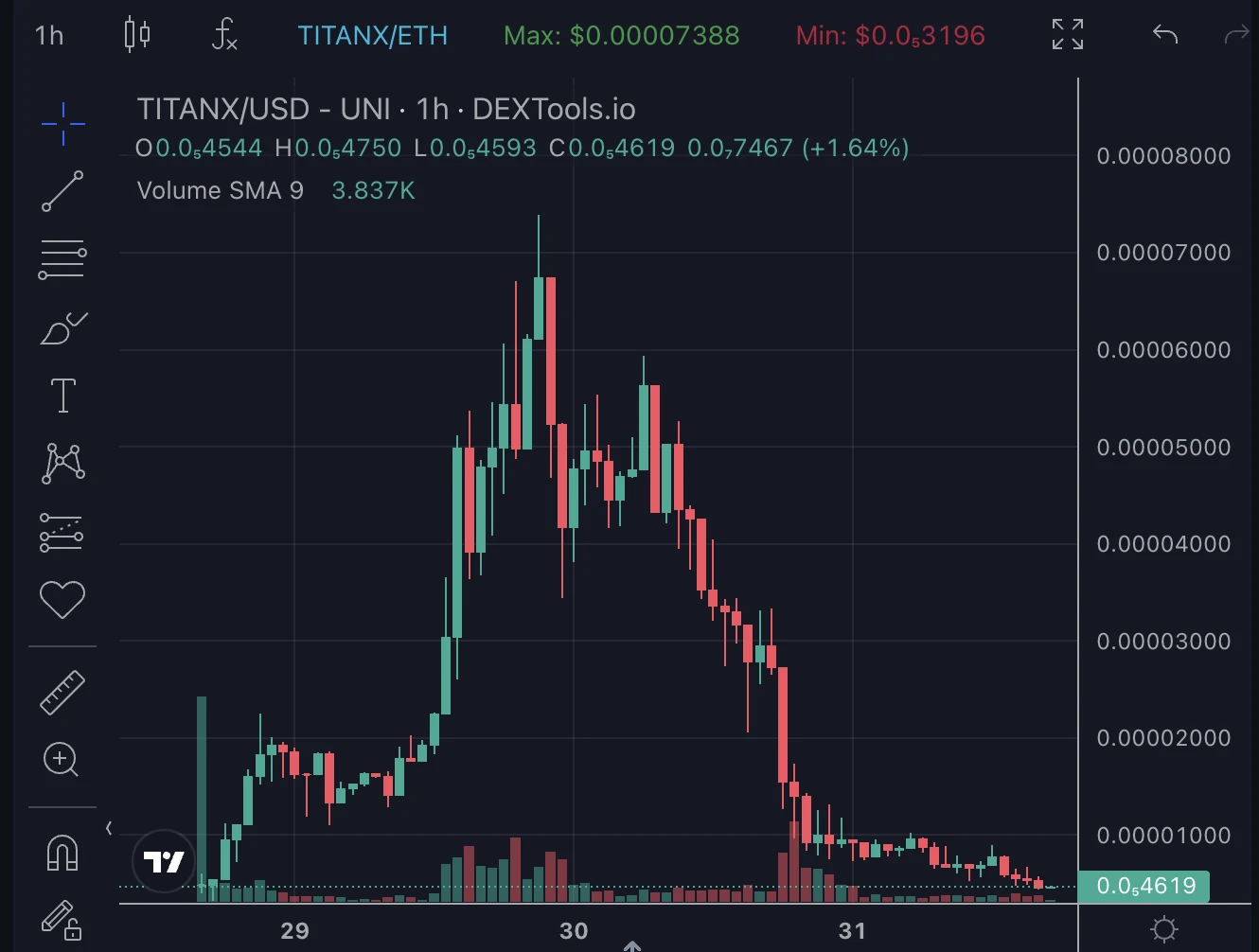
10 月 28 日,TITAN X 代币发布,DEXTOOL 数据显示该代币上线后价格最高涨幅约 1800% 。仅仅持续了一天,TITANX 价格开始大幅跳水,从高点下跌约 94% ,部分社区用户对于回购资金及机制是否生效和正常运作提出了质疑。

从爆红到接近“归零”,TITANX 发生了什么?未来又能否复苏?Odaily星球日报为你带来关于详细解读。

TITAN X:XEN 的再进化

如何理解 TITAN X?概括来说,这一项目的机制非常简洁,几乎和 XEN 一模一样,即消耗 ETH 铸造 TITANX。

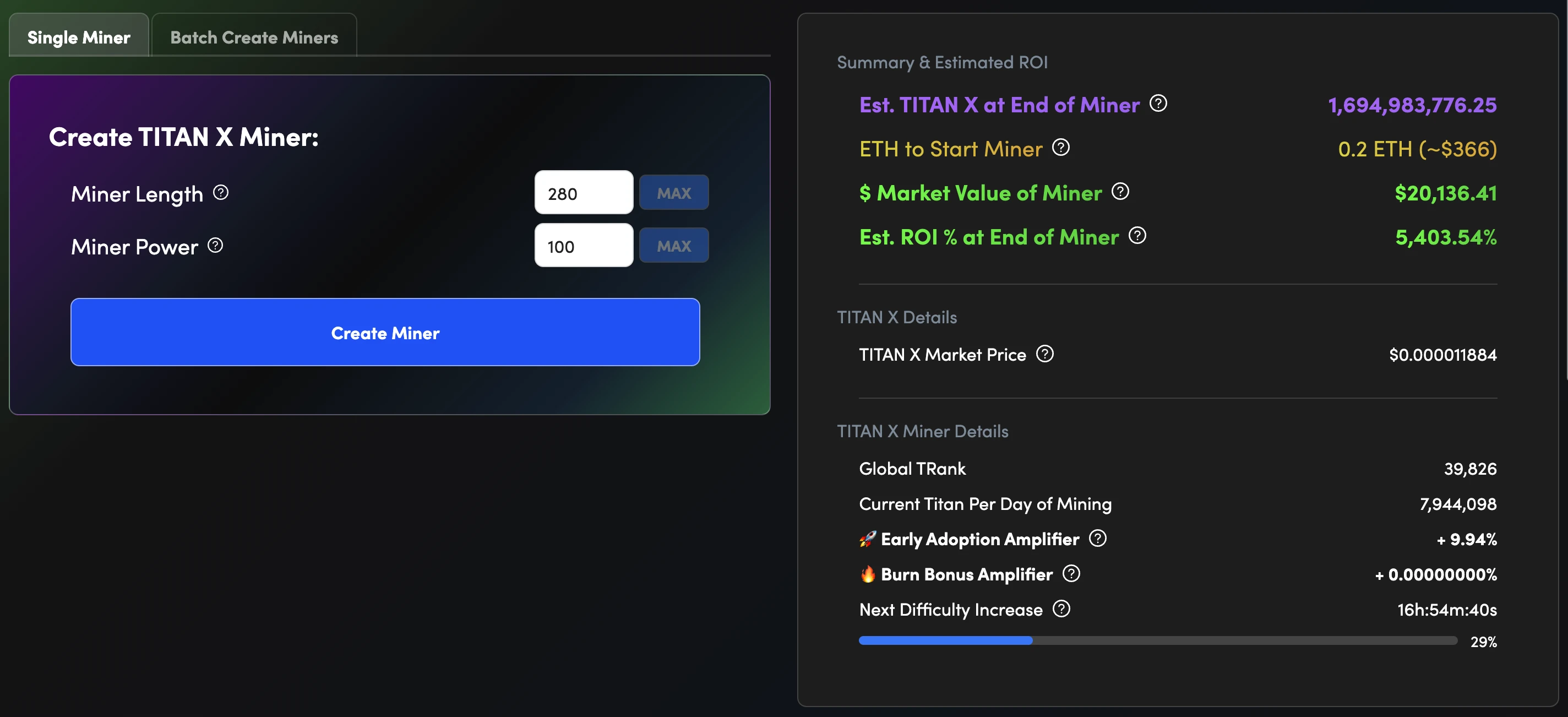
官方文档显示,TITAN X 拥有一种名为“虚拟矿机”的机制;借助虚拟矿机,用户可以通过质押 ETH 挖掘 TITANX。
从18倍涨幅到归零,TITANX回天乏术

而在代币销毁上,TITAN X 使用了一种名为“Proof of Burn 2.0 ”的销毁机制。生态系统内的开发人员可以使用 TITANX 来启动他们自己的代币,当他们这样做时——TITANX 将被销毁。这一机制类似Odaily星球日报此前曾介绍过的 XEN“套娃”式生态

而和 XEN 不同的是,TITAN X 设计了将收益留向项目方、并由项目方回购的机制。根据官方文档,仅 28% 的 ETH 被用于奖励给质押 TITANX 代币 的用户,而 62% 的 ETH 都被发送给 TITAN X 合约用于回购和销毁。

安全性隐忧

昨日,有社区用户质疑,TITAN X 的回购机制并没有有效运作,并存在合约风险。社区用户对这一项目的担忧在于,TITAN X 的回购合约存在 80 ETH 的回购上限,且并不能按时运作。

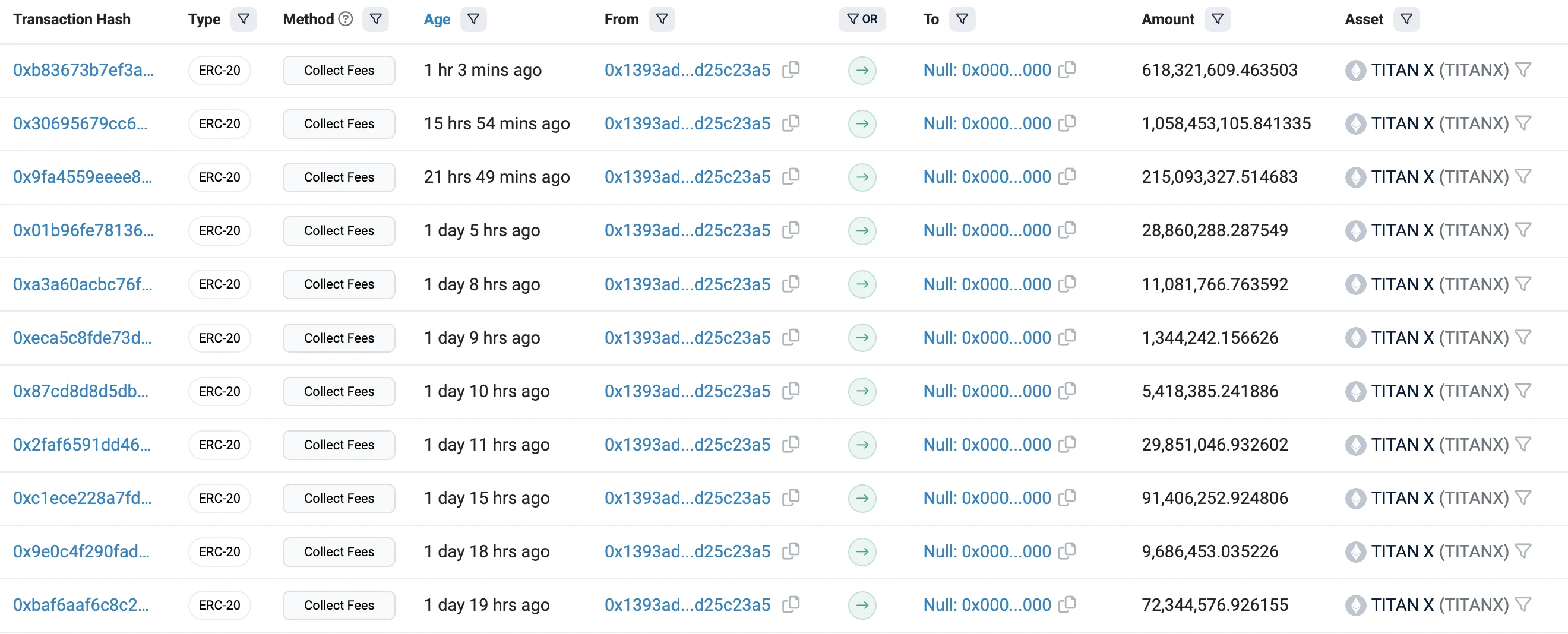
Odaily星球日报发现,该项目的回购操作也并非由合约“自动”执行,仍然需要项目方通过其控制的地址人工进行调用操作。以此来出发合约的回购操作。

此外,合约的安全性也缺乏保障。因此,项目方存在作恶的可能。在查询链上项目之后发现,在 TITANX 代币大跌期间,回购曾一度中断超过 7 个小时。
从18倍涨幅到归零,TITANX回天乏术

昨日稍晚间,TITANX 创始人 Jake Sharpe 于 X 平台发文表示,可能会直播回购和销毁 TITANX。对于回购限额,他也给出了回应,表示回购机制从一开始就设有限额,以防止滥用并培育健康的市场,几个月后或将取消回购上限。

链上数据显示,在中断 7 个小时后,目前 TITAN X 的回购地址已经恢复了回购销毁的操作,目前地址内有约 4700 枚 ETH。

归零之后,驶向何方?

尽管目前回购销毁已经恢复,但 TITAN X 已经失去了社区的信任。DEXTool 数据显示,TITANX 币价已跌至“归零”,目前其币价较最高点已经跌去约 94% 。
从18倍涨幅到归零,TITANX回天乏术

链上数据显示,随着 TITANX 的价格下跌,其链上交易数量也极具下跌。由于这一代币需要靠 mint 来生产,因此这也意味着用户数量的快速下跌。
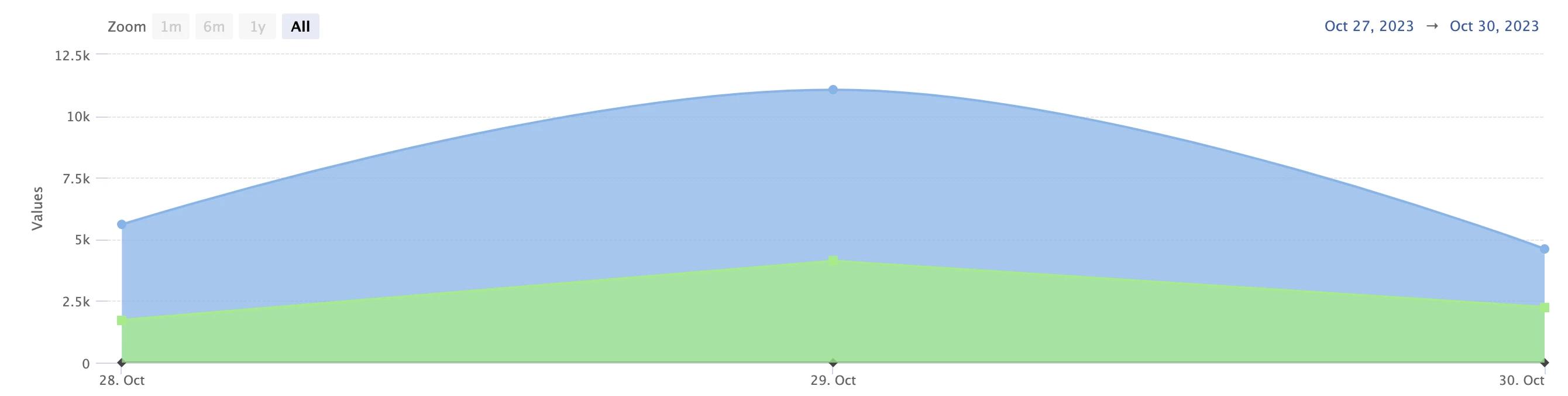
从18倍涨幅到归零,TITANX回天乏术

(TITANX 铸造合约的 Tx 数量)

但代币独立地址数并未显著降低,目前 TITANX 拥有约 2700 个独立地址,最高峰值时也仅为 2804 个独立地址。

链上活跃度的降低,也让 TITAN X 的铸造收益率快速回升。但已经失去社区信任的 TITAN X 的,却有着诸多悬之未觉的隐忧:项目的合约设计,究竟是否安全?项目方是否存在“Rug”的能力?

另外,与 XEN 的盛况和地址数量相比,TITANX 的链上数据仍与 XEN 早期存在着极大的差距。XEN 曾一度“带火”了一个赛道,大量“仿盘”纷纷涌现;而在机制上有所优化的 TITANX,目前来看并不能复刻当初 XEN 的成功。

尽管 TITANX 在“虚拟矿机”的实验中迈出了自己的一步,但目前来看,TITANX 恐怕依然回天乏术。能否重拾社区信心、重新获取热度和流量, 这对 TITANX 来说是一个近乎不可能完成的挑战。

Leituras Relacionadas

Bitcoin's 'Rally Ends,' Officially Entering the Later Stage of a Bear Market?

Bitcoin prices declined 13% this week, reversing the recent rebound and signaling a likely transition into the later stages of a bear market. Key on-chain metrics deteriorated, with the short-term holder cost basis falling below the Realized Price—a pattern last seen in early 2022, characteristic of bear market maturity. The rally to ~$82k proved to be a bear market bounce, as evidenced by the 90-day realized profit/loss ratio failing to sustain above the bullish threshold of 2. Daily realized losses surged to $1.35B, including significant selling from long-term holders who accumulated near cycle tops, indicating ongoing supply redistribution. Price was rejected almost precisely at the aggregate US spot ETF cost basis of ~$83k, turning that level into resistance and leaving the average ETF investor underwater again. Spot market selling pressure intensified, with the 7-day volume delta turning significantly negative to its weakest level since February. While a major long liquidation event cleared over $400M in leverage, spot demand has not yet stepped in to absorb the resulting supply. Options markets continue pricing in higher future volatility (elevated volatility risk premium) and maintain a skew toward put options, reflecting persistent demand for downside protection, though not yet panic. Overall, market structure remains fragile. Sustained recovery likely requires a reclaim of the ETF cost basis, a shift back to positive spot demand, and a slowdown in realized loss-taking. Until then, the market risks further downside or extended consolidation within the broader bear trend.

Foresight NewsHá 55m

Bitcoin's 'Rally Ends,' Officially Entering the Later Stage of a Bear Market?

Foresight NewsHá 55m

How Risky is the "Death Spiral" of MSTR and STRC?

Summary: This article explores the perceived "death spiral" risk between MicroStrategy (MSTR), its Bitcoin holdings, and its perpetual preferred stock (STRC), drawing comparisons to the LUNA-UST collapse. While both systems feature price anchors, high yields for holders, and potential feedback loops, their core mechanisms differ fundamentally. The MSTR-STRC structure relies on continuous financing to sustain its high dividend payouts, primarily through stock ATM offerings. A negative feedback cycle could occur: falling MSTR stock price makes raising equity capital harder, increasing pressure to sell Bitcoin, which undermines STRC confidence and further depresses MSTR. However, unlike LUNA-UST's automated, direct linkage, the MSTR-STRC loop is weaker and has brakes: STRC dividends can be deferred or rates lowered, and STRC holders have a $100/share liquidation preference in bankruptcy, providing a price floor. The company's sustainability hinges on its ability to continue financing. Its current ~$900 million USD reserves cover only about 6.3 months of its ~$1.71 billion annual interest/dividend burden. The next six months are critical, aligning with both the potential bottom in Bitcoin's four-year cycle and the depletion timeline of its reserves. While a LUNA-style catastrophic collapse is deemed highly unlikely due to structural differences, the key question is whether MicroStrategy can navigate this period through healthy deleveraging to restart its capital engine.

Foresight NewsHá 1h

How Risky is the "Death Spiral" of MSTR and STRC?

Foresight NewsHá 1h

Trading

Spot
Futuros
活动图片