16 Days, He Turned 'The Little Prince' into a 3D Game Using Opus 5.5, Now You Can Explore the Planets from the Book

marsbitPublished on 2026-10-16Last updated on 2026-10-16

Abstract

In just 16 days, developer Sac created a playable 3D narrative game titled "The Little Prince: Across the Stars" based on the classic book. Using a combination of AI tools—primarily Opus 5.5, 3D model generator Tripo, and software Blender—he transformed the story's planets into explorable 3D environments. The game allows players to step into and navigate scenes from the tale, such as the desert, cloudscapes, and the little prince's home. The project demonstrates how solo creators can leverage modern AI and 3D tools to rapidly prototype interactive experiences. Sac's process involved generating assets, integrating movement and camera controls, and scripting interactive story sequences. The current demo, accessible via a dedicated website with multi-language support, has already garnered player feedback, including bug reports which help refine the experience. Sac plans to open-source the full project and share a detailed development breakdown. This case highlights the potential for individual developers to bring imaginative worlds to life by breaking down complex game development into manageable steps with the aid of generative AI tools.

He spent 16 days turning 'The Little Prince' into a playable 3D narrative game.

On October 13th, developer Sac announced his creation on X.
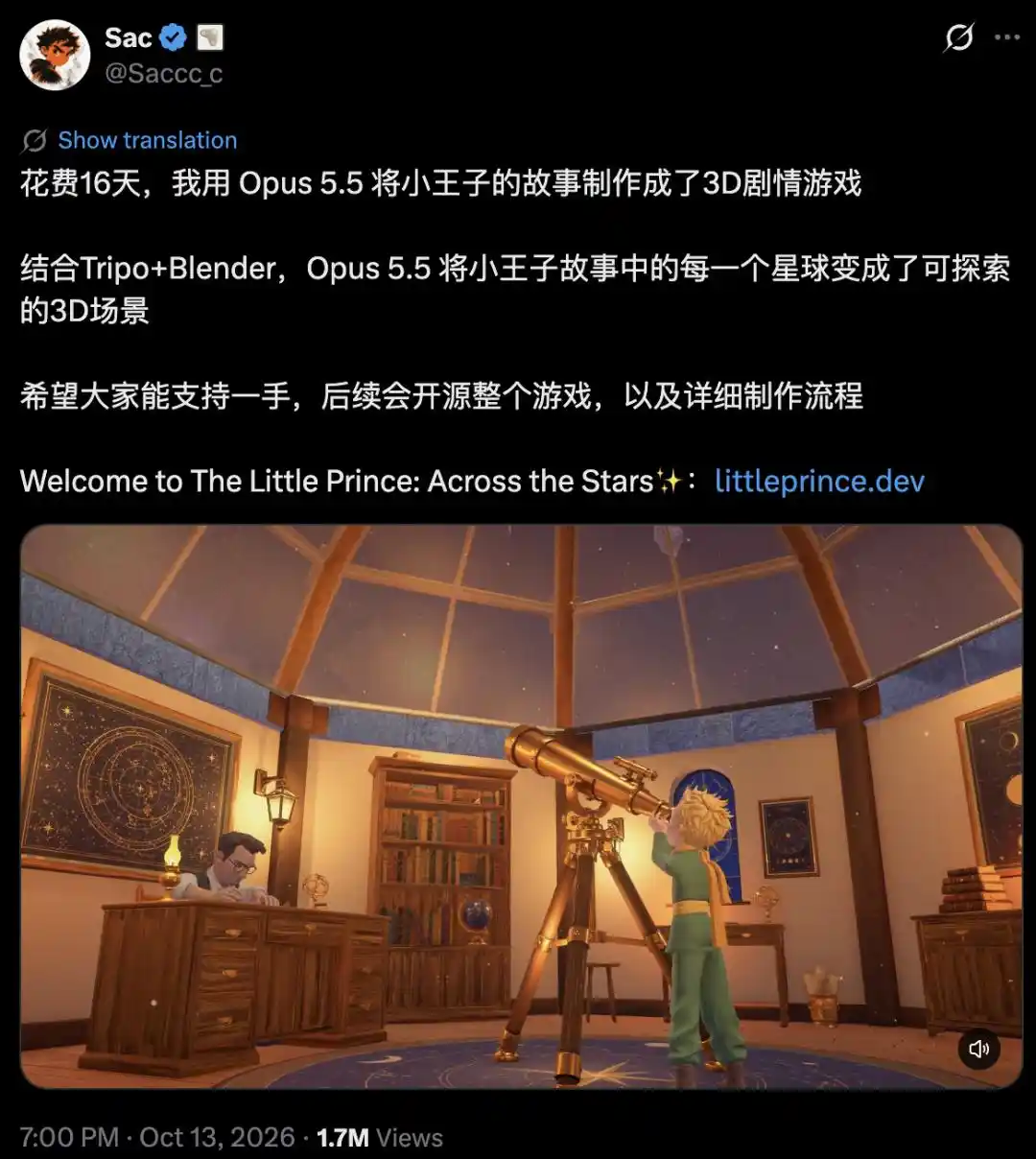
According to Sac, he used Opus 5.5, combined with the 3D model generation tool Tripo and 3D production software Blender, to transform every planet from the story into explorable 3D scenes.

The game is named 'The Little Prince: Across the Stars' and already has an independent website portal.
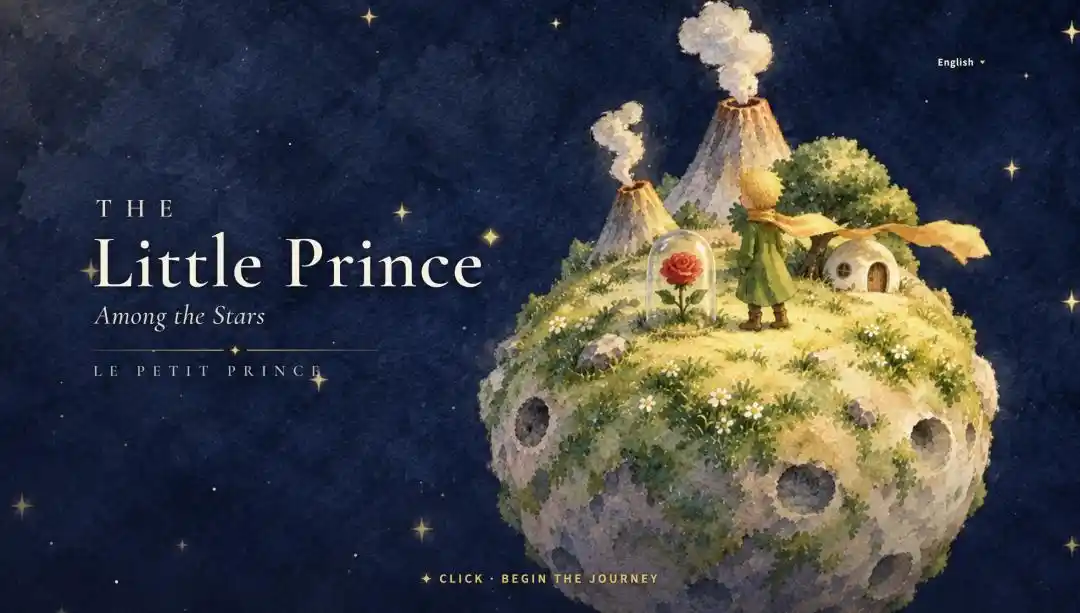
For fans of the book, just the ability to personally walk into those places once imagined in their minds is enough to be exciting.

The Little Prince's Planet, Now Open for Exploration

First, let's look at the demo shared by the creator.

The blond Little Prince stands among grass and rocks, with a sea of clouds spreading out in the distance.
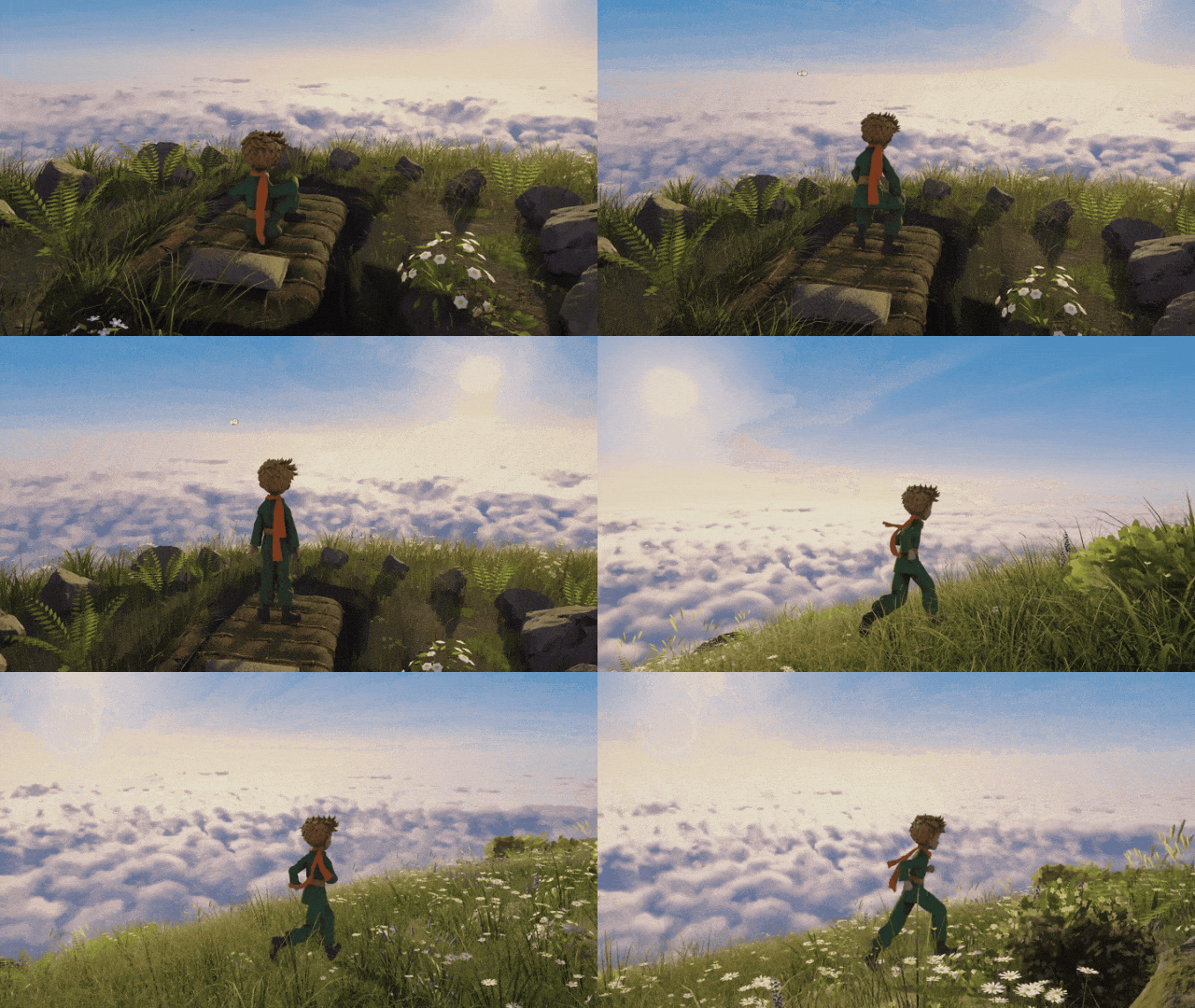
The camera moves indoors, revealing a wooden ceiling, a map hanging on the wall, and bookshelves lining the sides.
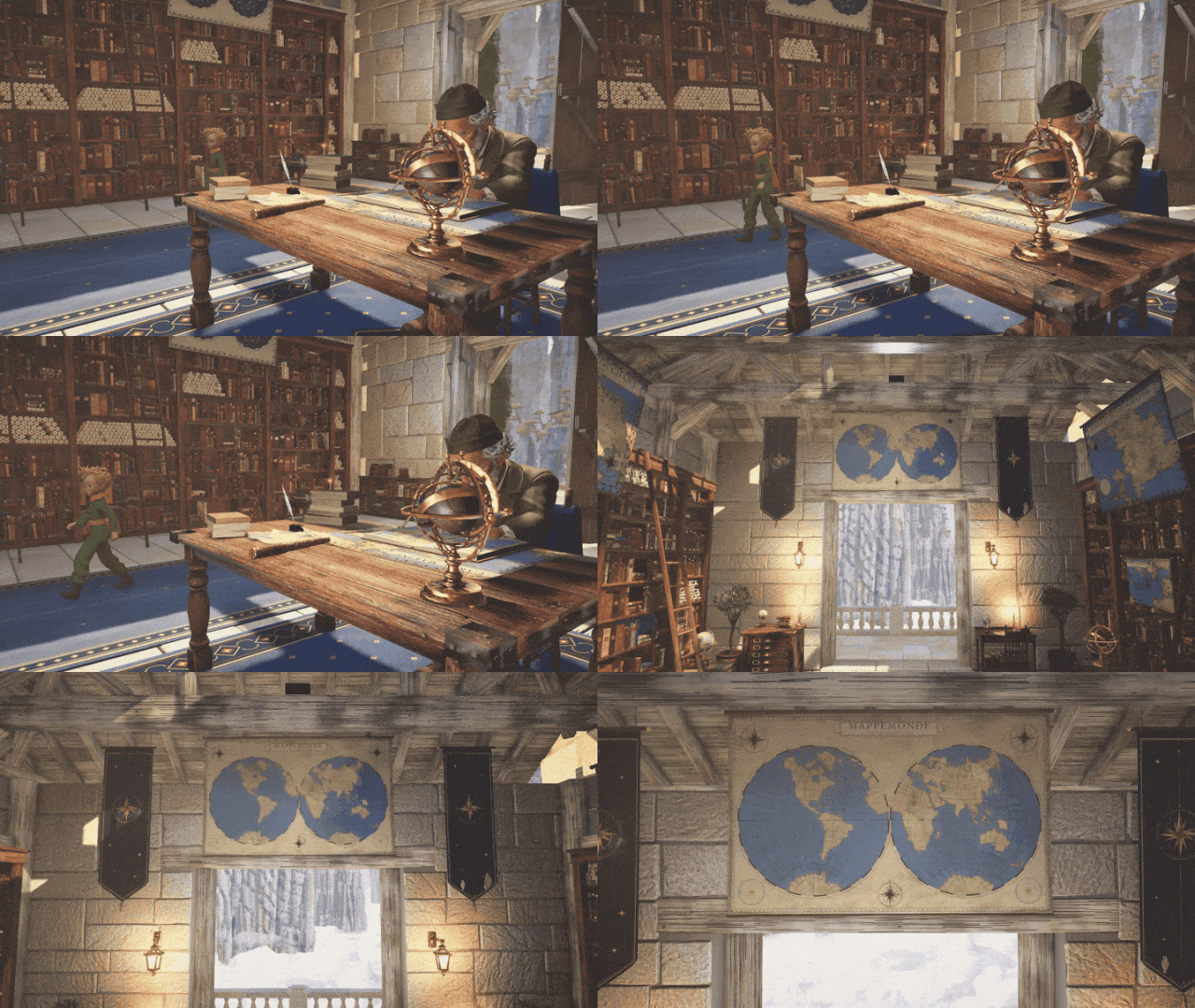
In another sequence, the Little Prince runs on sandy ground, his shadow moving with his footsteps.

From the sea of clouds to the room, and then to the desert, the characters and environments from the book now have concrete form, lighting, and space.

For those who have read 'The Little Prince,' this adaptation easily sparks curiosity:

What does that fairy-tale world remembered from the pages look like when transformed into a game?

When reading, we follow the text to paint that world in our minds.

In the game, we can become the Little Prince and explore within the 3D scenes: where to go, where to stop, which corner to examine first—all are up to us.

A familiar story thus gains a new, personally engaging way to be experienced.

However, after building these scenes, there's an even more interesting challenge:

How to turn the book's memorable plots into interactive experiences that move players?

A single action, an encounter, or even lingering a bit longer in a certain place could all influence how the game tells its story.

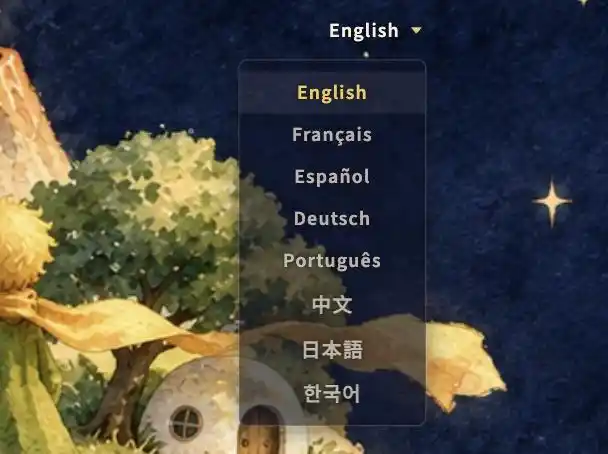
The official website currently lists 8 language options, including Chinese, English, and Japanese, providing an entry point for readers of different languages to approach and explore this world.
One Person Making a Game, Supported by Multiple Tools

The most intriguing question is: How did he make this 3D game in 16 days?

Turning a story into a 3D game requires far more than just getting characters and scenes on screen:

Characters need to move, and the camera needs to follow;

Characters must trigger storylines when reaching specific locations;

The game must provide appropriate feedback when a player completes an action...

The tool combination Sac explicitly named is Opus 5.5, Tripo, and Blender.

Among them, Tripo can generate 3D models from text or images, helping creators transform ideas for characters, objects, etc., into 3D assets.

Blender is a suite of 3D production software used for modeling, texturing, animation, and rendering. Generated models can be imported for further adjustment and production.

By combining Opus 5.5 with these tools, Sac ultimately created this publicly accessible game project.

Furthermore, game production has another easily overlooked difficulty: after separately creating characters, scenes, actions, and storylines, they must all work together seamlessly for the game to run smoothly.

A character might look beautiful alone, but appear out of scale or stylistically mismatched when placed in a scene. An animation might look natural in isolation, but feel awkward to players when combined with a follow camera.

These problems only become apparent after running the build, requiring repeated discovery and adjustment.

A complete game also takes shape step by step through solving these specific problems.

The biggest inspiration this case offers individual creators is:

With the help of large models and 3D tools, one person can also gradually turn an idea into an experienceable work.

First, set up a scene, get characters moving inside, then connect more scenes and plotlines.

By breaking down the massive production task into small goals, testing, and adjusting along the way, the work can gradually take shape.

Players Have Already Started Watering Flowers, and Have Started Reporting Bugs

Soon after the release, Sac received feedback from players.

X user @0xLuo expressed amazement after trying it, finding it hard to imagine such a polished 3D game was made in just 16 days.

However, he also discovered a minor bug: after completing the flower-watering task, the forward/backward directions for the W and S keys and the left/right directions for the A and D keys were reversed, though he wasn't sure of the exact trigger conditions.

Once players get their hands on it, issues not found during development can surface. Different exploration paths, key operations, and task sequences can all expose new bugs.

More importantly, while the visuals might attract clicks, whether the gameplay and story can retain players is up to them to decide.

The website also notes that the current version requires a browser supporting WebGPU graphics technology. If you want to try it, you need to ensure your browsing environment meets the requirements.

After the game's public release, adapting it to different devices and browsers to allow more people to play smoothly is also work the creator needs to continue.

After Open-Sourcing, the 16-Day Process Becomes Even More Worth Seeing

Sac mentioned in the original post that he plans to open-source the entire game later and publish detailed production documentation.

For others who also want to try making 3D games, these materials might provide actionable steps to reference:

How to build planets, adjust character models, connect character actions to the plot, and troubleshoot bugs.

If he can also explain which steps required repeated trial and error, which details needed his own judgment, and publicly share tool costs and time spent on each stage, newcomers could more clearly estimate the time, effort, and funds they themselves need to invest.

The exciting aspect of this project is that one person, with the help of AI and 3D tools, turned a familiar fairy tale into a game that others can enter and personally experience.

If the open-source plans proceed smoothly, the experience accumulated over these 16 days could potentially help even more creators take their first step.

Some might want to create a planet, others to recreate a small town, and some to turn a story they've been writing for a long time into a world they can walk into.

If it were you, what kind of game would you most want to make using AI?

References:

https://x.com/Saccc_c/status/2109962425512734739

https://littleprince.dev/

This article is from the WeChat public account "新智元" (ID: AI_era), author: ASI启示录

Related Questions

QWhat is the main achievement of the developer named Sac?

ASac created a 3D narrative game based on 'The Little Prince' in just 16 days.

QWhat is the name of the game developed by Sac?

AThe game is named 'The Little Prince: Across the Stars'.

QWhat were the primary tools Sac used to develop the game?

ASac primarily used Opus 5.5, the 3D model generation tool Tripo, and the 3D software Blender.

QWhat are some challenges mentioned in turning a story into an interactive 3D game?

AChallenges include ensuring character movement, camera following, triggering plot at specific locations, providing player feedback, and coordinating different assets like characters, scenes, and actions to work smoothly together.

QWhat did Sac announce regarding the future of this project?

ASac announced plans to open-source the entire game and share a detailed production process.

Related Reads

Democrats Plan to Investigate Apple, Meta and Musk, Trump's Silicon Valley Allies Face 'Reckoning'

Democrats, after winning majorities in both chambers of Congress, are rapidly setting investigative priorities targeting Trump's Silicon Valley allies. The House is preparing to examine Trump's use of Musk's AI chatbot Grok in planning a military operation to abduct Venezuelan President Maduro; Apple and Meta are under scrutiny over an ICE tracking app and local government data center agreements, respectively. The probe scope may extend well beyond these three companies, reviewing major corporations' most controversial business activities over the past two years and their ties to the Trump administration. Since Trump's second term, tech billionaires and executives have frequently attended White House events, donated to his ballroom project, and given gifts, while companies backed by Trump family members and Wall Street executives received billions in government funding. Groundwork Collaborative labeled Big Tech, private prison operators, and natural gas firms as "high-value" targets. Even before formal investigations begin, companies are preparing: Washington law firms are holding emergency meetings to advise founders and executives on congressional inquiries, and many are seeking to become Musk's personal counsel, anticipating subpoenas and high-profile legal work. Some VCs advise startups to close financing before year-end in case executives are called to testify or Pentagon spending shifts. Incoming House Oversight Committee Chairman Robert Garcia warned companies to "hire lawyers," and Senator Ed Markey said tech executives will need plenty of paper for subpoenas. Lawyers expect Democratic control of Congress to accelerate and intensify investigations, with detailed corporate inquiries potentially more effective than letters to Trump agencies since companies are more likely to respond and disclose dealings with officials. Apple, Meta, X, and Musk did not immediately respond to requests for comment. Covington & Burling lawyer Robert Kelner said the investigative wave is all but certain: "We've been telling clients, winter is coming. Now, winter is here."

marsbit9m ago

Democrats Plan to Investigate Apple, Meta and Musk, Trump's Silicon Valley Allies Face 'Reckoning'

marsbit9m ago

Anthropic's Strongest Model 4 Revealed for the First Time: RSI Soars at 2x Speed

Anthropic's unreleased "Model 4," reportedly trained between September and October, has surfaced via a third-party METR evaluation, scoring 178.6 on Anthropic's internal Aggregate Evaluation Capability Index (AECI)—outpacing public models Opus 5.5 (174.5) and Mythos 5.1 (172.5). Model 4 passed all 15 benchmarks at above 50% accuracy, a first compared with Opus 4.6 nine months earlier; removing three flawed benchmarks would push its score to 179.7. METR's 11-week investigation of internal data concludes Anthropic's model improvement has roughly doubled, with an inflection point in October 2025: AECI growth accelerated from about 15 points per year to 29 points per year (1.9x), meaning one year now covers what previously took two. Notably, METR estimates about 80% of this acceleration stems from AI assisting its own R&D rather than increased training compute, researcher headcount, or inference scaling—Claude is effectively helping build a stronger Claude. Internal employee surveys report self-assessed productivity gains rising from 1.3–1.4x in spring 2025 to about 5x by June and roughly 12x by October with Model 4, as researchers shift from using Claude as autocomplete to orchestrating many parallel agents, cutting idea-to-experiment time by up to 80%. METR researcher Ryan Greenblatt calls the report a signal pointing toward ASI within one to two years. Roughly 100 pages were submitted to Anthropic, but much of the most sensitive evidence—including a table forecasting future model capability scores—was redacted in the public version. METR sees no obvious bottleneck in algorithms, compute, or data over the next 12 months, and no brake in sight.

marsbit28m ago

Anthropic's Strongest Model 4 Revealed for the First Time: RSI Soars at 2x Speed

marsbit28m ago

US 401(k) proposal leaves door open to altcoins, but hurdles remain

A proposed US Labor Department rule could allow smaller cryptocurrencies (altcoins) in 401(k) retirement plans, but experts say they face more hurdles than Bitcoin and Ether. The rule, now under White House final review, aims to ease offering alternative investments like crypto while giving employers and plan managers more legal protection. It doesn't specify which digital assets qualify or set a minimum market cap, but directs plan managers to weigh six factors: performance, fees, liquidity, valuation, benchmarks and complexity. Experts expect Bitcoin and Ether to be offered first given their established markets and investment products. Teresa Goody Guillén of Bellementis PLLC said altcoins aren't automatically excluded, but plan managers must show their choices are prudent, noting "big doesn't mean suitable, and small doesn't mean disqualified." Bernardo Brites of Trace Finance said most tokens fail on track record or benchmark, and the practical test is whether a plan committee can document a reliable daily price from a regulated wrapper. ETFs and managed funds will likely precede direct crypto holdings, fitting existing custody and recordkeeping systems. Brites expects some crypto options by 2027, ETFs at larger employers later that year, and wider availability by 2028, noting the rule changes legal risk, not infrastructure. Legal uncertainty remains: the proposal offers some lawsuit protection but doesn't prevent suits, and future administrations could reverse the rule, potentially making employers hesitant.

cointelegraph5h ago

US 401(k) proposal leaves door open to altcoins, but hurdles remain

cointelegraph5h ago

Russia finalizes crypto trading rules ahead of Nov. 17 rollout

Russia’s central bank has finalized rules allowing exchanges to offer Bitcoin, Ether and Tether USDt to retail investors starting Nov. 17. Non-qualified investors can buy up to 300,000 rubles (about $3,700) in crypto annually through each intermediary, including brokers, asset managers and crypto exchange providers. Qualified investors face no purchase limits, but all investors must pass a mandatory test before trading. The directive builds on legislation signed by President Vladimir Putin on Aug. 4 establishing a regulated crypto market under central bank oversight. On Aug. 11, the Bank of Russia published draft regulations identifying BTC, ETH and USDT as eligible for public trading based on market capitalization, average daily trading volume and at least five years of price history on foreign exchanges. The law took effect Sept. 1, and the Bank of Russia later authorized Sberbank, the country’s largest bank, to offer crypto exchange services in October. Moscow Exchange, Russia’s largest securities exchange and a publicly traded company, is preparing to launch crypto trading on Dec. 1, initially offering the three cryptocurrencies through pilot transactions. While expanding regulated access, Russia is also tightening restrictions outside those channels. Direct peer-to-peer crypto trading will be prohibited starting July 1, 2027, transfers from regulated digital accounts to self-custody wallets are already banned, and cryptocurrency cannot be used to pay for goods and services.

cointelegraph6h ago

Russia finalizes crypto trading rules ahead of Nov. 17 rollout

cointelegraph6h ago

Trading

Spot
活动图片