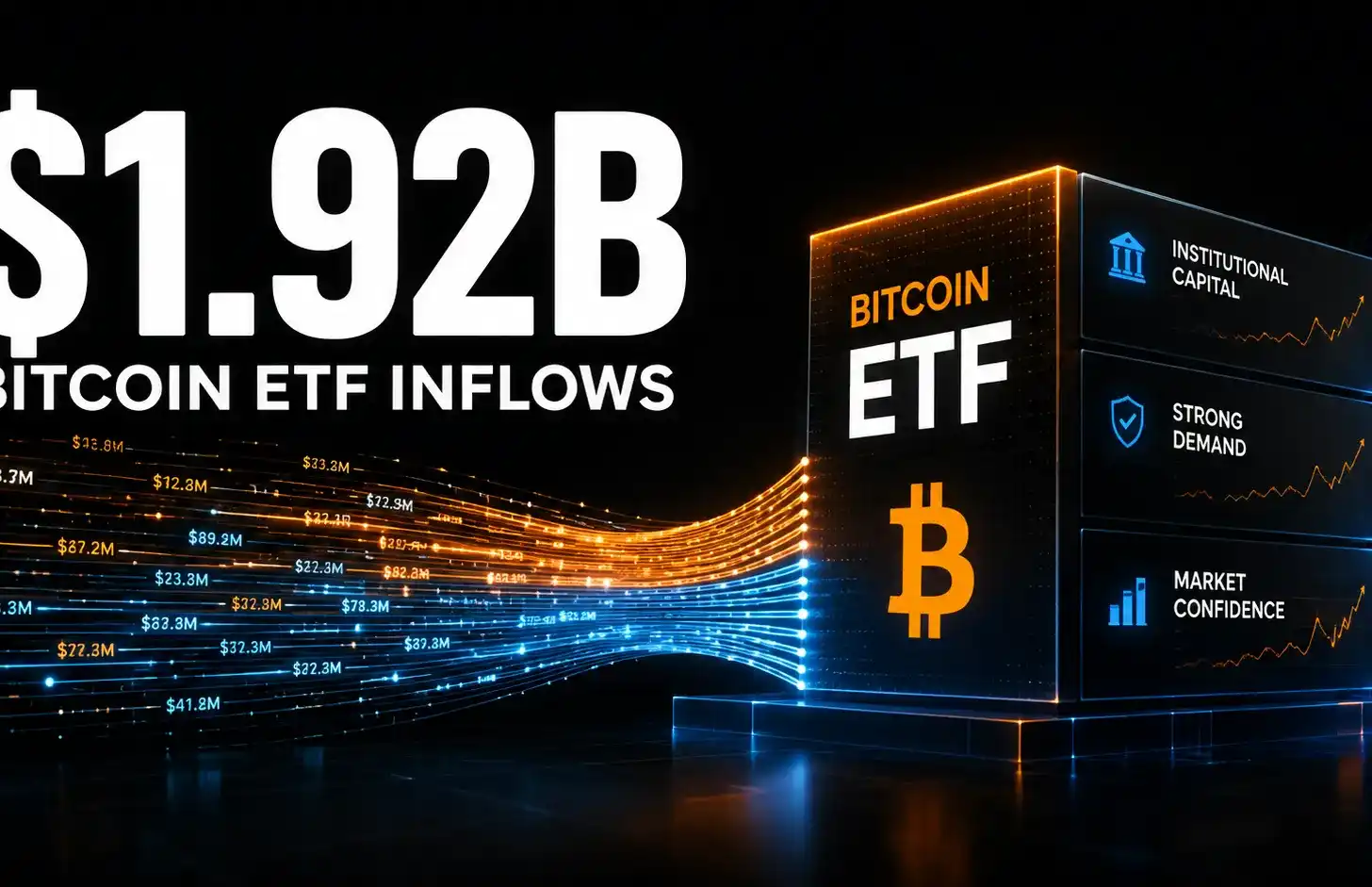
今日币价07/07:比特币暴跌至3万美元,山寨币和美股火热,因投资者担心美联储将继续加息

Tap Chi BitcoinОпубліковано о 2023-07-07Востаннє оновлено о 2023-07-07

Анотація

7 月 6 日华尔街开盘后,比特币继续波动,当年高点被回调所取代。
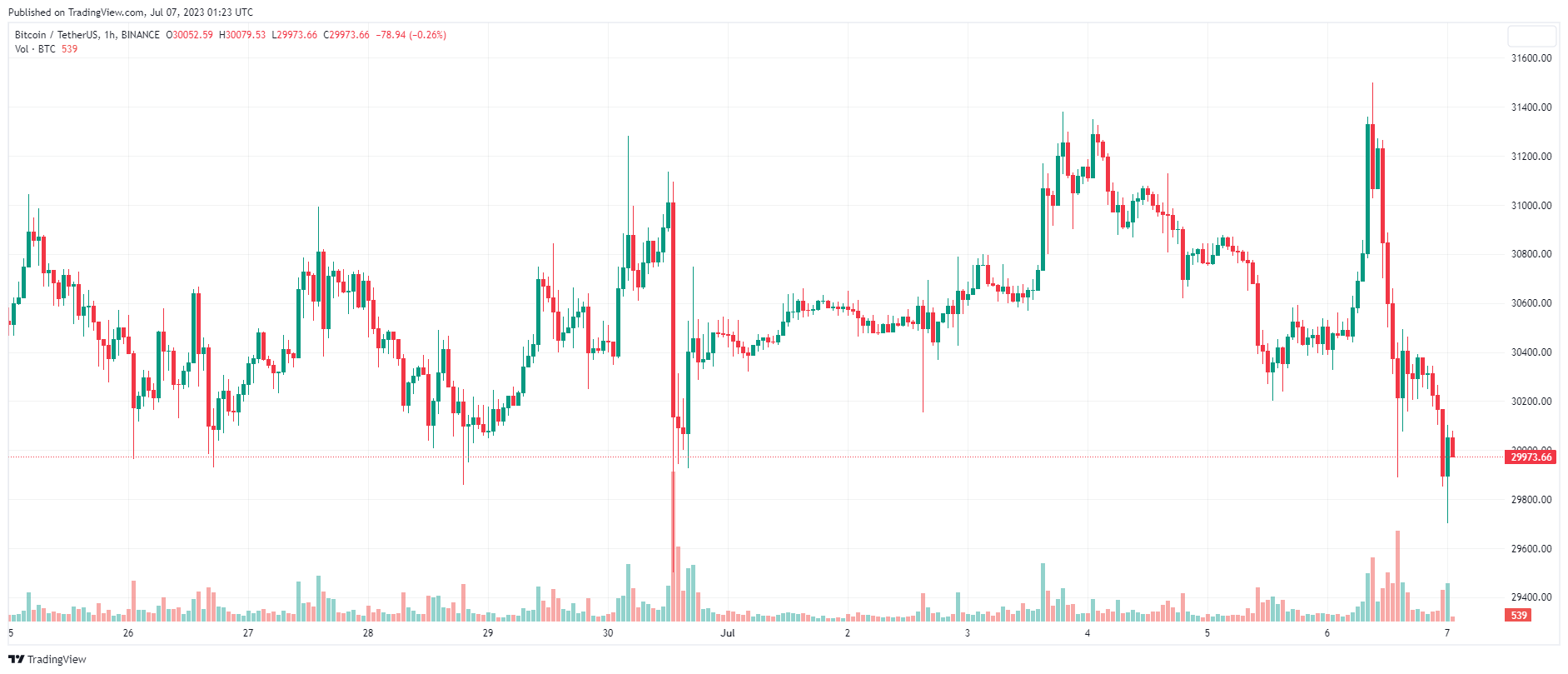
7 月 6 日华尔街开盘后,比特币继续波动,当年高点被回调所取代。

BTC 价格图表 – 1 小时 |来源:TradingView

周四(7月6日)美国股市下跌,好于预期的就业数据引发投资者对未来利率走势的担忧。

截至收盘,道琼斯指数下跌366.38点(相当于1.07%)至33922.26点。标准普尔 500 指数下跌 0.79%,至 4,411.59 点。纳斯达克综合指数下跌0.82%至13,679.04点。周四标记道琼斯指数和标准普尔 500 指数自 2023 年 5 月以来的最大跌幅。

三大股指都将创下单周跌幅纪录,仅剩周五交易日。道琼斯指数本周迄今已下跌 1.4%,标准普尔 500 指数和纳斯达克综合指数分别下跌 0.9% 和 0.8%。

ADP数据显示,6月美国私营部门新增就业岗位49.7万个,标记2022年7月以来最强劲的月份。 6 月份的就业增长是道琼斯预测的 220,000 个就业岗位的两倍多,远好于 5 月份的 267,000 个。两年期美国国债收益率上升至交易 16 年来的新高。

ADP 数据通常不可靠,并且被认为比其他就业数据波动性更大,该数据发布于周五美国官方 6 月就业报告(7 月 7 日 07)之前。经济学家预测美国经济上个月创造了 24 万个就业岗位,略低于 5 月份新增的 33.9 万个就业岗位。

然而,投资者现在可能期待更热门的数据,导致美联储(Fed)在6月会议暂停后,本月恢复加息。CME Group的FedWatch工具,投资者预测美联储加息的可能性为92%在月底的会议上。

另一方面,根据美国劳工部的报告,5 月份招聘人数下降幅度超出预期。这一数据可能会给稀缺的劳动力市场至少有所缓解带来希望。

与此同时,周四(7月6日)金价跌至近一周来最低水平,好于预期的美国私营部门就业报告提振了对美联储将加息的预期更多,从而推高美国债券收益率。

截至周四交易日,现货黄金合约下跌0.38%至每盎司1,910.01美元。黄金期货下跌 0.6%,至每盎司 1,915.4 美元。

周四(7月6日)油价基本持平,因市场权衡美国原油供应更加稀缺以及美联储加息可能抑制能源需求。

截至收盘,布伦特原油合约下跌 13 美分,至每桶 76.52 美元,前一交易日上涨 0.5%。 WTI 合约小幅上涨 1 美分,至每桶 71.8 美元,前一交易日上涨 2.9%,追赶本周早些时候布伦特原油价格。

TradingView 的数据追踪了 BTC 价格走势,当时其价格徘徊在 30,000 美元大关附近。

当天早些时候,比特币上涨至 2022 年中期以来的最高水平,但随着最大的加密货币回吐了所有涨幅,这场盛会很快就结束了。

BTC/美元甚至在 29,701 美元附近创下了 7 月新低。

受欢迎的交易员 Jelle 是关注价格重返 28,000 美元区间可能性的人士之一,他认为这是一个合适的切入点。

交易公司 8 的创始人兼首席执行官 Michaël van de Poppe 在部分评论中写道:“比特币已回到底部,需要转为看涨,否则可能会出现 28,500 美元的情况。市场预计在积极的失业数据的支持下加息。”
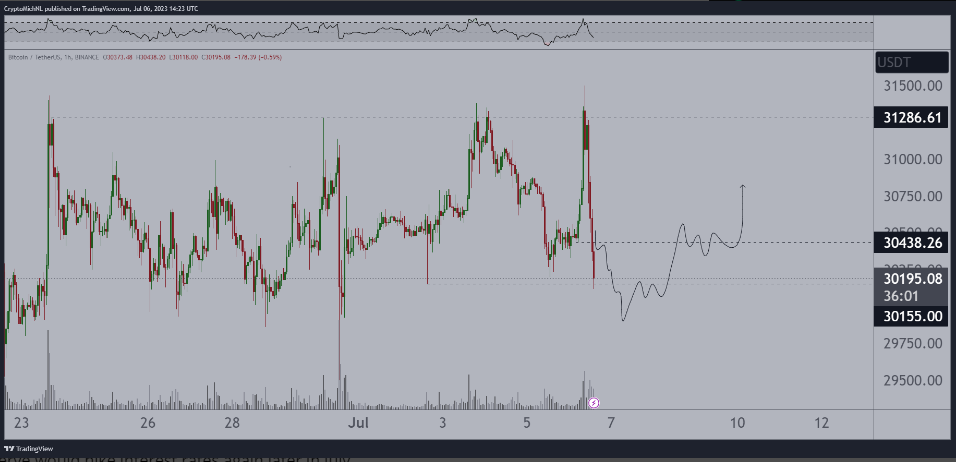
BTC/USD 图表,带标题 |资料来源:迈克尔·范·德·波普

Van de Poppe提到了华尔街开市前公布的强劲美国就业数据,这提振了市场对美联储(Fed)将在7月底再次加息的预期。

随着BTC跌破3万美元,许多未平仓合约被清仓,但总体清算量仍然不是很高。

根据监控资源 CoinGlass 的数据,7 月 6 日,BTC做多和做空清算额为 4300 万美元。加密货币清算总额约为 1.2 亿美元。
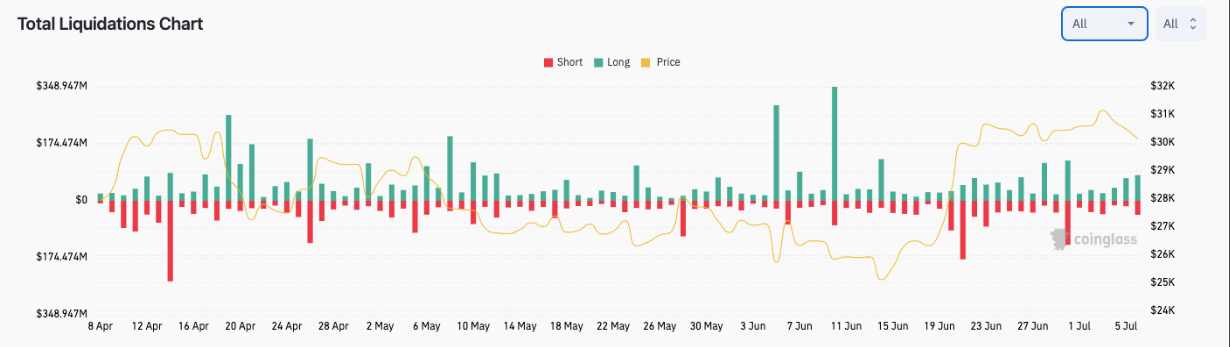
加密货币清算数据 |来源:CoinGlass

在山寨币方面,市场继续走低,最大的市值资产回到 30,000 美元以下。

领涨的是 Fantom (FTM),代币当天价值下跌了 10% 以上。该项目也抹去了前一周的势头,近7天跌幅接近11%。

前 100 名中的其他主要山寨币如 WOO Network (WOO)、ApeCoin (APE)、Lido DAO (LDO)、Algorand (ALGO)、Pepe (PEPE)、Litecoin (LTC)、Mina (MINA)、Injective (INJ) 、Filecoin (FIL)、UNUS SED LEO (LEO)……当日跌幅为 4-9%。
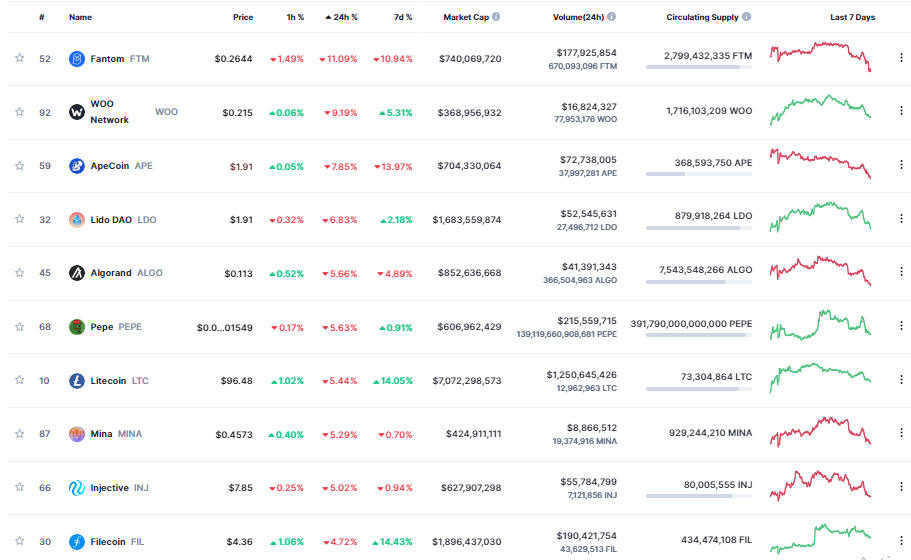
资料来源:Coinmarketcap

在触及 1,956 美元的局部高点后,以太坊(ETH) 面临巨大的抛售压力,拖累第二大市值资产突破 1,900 美元大关,在 1,832 美元附近建立局部底部,为 6 月下旬以来的最低水平。ETH 目前已略有回升至1,844美元附近,当日跌幅近3%。
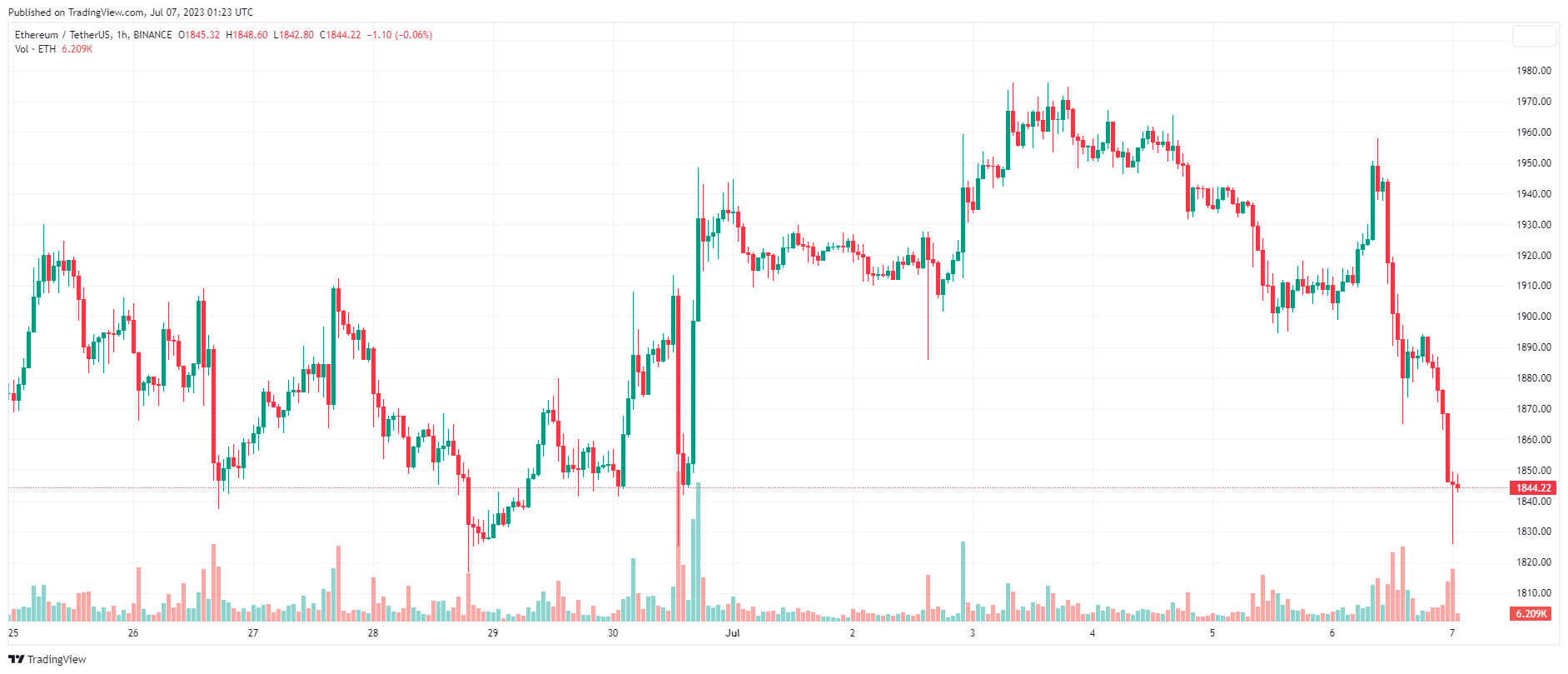
ETH 价格图表 – 1 小时 |来源:TradingView

Пов'язані матеріали

Seeking Alpha's Hot Article: Why Might the U.S. Stock Market Crash in June?

In a recent Seeking Alpha article, financial professor and analyst Damir Tokic argues that the US stock market may be poised for a significant crash in June 2026. The core thesis centers on a "mega-bubble" in equities, particularly within the technology sector, which has driven the S&P 500 to near-record valuations, with a Shiller P/E ratio exceeding 40—a level comparable to the 2000 dot-com bubble. Tokic identifies two primary catalysts for a potential collapse. First, he points to unsustainable market exuberance fueled by what he terms the "Trump Stimulus"—massive AI capital expenditure by tech giants, which he believes is politically driven and cannot last. Second, and more urgently, he highlights the escalating Iran war as a critical threat. The ongoing closure of the Strait of Hormuz has created a severe global energy supply crunch. Strategic petroleum reserves are projected to hit critically low operational levels by June, potentially causing oil prices to spike above $200 per barrel and triggering a severe, supply-driven inflationary shock. This scenario, Tokic warns, would force the Federal Reserve's hand. Despite currently maintaining a dovish bias, the Fed would likely be compelled to officially pivot to a hawkish stance at its June FOMC meeting to combat soaring inflation and bond yields. He contends that such a shift—or even a failure to act, which would destroy Fed credibility—could be the trigger that punctures the market bubble. The resulting downturn, he concludes, could rival the bear markets of 2000 and 2008, advising investors to prepare for a major correction.

marsbit8 хв тому

Seeking Alpha's Hot Article: Why Might the U.S. Stock Market Crash in June?

marsbit8 хв тому

AI PC Battle: Bet on the Toll Booth, Not the Camp

**Title:** The AI PC Battle: Don't Bet on Sides, Bet on the Tollbooth **Summary:** The AI PC competition is moving beyond simple "x86 vs. Arm" narratives. The core investment thesis should focus on identifying which players can sustain margins, cash flow, and pricing power throughout the upgrade cycle, rather than backing a particular architecture. The opportunity is analyzed in three layers: 1. **The Advanced Foundry Tollbooth:** TSMC is positioned to collect "tolls" regardless of which chip designer wins, due to its dominant ~70% share in advanced semiconductor manufacturing, which is essential for high-end AI PC chips. 2. **Compute & Platform Spillover:** AMD represents an offensive in the x86 CPU+GPU space, while NVIDIA leverages its GPU and CUDA software stack dominance. Both benefit from the demand for increased local AI compute. 3. **Architecture Diffusion & Turnaround Plays:** ARM and Intel offer potential for significant upside (elasticity), but investments here require stricter discipline due to higher execution risks and competitive challenges. The industry is transitioning from concept to shipment validation. While short-term forecasts for AI PC adoption have been revised down slightly due to tariffs and procurement delays, the long-term trend towards AI becoming a standard PC feature remains intact. The key driver for upgrade cycles will be whether compelling enterprise applications (e.g., privacy-sensitive computing, low-latency inference) emerge beyond consumer-focused features like meeting summarization. Investment strategy should prioritize companies with platform-level advantages and recurring revenue streams. TSMC offers high certainty as the foundational tollbooth. AMD presents a strong offensive play within the established ecosystem. ARM and Intel are higher-risk, higher-potential-reward turnaround bets. The report cautions against chasing short-term hype and emphasizes a disciplined, long-term approach focused on buying ecosystem strength and cash-flow certainty after market enthusiasm subsides. **Key Risks:** Underwhelming AI PC applications slowing upgrade cycles; slow improvement in Windows on Arm compatibility; macro/tariff impacts on PC demand; potential advanced node supply-demand mismatches affecting TSMC; high overall AI sector valuations making stocks vulnerable to a risk-off shift in markets.

marsbit22 хв тому

AI PC Battle: Bet on the Toll Booth, Not the Camp

marsbit22 хв тому

Ten-Thousand-Word Analysis: From $10 to $290, MRVL Wins the Entire AI Era by 'Not Making GPUs'

Marvell Technology's stock price surged from under $10 in 2016 to a record $290 in June 2026, fueled not by making GPUs, but by dominating AI infrastructure connectivity. This analysis argues the market misvalues MRVL as merely a smaller Broadcom in custom AI chips, overlooking its true, unique position. Marvell's core strength lies in enabling high-speed data flow for AI clusters through three interconnected businesses. First, it holds a commanding ~70% market share in high-speed optical DSPs (essential for data center light modules), a deep-moat business with accelerating growth. Second, its custom AI chip design business serves hyperscalers like AWS, Microsoft, and Google, with a significant revenue pipeline despite lower margins. Third, stable cash flows come from Ethernet switch chips and enterprise storage controllers. Together, they form a full-stack "AI data movement" platform. CEO Matt Murphy's transformative leadership since 2016, involving strategic divestments, key acquisitions (like Inphi for optical DSPs), and securing long-term agreements with major cloud providers, repositioned the company. A pivotal $2 billion strategic investment from NVIDIA in 2026 underscored Marvell's critical role in the AI ecosystem, particularly through collaborations like NVLink Fusion. While Marvell faces risks—including client concentration (losing the Amazon Trainium3 design), lower-margin business mix, competitive threats, insider selling, and complex supply chains—its fundamentals remain strong. The optical interconnect moat is widening with the acquisition of Celestial AI (photonics fabric), and financial metrics show accelerating revenue growth and operating leverage. With a PEG ratio suggesting undervaluation relative to its growth, the thesis is that the market undervalues Marvell's monopolistic position in AI "plumbing" while overemphasizing its competitive custom chip segment. The story transcends investing, symbolizing how in any complex system—from the internet to AI—the value of "connection" ultimately surpasses that of individual "nodes."

marsbit52 хв тому

Ten-Thousand-Word Analysis: From $10 to $290, MRVL Wins the Entire AI Era by 'Not Making GPUs'

marsbit52 хв тому

AI Relay Stations Spark Heated Debate on Zhihu: Behind Cheap Tokens, What Are Users Really Worried About?

A discussion on Zhihu about "AI relay stations" shifted the niche developer topic of "cheap tokens" into broader user awareness. Users moved beyond simply questioning the legitimacy of these services to focus on practical concerns: Where do cheap tokens truly come from? Is the model being accessed the real one? Can relay stations see prompts, code, and API keys? For occasional users, are the risks worth it? The core debate centered less on price and more on trust. A primary worry is model authenticity—the risk of "model swapping," where users paying for a premium model might be routed to a cheaper one, creating an information asymmetry. Others argued that cost comparisons matter; while cheaper than official pay-as-you-go APIs, relay stations may not be the lowest-cost option versus subscriptions, domestic models, or free tiers, making user needs assessment crucial. Speculation about token sources ranged from legitimate bulk discounts to gray-area methods like account sharing or exploiting regional pricing. This opacity makes risk assessment difficult for users. Data security emerged as a critical concern, especially for enterprise use. When processing sensitive information like code, contracts, or client data, the inability to verify a relay station's data handling, retention, or access policies poses significant compliance and confidentiality risks. The evolving consensus suggests relay stations can be used cautiously for low-sensitivity, disposable tasks (e.g., summarizing public info, simple translation). However, they should not be the default for sensitive, professional, or production workflows involving proprietary data, Agents, or automated systems. Recommendations include avoiding large prepayments, not relying on a single service, using test prompts to monitor quality, anonymizing data where possible, and keeping official channels as backups. Ultimately, the discussion framed tokens not just as a billing unit but as a measure of real cost encompassing price, model integrity, data security, and service stability. The popularity of relay stations highlights user demand for affordable access, but the debate underscores a key trade-off: the savings from cheap tokens may come at the price of trust, transparency, and control over one's data and AI experience.

marsbit1 год тому

AI Relay Stations Spark Heated Debate on Zhihu: Behind Cheap Tokens, What Are Users Really Worried About?

marsbit1 год тому

Торгівля

Спот
Ф'ючерси
活动图片