Indian Parliament Member Asks Government to Tax Crypto Income More Than 30%

newsbtcPublished on 2022-03-29Last updated on 2022-03-29

Abstract

India’s Finance Bill 2022 containing the proposed 30% tax on crypto income is now being considered in Rajya Sabha, the upper house of India’s parliament.

Indian Parliament Member Asks Government to Tax Crypto Income More Than 30%

An Indian parliament member has urged the government to increase the tax on crypto income from the current proposed rate of 30%, stressing that crypto trading is similar to gambling. He has also requested that the goods and services tax (GST) be imposed on the total transaction value of crypto.

Indian Parliament Member Wants to Tax Crypto Income More Than 30%

India’s Finance Bill 2022 containing the proposed 30% tax on crypto income is now being considered in Rajya Sabha, the upper house of India’s parliament.

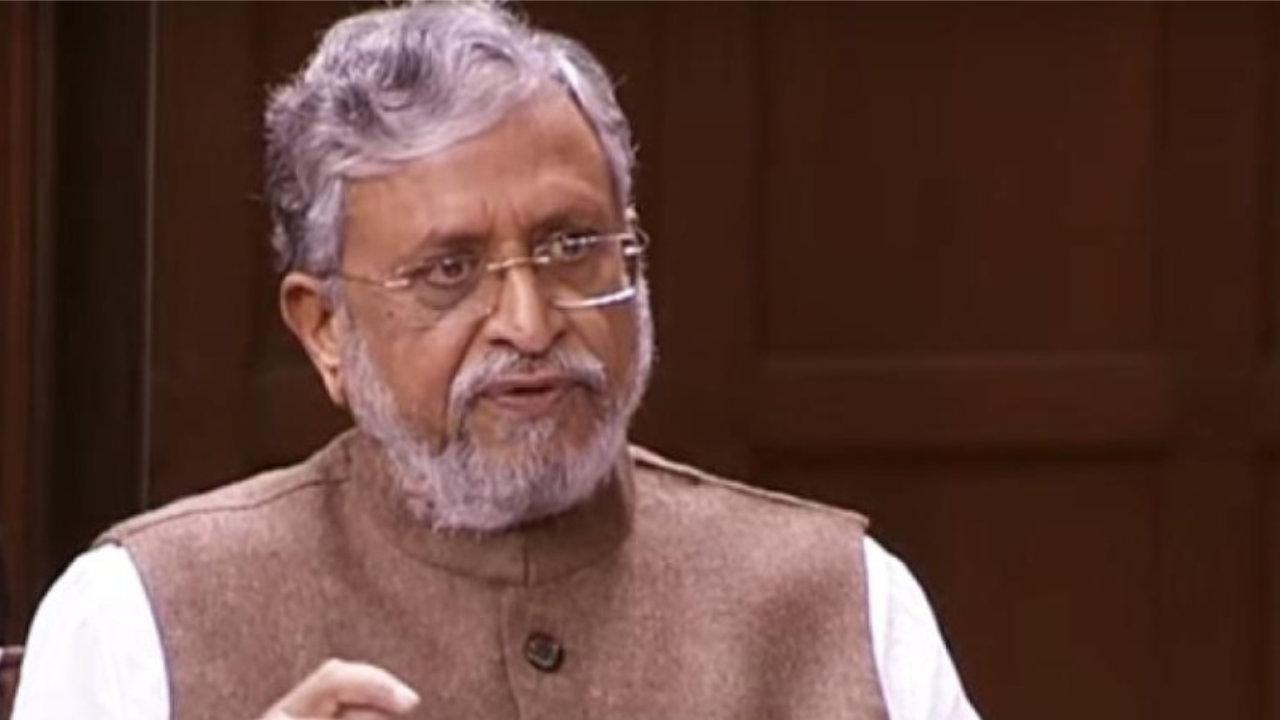
Parliament member Sushil Kumar Modi asked the government Monday to increase the tax on cryptocurrency income from the current rate of 30%. He said:

I would like to request the finance minister that the 30% tax that you have imposed on crypto, please consider in the coming days if this tax can be further increased.

Parliament member Modi argued that cryptocurrency is not a commodity, an asset, goods, or a service, emphasizing that it does not have intrinsic value.

He added that while stocks are backed by companies behind them, “crypto is gambling.” He further questioned, “Who are behind crypto?”

The parliament member further pointed out that the 18% goods and services tax (GST) is only levied on crypto service providers, such as exchanges, emphasizing that this needs to be increased. Modi opined:

Cryptos are similar to lottery, casinos betting, gambling and horse racing. In all these activities, 28% tax (GST) is imposed on the total transaction value … So I request to you that the GST council needs to consider imposing GST on the total transaction value of crypto.

“Investors are attracted by extraordinary profits,” Modi stressed, adding that “no one knows what is the value of crypto.”

Modi proceeded to give examples of countries that have imposed higher taxes on crypto. He said Japan has imposed a 55% tax while Germany, France, and Australia have imposed up to 45%.

The parliament member further claimed that investors have been storing cryptocurrencies in private wallets before April 1 and “$8 billion worth of crypto assets are expected to go out of the country.”

Besides the 30% tax on crypto income, Indian Finance Minister Nirmala Sitharaman also proposed imposing a 1% tax deducted at source (TDS) on every crypto transaction. The 1% TDS will go into effect on July 1 while the 30% income tax will start levying on April 1. An Indian parliament member has warned that imposing a 1% TDS on every crypto transaction will kill the nascent asset class.

Related Reads

The Real Battlefield of AI Lies in the 'Dark Forest'

The article "AI's Real Battlefield is in the 'Dark Forest'" discusses the shifting dynamics in the global AI landscape, contrasting the strategic directions of Chinese and U.S. AI developers. Chinese companies like Alibaba (with its "HappyHorse" video model), ByteDance (Seedance 2.0), and Kuaishou (Kling 3.0) have taken the lead in text-to-video generation, surpassing OpenAI’s now-discontinued Sora. These models are deeply integrated into their parent companies’ content ecosystems (e.g., Douyin, Kuaishou), serving to reduce content creation costs and enhance user engagement rather than operating as standalone profit centers. In contrast, U.S. firms are pivoting toward high-stakes enterprise and security applications. Anthropic’s Claude Mythos model demonstrates advanced capabilities in autonomously discovering and exploiting software vulnerabilities, prompting concern at the highest levels of U.S. financial and governmental institutions. OpenAI responded with its own GPT-5.4-Cyber, signaling a strategic shift from consumer-facing products to enterprise-grade tools focused on cybersecurity and programming. The divergence is attributed to fundamental differences in resources and market structures. U.S. companies, backed by vast computational resources (e.g., Amazon and Google supply Anthropic with substantial funding and TPU access), can pursue deep, specialized R&D in high-value B2B sectors. Chinese firms, facing significant compute power constraints and a less mature enterprise SaaS market, have found success by leveraging their massive consumer platforms and optimizing for cost-efficiency. The article warns that the AI race is entering a "dark forest" phase—a reference to competitive dynamics where cybersecurity capabilities could determine digital sovereignty. While Chinese models like Zhipu AI’s GLM-5.1 show promise in narrowing the gap in coding proficiency, the author stresses that achieving parity in security-critical AI will require asymmetric strategies, including greater investment in coding models, adaptation to domestic hardware, and exploring international markets in the Global South.

marsbit5m ago

The Real Battlefield of AI Lies in the 'Dark Forest'

marsbit5m ago

Trading

Spot
Futures
活动图片