FHE: The Privacy Layer Powering Institutional Adoption of Web3

TheNewsCryptoPublicado em 2026-04-30Última atualização em 2026-04-30

The next phase of Web3 adoption will not be defined by retail participation or speculative cycles, but by whether institutions can meaningfully engage with blockchain-based systems. Financial institutions, asset managers, healthcare organizations, and governments bring with them not only capital, but also stringent requirements around compliance, data protection, and operational security. The challenge is not simply onboarding these players, but building infrastructure that aligns with how they already operate.

Several sectors within Web3 are already evolving to meet this demand. Tokenization, particularly in real estate and other real-world assets, has emerged as a leading use case. By enabling fractional ownership and global access to traditionally illiquid assets, tokenization platforms are reshaping capital markets. However, they also introduce complex data considerations. Ownership records, investor identities, and financial performance metrics must be managed in ways that comply with jurisdictional regulations. Institutions cannot expose sensitive financial data to public networks or counterparties, yet they still need to interact with these systems efficiently.

A parallel transformation is taking place in digital identity. As decentralized identity and Proof of Humanity systems gain traction, they aim to solve one of the most persistent challenges in Web3: verifying users without compromising privacy. For institutions, this is critical. Compliance frameworks such as Know Your Customer and anti-money laundering regulations require robust identity verification, but also impose strict controls on how personal data is handled. The ability to confirm attributes, such as uniqueness or accreditation status, without revealing underlying personal information is essential for institutional onboarding at scale.

At the same time, blockchain infrastructure itself is adapting to regulatory expectations. Networks aligning with frameworks such as the European Union’s Markets in Crypto-Assets regulation are being designed to provide legal clarity and operational assurances. These regulated environments aim to bridge the gap between traditional finance and decentralized systems, offering transparency, auditability, and compatibility with existing compliance structures. Yet even within these frameworks, a critical issue remains unresolved: how to process sensitive data without exposing it.

This is the core limitation of current Web3 infrastructure. While tokenization platforms enable access, identity solutions enable verification, and regulated chains enable compliance, none of these layers fully address the challenge of data confidentiality during computation. Institutions are still forced to choose between using data and protecting it. Sensitive information, whether financial, personal, or operational, must often be decrypted to be processed, creating exposure risks that are unacceptable in regulated environments.

Fully Homomorphic Encryption (FHE) introduces a fundamentally new paradigm that addresses this gap. FHE allows computations to be performed directly on encrypted data, without ever revealing the underlying information. The data remains encrypted throughout its lifecycle, including during processing, and only authorized parties can decrypt the final results. This eliminates the need to expose raw data to intermediaries, infrastructure providers, or decentralized networks.

In the context of Web3, this capability transforms how institutions can participate. Tokenized assets can be analyzed, priced, and managed without disclosing sensitive financial details. Identity systems can verify user attributes without revealing personal data, enabling compliance without compromising privacy. Regulated blockchains can offer not only transparency and auditability, but also true data confidentiality, aligning more closely with institutional requirements.

This is why FHE is increasingly viewed as a missing layer in the Web3 stack. It does not replace existing infrastructure, but enhances it by making it usable for institutions. Without a mechanism to compute on encrypted data, the promise of decentralized systems remains limited for organizations that operate under strict regulatory and fiduciary constraints. FHE provides a way to reconcile these constraints with the benefits of blockchain technology.

Emerging platforms are beginning to bring this vision into reality. Fhenix, for example, is focused on integrating Fully Homomorphic Encryption into blockchain environments, enabling developers to build applications where data remains encrypted even while being processed on-chain. This approach extends the capabilities of smart contracts by allowing them to operate on confidential data, opening the door to a new class of privacy-preserving decentralized applications.

For institutions, this represents a significant shift. Instead of adapting their operations to fit the limitations of public blockchains, they can engage with systems that respect their existing requirements around data protection and compliance. Sensitive information no longer needs to be exposed to participate in decentralized networks, reducing both regulatory risk and operational friction.

The broader implication is that institutional adoption of Web3 depends not only on regulatory alignment or technical scalability, but on the ability to securely handle data. As long as data must be exposed to be useful, institutions will remain cautious. The risks associated with breaches, misuse, or non-compliance are simply too high. By enabling computation without exposure, FHE removes one of the most significant barriers to participation.

As Web3 continues to mature, the integration of privacy-preserving technologies will likely become a defining factor in its evolution. Tokenization, identity, and regulated infrastructure are all necessary components, but they are not sufficient on their own. Without a robust privacy layer, the system cannot fully support institutional use cases.

Fully Homomorphic Encryption offers a path forward by resolving the fundamental tension between data utility and data confidentiality. It enables a model where institutions can collaborate, compute, and innovate without compromising the security of their information. In doing so, it positions itself not just as an enhancement to Web3, but as a foundational technology for its next phase of growth.


TagsBlockchainWeb 3

Criptomoedas em alta

Leituras Relacionadas

New Fire Group Chief Economist Fu Peng's Latest Speech: Crypto Assets Deeply Bound to Liquidity, Global Assets 'Shrink Circle' with Widening Divergence

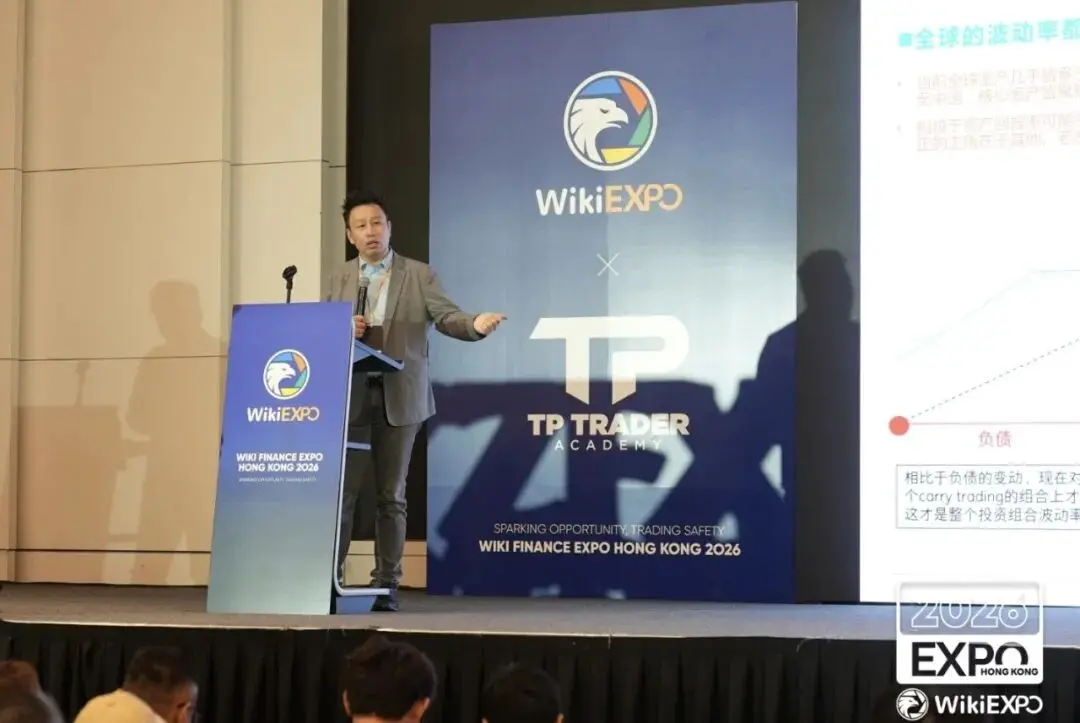
The chief economist of Sinovation Group delivered a speech at Wiki Finance EXPO Hong Kong 2026, analyzing the global market through the lens of liquidity. He argues that all major assets, including cryptocurrencies, are fundamentally tied to global liquidity, which is now shifting from an era of extreme post-2008 ease to sustained tightening under new Fed leadership. This marks the end of widespread "asset flooding" and ushers in a "shrinking circle" dynamic: capital is abandoning speculative, low-quality assets and concentrating in a few high-conviction, value-driven core holdings. The only dominant global investment theme is AI, viewed as a 20-25 year productivity cycle. However, a critical inflection point has been reached in Q2, where major tech firms' free cash flow has turned negative. The market narrative has pivoted from rewarding pure capital expenditure growth to demanding proof of future revenue generation and returns. While the AI super-cycle's long-term thesis remains intact, the initial hardware-driven phase (e.g., Nvidia, memory chips) is maturing. The speaker warns of significant volatility risk not from industry fundamentals, but from excessive financial leverage built up in these "certain" assets. He emphasizes that investment strategy must evolve from broad diversification to focused, cyclical allocation within the AI value chain (upstream hardware, midstream, downstream applications), avoiding blind long-term holds on single names. For crypto, this liquidity paradigm shift means the era of speculative "air coin" mania is over; the market is maturing, with institutional participation increasing and volatility stabilizing for core assets like Bitcoin and Ethereum. The core takeaway is that understanding the top-down liquidity framework is essential for navigating the current era of market分化 and focused capital allocation.

链捕手Há 15m

New Fire Group Chief Economist Fu Peng's Latest Speech: Crypto Assets Deeply Bound to Liquidity, Global Assets 'Shrink Circle' with Widening Divergence

链捕手Há 15m

4 Hours, 118 Responses: Liang Wenfeng’s Internal Q&A Addresses Everything

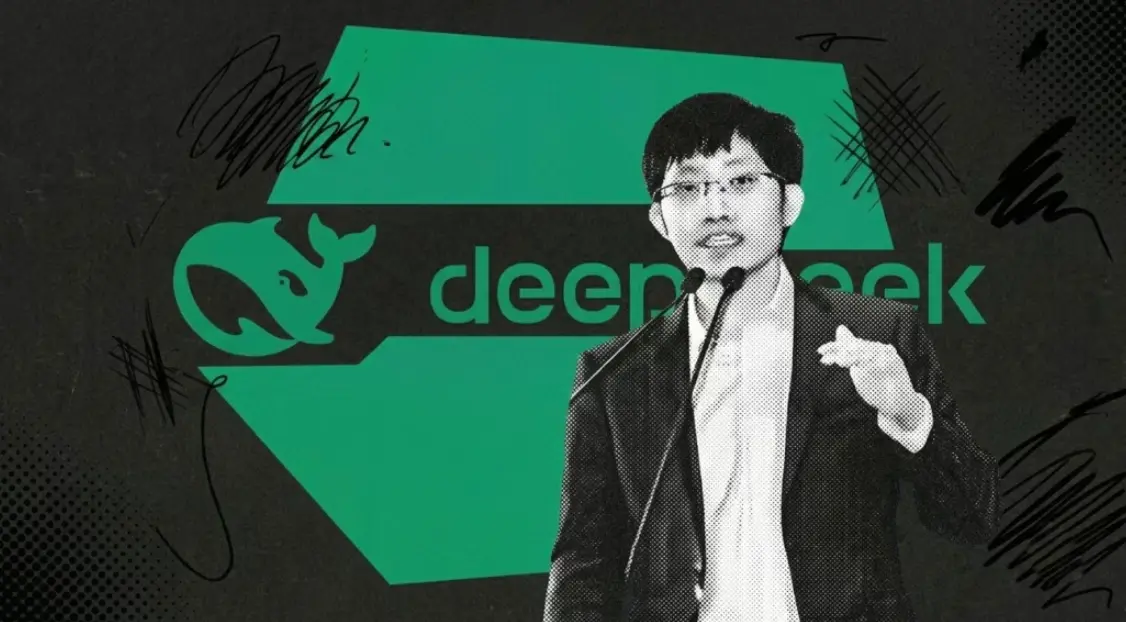
**DeepSeek Founder Liang Wenfeng's Candid Reflections on the Company's Path to AGI** DeepSeek has recently completed its first external funding round, raising over 500 billion RMB (approx. $74B) at a pre-money valuation of 3.675 trillion RMB ($543B). Founder Liang Wenfeng personally invested 200 billion RMB. This marks a strategic shift from its initial "no financing, no IPO, no commercialization" principle. In a recent investor Q&A, Liang articulated DeepSeek's core philosophy and roadmap. The company is driven by a powerful, unwritten vision for beneficial AGI rather than pure commercial maximization. He emphasizes "strategic restraint"—avoiding unnecessary conflicts, prioritizing long-term AGI success over short-term gains, and maintaining an open, cooperative stance even with competitors. Liang outlined the AGI technical roadmap: current focus on Agent capabilities, followed by solving "continual learning," which he sees as the key to unlocking models that can learn and adapt like humans. This could lead to a gradual "singularity" where AI accelerates its own research, and eventually to embodied intelligence. DeepSeek will strictly focus on this "AGI mainline," avoiding distractions like video generation which, while commercially viable, don't directly advance core intelligence. He identifies team stability as the single most critical factor for success, now bolstered by the recent funding. While talent is not a bottleneck, the primary constraint compared to the US is compute resources. Liang is optimistic about domestic AI chips, stating that Nvidia's CUDA moat is eroding and that within a year, the viability of the Chinese chip ecosystem will be proven, with Huawei's offerings being key. The main issue is production capacity. On competition, Liang believes the final differentiators will be cost, time-to-market, and user experience. He foresees Chinese companies playing a major role by offering systematically lower-cost AI services globally. DeepSeek's commercialization strategy involves offering API services at a "reasonable profit" and focusing on coding Agents. He remains committed to open-sourcing even their strongest models, seeing no downside as the barriers to effective deployment remain high. The company operates with a unique dual management structure combining top-down direction with significant bottom-up, unstructured research time for employees. Data quality and post-training are identified as major current challenges, with half of core researchers involved in data labeling efforts. Liang concludes that DeepSeek aims to be one of several trillion-dollar companies in the AI era, achieved through extreme focus on its chosen path.

链捕手Há 22m

4 Hours, 118 Responses: Liang Wenfeng’s Internal Q&A Addresses Everything

链捕手Há 22m

After Three Consecutive Quarters of Decline, Can the Crypto Market Find a Window for Stabilization in Q3?

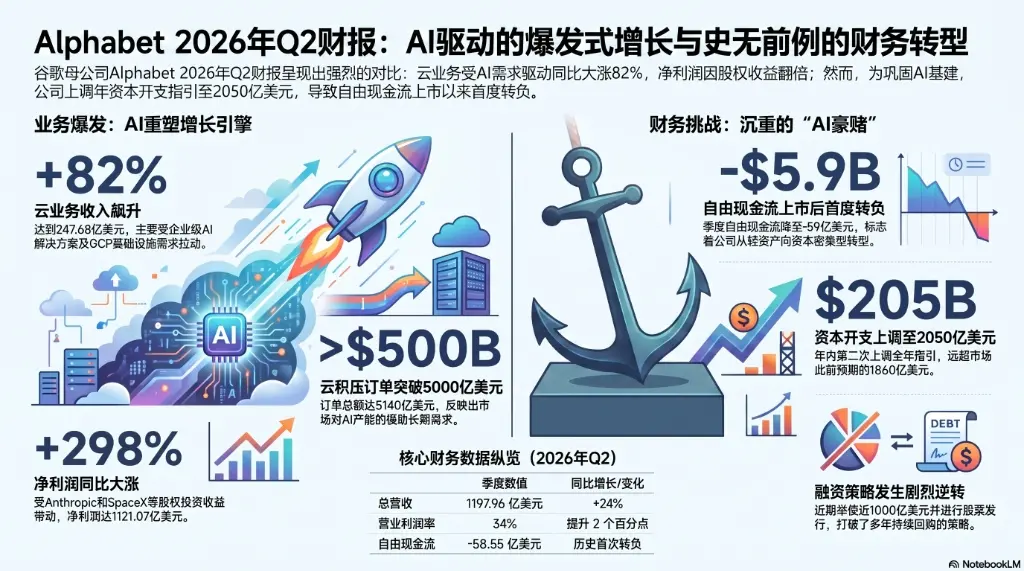
The cryptocurrency market has just concluded its worst-performing quarter since 2022, with total capitalization dropping 12.6% to $2.1 trillion. All core metrics indicate capital is leaving the sector, not just rotating within it. Bitcoin fell 14.2% and Ethereum dropped 25.4% in Q2, breaking their previous correlation with US tech stocks. A key driver is the reversal in US spot Bitcoin ETF flows, which saw a net outflow of approximately $4.67 billion in Q2, including a record monthly outflow near $4.5 billion in June. While recent data suggests long-term holders are accumulating again, sustained ETF outflows mean continued selling pressure. Market focus is now singularly on the Federal Reserve. The upcoming July FOMC meeting is seen as the most critical event for Q3. A dovish signal could support Bitcoin reclaiming a $68,000-$84,000 range, while a hawkish stance might establish a new trading band around $50,000-$56,000. Additionally, regulatory uncertainty persists, with the progress of the crucial *CLARITY Act* stalling in the Senate, reducing its perceived 2026 passage probability to 40-45%. Despite the broad downturn, a few sectors showed growth. Prediction markets saw nominal volume surge 48.7% year-over-year to $113.8 billion, and tokenized collectibles transaction volume rose 143% quarterly to $1.4 billion. The Real-World Asset (RWA) tokenization sector also continued steady growth, now representing ~$28.1 billion in on-chain value. The market's foundation for an extreme crash appears limited, with Bitcoin price hovering near its 200-week moving average. However, the trading paradigm has shifted from narrative-driven speculation to decisions based on price action, policy developments, and interest rate expectations, making a broad sentiment-driven rally unlikely in the near term.

marsbitOntem 08:36

After Three Consecutive Quarters of Decline, Can the Crypto Market Find a Window for Stabilization in Q3?

marsbitOntem 08:36

Trading

Spot

Artigos em Destaque

Como comprar FHE

Bem-vindo à HTX.com!Tornámos a compra de Mind Network (FHE) simples e conveniente.Segue o nosso guia passo a passo para iniciar a tua jornada no mundo das criptos.Passo 1: cria a tua conta HTXUtiliza o teu e-mail ou número de telefone para te inscreveres numa conta gratuita na HTX.Desfruta de um processo de inscrição sem complicações e desbloqueia todas as funcionalidades.Obter a minha contaPasso 2: vai para Comprar Cripto e escolhe o teu método de pagamentoCartão de crédito/débito: usa o teu visa ou mastercard para comprar Mind Network (FHE) instantaneamente.Saldo: usa os fundos da tua conta HTX para transacionar sem problemas.Terceiros: adicionamos métodos de pagamento populares, como Google Pay e Apple Pay, para aumentar a conveniência.P2P: transaciona diretamente com outros utilizadores na HTX.Mercado de balcão (OTC): oferecemos serviços personalizados e taxas de câmbio competitivas para os traders.Passo 3: armazena teu Mind Network (FHE)Depois de comprar o teu Mind Network (FHE), armazena-o na tua conta HTX.Alternativamente, podes enviá-lo para outro lugar através de transferência blockchain ou usá-lo para transacionar outras criptomoedas.Passo 4: transaciona Mind Network (FHE)Transaciona facilmente Mind Network (FHE) no mercado à vista da HTX.Acede simplesmente à tua conta, seleciona o teu par de trading, executa as tuas transações e monitoriza em tempo real.Oferecemos uma experiência de fácil utilização tanto para principiantes como para traders experientes.

361 Visualizações TotaisPublicado em {updateTime}Atualizado em 2026.06.02

Como comprar FHE

Discussões

Bem-vindo à Comunidade HTX. Aqui, pode manter-se informado sobre os mais recentes desenvolvimentos da plataforma e obter acesso a análises profissionais de mercado. As opiniões dos utilizadores sobre o preço de FHE (FHE) são apresentadas abaixo.

活动图片