Wall Street piles in: How Ripple’s quiet pivot led to a $40B valuation

cointelegraphPubblicato 2025-12-08Pubblicato ultima volta 2025-12-08

Introduzione

Ripple's recent $500 million funding round, valuing the company at $40 billion, marks a significant shift from its past legal battles with the SEC. The round attracted major Wall Street investors, including Citadel Securities and Fortress Investment Group, partly due to favorable investment terms offering downside protection. Investors were granted the option to sell shares back to Ripple after three to four years for a guaranteed 10% annualized return, or a higher 25% return if Ripple repurchases the shares itself. Despite Ripple's expansion into stablecoins (like RLUSD) and acquisitions to build a broader crypto infrastructure stack, many institutional investors still view the company’s value as heavily tied to XRP.

Ripple’s $500 million raise in November marked a striking turn for a company once defined by its bruising, multiyear battle with the US Securities and Exchange Commission. As its legal challenges ease and Ripple pushes beyond cross-border payments toward a more ambitious crypto-native settlement stack, the company is repositioning itself in ways that are increasingly attracting major Wall Street investors.

The round, which Cointelegraph reported valued Ripple at $40 billion, one of the highest valuations for a private company, drew an unusually heavy institutional roster. Investors included Citadel Securities, Fortress Investment Group and funds linked to Galaxy Digital, Pantera Capital and Brevan Howard.

New details reported by Bloomberg also shed light on how Ripple secured that interest — namely, by offering investors a deal structured with significant downside protections.

The terms allow participating funds to sell their shares back to Ripple after three or four years at a guaranteed annualized return of about 10%, according to people familiar with the matter. That option disappears if Ripple goes public within that window.

The company also retained the right to repurchase the shares itself over the same period — in that case, providing investors with an even higher annualized return of roughly 25%.
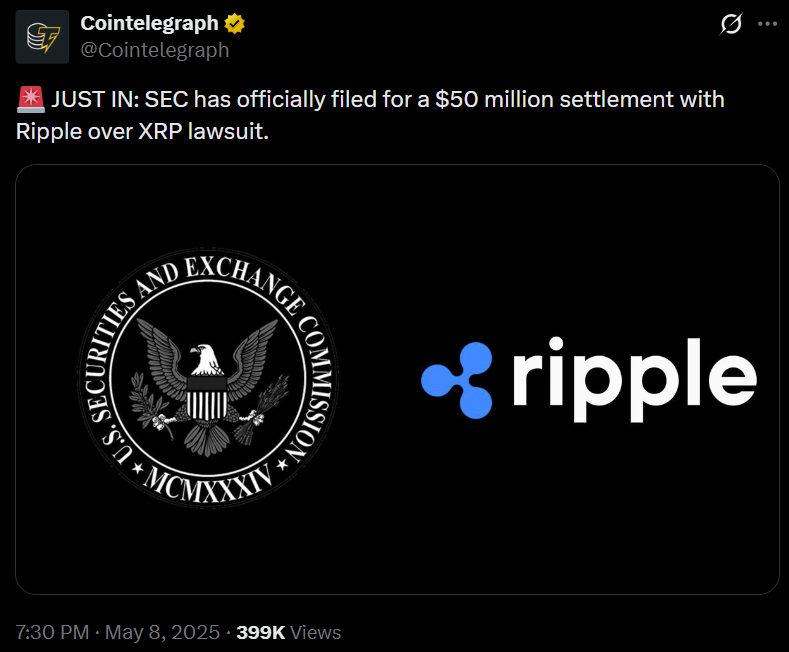
Source: Cointelegraph

Related: Ripple rejects IPO plans despite SEC case victory: Here’s why

Ripple broadens its reach, but investors still zero in on XRP

Although Ripple has broadened its focus, including a significant push into the stablecoin market with its dollar-pegged Ripple USD (RLUSD), some institutional investors still view backing the company as a bet on XRP (XRP), according to Bloomberg.

Two of the funds involved concluded that roughly 90% of Ripple’s net asset value was tied to XRP, despite the company’s repeated emphasis that it does not control the token and that XRP functions as an independent asset.
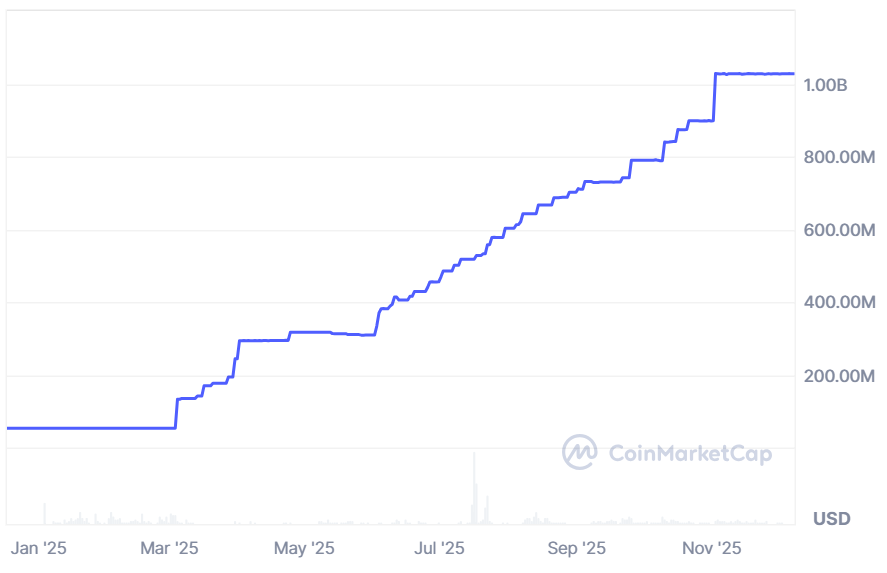
The Ripple USD stablecoin has grown to a market capitalization of more than $1 billion. Source: CoinMarketCap

Nevertheless, Ripple is positioning itself as a company that can combine custody, treasury, prime brokerage services and stablecoins to help institutions access digital assets.

As part of that strategy, the company acquired non-bank prime broker Hidden Road in April, now rebranded as Ripple Prime, and also bought treasury-management company GTreasury. The two deals, totaling approximately $2.25 billion, highlight Ripple’s growing effort to establish a comprehensive institutional infrastructure stack.

Related: VC Roundup: Big money, few deals as crypto venture funding dries up

Letture associate

Encryption Claims Dilemma: The Reality of Rights Protection Under the Conflict of Criminal and Civil Procedures

"Encrypted Claims Dilemma: The Reality of Rights Protection Amidst Criminal-Civil Procedure Conflicts" This article examines the challenges victims face in seeking legal recourse for cryptocurrency theft or fraud in China, highlighting the tension between criminal and civil procedures. Through two representative cases, it illustrates how cross-jurisdictional complexities and regulatory ambiguities often hinder effective relief. In Case 1, a South Korean company paid 800,000 USDT to a Chinese employee of an S-based exchange for listing services, only to have the employee disappear. Despite legal efforts citing属地管辖 (territorial jurisdiction) and the property-like status of virtual assets under China’s "9.24 Notice," local police initially refused to accept the case due to the foreign elements involved. After persistent advocacy, the case was accepted but not formally立案 (registered). Case 2 involved a woman scammed out of over 3 million RMB while attempting to purchase USDT through an OTC trader for investment. While the trader was arrested, the main fraudster remained abroad. Civil action against the trader for unjust enrichment failed, as courts cited the "criminal-first" principle (刑事优先), requiring criminal resolution before civil claims can proceed. The analysis reveals that civil remedies are often impractical when criminal elements are involved: courts may transfer such cases to police, and even successful criminal convictions may not guarantee restitution if perpetrators lack assets. The author concludes that, despite guides on civil litigation, pursuing criminal avenues remains the more viable—though still fraught—path for victims seeking recovery. The piece underscores systemic hurdles, including judicial reluctance to recognize crypto-related claims and procedural barriers, urging greater clarity in legal frameworks to protect victims.

比推4 min fa

Encryption Claims Dilemma: The Reality of Rights Protection Under the Conflict of Criminal and Civil Procedures

比推4 min fa

Trading

Spot
Futures
活动图片