Trump's Perplexing Fed Threat Might Be a Gift to Warsh

marsbitPublished on 2026-09-08Last updated on 2026-09-08

Abstract

Former President Donald Trump's puzzling call for Federal Reserve interest rate cuts and threats to halt trade with countries running U.S. deficits has drawn market confusion rather than movement. Reuters columnist Mike Dolan argues this rhetoric, lacking logical coherence, paradoxically presents new Fed Chair Kevin Warsh with an opportunity. By pushing for a rate hike at the upcoming September meeting, Warsh could credibly distance the central bank from White House pressure, reaffirm its commitment to the inflation target, and bolster his own credibility. With strong August jobs data, growth accelerating, and core inflation persistently above 2%, few economists see a case for cuts. A 25-basis-point hike, Dolan suggests, would be a strong public relations move to end speculation that Warsh is a White House "puppet" and could even help lower long-term borrowing rates by reinforcing the Fed's anti-inflation resolve. The article notes Trump's history of turning on his Fed appointees, implying Warsh faces a critical choice that may ultimately anger his patron.

Author: Mike Dolan

Compiled by: TechFlow

Deep Tide Digest: Last Friday, positive U.S. August employment data emerged, yet Trump suddenly pivoted to criticize the Federal Reserve, demanding "interest rate cuts, or else stop trading with countries with deficits." Reuters columnist Mike Dolan points out that this statement is logically incoherent and barely elicited a market reaction. However, it precisely presents an opportunity for Fed Chair Kevin Warsh, who took office this past May, to push for a rate hike this month. This move would reaffirm the Fed's commitment to its inflation target and demonstrate that he is not the White House's "puppet," thereby creating distance from the President and building his own credibility.

Trump's inexplicable linking of U.S. interest rate policy with trade relations with America's largest trading partners has generated more confusion than market volatility. But the President's outlandish statement has instead given Federal Reserve Chair Kevin Warsh an opportunity: to drive a Fed rate hike this month, convincingly creating distance from the White House and boosting his own credibility.

Last Friday should have been a reasonably good day economically for the President. After all, U.S. August job growth came in three times higher than expected, and a significant portion of the summer's weak job figures were revised upward. Diesel prices did hit a record high earlier that day, potentially adding upward pressure on inflation. However, the modest wage growth in the jobs report could also be interpreted as another reason for the Fed to stand pat ahead of this Friday's inflation data, coming just days before the Fed's next meeting.

Trump needed some good economic news. With only two months until the midterm Congressional elections, his overall approval rating remains at the low point of his two terms, and 71% of Americans (including four in ten Republicans) disapprove of his handling of the cost of living.

Yet, instead of focusing on the positive August jobs data, Trump quickly and somewhat inexplicably pivoted to attack the Fed, telling the central bank what it should do and threatening what he would do if it didn't comply.

"High interest rates put the U.S. at a very unfair disadvantage, I won't allow it!" Trump wrote on his Truth Social platform, while praising Warsh as "great." "We should have the lowest interest rates in the world... No rate cut, I'll stop trading with those countries where we have a deficit," Trump added.

The main problem with this argument is that it simply doesn't make sense. Even commentators typically supportive of the President either gave up trying to parse it or ignored it outright. Given the market's concerns over the past 18 months about the President's persistent political pressure on the central bank—including his willingness to force its hand through political appointments—this apparent disregard is noteworthy.

Trump has repeatedly called for significant rate cuts during his second term and has threatened multiple times to fire Warsh's predecessor, Jerome Powell, for not complying. He has also frequently questioned why America's economic strength shouldn't also grant it the world's lowest interest rates, even though most economists would struggle with the notion that a high-growth economy should have lower borrowing costs—considering the inflationary impact of overheating, the opposite is typically true.

More importantly, with core inflation running above the Fed's 2% target for 65 consecutive months, growth accelerating, financial conditions loose, and full employment effectively achieved, almost no one believes the Fed should be cutting rates now—not even those who think a September hike (currently priced by futures markets at over a 50% probability) might be slightly premature.
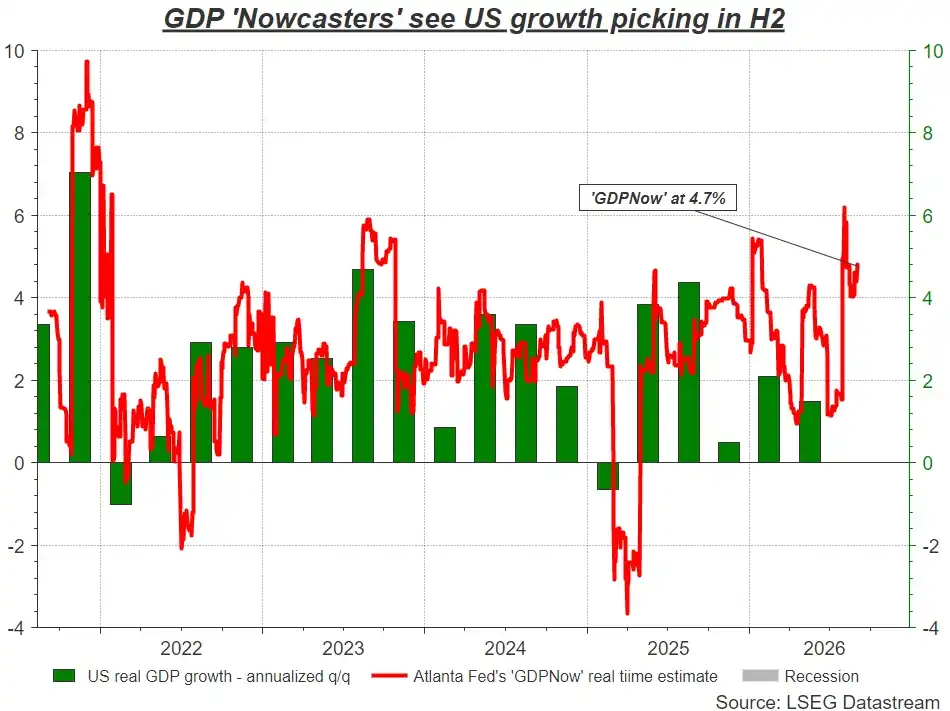
Even if one agreed with the call for rate cuts now, despite the cost-of-living issues, linking the Fed's hesitation to a threat to "stop trading with foreign countries" has left most commentators and investors questioning the President's grasp of basic economics.

"Clueless" or "Puppet"?

Perhaps Friday's post was just a hasty attempt to re-energize his latest offensive in the trade tariff war. But even then, deliberately weakening foreign economies by cutting off imports via tariffs or executive order could prompt those countries to cut rates while also potentially raising import prices at home. That wouldn't give the U.S. the world's lowest interest rates.

The market's lack of reaction to Trump's latest Fed comments might indicate investors are growing more skeptical and cautious about the President's increasingly outlandish posts. For example, Trump recently claimed to have "blown to pieces" Iran's Kharg Island oil hub, which turned out to be completely false.

So where does this leave Kevin Warsh? The Trump-appointed chair has struggled to establish his own credibility since taking office in May, with concerns about White House political pressure constantly looming over him.

However, Warsh seemed to lean noticeably hawkish in his recent keynote speech at Jackson Hole.

A rate hike now would not only highlight the Fed's commitment to its inflation target (regardless of how little consumer price inflation trends fluctuate this week) but also affirm Warsh's control over the central bank and help him create distance from the President.

"A 25bp hike is good PR. It ends the credibility narrative and months of speculation over whether Warsh is a puppet," wrote TS Lombard economist Dario Perkins. He noted that in the last 50 years, only Janet Yellen didn't raise rates within two months of becoming Fed chair.
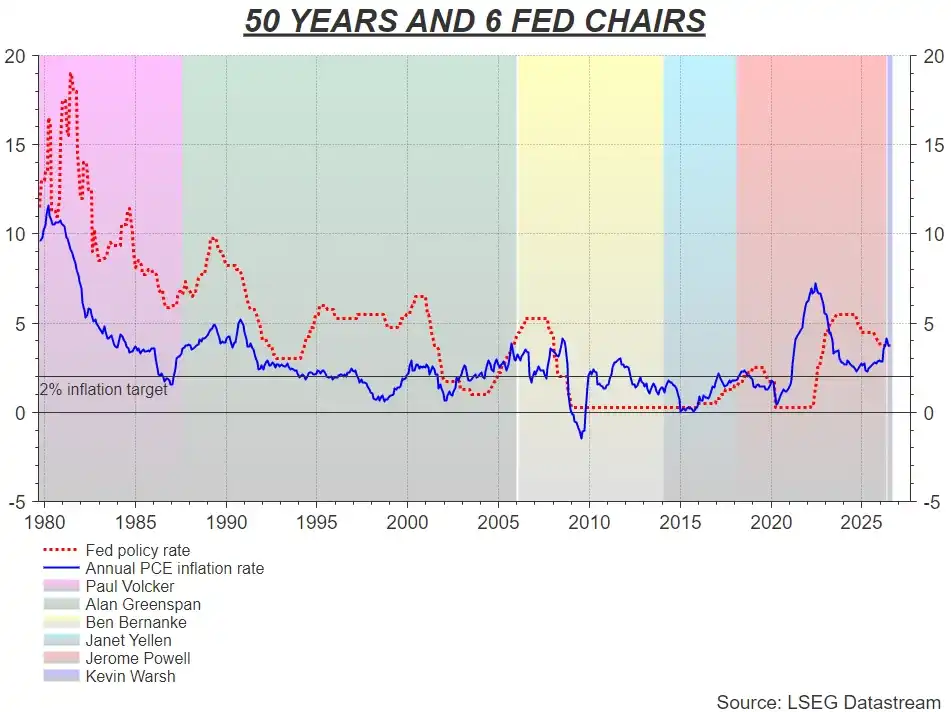
The perceived cost of the Fed and its current head being seen as cowed by a White House whose views are "hard to explain" outweighs any negative impact from a quarter-point hike. In fact, hiking now might even help lower long-term bond borrowing rates by reaffirming the Fed's inflation-fighting credibility, taking some pressure off Treasury Secretary Scott Bessent; and long-term rates arguably have a bigger impact on the economy than the policy rate.

"Warsh only gets credibility when Trump starts calling him an idiot!" Perkins added.

For now, Warsh still seems "great" in the President's eyes. But it took Trump only a year to go from praising Powell as "brilliant" to labeling him "clueless" as rates kept rising. Warsh faces significant choices, even if they risk angering the person who appointed him.

(These views are those of the author, Mike Dolan, a Reuters columnist.)

Related Questions

QWhat is the main point made by the author regarding President Trump's recent criticism of the Federal Reserve?

AThe author argues that President Trump's illogical criticism of the Federal Reserve and his demand for rate cuts paradoxically provides an opportunity for Fed Chairman Kevin Warsh to raise rates, which would help him establish credibility and distance himself from the White House.

QAccording to the article, why is President Trump's argument for lower interest rates considered illogical?

ATrump's argument is considered illogical because it suggests a high-growth economy like the U.S. should have the world's lowest interest rates, while most economists believe the opposite is typically true due to inflationary pressures from an overheating economy. Furthermore, his threat to stop trade with countries running a deficit with the U.S. has no logical connection to Fed rate policy.

QWhat opportunity does Trump's critique create for Fed Chairman Kevin Warsh, according to the analysis?

ATrump's critique creates an opportunity for Warsh to lead the Fed in raising interest rates. This move could demonstrate the Fed's commitment to its inflation target, confirm Warsh's control over the central bank, and help him build personal credibility by distancing himself from political pressure from the White House.

QHow did the market react to President Trump's latest comments on the Federal Reserve, and what does this reaction suggest?

AThe market showed little reaction to Trump's latest comments. This lack of reaction suggests investors are becoming increasingly skeptical and cautious towards the president's more outlandish posts, as seen with his earlier false claim about bombing an Iranian oil hub.

QWhat is the significance of a potential rate hike for Fed Chairman Kevin Warsh's reputation, as highlighted in the article?

AA potential rate hike is significant for Warsh's reputation because it would serve as a strong public relations move. It could end the narrative questioning his credibility and speculation that he is a 'puppet' of the White House, ultimately helping him establish his independence and authority as Fed Chair.

Related Reads

Mercado Bitcoin begins post-hack reopening without a timeline for withdrawals

Mercado Bitcoin, one of Brazil's largest crypto exchanges, began restoring read-only access to customer accounts in phases on Monday, a week after attackers drained an estimated $49 million from the platform. Access started at 19:00 UTC, with all accounts expected to be viewable by 21:00 UTC, showing holdings as they stood on Nov. 2, the day of the hack. The exchange has yet to say when customers will be able to withdraw funds. Fabricio Tota, vice president of new business, said the exchange hoped read-only access would reassure customers that their assets were still recorded on the platform. He explained that the company opted for "a more conservative approach" to reactivating accounts "to ensure our return happens with the utmost security." The caution follows concerns from blockchain security analysts that attackers were able to access addresses, draining funds through standard transfers rather than a smart contract exploit. Blockchain analysts traced some of the stolen funds to customer deposit addresses, but Mercado Bitcoin says customers won't bear the losses. Tota said the vast majority of assets were never even touched by anyone and were not involved in the incident. On Nov. 4, Mercado Bitcoin pledged to cover all losses with company funds, bolstered by a $20 million investment from stablecoin issuer Tether in July. Tota highlighted that a portion of the stolen funds were also frozen in the hours after the company announced the attack. The next phase of recovery will require users to confirm their registration details before they can move funds. The exchange plans to restore withdrawals via Pix, Brazil's instant payment system, initially allowing customers to withdraw only to accounts in their own name. Tota gave no date for either step. Mercado Bitcoin has yet to explain how the attackers gained access to its wallets. Blockchain data company Bitquery found that as of Nov. 4, wallets linked to the attacker held most of the stolen funds that had escaped freezes, including 106.07 BTC.

cointelegraph2h ago

Mercado Bitcoin begins post-hack reopening without a timeline for withdrawals

cointelegraph2h ago

Avalanche’s AVAX leads crypto gains following NYSE tokenization deal

Avalanche's AVAX token rose as much as 10% on Monday, becoming the top gainer among the 100 largest cryptocurrencies, after the New York Stock Exchange announced plans to use Avalanche's blockchain to settle trades on a new platform for trading tokenized stocks around the clock. AVAX later eased to $8.86, still up over 8% on the day, with a market cap of around $3.95 billion and $439.7 million traded in the past 24 hours. Avalanche's total value locked stands at $633 million, up 4% over the past day. NYSE's head of digital issuance, Dennis Lee, said the exchange is examining how blockchain technology can expand its equities offerings and is picking the right technology for each job. The deal underscores Wall Street's growing effort to use blockchain to make stock trading faster and enable trading outside regular market hours; traditional US markets are open 9:30 am to 4:00 pm EST on weekdays, with trades often taking at least one business day to settle. The NYSE first announced plans for the platform in January, and Ava Labs revealed in September that the exchange had spent about a year testing Avalanche, though the final selection was not confirmed until Monday. Avalanche will record stock trades and help complete transactions on the platform, which will let investors buy and sell digital versions of stocks across different blockchains. Lee said the settlement ledger needs to be fast, reliable, permissioned, cost-predictable, and backed by a large developer community—all of which Avalanche meets. The platform could launch before the end of 2026 pending regulatory approval. Ava Labs chief business officer John Nahas said first conversations with the NYSE began nearly a year ago and called it an important step toward blockchain becoming foundational financial infrastructure. The news comes as other major firms invest in blockchain for faster, round-the-clock trading: Nasdaq plans to invest $100 million in Kraken's parent Payward to launch tokenized stocks by Q2 2027, and the DTCC launched a service in October allowing firms to turn traditional securities into digital tokens. The NYSE deal follows other efforts to bring traditional assets onto Avalanche, including Progmat moving over 452 billion yen in digital securities onto a dedicated Avalanche blockchain in July and Aave Labs' plans for a lending service using tokenized assets as collateral.

cointelegraph3h ago

Avalanche’s AVAX leads crypto gains following NYSE tokenization deal

cointelegraph3h ago

Trading

Spot
活动图片




