Solana Breakpoint 2026 London Notes: Solana’s Coming of Age and the Token Supercycle
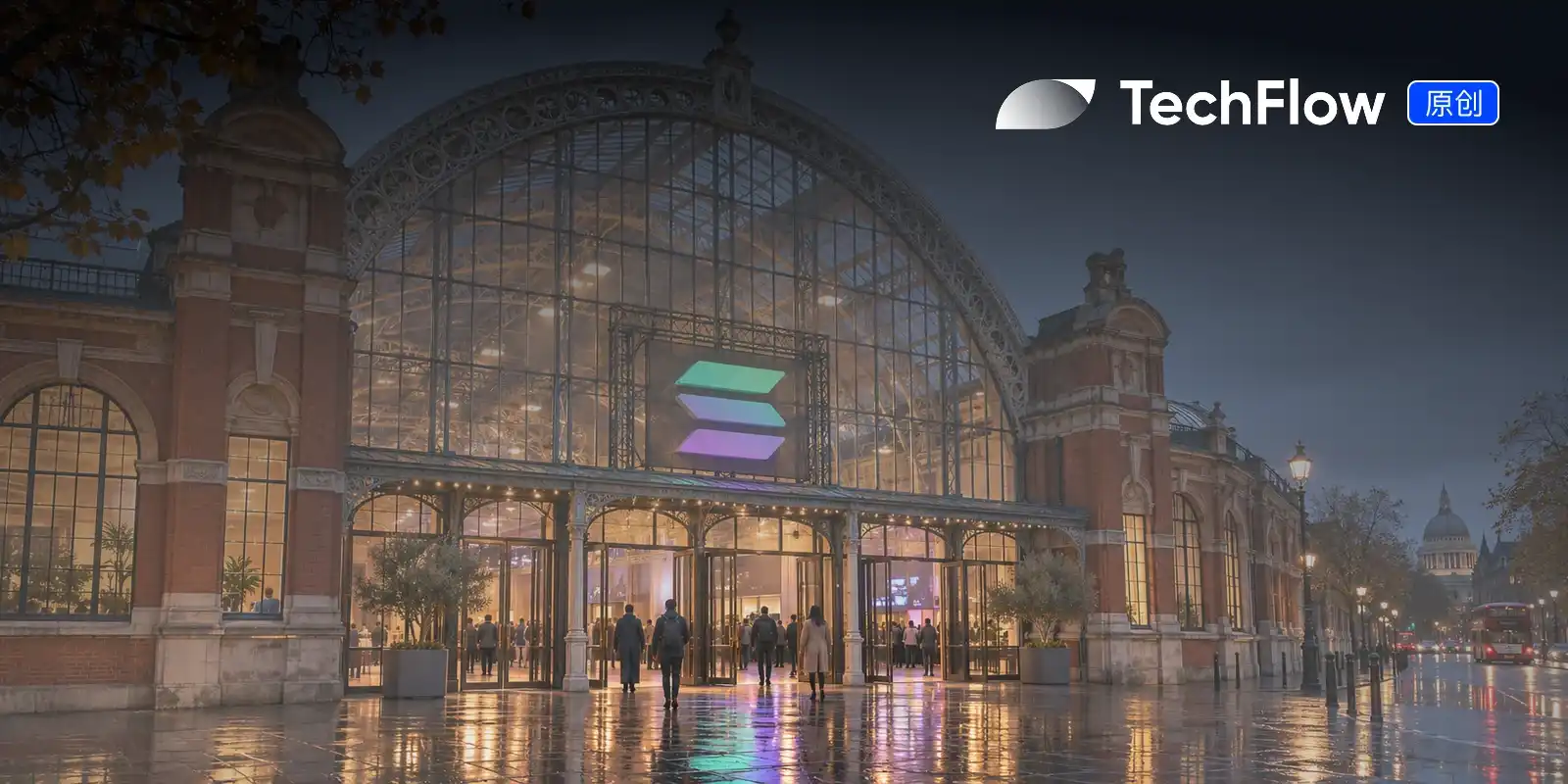
Solana Breakpoint 2026 was held in London at the Olympia Convention Centre, drawing over 8,000 attendees from more than 100 countries—the first time the conference left the sunny climes for Europe. The headline announcement had nothing to do with token launches or fundraising: Solana's mainnet officially graduated from Beta to 1.0 after roughly six years and eight months in "test" status, a moment met with prolonged applause. The upgrade reflects real technical change—200ms block times activated in October 2026, doubling block opportunities per second, and the Alpenglow consensus bringing finality down to 150ms.
The two-day agenda under the "Token Supercycle" theme was sharply divided. Day one, dubbed "Boomer Day," targeted traditional finance with stablecoins, cross-border payments, tokenized RWAs, and macroeconomics, featuring executives from Barclays, Western Union, BNY Mellon, and Zelle. Day two pivoted to AI agents, prediction markets, consumer apps, and programmable capital, with speakers like Balaji Srinivasan and Y Combinator's Nemil Dalal.
Institutions are no longer just watching—they're moving in. SoFi became the first US national bank to support direct on-chain Solana deposits, launched SoFiUSD, and integrated across the ecosystem within six months. MoneyGram became a Solana validator and launched remittance ramps across 170 countries. Bullish acquired Equiniti for $4.2 billion and has tokenized 151 million shares on Solana. Tokenized equities on Solana surpassed $10 billion in monthly volume with 95% global market share, and RWA TVL hit a $5 billion record in October. Backpack's Sunrise platform tokenized SpaceX on IPO day, and Powerus saw $8 million in tokenized trading volume within four hours—exceeding its Nasdaq volume.
DeFi veterans stayed busy: Jupiter launched "Aggregate Everything" with token baskets, yield vaults, and cross-chain transfers, surpassing $2 trillion in aggregated DEX volume. Kamino, with $1.16 billion TVL, pushed into fixed-rate lending, private credit, and RWA DEX.
The guest list read like Davos—Michael Lewis, Boris Johnson, former UK chancellor Sajid Javid—yet the atmosphere stayed hacker-style. Each attendee received a programmable ESP32-C5 hardware badge, and a 12-day London Hacker House preceded the event. Lily Liu's vision of internet capital markets—where assets anywhere can raise globally, priced in dollars, settled openly—felt less like a slogan and more like something being delivered.
marsbit21h ago