Samsung Wallet Supports USDC Cross-Border Remittances: Solana and Sui as Underlying Networks, Coinbase Responsible for Custody

marsbitPublished on 2026-10-08Last updated on 2026-10-08

Abstract

Samsung Wallet now supports cross-border USDC transfers for eligible Galaxy users in the US, starting the last week of October. This feature, integrated directly into the pre-installed Samsung Wallet app on approximately 82 million devices, allows users to send the USDC stablecoin to external crypto wallets or directly to bank accounts in over 60 countries, with recipients receiving local currency. The service is built on the Solana and Sui blockchain networks for underlying transactions. Coinbase provides custody for the stablecoin through Coinbase Prime Vault, while Bastion supplies the regulated stablecoin infrastructure. This move simplifies the user experience by removing typical crypto setup complexities. Funding occurs through built-in channels, and transactions require biometric authentication on registered devices. Samsung does not charge fees for sending USDC to compatible wallets, though receiving wallets or exchanges may apply their own fees. Industry observers view this integration as a significant step toward mainstream adoption of stablecoins for payments, leveraging the massive distribution channel of pre-installed mobile wallets. The company has indicated future plans may include enabling stablecoin payments for online and tap-to-pay transactions on eligible devices. Expansion beyond the US will depend on local regulations.

Author: Olivier Acuna

Compiled by: TechFlow

TechFlow Insight: Samsung aims to turn its Wallet into a cross-border payment gateway: Approximately 82 million US Galaxy devices will be able to send USDC starting from the last week of October, with funds transferable to local bank accounts in over 60 countries. The underlying networks are Solana and Sui, custody is handled by Coinbase Prime Vault, and stablecoin infrastructure is provided by Bastion. For investors, this is more than just a smartphone manufacturer's experiment—it represents the implementation of stablecoin distribution through a pre-installed wallet pipeline, placing SOL, SUI, USDC, and Coinbase on the same consumer-facing chain.
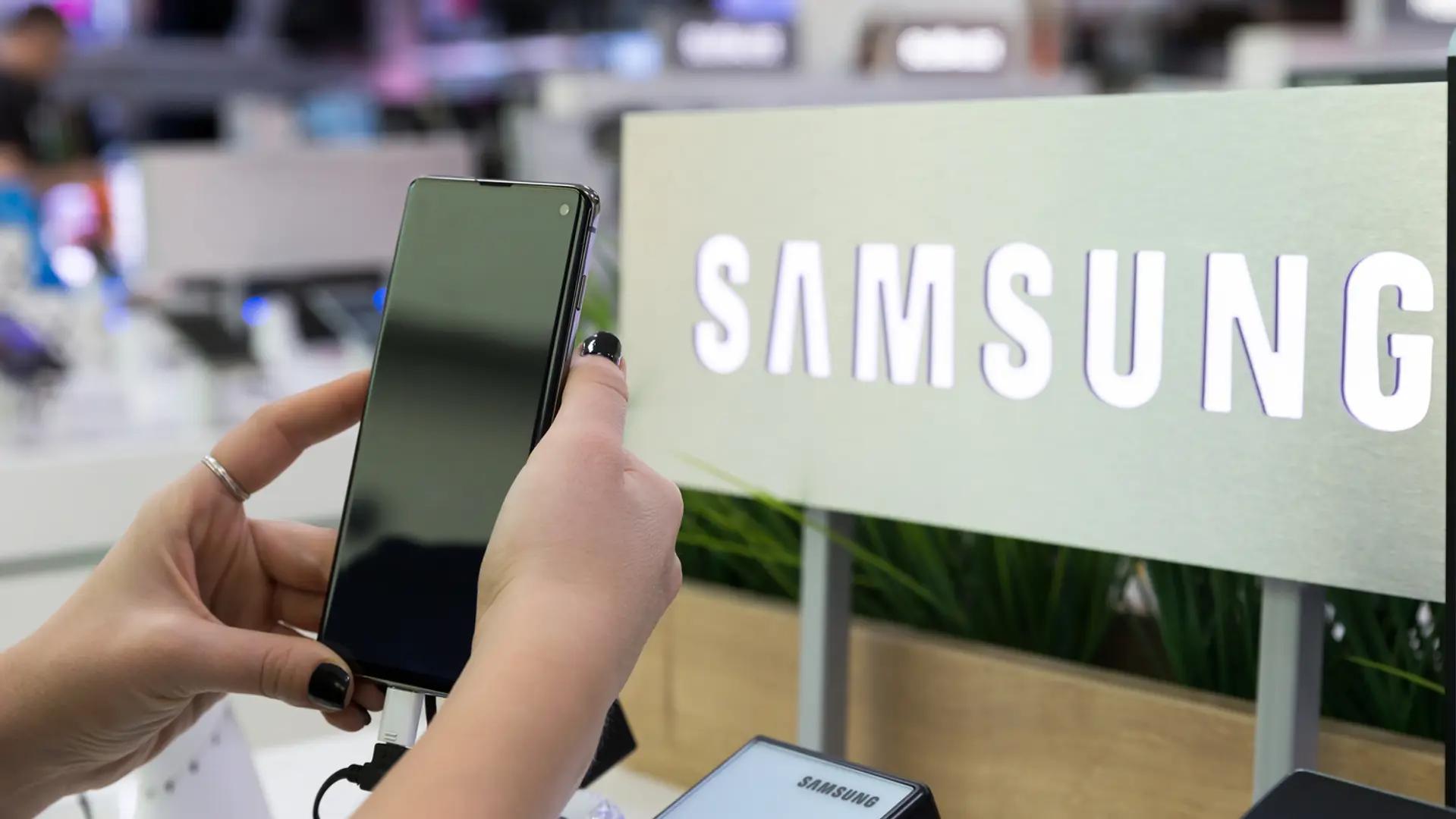
Samsung is transforming its wallet application into a cross-border payment tool: Eligible users will be able to send USDC to other wallets and bank accounts starting from the last week of October.

"Sending money abroad should be as easy as using the wallet already installed on your phone," said Woncheol Chai, head of Samsung Electronics' digital wallet business. "By integrating USDC transfers into Samsung Wallet, eligible Galaxy users can get started without downloading additional apps or managing private keys themselves."

This feature will be available on approximately 82 million Galaxy devices in the United States and will be fully compatible with Samsung Wallet, which already stores bank cards, identification documents, and boarding passes—according to a statement released by Solana on Wednesday announcing the partnership with Samsung.

To support this service, Solana and Sui will provide the underlying blockchain networks. Coinbase will handle custody of the stablecoin via Coinbase Prime Vault, while Bastion will supply regulated stablecoin infrastructure.

Through this integration, users will be able to send Circle's stablecoin USDC—the world's second-largest dollar-pegged token, favored by institutions for its strong regulatory backing. According to the IMF's annual report, the use of stablecoins in cross-border transactions has grown rapidly this year due to low transaction costs.

Galaxy users can seamlessly send USDC to compatible crypto wallets abroad or directly to eligible bank accounts in over 60 countries, with recipients receiving funds in their local currency. Samsung will not charge fees for USDC transfers to compatible external wallets, although receiving wallets or exchanges may impose additional fees.

For users, this product eliminates much of the typical crypto setup required to send stablecoins. Samsung states that customers will fund transfers through built-in on- and off-ramps and must use biometric authentication on registered Galaxy devices to send funds.

This launch turns Samsung's broader stablecoin ambitions into a consumer product. Samsung had previously stated in August its plans to add stablecoin savings and payment features to hundreds of millions of Galaxy phones; analysts told CoinDesk at the time that this could position Samsung as a significant distributor of digital dollars. The US market release marks its first large-scale deployment.

This integration provides Samsung with a token distribution channel—something crypto companies have historically struggled to build themselves. Embedding the technology into a familiar payment app already installed on tens of millions of phones shifts stablecoins from speculative trading tools to simple remittance products: recipients can receive funds directly as fiat into their bank accounts, without even needing to open a crypto wallet.

Industry professionals view this framework as a path for stablecoins to achieve mainstream adoption in cross-border payments.

"Stablecoins have the potential to make moving money globally faster and simpler, and we want Galaxy users to benefit from this without having to grapple with the complexities of traditional crypto tools," said Lily Liu, President of the Solana Foundation.

Liu noted that stablecoins have already proven blockchain as an efficient way to move money globally quickly and cheaply. However, she added that stablecoins previously lacked a pathway to mainstream adoption, and the partnership with Samsung addresses this issue.

Borderless echoed this sentiment in a statement to CoinDesk.

"Mass adoption will never come from everyone downloading crypto apps. It will come from the phone already in your pocket. I expect Apple and Google to follow suit; when that happens, sending money abroad will be as easy as sending a text message," said Kevin Lehtiniitty, CEO of Borderless.xyz, in a LinkedIn post.

Samsung has not yet specified when the feature will expand beyond the United States. Future availability depends on local regulations. The company stated that it may later enable stablecoin online payments and tap-to-pay transactions on eligible Galaxy phones.
Trending Cryptos

Related Questions

QWhat are the main features of the new USDC cross-border payment service integrated into the Samsung Wallet, and which users will initially have access to it?

AThe new service allows users to send the USDC stablecoin from within the Samsung Wallet to compatible crypto wallets or directly to bank accounts in over 60 countries. It is initially rolling out to eligible Galaxy device users in the United States (approximately 82 million devices) starting in the last week of October. The service removes typical crypto complexities for users by leveraging built-in funding channels and requiring biometric authentication on registered devices.

QWhich key companies and technologies are powering this Samsung Wallet integration for USDC cross-border transfers?

AThe integration is powered by Solana and Sui, which provide the underlying blockchain networks. Coinbase handles custody through its Coinbase Prime Vault, and Bastion provides regulated stablecoin infrastructure. The stablecoin used is Circle's USDC.

QAccording to the article, why is this Samsung Wallet feature considered significant for the adoption of stablecoins?

AIt is significant because it embeds stablecoin transfers into a familiar, pre-installed payment app used by millions of mainstream consumers, rather than requiring them to download a separate crypto application. This provides a major distribution channel for stablecoins, moving them from speculative trading towards a simple remittance product. Industry leaders see it as a clear path to mainstream adoption for cross-border payments.

QWhat advantages does the Samsung Wallet service offer to users in terms of fees and convenience for cross-border payments?

ASamsung will not charge a fee for sending USDC to compatible external wallets, though the receiving wallet or exchange may charge. The primary convenience is that users can send funds internationally without needing to manage private keys or install additional apps, using the Samsung Wallet they already have. Recipients in supported countries can receive funds directly into their local bank account in local currency, without needing a crypto wallet.

QWhat future developments related to stablecoin functionality on Samsung devices are mentioned in the article?

AThe article mentions that Samsung has previously stated ambitions to add stablecoin savings and payment features to hundreds of millions of Galaxy phones. Following this U.S. launch, the company may later enable stablecoin online payments and tap-to-pay transactions on eligible devices. Expansion beyond the U.S. is planned but will depend on local regulations.

Related Reads

Coin-Stock Trend Indicator丨Third-largest BTC treasury company Twenty One Capital buys $10 million in BTC for the first time since July 2025; Bitmine total holdings value drops $2.5 billion in a week (November 17)

This week's crypto stock snapshot notes that the recent US equity move was merely an oversold rebound rather than a new high, with the impact of the Democratic midterm election win still spreading and Nvidia founder Jensen Huang's resignation controversy evolving into a broader AI-sector storm. The week's biggest US market event is Anthropic's IPO on November 19, though its fundraising and valuation fall short of SpaceX's record. Japanese stocks remain favored by Morgan Stanley analysts despite AI-related weakness, while Korean stocks fell 2.59% to 4,968.45, their lowest since February 2. In crypto stocks, last week's market crash hit DAT treasury companies hard, with ETH treasury firm Bitmine's holdings value dropping from $14.3 billion to $11.8 billion in a week, nearly all due to ETH's price decline. Listed companies (excluding miners) bought a net $51.86 million in Bitcoin last week, down 45.2% week-over-week. Strategy bought 485 BTC at $68,887 each for about $33.4 million, bringing total holdings to 850,849 BTC; Metaplanet bought none. Capital B bought 12 BTC at $77,500.2, holding 3,550 BTC; Strive bought 251 BTC at $69,853 for about $17.53 million, holding about 43,404 BTC. Total tracked holdings reached 1,171,317 BTC, up 0.04% week-over-week, worth about $75.53 billion, or 5.8% of Bitcoin's circulating market cap. Twenty One Capital bought 154.32 BTC for about $10 million in cash, its first purchase since July 2025, bringing holdings to about 43,700 BTC and making it the third-largest listed Bitcoin treasury; CEO Rapha Zagury said volatility creates opportunity and the firm bought the dip. BitMine added 7,653 ETH last week, holding 6,077,745 ETH (4.97% of total supply, 0.03% short of its 5% goal) plus 216 BTC, a $180 million investment in Beast Industries, $67 million in Eightco Holdings, and $448 million in cash and securities; its ETH holdings are worth about $11.1 billion at $1,823 per ETH. Chairman Tom Lee attributed ETH's 28% two-week drop to Nvidia-related turmoil triggering Asian margin selling and investors raising cash for Anthropic's reported November 18 IPO, saying it contradicts improving fundamentals. DeFi Development Corp. added 9,482 SOL, with Solana treasury holdings reaching about 2.62 million tokens, growing for a 10th straight week; its CHAD preferred stock raised enough to buy over 230 SOL today. CZ said Japan-listed ASIAN STAR will distribute 8 million yen worth of BNB to shareholders and pursue Japanese real estate tokenization on BNB Chain. DeFi Technologies reported Q3 2026 revenue of $18.3 million (down about 18% year-over-year), operating income of $7 million, and net profit of $22.3 million, with $53.4 million in cash and stablecoins and $48.2 million in digital assets. Ripple-backed Evernorth disclosed its 346 million XRP was booked at $342 million versus an initial $847 million record value, with cumulative impairments of $505 million, a nearly 60% decline.

marsbit15m ago

Coin-Stock Trend Indicator丨Third-largest BTC treasury company Twenty One Capital buys $10 million in BTC for the first time since July 2025; Bitmine total holdings value drops $2.5 billion in a week (November 17)

marsbit15m ago

SMIC Closes In on Global No. 2

SMIC is closing in on the global foundry industry's second place. In the first three quarters of 2026, the company reported revenue of 60.618 billion yuan (up 22.43% year-on-year) and net profit of 7.314 billion yuan (up 91.57%), with gross margin hitting a four-year high of 25.59%. In Q2, Samsung held 5.9% of the global foundry market versus SMIC's 5.4%—a gap of just 0.5 percentage points, down from 1.4 points the previous quarter. Revenue-wise, the two were only about $254 million apart in Q2, and SMIC's Q4 guidance of $3.32–3.38 billion would exceed Samsung's Q2 level. Growth is no longer driven mainly by smartphones, whose share of wafer revenue fell from 21.5% to 14.3%, amid a 15.2% decline in domestic smartphone shipments. Instead, industrial and automotive revenue nearly doubled, rising from 11.9% to 19.3% of revenue, while computer and tablet revenue grew about 55%. SMIC has invested in BCD processes covering battery management, digital isolation, and smart power switches, with some processes meeting Grade 0 automotive standards. AI demand is also creating new opportunities in mature-node chips such as power management, controllers, and specialty memory; customer pull for these AI-supporting chips exceeded expectations, prompting SMIC to trim engineering and R&D wafers to prioritize mass-production orders. Q3 wafer shipments exceeded 3 million 8-inch equivalent wafers for the first time, with utilization at 97.3%. A key financial inflection point: after tripling capacity over a decade (from 339,000 to 1.1168 million wafers per month), SMIC's capital expenditure is falling—Q3 capex dropped 56.5% year-on-year to 7.423 billion yuan, and cash paid for fixed assets fell over 30% versus 2024 and 2025. Major expansion projects in Shanghai, Beijing, Tianjin, and Shenzhen are 95–98% complete, with construction-in-progress declining from 92.619 billion to 62.652 billion yuan as projects transfer to fixed assets. However, management cautions that longer equipment lead times could disrupt capex pacing, and Q4 gross margin guidance of 26–28% is below Q3's 29.9% due to new capacity and R&D costs. The next decade's challenge is not just overtaking Samsung, but proving that past massive investments can steadily convert into real profits and cash flow.

marsbit24m ago

SMIC Closes In on Global No. 2

marsbit24m ago

Duan Yongping cut Nvidia by 63% in Q3 and cleared out of Alibaba, but he says "not in a hurry to sell"

According to the 13F filings disclosed on November 16, Duan Yongping's H&H International Investment held positions worth $17.191 billion at the end of Q3 2026, down from the previous quarter, across 16 companies. Apple remained the top holding at $7.061 billion (41.07% of the portfolio), followed by Berkshire Hathaway at $4.161 billion and Pinduoduo at $2.181 billion. During the quarter, he added to Pinduoduo and Tesla, opened a new position in SpaceX, and kept Occidental Petroleum unchanged. The most notable moves were a 63.07% reduction in Nvidia—selling 3.9612 million shares to hold 2.319 million shares—and a full liquidation of Alibaba's 301,400 shares. Nvidia traded at highs in Q3 but has plunged 31.63% since the start of Q4 through November 16, while Alibaba recently hit a new low since its October 2025 correction. Regarding Nvidia founder Jensen Huang's resignation, Duan said most of his reasons for owning NVDA remain, though Huang's absence matters greatly and is already reflected in the price. He expressed interest in seeing whether the company can navigate the crisis and said he does not want to rush to sell. He noted he sold quite a few puts that day. Duan believes the short-term business impact will be minimal, but within a few years it will depend on whether Nvidia can find a good CEO, as Huang was hardworking and far-sighted about AI. He said Nvidia's business model requires a strong management team, or it may become less formidable in three to five years, though AI is just beginning and should grow well over the next decade. On whether Huang might return, Duan said it is not a zero-probability event and the board must bear final responsibility for the decision.

marsbit24m ago

Duan Yongping cut Nvidia by 63% in Q3 and cleared out of Alibaba, but he says "not in a hurry to sell"

marsbit24m ago

Trading

Spot

Hot Articles

Discussions

Welcome to the HTX Community. Here, you can stay informed about the latest platform developments and gain access to professional market insights. Users' opinions on the price of SOL (SOL) are presented below.

活动图片