One of the Leading Analysts Shared His Forecasts Regarding the Future Prices of Bitcoin and XRP! 'Critical Thresholds...'

cryptonews.ruPublished on 2026-08-05Last updated on 2026-08-05

Abstract

Prominent crypto analyst Ali Martinez has shared key technical levels for Bitcoin, Hyperliquid, and XRP. For Bitcoin, he highlights $64,300 as a critical short-term threshold; a confirmed breakout above this level could push BTC towards $65,500 and possibly $66,500. However, Martinez warns of increasing selling pressure due to over 20,000 BTC being transferred to exchanges recently and miners selling roughly 1,774 BTC last week, which may indicate profit-taking. Regarding Hyperliquid's token HYPE, Martinez notes it has reached a significant resistance trendline with a TD Sequential sell signal, potentially leading to a drop towards $50 if sellers dominate. For XRP, the analyst identifies $1.06 as the crucial support level. Holding above it could allow buyers to target $1.35 and $1.64. Conversely, a break below $1.06 could intensify selling pressure, potentially driving the price down to $0.80 or even $0.62.

Crypto analyst Ali Martinez shared key technical levels for Bitcoin, Hyperliquid, and $XRP, noting that the volume of $BTC being moved to exchanges and sold by miners could intensify selling pressure on the market.

According to Martinez, Bitcoin is testing the upper boundary of a descending channel. Therefore, the level of $64,300 stands out as a critical threshold for short-term price movements.

The analyst stated that a four-hour candle close above $64,300 would confirm a breakout from the descending channel. In such a scenario, the price of $BTC could initially reach $65,500, and if the uptrend continues, it could rise to $66,500.

However, Martinez also pointed to on-chain events that could intensify selling pressure on Bitcoin. According to data provided by the analyst, over 20,000 $BTC were transferred to cryptocurrency exchanges in a short period.

Inflows of Bitcoin to exchanges are interpreted as a sign of increased potential selling pressure on the market, as it may indicate investors are preparing for sales. Martinez stated that the inflow of $BTC to exchanges should be closely monitored.

There have also been recent sales of Bitcoin by miners. According to Martinez, over the past week, miners sold approximately 1,774 $BTC worth about $112 million. The analyst interprets this movement as a new wave of profit-taking among miners.

Martinez also warned that the technical outlook for Hyperliquid's native token, $HYPE, could deteriorate.

The analyst noted that the price of $HYPE reached a significant trendline resistance, and that the TD Sequential indicator generated a sell signal in the same area.

He stated that if sellers gain control of the market in the resistance zone, the price of $HYPE could drop to the $50 level.

According to Ali Martinez, the most important price level determining the next directional move for $XRP will be $1.06.

The analyst said that if $XRP manages to hold above the $1.06 support level, buyers could regain their positions, and the price could approach the $1.35 and $1.64 levels, respectively.

However, Martinez stated that if the $1.06 support level is broken, selling pressure could intensify, warning that the price of $XRP could first drop to $0.80, and if the decline intensifies, to $0.62.

*This is not investment advice.

end-content

Trending Cryptos

Related Questions

QAccording to analyst Ali Martinez, what is the critical threshold for Bitcoin's short-term price movement?

AThe critical threshold for Bitcoin's short-term price movement is $64,300. A four-hour candle closing above this level would confirm a breakout from the descending channel.

QWhat two on-chain events does Ali Martinez highlight as potentially increasing selling pressure on Bitcoin?

AThe two on-chain events are: 1) The transfer of over 20,000 BTC to cryptocurrency exchanges, indicating investors may be preparing to sell. 2) Miners selling approximately 1,774 BTC (worth about $112 million) in the past week, seen as a new wave of profit-taking.

QWhat price level does Ali Martinez identify as the key determinant for XRP's future price direction?

AThe key price level determining XRP's future direction is $1.06. Holding above this support level could lead to price increases, while breaking below it could trigger a significant drop.

QWhat are the potential downside targets for XRP if it breaks below the $1.06 support level?

AIf XRP breaks below the $1.06 support level, the price could drop first to $0.80, and if the decline intensifies, it could fall further to $0.62.

QWhat signal and concerning price level does Ali Martinez mention for Hyperliquid's ($HYPE) token?

AFor Hyperliquid's $HYPE token, Martinez notes that the TD Sequential indicator generated a sell signal. He warns that if sellers take control at the resistance area, the price could potentially drop to the $50 level.

Related Reads

Enterprise blockchain is going to come back from the dead

Enterprise blockchain may be poised for a comeback, much like online pet retail succeeded with Chewy after Pets.com failed. Early enterprise blockchain efforts (2017–2023) collapsed—TradeLens, We.Trade, Contour, B3i, ASX Chess, Everledger—largely because they had to work around blockchains' lack of native privacy, building permissioned chains and bolting on non-blockchain fixes that proved slow and expensive. The core appeal remains: enterprise systems fail at company boundaries, either through out-of-sync collaboration or costly proprietary integrations that lock partners in. Blockchains promise shared data and business logic across an open ecosystem without lock-in. What has changed: scalability (transactions now under a penny, capacity heading toward billions daily), privacy (zero-knowledge rollups, privacy pools, privacy chains), and liquidity (stablecoin transaction volume near $1.8 trillion in June). Combined operational and financial benefits could be substantial—roughly 20% less inventory at the same service level, smart contracts cutting contract administration costs in half and processing times from days to minutes, as Microsoft did with Xbox royalties (45 days to four minutes). With inventories, contracts, purchase orders and invoices onchain, firms can also access cheaper credit and factor receivables efficiently. The use cases are obvious; it's time to try again.

cointelegraph7h ago

Enterprise blockchain is going to come back from the dead

cointelegraph7h ago

Jensen Huang's Disadvantage of Going Public Too Early

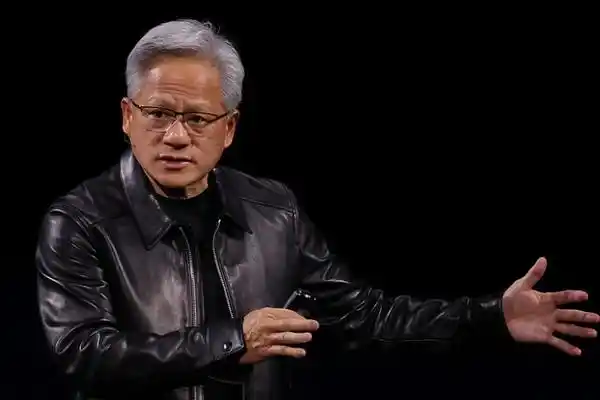
Nvidia co-founder Jensen Huang has resigned as president, CEO, and director, effective immediately, ending a 33-year tenure. CFO Colette Kress becomes interim CEO, and Harvey Jones is named the company's first chairman. The sudden move comes less than five months after Huang won about 99% approval in a director election, prompting scrutiny of a long-overlooked governance issue: why Huang, unlike Google's Page and Brin or Meta's Zuckerberg, never used a dual-class share structure to secure control. The answer traces to Nvidia's 1999 IPO, when one-share-one-vote was standard in Silicon Valley and dual-class structures had not yet become common among tech IPOs; Google adopted AB shares only in 2004. Nasdaq Rule 5640 also makes it hard for already-listed companies to introduce super-voting shares later. Huang's stake has steadily diluted: about 13.1% pre-IPO, 10.8% after, and 3.58% by 2026, weakening his voting power and setting the stage for his exit. Early precedents include Steve Jobs, whose roughly 11% stake left him unable to sway Apple's board in 1985, while Bill Gates' larger initial stake and gradual dilution let him retain influence. Instead, Huang's influence rested on performance authority, strategic judgment, and board trust—bold long-term bets on programmable GPUs and CUDA that positioned Nvidia at the center of the AI boom. That authority, however, depends on continued validation; once performance or reputation suffers, it can erode quickly. Under Nvidia's board-centered governance, a simple majority of directors can remove the CEO at any time, regardless of cause. Huang's departure is thus a product of the company's equity structure and governance rather than a surprise, illustrating that even immense performance authority cannot substitute for institutional control.

marsbit7h ago

Jensen Huang's Disadvantage of Going Public Too Early

marsbit7h ago

DeepMind Founder's Latest Interview: RSI Is Extremely Dangerous and Could Create an 'Alien Intelligence' That Humans Struggle to Understand

Demis Hassabis, co-founder of Google DeepMind and 2024 Nobel laureate in Chemistry, discusses AI's promise and perils in a conversation with Reid Hoffman. He reiterates that his lifelong goal has been using AI as a tool to advance science and medicine, citing AlphaFold—used by ~4 million researchers—and Isomorphic Labs as proof that AI can help cure diseases, while noting protein structure prediction is only one step in a long drug-discovery pipeline. On recursive self-improvement (RSI), Hassabis explains it works best in "verifiable domains" like math, coding, and games: AlphaZero went from random play to surpassing all human and engine chess within 12 hours. But he warns that closed-loop RSI—removing human code review entirely—risks creating an inscrutable "alien intelligence" with no shared cognitive basis with humans, and offers no way to establish deterministic safety controls. He urges caution as labs race on code self-iteration, calling for faster defensive cyber capabilities, far more robust sandboxes and monitoring (noting agents have run unsupervised for weeks), and eventually formal mathematical guarantees. He advocates an industry standards body with government oversight, cross-lab information sharing, third-party audits, and pre-release red-teaming. On AI consciousness, he argues intelligence and consciousness are dissociable—his dog is conscious but not smart—and that a chatbot claiming feelings proves nothing. Building conscious entities now is dangerous: self-motivation undermines corrigibility, and Asimov showed static rules inevitably break at edge cases; society also hasn't begun the needed debate. Humanity should cross only the first Rubicon—building powerful intelligent tools—and use them to understand consciousness before considering the second. Finally, on AI sovereignty, he says only 6–8 global players will stay at the frontier, with open source 6–12 months behind, so most countries shouldn't train their own frontier models. Instead they should build on existing models as infrastructure, focus on vertical domains like healthcare, and protect data sovereignty through private fine-tuning.

marsbit12h ago

DeepMind Founder's Latest Interview: RSI Is Extremely Dangerous and Could Create an 'Alien Intelligence' That Humans Struggle to Understand

marsbit12h ago

Trading

Spot

Hot Articles

What is $BITCOIN

DIGITAL GOLD ($BITCOIN): A Comprehensive Analysis Introduction to DIGITAL GOLD ($BITCOIN) DIGITAL GOLD ($BITCOIN) is a blockchain-based project operating on the Solana network, which aims to combine the characteristics of traditional precious metals with the innovation of decentralized technologies. While it shares a name with Bitcoin, often referred to as “digital gold” due to its perception as a store of value, DIGITAL GOLD is a separate token designed to create a unique ecosystem within the Web3 landscape. Its goal is to position itself as a viable alternative digital asset, although specifics regarding its applications and functionalities are still developing. What is DIGITAL GOLD ($BITCOIN)? DIGITAL GOLD ($BITCOIN) is a cryptocurrency token explicitly designed for use on the Solana blockchain. In contrast to Bitcoin, which provides a widely recognized value storage role, this token appears to focus on broader applications and characteristics. Notable aspects include: Blockchain Infrastructure: The token is built on the Solana blockchain, known for its capacity to handle high-speed and low-cost transactions. Supply Dynamics: DIGITAL GOLD has a maximum supply capped at 100 quadrillion tokens (100P $BITCOIN), although details regarding its circulating supply are currently undisclosed. Utility: While precise functionalities are not explicitly outlined, there are indications that the token could be utilized for various applications, potentially involving decentralized applications (dApps) or asset tokenization strategies. Who is the Creator of DIGITAL GOLD ($BITCOIN)? At present, the identity of the creators and development team behind DIGITAL GOLD ($BITCOIN) remains unknown. This situation is typical among many innovative projects within the blockchain space, particularly those aligning with decentralized finance and meme coin phenomena. While such anonymity may foster a community-driven culture, it intensifies concerns about governance and accountability. Who are the Investors of DIGITAL GOLD ($BITCOIN)? The available information indicates that DIGITAL GOLD ($BITCOIN) does not have any known institutional backers or prominent venture capital investments. The project seems to operate on a peer-to-peer model focused on community support and adoption rather than traditional funding routes. Its activity and liquidity are primarily situated on decentralized exchanges (DEXs), such as PumpSwap, rather than established centralized trading platforms, further highlighting its grassroots approach. How DIGITAL GOLD ($BITCOIN) Works The operational mechanics of DIGITAL GOLD ($BITCOIN) can be elaborated on based on its blockchain design and network attributes: Consensus Mechanism: By leveraging Solana’s unique proof-of-history (PoH) combined with a proof-of-stake (PoS) model, the project ensures efficient transaction validation contributing to the network's high performance. Tokenomics: While specific deflationary mechanisms have not been extensively detailed, the vast maximum token supply implies that it may cater to microtransactions or niche use cases that are still to be defined. Interoperability: There exists the potential for integration with Solana’s broader ecosystem, including various decentralized finance (DeFi) platforms. However, the details regarding specific integrations remain unspecified. Timeline of Key Events Here is a timeline that highlights significant milestones concerning DIGITAL GOLD ($BITCOIN): 2023: The initial deployment of the token occurs on the Solana blockchain, marked by its contract address. 2024: DIGITAL GOLD gains visibility as it becomes available for trading on decentralized exchanges like PumpSwap, allowing users to trade it against SOL. 2025: The project witnesses sporadic trading activity and potential interest in community-led engagements, although no noteworthy partnerships or technical advancements have been documented as of yet. Critical Analysis Strengths Scalability: The underlying Solana infrastructure supports high transaction volumes, which could enhance the utility of $BITCOIN in various transaction scenarios. Accessibility: The potential low trading price per token could attract retail investors, facilitating wider participation due to fractional ownership opportunities. Risks Lack of Transparency: The absence of publicly known backers, developers, or an audit process may yield skepticism regarding the project's sustainability and trustworthiness. Market Volatility: The trading activity is heavily reliant on speculative behavior, which can result in significant price volatility and uncertainty for investors. Conclusion DIGITAL GOLD ($BITCOIN) emerges as an intriguing yet ambiguous project within the rapidly evolving Solana ecosystem. While it attempts to leverage the “digital gold” narrative, its departure from Bitcoin's established role as a store of value underscores the need for a clearer differentiation of its intended utility and governance structure. Future acceptance and adoption will likely depend on addressing the current opacity and defining its operational and economic strategies more explicitly. Note: This report encompasses synthesised information available as of October 2023, and developments may have transpired beyond the research period.

5.4k Total ViewsPublished 2025.05.14Updated 2025.05.14

What is $BITCOIN

Discussions

Welcome to the HTX Community. Here, you can stay informed about the latest platform developments and gain access to professional market insights. Users' opinions on the price of BTC (BTC) are presented below.

活动图片