Mysten Labs Develops System to Verify AI Agent Actions

cryptonews.ruPublished on 2026-10-08Last updated on 2026-10-08

Abstract

Blockchain company Mysten Labs, in collaboration with cloud and AI services provider Google Cloud, is developing the Verifiable Agent Arbiter (VAA). This system aims to help companies verify that AI agents operated within their authorized parameters. The VAA will store detailed operational data—including user requests, model responses, tool invocations, and rule-based decisions—in the customer-managed Google Cloud Storage. Cryptographic proofs of this data will be held on Walrus, an AI-focused data storage platform, while the Sui blockchain will coordinate the overall system's operations.

Blockchain company Mysten Labs and cloud and AI service provider Google Cloud are developing Verifiable Agent Arbiter (VAA). The system will help companies verify that AI agents have acted within the scope of their granted permissions.

VAA will save detailed data about agent operations in Google Cloud Storage, managed by the client: requests, model responses, tool calls, and rule-based decisions. Cryptographic proofs of this data will be stored in Walrus — a data storage platform optimized for AI, and the Sui blockchain will coordinate the system's operation.

Trending Cryptos

Related Questions

QWho are the two companies collaborating to develop the Verifiable Agent Arbiter (VAA) system?

AThe blockchain company Mysten Labs and cloud and AI services provider Google Cloud are collaborating to develop the Verifiable Agent Arbiter (VAA).

QWhat is the primary purpose of the Verifiable Agent Arbiter (VAA) system being developed?

AThe primary purpose of the Verifiable Agent Arbiter (VAA) system is to help companies verify that AI agents operated within their granted authority.

QWhere will detailed operational data about the AI agents be stored within the VAA system?

ADetailed operational data about the AI agents, such as requests, model responses, tool usage, and rule-based decisions, will be stored in Google Cloud Storage, managed by the client.

QWhich platform will be used to store the cryptographic proofs of the AI agents' operational data in the VAA system?

AThe cryptographic proofs of the AI agents' operational data will be stored in Walrus, a storage platform oriented towards AI.

QWhat role does the Sui blockchain play in the Verifiable Agent Arbiter (VAA) system?

AThe Sui blockchain is used to coordinate the work of the entire Verifiable Agent Arbiter (VAA) system.

Related Reads

Strategy stock sheds 5% amid MSCI index removal, Bitcoin sell-off

Strategy (Michael Saylor's Bitcoin treasury company) fell 6.49% on Thursday to close at $114.41, after MSCI confirmed the company's removal from its global equity indexes, compounded by a broader crypto market sell-off. The removal takes effect after the Nov. 30 market close and could trigger selling by index-tracking funds; JPMorgan previously estimated roughly $2.8 billion in potential selling pressure. Ryan Kirkley, CEO of Global Settlement Network, said the decision could distinguish Bitcoin treasury companies from traditional operating businesses and limit indirect crypto exposure for passive investors, noting that index inclusion had given ordinary passive investors leveraged Bitcoin exposure they never chose. He added it raises questions about whether such companies should be classified alongside traditional operating businesses, arguing that buying and holding an asset isn't an operating business but rather a fund that doesn't follow fund rules. In its Aug. 31 response to MSCI's proposed rules, Strategy called the changes a pretext for targeting digital asset treasury companies and downplayed the impact, saying MSCI-linked funds held about 13 million of its shares, just 3.1% of basic shares outstanding. The decline coincided with a broader crypto sell-off, with Bitcoin near $71,340, down 4.3% in 24 hours, and total crypto market capitalization down 3% to about $2.49 trillion.

cointelegraph1h ago

Strategy stock sheds 5% amid MSCI index removal, Bitcoin sell-off

cointelegraph1h ago

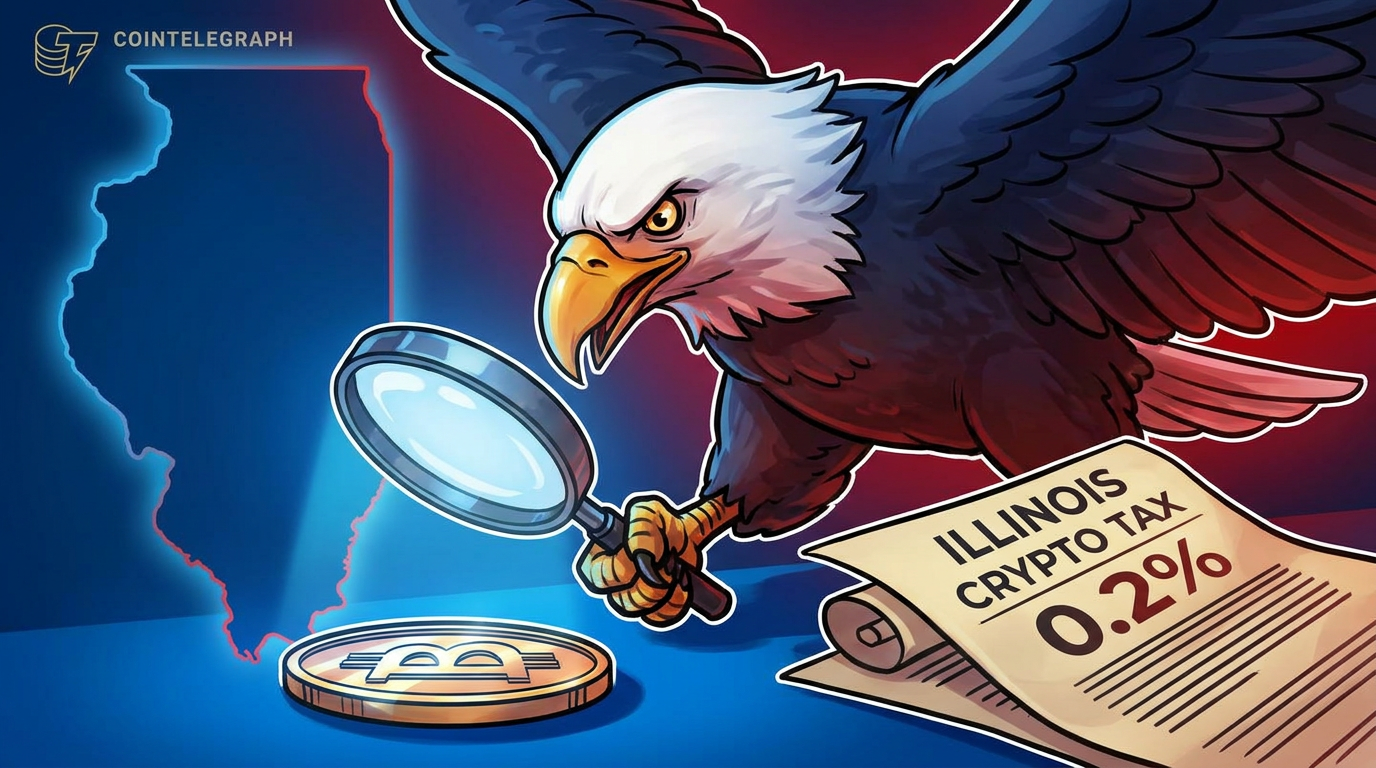
US Justice Department, business groups and DeFi firms challenge Illinois crypto tax

The US Department of Justice, business and financial industry groups, and a coalition of DeFi firms have backed a legal challenge to Illinois' 0.2% digital asset tax, arguing it unfairly targets crypto transactions and could impose taxes even without profit. The Justice Department filed a statement of interest, while the US Chamber of Commerce and SIFMA submitted an amicus filing. A coalition including Andreessen Horowitz, Paradigm, Uniswap and Aave Labs also filed a brief. The law, enacted in June, taxes the value of digital assets exchanged, transferred or stored regardless of profit. The Digital Chamber sued Illinois officials in July, followed by a separate challenge from the Blockchain Association and Crypto Council for Innovation in August. Originally set for Jan. 1, 2027, the tax was delayed to July 1, 2027. Illinois projected $60 million in fiscal year 2027 revenue. SIFMA and the Chamber warned the tax would affect banks, broker-dealers, custodians and asset managers nationwide, exposing them to compliance costs and burdening customers—someone who loses money owes the same tax as someone who profits, and moving assets between accounts could trigger tax without a sale or gain. They argued it discriminates against digital assets and may violate federal internet tax protections and constitutional interstate commerce requirements. The DOJ said the tax undermines federal efforts to promote crypto innovation, citing the Strategic Bitcoin Reserve and GENIUS Act. The DeFi coalition warned the rules could impose obligations on software developers and blockchain participants lacking customer information or control over funds.

cointelegraph2h ago

US Justice Department, business groups and DeFi firms challenge Illinois crypto tax

cointelegraph2h ago

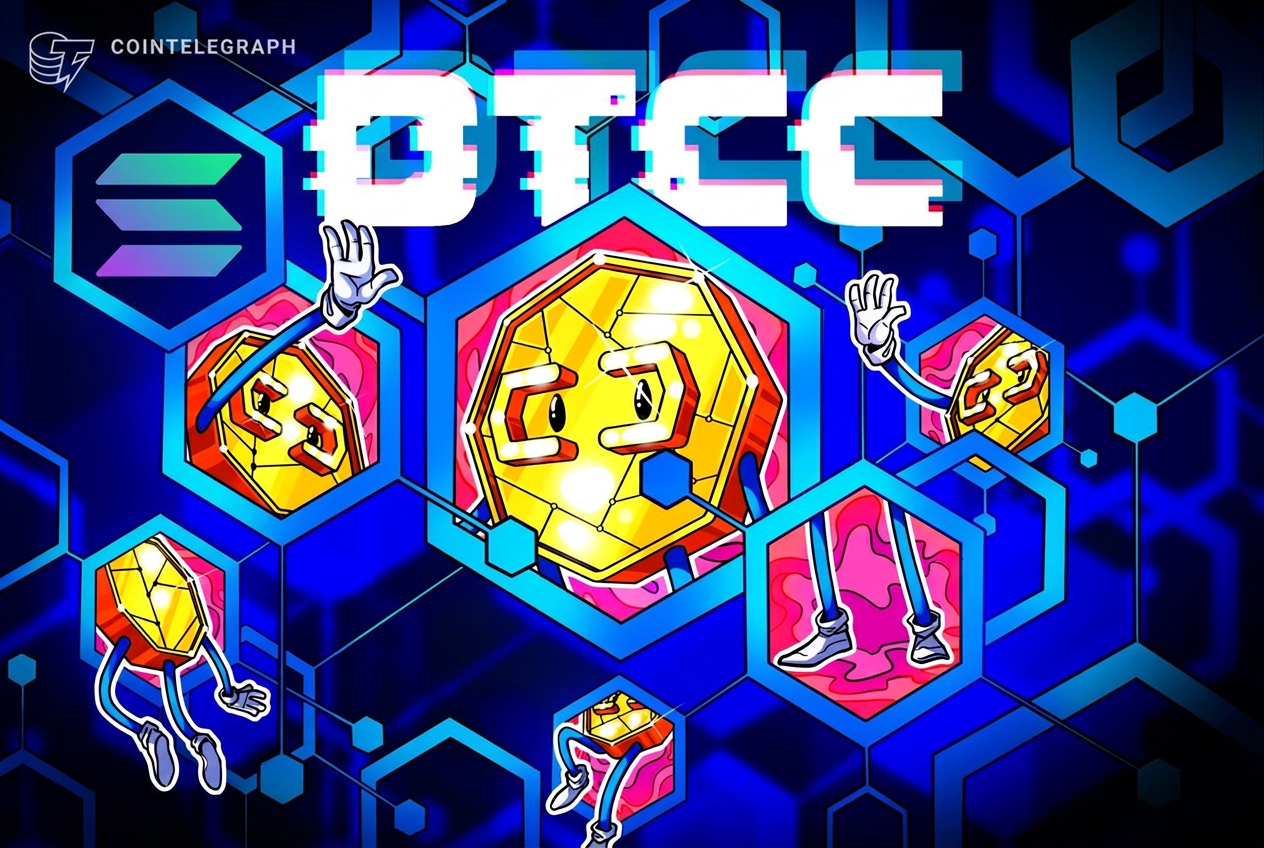
DTCC Plans Solana Expansion as Wallet Rules Limit Access

DTCC plans to connect its tokenization service to Solana in the second half of 2027, allowing certain securities held by its DTC subsidiary to be converted into digital tokens on the network. Analysts say the move could attract more traditional financial institutions to Solana, which is known for fast transactions and low fees and had about $4.94 billion in total value locked as of Nov. 12. However, the impact may be limited by US regulatory rules. Alex Lin of Reforge noted that Solana's experience handling memecoin trading served as a public stress test, giving the network credibility to handle retail-scale volume reliably. Still, under a December 2025 SEC no-action letter, DTC participants must register wallets to hold tokenized securities, and tokens can only be transferred between registered wallets. Lin said the near-term impact is overstated because the tokens remain in a walled garden, inaccessible to permissionless retail and DeFi liquidity until regulators allow these assets to function as true onchain collateral. DTCC launched its tokenization service on the Canton Network and its private Besu network on Oct. 28, with 20 DTC participants signed on, though it has not said whether any plan to use Solana. Kha Nguyen of Birdeye said Solana has already seen growing demand for tokenized stocks, with trading volume reaching around $4.9 billion in H1 2026 and over 1 million accounts holding tokenized stocks by late September. However, broader Solana activity has slowed, with transactions down nearly 40%, DEX volume down 34.4%, and fees down 39%, while tokenized RWA value rose almost 7% to $4.76 billion. Nguyen said DTCC's integration would need banks, brokers, and issuers to actively issue, trade, and settle on Solana, with enough liquidity for large trades. He stressed that assets must be active rather than idle—traded around the clock, used as collateral, and earning yield. Lin agreed that long-term impact depends on where assets are used for secondary trading and collateral activity, not where they are issued.

cointelegraph3h ago
DTCC Plans Solana Expansion as Wallet Rules Limit Access

cointelegraph3h ago
Trading

Spot

Hot Articles

How to Buy AR

Welcome to HTX.com! We've made purchasing Arweave (AR) simple and convenient. Follow our step-by-step guide to embark on your crypto journey.Step 1: Create Your HTX AccountUse your email or phone number to sign up for a free account on HTX. Experience a hassle-free registration journey and unlock all features.Get My AccountStep 2: Go to Buy Crypto and Choose Your Payment MethodCredit/Debit Card: Use your Visa or Mastercard to buy Arweave (AR) instantly.Balance: Use funds from your HTX account balance to trade seamlessly.Third Parties: We've added popular payment methods such as Google Pay and Apple Pay to enhance convenience.P2P: Trade directly with other users on HTX.Over-the-Counter (OTC): We offer tailor-made services and competitive exchange rates for traders.Step 3: Store Your Arweave (AR)After purchasing your Arweave (AR), store it in your HTX account. Alternatively, you can send it elsewhere via blockchain transfer or use it to trade other cryptocurrencies.Step 4: Trade Arweave (AR)Easily trade Arweave (AR) on HTX's spot market. Simply access your account, select your trading pair, execute your trades, and monitor in real-time. We offer a user-friendly experience for both beginners and seasoned traders.

14.3k Total ViewsPublished 2024.03.29Updated 2026.06.02

How to Buy AR

Discussions

Welcome to the HTX Community. Here, you can stay informed about the latest platform developments and gain access to professional market insights. Users' opinions on the price of AR (AR) are presented below.

活动图片