Written by: Cathy
In the summer of 2017, a new species emerged on Ethereum: write a smart contract, draft a whitepaper, and you could raise hundreds of millions of dollars from around the world. That was called an ICO.
Tens of thousands of projects were launched, with the vast majority going to zero. But the platforms and investment syndicates that earned fees in the middle thrived.
Then came IEOs, where exchanges screened projects and allocated quotas. Later, IDOs moved on-chain, but still required pooling a large sum to create liquidity pools. Inscriptions changed the play again, no fundraising, first-come-first-served.
Each generation lowered the barrier. Each generation ignited a market cycle. Often, the platforms made more money than the project founders.
By 2026, bonding curve Meme launch platforms had slashed the barrier to zero. Anyone could launch a token with a few clicks, no startup capital, no approval, no code required.
But this cycle's hottest battleground isn't on Solana.
It's a new chain that launched only on July 1st. In two months, its cumulative DEX trading volume reached $34.6 billion. Its on-chain Meme launch platform's daily fees once hit a peak of $6.33 million, repeatedly surpassing the leader, Pump.fun.
It's called Robinhood Chain.
01 Two Months, From Zero to $6.33M Daily Fees
Robinhood Chain is built on the Arbitrum Orbit architecture. The L2 itself has extremely low Gas, and users of its own wallet get a 90-day Gas-free subsidy. Transaction friction is almost zero, leading to explosive growth of Meme launch platforms.
The top contender, Pons, launched on July 13th. Its model is simple and brutal: charge a 1% transaction fee, return 70% directly to the token creator, and the protocol keeps 30%. Of the money kept, 80% is used to buy back and burn the platform token, Pons.
In less than two months, 30% of the total supply, approximately 300 million tokens, ended up in a black hole address. Pons rose from zero to nearly $1, with its market cap once exceeding $600 million.
It took Pons less than 50 days from launch to become a top-four protocol by fees across all networks. It took Pump.fun over two years to reach a similar position.
On September 3rd, Pons's single-day protocol fees exceeded $6 million, ranking fourth across all networks, behind only Tether, Uniswap, and Circle. Pump.fun was left far behind. On September 2nd, Robinhood Chain's daily chain revenue reached $4.01 million, while Solana's full-chain revenue on the same day was only $81.7 thousand.
Robinhood Chain doesn't have only Pons.
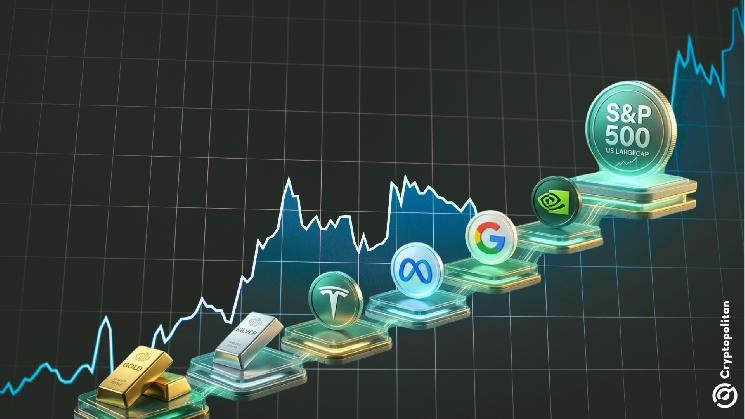
A Meme launch platform called LONG did something even bolder: it doesn't pair new tokens with ETH, but instead builds liquidity with tokenized stocks like Nvidia and S&P 500. Meme vs. stocks, the on-chain casino and Wall Street converge here.
LONG's tokenized stock daily trading volume once broke $425 million, accounting for 20% of the chain's total stock TVL. It even packaged 3x leveraged stock tokens, bringing traditional finance derivatives play to a two-month-old chain.
The entire chain has listed over 190 types of tokenized stocks, with peak daily DEX trading volume reaching $3.7 billion, approaching Solana. From Meme to stocks, Robinhood Chain has grown into a hybrid-asset on-chain trading arena.
Pons's V2 upgrade locks the post-graduation liquidity of tokens into Uniswap V4 pools. Interestingly, the Pools.trade later launched by Uniswap itself runs on the same underlying liquidity. Whichever front-end wins, the funds ultimately settle in Uniswap's pools.
But all this is built on one premise: this chain is only two months old.
The L2's Gas is already low enough to ignore. Creators can wash-trade at extremely low cost, paying 1% and getting 70% back. How much of that massive trading volume is real demand?
The answer is not yet clear.
02 Everyone is Competing for Token Issuance Rights
The explosion of Robinhood Chain is just one facet of the war.
On Solana, Pump.fun remains the Meme launch platform with the highest cumulative revenue, having extracted over $1.23 billion. Its moat is the closed loop: tokens graduate into its own PumpSwap for trading, allowing it to extract fees throughout the entire lifecycle. But its daily fees have been surpassed by Pons multiple times.
Pump.fun hasn't been idle either. It launched Mayhem Mode, introducing AI trading agents to combat sniping bots and protect retail investors from front-running. 50% of PumpSwap protocol revenue is distributed to creators.
It's not just Pons challenging it.
LetsBONK.fun introduced a dynamic logarithmic pricing curve on Solana, flattening the early price slope to give retail investors a fairer price in the first few minutes after launch. Each wallet has purchase limits in the first 60 seconds, specifically designed to curb front-running bots. Its market share in Solana Meme launch platforms once surged from 13% to 78%. Approximately 50% of platform fees are fed back to BONK holders via buyback and burn.
Raydium couldn't sit still either. Graduated tokens from Pump.fun used to automatically go into Raydium's pools, contributing trading fees with every subsequent trade. With the launch of PumpSwap, that revenue stream was cut off. Raydium directly launched LaunchLab for a head-on fight.
On the Base chain, Zora turned token issuance into a creator tool. Each creator gets a dedicated token, with a total supply of 10 billion. Half goes into a liquidity pool, and half is unlocked over five years for the creator themselves.
On July 30th, newly launched tokens on Zora accounted for 44.6% of all chains across the network, helping Base surpass Solana in token issuance volume for the first time. Over $27 million has already been distributed to creators, and the Zora token rose 8-fold in the same period.
Believe goes even wilder. Reply to a specified account on X, attach a token name, and the back-end automatically completes the on-chain deployment. Its V2 version launched a "Human Sentiment Market," using tokens to go long or short on personal reputation. Issuing tokens isn't just about issuing; it becomes a social primitive.
Within Robinhood Chain, Uniswap itself entered the fray with Pools.trade: zero issuance fee, zero trading fees. Only a 0.25% LP fee is auto-compounded and locked, raising the token's price floor with every trade.
On its first day, $73.6 million in trading volume poured in, more than Uniswap V4 on the Ethereum mainnet on the same day. Pons plummeted 49% in a week.
The same script is replaying on every public chain: first, one dominates, then low-cost competitors swarm in, fees get driven lower and lower. Pump.fun monopolized Solana for two years, now besieged by BONK.fun and LaunchLab. On Robinhood Chain, Pons had just stabilized for two months before Pools.trade came with zero fees to poach users.
Token issuance rights are becoming free public infrastructure.
03 Platform Tokens: The Biggest Bet, The Biggest Risk
Almost all Meme launch platforms have issued their own tokens. Almost all use "buyback and burn" to prop up the price.
Pons burned 30% of its token supply. The Zora token rose 800% in July. Virtuals uses protocol revenue for continuous buyback and burn of its token, but its AI agent inference engine for 18,000 agents runs on its own servers—if it goes down, everything halts. Clanker uses 60% of its revenue for buybacks.
The price of these tokens is fundamentally tied to one thing: how much fee revenue the platform can sustainably generate.
A bigger risk comes from compliance. The mechanism of continuously feeding platform profits back to token holders, from the perspective of U.S. securities law, is just one step away from "disguised dividends." In August 2026, the SEC proposed a 400-page "Regulation of Crypto Assets," the first federal-level framework to define the lifecycle of tokens.
The regulation includes a "safe harbor" mechanism: if project founders can prove the network is sufficiently decentralized, and founders are no longer the determining factor of value, tokens can transition from securities to commodities. The question is, which of these Meme launch platforms dares to claim it's decentralized?
Platform tokens are the biggest leverage and the biggest risk exposure in this cycle. Investing in platform tokens is essentially betting that the platform will survive the next winter.
This chain is only two months old, yet its daily fees already rank in the top four across all networks.
But every public chain's Meme frenzy has had a similarly dazzling start. The real test has never been who rises the fastest, but who remains after the tide recedes.
Token issuance rights are free; surviving is what charges a fee.