Ledger’s Hacked Big Player Actually a Fake Order Fraudster: Loss Exceeds 60 BTC

marsbitPublished on 2026-10-16Last updated on 2026-10-16

Abstract

According to a Chainalysis investigation, a major victim in the recent Ledger security breach was not a legitimate investor but an organized telecom fraud ring. This group operated a "fake review" scam, tricking victims into paying for fake e-commerce transactions and then demanding additional payments under false pretenses of account issues. They accumulated over 60 BTC (worth ~$4.8 million at the time). The fraudsters converted the illicit fiat into Bitcoin to launder the funds. In September 2025, they distributed the 60+ BTC across three Ledger hardware wallet addresses. However, on October 9, an external hacker exploited a supply chain vulnerability in Ledger's software, draining all assets from those addresses in a single transaction. The case highlights that hardware wallets are not impervious, especially if compromised software or firmware is installed. It also presents a legal dilemma: as the original funds were obtained criminally, the fraudsters have no legitimate claim for recovery. The stolen Bitcoin has been flagged, and international law enforcement coordination for tracking is set to begin.

Author: Shenchao TechFlow
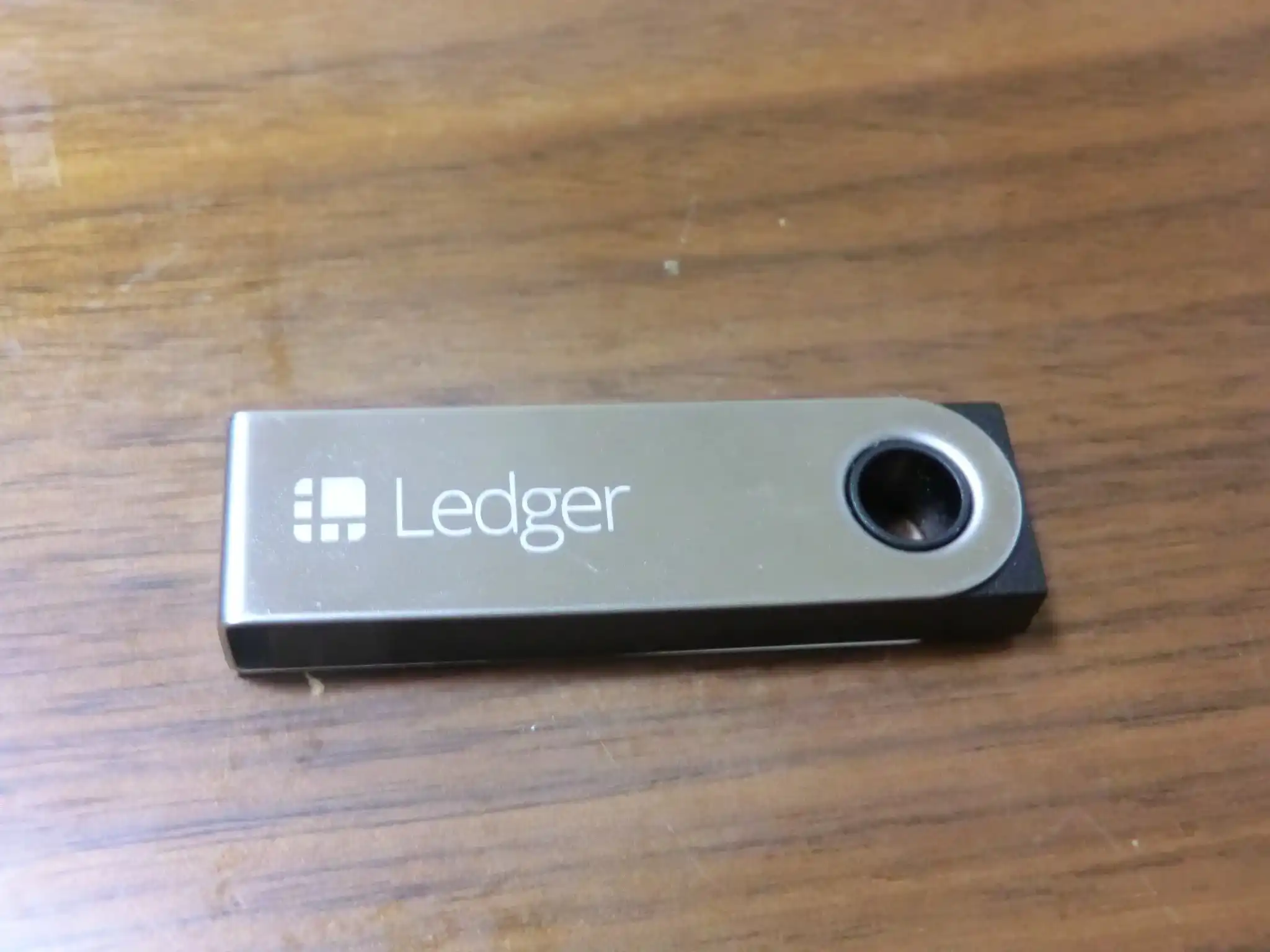
According to the original on-chain investigation report disclosed by Chainalysis, one of the victim addresses that suffered the heaviest losses in the recent hardware wallet manufacturer Ledger security vulnerability attack was not a compliant crypto investor, but a long-running organized telecom fraud gang operating online "fake order tasks." Through tactics such as luring victims into fabricating fake transactions and positive reviews for specific e-commerce products, and then tricking them into recharging their accounts under the pretext of negative balances, the gang illegally amassed over 60 Bitcoin (approximately $4.8 million based on the market price at the time).

Fake Sales Volume and Recharge Traps: A $4.8 Million Black-Market Fund Chain

Chainalysis's tracking of the fund source indicates that these involved assets originated from a typical telecom network fraud scheme involving fake orders for part-time jobs.

The fraud gang widely advertised high-paying part-time job offers on social media and instant messaging apps. Initially, they built victim trust by returning small commissions, inducing victims to continuously advance funds to boost sales volumes and positive reviews for designated merchants. As the advanced funds gradually accumulated, the fraud platform artificially altered settlement data in the backend, creating so-called "account violation or negative balance" alerts, forcing victims to inject additional large recharges to unfreeze their principal. Through multi-layered automated settlement channels, the fraudsters quickly exchanged the fraudulently obtained fiat currency funds for over 60 Bitcoin, aiming to launder bank transfer records.

September Diversion and October Looting: The On-Chain Trail of Hackers Stealing from Criminals

After pooling the funds, the fraudsters attempted to evade risk control detection by centralized institutions using cold storage devices:

On-chain ledger data clearly records the complete flow. On September 22, 2025, the fraud gang dispersed these illegal proceeds into three separate Ledger hardware wallet custody addresses. Due to an unfixed supply-chain injection backdoor in the external code library relied upon by the hardware wallet's underlying software, on October 9, external hackers exploited a permission vulnerability. Through a single automated signature instruction, they instantly emptied the Bitcoin assets from the aforementioned three dispersed addresses and transferred a total of 60.3 BTC into a hacker-controlled main address that had been widely flagged by security agencies. According to Bitcoin blockchain explorer transaction records, this transfer transaction required only 1 block confirmation, resulting in a one-way looting of the black-market funds.

Cold Wallets Are Not Absolutely Safe Zones and Legal Difficulties in Recovering Stolen Funds

This case of criminals stealing from criminals reveals the practical challenge of defensive layer fractures in the crypto security ecosystem.

Hardware devices can physically isolate private keys from network exposure, but if users install tampered client firmware or malicious connection protocols, the protective effectiveness of physical cold isolation is directly nullified. To guard against supply-chain vulnerabilities, users need to regularly visit the Ledger Official Security Bulletin Center to verify firmware hash signatures. Legally, as the upstream criminal entity, the fraud gang has lost its legitimate claim for compensation. Furthermore, these Bitcoin assets, already looted into mixing pools, have been placed on a secondary involved asset monitoring list by the global judicial cooperation network. The cross-border law enforcement data mutual recognition and tracking assistance procedures are scheduled to commence at 10:28 AM Beijing Time on October 28.


Trending Cryptos

Related Questions

QWhat was the true identity of the most severely affected victim in the Ledger security breach according to Chainalysis?

AThe victim was not a compliant crypto investor, but a long-running organized telecommunications fraud gang that operated a network 'brushing task' scam.

QHow did the fraudulent gang initially gain the trust of victims in the 'brushing task' scheme?

AThey established trust with victims by initially returning small commissions for tasks, which involved making fake transactions and favorable reviews for specific e-commerce goods.

QWhat method did the fraudsters use to launder the fiat currency they obtained from the scam?

AThey laundered the money by quickly exchanging the fraudulently obtained fiat currency for over 60 Bitcoin through multi-layered automated settlement channels.

QHow did the external hacker manage to steal the Bitcoin from the fraud gang's Ledger wallets?

AThe hacker exploited an unfixed supply chain backdoor in the external code library that the hardware wallet's underlying software relied on, using a single automated signature instruction to empty the funds.

QWhat are the security implications highlighted by this 'black eats black' case regarding hardware wallets?

AIt shows that hardware wallets' physical cold storage isolation can be compromised if users install tampered client firmware or malicious connection protocols, rendering the protection ineffective against supply chain vulnerabilities.

Related Reads

Changing Gas Metering Could Break Smart Contracts? Ethereum Urgently Halts Hoodi Fork to Investigate Eight Major Security Risks

Ethereum core developers have paused the Hoodi testnet upgrade after security auditors found that two upcoming Gas improvement proposals could invalidate long-standing assumptions underpinning many deployed smart contracts. The proposals, EIP-8037 and EIP-8038, part of the Glamsterdam upgrade, aim to reprice state storage by decoupling state creation from state access and setting dynamic weights for certain opcodes, in order to curb unchecked growth of Ethereum's state data. However, this overhaul disrupts static Gas constants that developers have relied on as fixed system parameters. ChainSecurity identified eight invariant risks. Many contracts and off-chain infrastructure depend on hardcoded Gas limits, for example to prevent reentrancy or bound execution scope; higher costs could cause cross-contract calls to run out of Gas and revert. Other risks lie in error-handling logic that relies on precise prediction of inner execution costs, and in proxy contracts that forward Gas based on fixed ratios, potentially distorting execution paths or locking funds in incomplete state-machine branches. To avoid systemic compatibility failures and cascading disruptions across multisig wallets, bridges, and lending protocols, developers agreed at an ACD meeting not to hard-fork Hoodi until the affected contracts are fully mapped and compatibility guidance is issued. Because much logic lives off-chain in proprietary routing, settlement scripts, and liquidation bots, the Ethereum Foundation acknowledged it cannot audit the entire ecosystem alone. It has published a public repository detailing the eight affected invariants, sample problem code, and prompt templates for audit and scanning tools, so teams can check their own logic. Findings will be reviewed at next week's ACD meeting, when Hoodi activation conditions will be reassessed.

marsbit2h ago

Changing Gas Metering Could Break Smart Contracts? Ethereum Urgently Halts Hoodi Fork to Investigate Eight Major Security Risks

marsbit2h ago

What Exactly Drives the Value of Layer 1?

This analysis by Marc Arjoon, CFA, examines what actually drives Layer 1 valuation through time-series regression on major L1 assets. Short-term, all L1 price movements remain dominated by Bitcoin beta. Over longer horizons, Ethereum's market cap has fully decoupled from its own protocol revenue—a deliberate policy outcome of Dencun and higher gas limits rather than a demand collapse—with its 2025 rally driven instead by spot ETF and corporate treasury demand. Solana, by contrast, shows revenue and market cap moving in tandem, both rising ~15x since January 2023 and peaking the same week. Active addresses and DEX volumes show weak weekly correlations and large divergences despite long-cycle drift. Testing Metcalfe's Law, the fitted elasticity of market cap to active addresses is only 0.56 for Ethereum and 0.62 for Solana and BNB—closer to the square root of addresses than the square. None of six valuation multiples reliably mean-reverts; Mcap/REV is the only one that predicts positive 13-week returns from low valuation quantiles on Ethereum and TRON. No L1 has Bitcoin's deep holder base: only 4% of Solana and 10% of Ethereum supply has been dormant over three years versus 42% for Bitcoin. Ethereum's pricing anchors to peer capital share—59% of L1 market cap, 70% of DeFi TVL, 75% of tokenized RWA—rather than on-chain activity, where it holds just 5% of active addresses. Across chains, market cap rank correlates strongly with TVL (Spearman 0.87) and stablecoin supply (0.63) but weakly with transactions (0.17). The core conclusion: L1s are valued less as fee-generating businesses and more as monetary assets competing for capital settlement and liquidity share.

marsbit2h ago

What Exactly Drives the Value of Layer 1?

marsbit2h ago

Trading

Spot

Hot Articles

What is $BITCOIN

DIGITAL GOLD ($BITCOIN): A Comprehensive Analysis Introduction to DIGITAL GOLD ($BITCOIN) DIGITAL GOLD ($BITCOIN) is a blockchain-based project operating on the Solana network, which aims to combine the characteristics of traditional precious metals with the innovation of decentralized technologies. While it shares a name with Bitcoin, often referred to as “digital gold” due to its perception as a store of value, DIGITAL GOLD is a separate token designed to create a unique ecosystem within the Web3 landscape. Its goal is to position itself as a viable alternative digital asset, although specifics regarding its applications and functionalities are still developing. What is DIGITAL GOLD ($BITCOIN)? DIGITAL GOLD ($BITCOIN) is a cryptocurrency token explicitly designed for use on the Solana blockchain. In contrast to Bitcoin, which provides a widely recognized value storage role, this token appears to focus on broader applications and characteristics. Notable aspects include: Blockchain Infrastructure: The token is built on the Solana blockchain, known for its capacity to handle high-speed and low-cost transactions. Supply Dynamics: DIGITAL GOLD has a maximum supply capped at 100 quadrillion tokens (100P $BITCOIN), although details regarding its circulating supply are currently undisclosed. Utility: While precise functionalities are not explicitly outlined, there are indications that the token could be utilized for various applications, potentially involving decentralized applications (dApps) or asset tokenization strategies. Who is the Creator of DIGITAL GOLD ($BITCOIN)? At present, the identity of the creators and development team behind DIGITAL GOLD ($BITCOIN) remains unknown. This situation is typical among many innovative projects within the blockchain space, particularly those aligning with decentralized finance and meme coin phenomena. While such anonymity may foster a community-driven culture, it intensifies concerns about governance and accountability. Who are the Investors of DIGITAL GOLD ($BITCOIN)? The available information indicates that DIGITAL GOLD ($BITCOIN) does not have any known institutional backers or prominent venture capital investments. The project seems to operate on a peer-to-peer model focused on community support and adoption rather than traditional funding routes. Its activity and liquidity are primarily situated on decentralized exchanges (DEXs), such as PumpSwap, rather than established centralized trading platforms, further highlighting its grassroots approach. How DIGITAL GOLD ($BITCOIN) Works The operational mechanics of DIGITAL GOLD ($BITCOIN) can be elaborated on based on its blockchain design and network attributes: Consensus Mechanism: By leveraging Solana’s unique proof-of-history (PoH) combined with a proof-of-stake (PoS) model, the project ensures efficient transaction validation contributing to the network's high performance. Tokenomics: While specific deflationary mechanisms have not been extensively detailed, the vast maximum token supply implies that it may cater to microtransactions or niche use cases that are still to be defined. Interoperability: There exists the potential for integration with Solana’s broader ecosystem, including various decentralized finance (DeFi) platforms. However, the details regarding specific integrations remain unspecified. Timeline of Key Events Here is a timeline that highlights significant milestones concerning DIGITAL GOLD ($BITCOIN): 2023: The initial deployment of the token occurs on the Solana blockchain, marked by its contract address. 2024: DIGITAL GOLD gains visibility as it becomes available for trading on decentralized exchanges like PumpSwap, allowing users to trade it against SOL. 2025: The project witnesses sporadic trading activity and potential interest in community-led engagements, although no noteworthy partnerships or technical advancements have been documented as of yet. Critical Analysis Strengths Scalability: The underlying Solana infrastructure supports high transaction volumes, which could enhance the utility of $BITCOIN in various transaction scenarios. Accessibility: The potential low trading price per token could attract retail investors, facilitating wider participation due to fractional ownership opportunities. Risks Lack of Transparency: The absence of publicly known backers, developers, or an audit process may yield skepticism regarding the project's sustainability and trustworthiness. Market Volatility: The trading activity is heavily reliant on speculative behavior, which can result in significant price volatility and uncertainty for investors. Conclusion DIGITAL GOLD ($BITCOIN) emerges as an intriguing yet ambiguous project within the rapidly evolving Solana ecosystem. While it attempts to leverage the “digital gold” narrative, its departure from Bitcoin's established role as a store of value underscores the need for a clearer differentiation of its intended utility and governance structure. Future acceptance and adoption will likely depend on addressing the current opacity and defining its operational and economic strategies more explicitly. Note: This report encompasses synthesised information available as of October 2023, and developments may have transpired beyond the research period.

4.8k Total ViewsPublished 2025.05.14Updated 2025.05.14

What is $BITCOIN

Discussions

Welcome to the HTX Community. Here, you can stay informed about the latest platform developments and gain access to professional market insights. Users' opinions on the price of BTC (BTC) are presented below.

活动图片