Kraken Parent Company Payward Acquires Lithuania's Saldo Bank, Becoming First Crypto Firm to Buy an EU Bank

marsbitPublished on 2026-10-15Last updated on 2026-10-15

Abstract

Payward, the parent company of cryptocurrency exchange Kraken, has agreed to acquire Lithuania's Saldo Bank for an undisclosed amount, positioning itself to become the first crypto company to purchase a European bank. The acquisition, pending regulatory approval and expected to close in 2027, will grant Payward a crucial EU banking license. This will enable Kraken to expand beyond crypto trading and offer European clients traditional financial services such as interest-bearing deposit accounts, loans, card services, and euro-denominated payments. Saldo Bank, licensed in Lithuania, Finland, Sweden, and Germany, reported total assets of approximately €164 million at the end of 2025. Payward's move reflects a broader trend of crypto firms increasingly competing with traditional financial institutions. The company has already applied for a U.S. national trust bank charter and, through its banking arm, holds a limited-purpose master account with the Federal Reserve. Payward's banking business has reportedly originated over $2 billion in loans to date. The acquisition of Saldo Bank is seen as a key step for Payward to function as a primary-account financial institution for its European customer base.

Author: Olivier Acuna

Compiled by: Deep Tide TechFlow

Deep Tide's Summary: Payward (Kraken's parent company) has agreed to acquire Lithuania's Saldo Bank, securing an EU banking license to offer European clients interest-bearing deposits, loans, cards, and euro payments; the FT reports this would be the first crypto company to acquire a European bank. The transaction is still pending regulatory approval and is expected to close in 2027. Combined with its U.S. trust bank application and having issued over $2 billion in loans, this marks another step in crypto exchanges expanding towards comprehensive "primary-account-style" financial services.
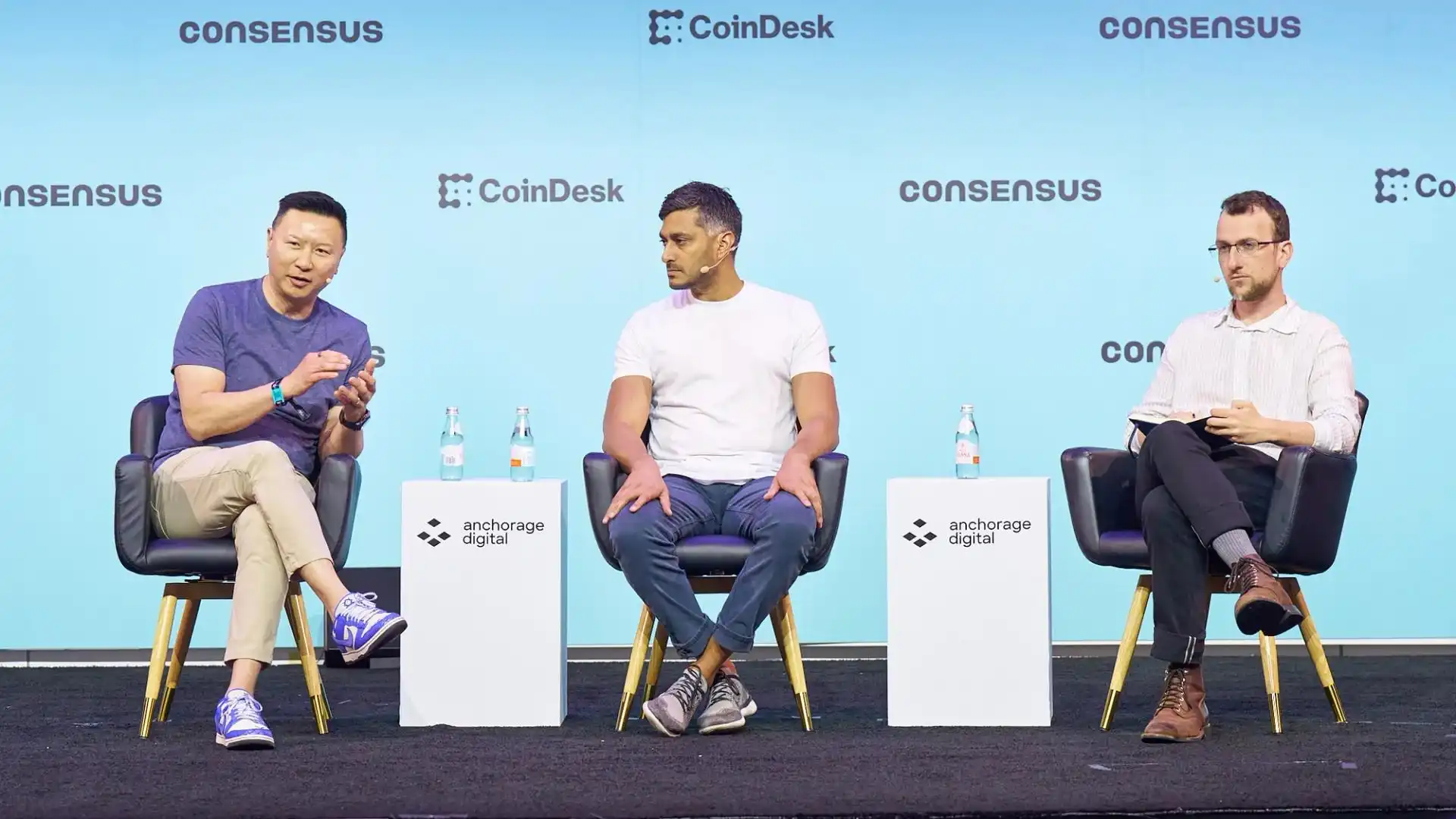
Crypto exchange Kraken's parent company, Payward, announced it has agreed to acquire Lithuania's Saldo Bank for an undisclosed sum, thereby obtaining an EU banking license to expand from crypto trading into traditional financial services.

According to the Financial Times, this acquisition would make Payward the first crypto company to purchase a European bank, reflecting the increasing competition between crypto firms and traditional lenders.

Payward did not immediately respond to CoinDesk's inquiry regarding the acquisition price. Data from The Banks shows Saldo Bank's total assets at the end of 2025 were €163.9 million (approximately $180 million), an increase of 22.7% year-on-year.

CoinDesk reported in July that Kraken was seeking a banking license in Lithuania at that time. In the U.S., Payward has applied for a national trust bank charter, and its banking arm has gained limited access to the Federal Reserve's payment system.

"A licensed EU bank is a key piece to allow us to serve European customers like a primary-account financial institution: holding assets in one place, moving them freely, and putting them to work," said Payward Co-CEO Arjun Sethi.

The deal enables Payward to offer EU clients interest-bearing bank deposits, loans, card services, and euro payments.

Saldo Bank is licensed in Lithuania, Finland, Sweden, and Germany, and holds a passport to operate in the Netherlands. It provides deposits, consumer and business loans, and payment services.

Payward stated that its banking business has originated over $2 billion in loans cumulatively, holds a Federal Reserve master account with limited purpose, and possesses an electronic money institution license in Ireland.

The transaction is still pending regulatory approval and is expected to close in 2027.

Trending Cryptos

Related Questions

QWho is the parent company of Kraken, and what significant acquisition did it recently agree to?

APayward is the parent company of Kraken. It has agreed to acquire Saldo Bank in Lithuania.

QWhat major benefit does Payward gain by acquiring Saldo Bank?

APayward gains an EU banking license, allowing it to offer traditional banking services like interest-bearing deposits, loans, card services, and Euro payments to European customers.

QAccording to the Financial Times, what makes this acquisition notable in the crypto industry?

AAccording to the Financial Times, this acquisition would make Payward the first crypto company to acquire a European bank, reflecting crypto firms' growing competition with traditional lenders.

QWhat are some of the existing financial licenses and operations held by Payward's banking arm mentioned in the article?

APayward's banking arm holds a limited-purpose master account with the Federal Reserve, has an electronic money institution license in Ireland, and has reportedly originated over $2 billion in loans.

QWhat is the current status and expected timeline for the completion of the Saldo Bank acquisition?

AThe acquisition is still pending regulatory approval and is expected to be completed in 2027.

Related Reads

Changing Gas Metering Could Break Smart Contracts? Ethereum Urgently Halts Hoodi Fork to Investigate Eight Major Security Risks

Ethereum core developers have paused the Hoodi testnet upgrade after security auditors found that two upcoming Gas improvement proposals could invalidate long-standing assumptions underpinning many deployed smart contracts. The proposals, EIP-8037 and EIP-8038, part of the Glamsterdam upgrade, aim to reprice state storage by decoupling state creation from state access and setting dynamic weights for certain opcodes, in order to curb unchecked growth of Ethereum's state data. However, this overhaul disrupts static Gas constants that developers have relied on as fixed system parameters. ChainSecurity identified eight invariant risks. Many contracts and off-chain infrastructure depend on hardcoded Gas limits, for example to prevent reentrancy or bound execution scope; higher costs could cause cross-contract calls to run out of Gas and revert. Other risks lie in error-handling logic that relies on precise prediction of inner execution costs, and in proxy contracts that forward Gas based on fixed ratios, potentially distorting execution paths or locking funds in incomplete state-machine branches. To avoid systemic compatibility failures and cascading disruptions across multisig wallets, bridges, and lending protocols, developers agreed at an ACD meeting not to hard-fork Hoodi until the affected contracts are fully mapped and compatibility guidance is issued. Because much logic lives off-chain in proprietary routing, settlement scripts, and liquidation bots, the Ethereum Foundation acknowledged it cannot audit the entire ecosystem alone. It has published a public repository detailing the eight affected invariants, sample problem code, and prompt templates for audit and scanning tools, so teams can check their own logic. Findings will be reviewed at next week's ACD meeting, when Hoodi activation conditions will be reassessed.

marsbit2h ago

Changing Gas Metering Could Break Smart Contracts? Ethereum Urgently Halts Hoodi Fork to Investigate Eight Major Security Risks

marsbit2h ago

What Exactly Drives the Value of Layer 1?

This analysis by Marc Arjoon, CFA, examines what actually drives Layer 1 valuation through time-series regression on major L1 assets. Short-term, all L1 price movements remain dominated by Bitcoin beta. Over longer horizons, Ethereum's market cap has fully decoupled from its own protocol revenue—a deliberate policy outcome of Dencun and higher gas limits rather than a demand collapse—with its 2025 rally driven instead by spot ETF and corporate treasury demand. Solana, by contrast, shows revenue and market cap moving in tandem, both rising ~15x since January 2023 and peaking the same week. Active addresses and DEX volumes show weak weekly correlations and large divergences despite long-cycle drift. Testing Metcalfe's Law, the fitted elasticity of market cap to active addresses is only 0.56 for Ethereum and 0.62 for Solana and BNB—closer to the square root of addresses than the square. None of six valuation multiples reliably mean-reverts; Mcap/REV is the only one that predicts positive 13-week returns from low valuation quantiles on Ethereum and TRON. No L1 has Bitcoin's deep holder base: only 4% of Solana and 10% of Ethereum supply has been dormant over three years versus 42% for Bitcoin. Ethereum's pricing anchors to peer capital share—59% of L1 market cap, 70% of DeFi TVL, 75% of tokenized RWA—rather than on-chain activity, where it holds just 5% of active addresses. Across chains, market cap rank correlates strongly with TVL (Spearman 0.87) and stablecoin supply (0.63) but weakly with transactions (0.17). The core conclusion: L1s are valued less as fee-generating businesses and more as monetary assets competing for capital settlement and liquidity share.

marsbit2h ago

What Exactly Drives the Value of Layer 1?

marsbit2h ago

Trading

Spot

Hot Articles

What is $BANK

Bank AI: A Revolutionary Step in the Future of Banking Introduction In an era marked by rapid advancements in technology, Bank AI stands at the intersection of artificial intelligence (AI) and banking services. This innovative project seeks to redefine the financial landscape, enhancing operational efficiency, security measures, and customer experiences through the power of AI. As we embark on this exploration of Bank AI, we will delve into what the project entails, its operational dynamics, its historical context, and significant milestones. What is Bank AI? At its core, Bank AI represents a transformative initiative aimed at integrating artificial intelligence into various banking operations. This project harnesses the capabilities of AI to automate processes, improve risk management protocols, and enhance customer interaction through personalized services. The primary objectives of Bank AI include: Automation of Banking Functions: By leveraging AI technologies, Bank AI aims to automate routine tasks, reducing the burden on human resources and enhancing efficiency. Enhanced Risk Management: The project utilises AI algorithms to predict and identify risks, thereby fortifying security measures against fraud and other threats. Personalization of Banking Services: Bank AI focuses on offering tailored financial products and services by analysing customer data and behaviours. Improving Customer Experience: The implementation of AI-driven solutions, such as chatbots and virtual assistants, aims to provide users with more human-like interactions, revolutionising the way customers engage with banks. With these goals, Bank AI positions itself as a crucial player in rendering banking more efficient, secure, and user-centric. Who is the Creator of Bank AI? Details regarding the creator of Bank AI remain unknown. As such, no specific individual or organisation has been identified in the available information. The anonymity surrounding the project's inception raises questions but does not detract from its ambitious vision and objectives. Who are the Investors of Bank AI? Similar to the project's creator, specific information regarding the investors or supporting organisations of Bank AI has not been disclosed. Without this information, it is challenging to outline the financial backing and institutional support that might be propelling the project forward. Nevertheless, the importance of having a robust investment foundation is pivotal for sustaining development in such an innovative field. How Does Bank AI Work? Bank AI operates on several innovative fronts, focusing on unique factors that differentiate it from traditional banking frameworks. Below are key operational features: Automation: By applying machine learning algorithms, Bank AI automates various manual processes within banks. This results in reduced operational costs and allows human workers to redirect their efforts towards more strategic activities. Advanced Risk Management: The integration of AI into risk management practices equips banks with tools to accurately predict potential threats such as fraud, ensuring that customer information and assets remain secure. Tailored Financial Recommendations: Through continuous learning from customer interactions, the AI systems develop a nuanced understanding of user needs, enabling them to offer tailored advice on financial decisions. Enhanced Customer Interactions: Utilizing chatbots and virtual assistants powered by AI, Bank AI enables a more engaging customer experience, allowing users to have their queries resolved quickly, thus reducing wait times and improving satisfaction levels. Together, these operational features position Bank AI as a pioneer in the banking sector, establishing new benchmarks for service delivery and operational excellence. Timeline of Bank AI Understanding the trajectory of Bank AI requires a look at its historical context. Below is a timeline highlighting important milestones and developments: Early 2010s: The conceptualization of AI integration into banking services began to gain attention as banking institutions recognised the potential benefits. 2018: A marked increase in the implementation of AI technologies occurred when banks started using AI tools like chatbots for basic customer service and risk management systems for improved security handling. 2023: The sophistication of AI continued to advance, with generative AI being introduced for more complex tasks such as document processing and real-time investment analysis. This year marked a significant leap in the capabilities afforded to banks by AI technology. 2024-Current Status: As of this year, Bank AI is on an upward trajectory, with ongoing research and developments poised to further enhance capabilities in banking operations. Continued exploration of AI applications hints at exciting developments yet to come. Key Points About Bank AI Integration of AI in Banking: Bank AI focuses on adopting artificial intelligence to streamline banking processes and improve user experiences. Automation and Risk Management Focus: The project strongly emphasizes these areas, aiming to shift the burden of routine tasks while enhancing security frameworks through predictive analytics. Personalized Banking Solutions: By harnessing customer data, Bank AI enables tailored banking services that cater to individual user needs. Commitment to Development: Bank AI remains committed to ongoing research and development efforts, ensuring its adaptability and ongoing relevance as technology continues to evolve. Conclusion In summary, Bank AI exemplifies a crucial step forward in the banking industry, leveraging artificial intelligence to reshape operational paradigms, enhance security, and promote customer satisfaction. Despite gaps in information surrounding the creator and investors, the clear objectives and functional mechanisms of Bank AI provide a strong foundation for its ongoing evolution. As AI technology continues to advance and merge with the banking sector, Bank AI is well-positioned to significantly impact the future of financial services, enhancing the way we understand and interact with banking.

3.7k Total ViewsPublished 2024.04.06Updated 2024.12.03

What is $BANK

How to Buy BANK

Welcome to HTX.com! We've made purchasing Lorenzo Protocol (BANK) simple and convenient. Follow our step-by-step guide to embark on your crypto journey.Step 1: Create Your HTX AccountUse your email or phone number to sign up for a free account on HTX. Experience a hassle-free registration journey and unlock all features.Get My AccountStep 2: Go to Buy Crypto and Choose Your Payment MethodCredit/Debit Card: Use your Visa or Mastercard to buy Lorenzo Protocol (BANK) instantly.Balance: Use funds from your HTX account balance to trade seamlessly.Third Parties: We've added popular payment methods such as Google Pay and Apple Pay to enhance convenience.P2P: Trade directly with other users on HTX.Over-the-Counter (OTC): We offer tailor-made services and competitive exchange rates for traders.Step 3: Store Your Lorenzo Protocol (BANK)After purchasing your Lorenzo Protocol (BANK), store it in your HTX account. Alternatively, you can send it elsewhere via blockchain transfer or use it to trade other cryptocurrencies.Step 4: Trade Lorenzo Protocol (BANK)Easily trade Lorenzo Protocol (BANK) on HTX's spot market. Simply access your account, select your trading pair, execute your trades, and monitor in real-time. We offer a user-friendly experience for both beginners and seasoned traders.

9.8k Total ViewsPublished 2025.05.09Updated 2026.06.02

How to Buy BANK

Discussions

Welcome to the HTX Community. Here, you can stay informed about the latest platform developments and gain access to professional market insights. Users' opinions on the price of BANK (BANK) are presented below.

活动图片