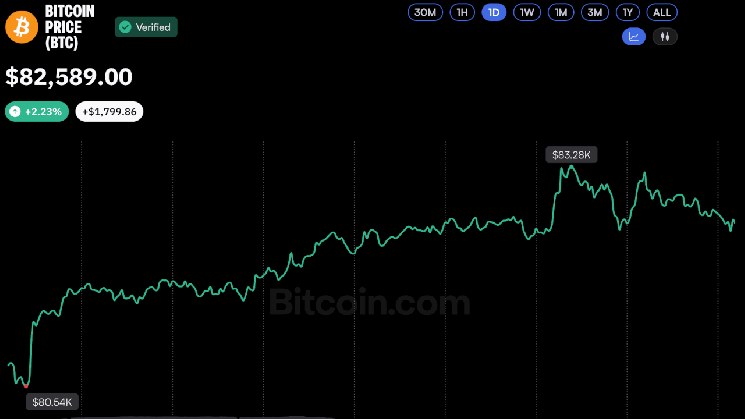
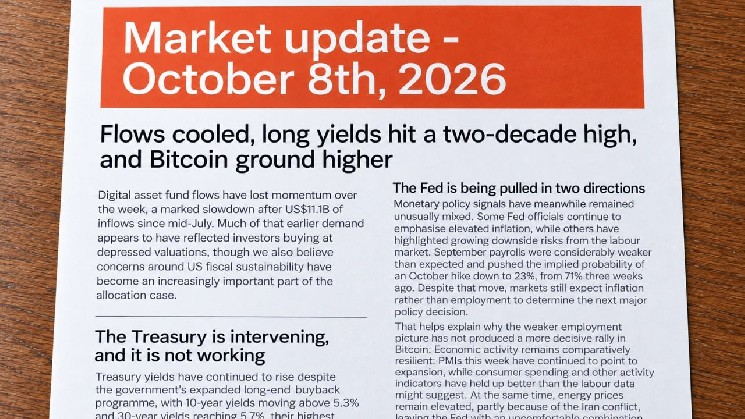
Global digital asset funds lost $243 million over the week — the previous week, conversely, saw inflows of about $1.3 billion. This shift in sentiment was recorded in the market update from September 11 by analytics company CoinShares, linking the reversal of flows to the latest US inflation statistics.
The Consumer Price Index (CPI) for August rose 0.4% month-on-month and 3.4% year-on-year — these figures matched market expectations. However, core inflation, which excludes food and energy prices, came in slightly above forecasts: +0.3% month-on-month and +2.4% year-on-year. The data is confirmed by the US Bureau of Labor Statistics.
Why This Is Bad for Bitcoin
According to James Butterfill, head of research at CoinShares, it is precisely the core inflation exceeding forecasts that complicates the short-term picture for Bitcoin. Higher core inflation increases the likelihood that the Fed will leave rates unchanged in September, and the tight monetary policy could persist longer than the market had anticipated.
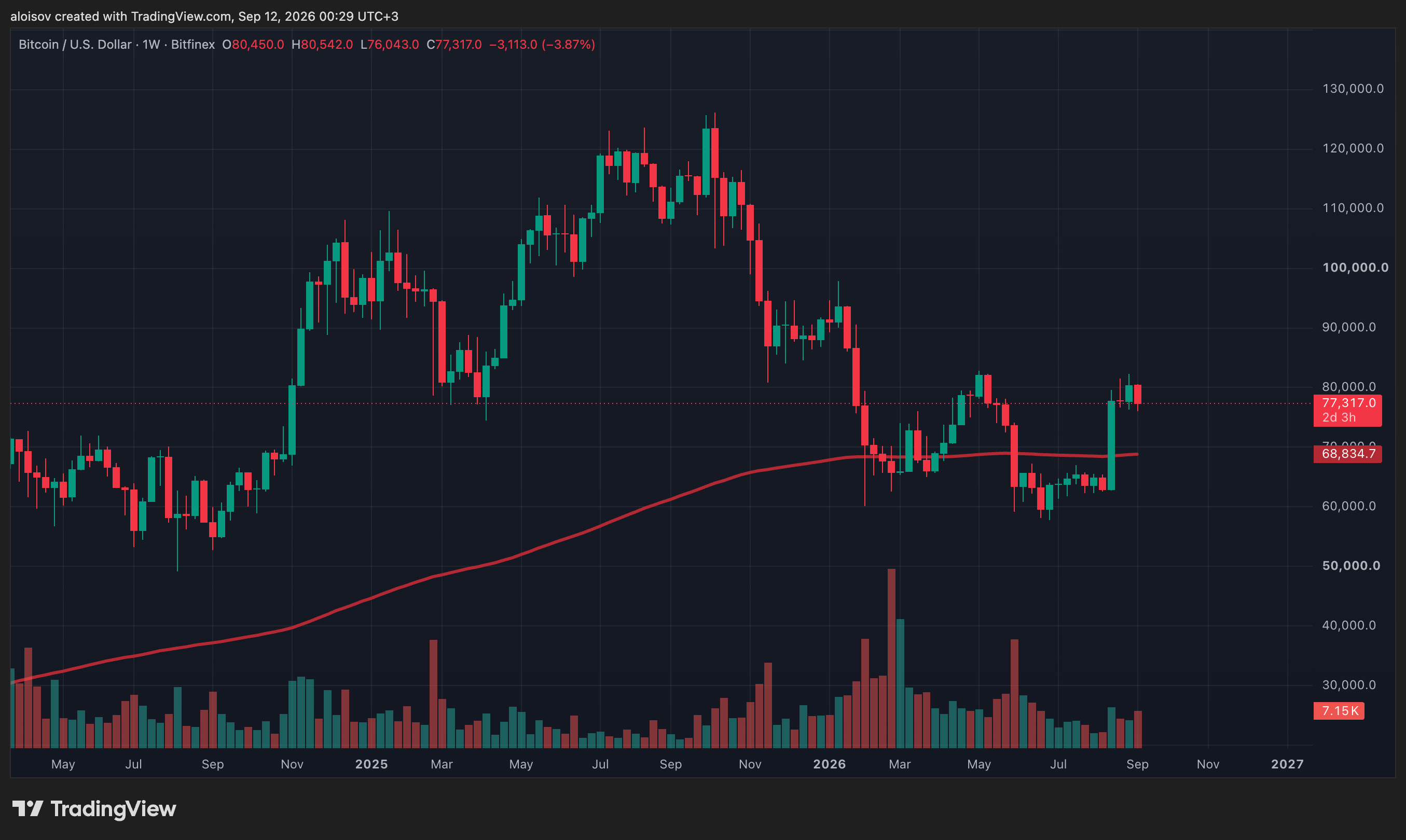
The market had hoped for softer inflation data as one of the possible drivers for a sustained consolidation of Bitcoin's price above the $80,000 mark. This scenario has not yet materialized, and without a dovish signal from the inflation statistics, the upside potential in the short term is likely to remain limited.
As noted by CoinShares, a confident move above $80,000 currently requires one of three things:
- weaker macroeconomic data
- a more dovish shift in Fed policy
- a different political catalyst
The company reiterated similar points on social network X, stating that US inflation has complicated the short-term outlook for Bitcoin, and global flows into crypto funds turned negative this week, while pressure on the Treasury bond market continues to build — the expanded buyback program has not yet helped to significantly reduce long-term yields.
Long-term Factor – Pressure on the Government Bond Market
However, CoinShares believes that in the medium term, it could be precisely the situation in the US government bond market that plays in Bitcoin's favor. The expanded paper buyback program has not yet led to a noticeable decline in long-term yields, which means the likelihood of more extensive intervention by US financial authorities in the future is increasing.
Thus, the short-term backdrop for Bitcoin following the CPI data release appears rather subdued, and the $243 million outflow from digital asset funds confirms this dynamic. At the same time, fundamental problems in the US government bond market remain a factor that CoinShares associates with potential support for Bitcoin in the more distant future.
AI Opinion
From a machine data analysis perspective, the current outflow of $243 million is not the first time macroeconomic statistics have sharply reversed capital flows in crypto funds. A similar scenario unfolded in late August last year: capital inflows suddenly turned negative after the release of Core PCE data, which did not support expectations for a Fed rate cut — as previously reported by CoinShares. A similar logic is at work now: core inflation exceeding forecasts is becoming a trigger for revising expectations for the September rate.
A technical detail often overlooked: such flow reversals are rarely geographically uniform. The November episode last year demonstrates this asymmetry — 'hawkish' signals from the Fed triggered a $360 million outflow from crypto funds, with the bulk of selling coming from American markets, while European investors partially offset the pressure, as noted by CoinShares. It is possible that in the current outflow, the main share also came precisely from US investors, who are most sensitive to the interest rate trajectory. Whether the current pause becomes another short-term episode in a chain of such reversals or signals a more long-term shift in risk appetite will be shown by the data in the coming weeks.