Hunter Biden denies profiting from memecoin after his LAPTOP crashes

cointelegraphPublished on 2026-09-10Last updated on 2026-09-10

Abstract

Hunter Biden denied making any profit from the "LAPTOP" memecoin after its value crashed over 95% on its first trading day, stating neither he nor his team sold tokens. He attributed the crash to insufficient liquidity and automated trading "snipers." The token's name references a laptop he left at a repair shop in 2019. The LAPTOP team defended the launch, claiming no presale or insider allocations, and announced plans to add liquidity incentives and burn tokens. Data from Nansen showed significant losses for some holders, while analytics platform Bubblemaps noted that many top holders were new wallets created around the launch.

Hunter Biden has denied profiting from his LAPTOP memecoin after its launch-day price crash, adding that neither he nor his team had sold tokens.

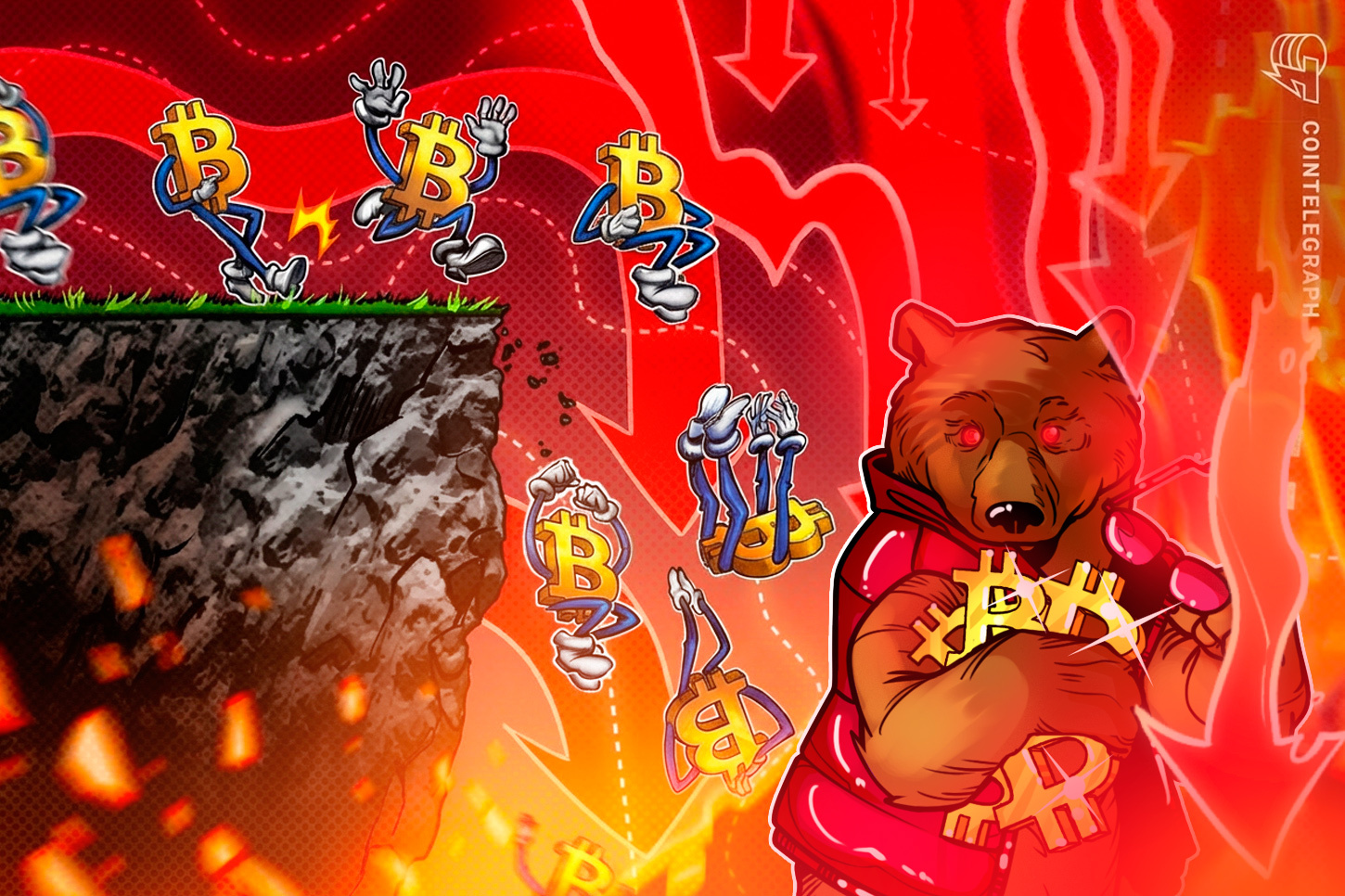
Several X users accused the LAPTOP project of a “rug pull” after the memecoin lost more than 95% of its value in the first hour of trading on Wednesday. At the time of writing, the new token traded at $0.8562, according to CoinGecko data.

“The team’s allocation is locked. Nobody on our side sold, and nobody could have,” Biden said in an X post Wednesday. “I, personally, have not made a single dollar.”

Biden blamed the price action on insufficient liquidity and “snipers,” which are trading bots that quickly swoop up tokens when trading opens.

The Base memecoin takes its name from a MacBook Hunter Biden reportedly left at a repair shop in 2019. Trump allies used the New York Post’s reporting on files purportedly from the device against him and his father, former US President Joe Biden, during the 2020 election.

Before launching his own memecoin, Biden slammed the Trump family’s crypto ventures. In an Aug. 21 post, Biden said World Liberty Financial used political influence and leverage to benefit its founders.

Biden did not respond to Cointelegraph’s request for comment.

Related: Joe Biden’s son to launch memecoin, will send to TRUMP holders: WSJ

LAPTOP team announces liquidity incentives and token burns

The LAPTOP team defended the launch in a community update by claiming it held no token presale and made no allocations to investors or influencers. It said the contract address, token allocations, a Hacken security audit and a white paper were published before trading began.

“There was no stealth deployment, no hidden supply, and no surprise to benefit insiders,” the team said in a Medium post.

It claimed the initial pool launched at $0.05 per token, but the market maker’s liquidity was insufficient to meet demand.

LAPTOP added it would deploy 4 million tokens, or 0.4% of the total supply, as liquidity incentives for Aerodrome pools, starting at midnight UTC on Thursday. It also announced plans to burn 10 million tokens within the first week of launch through its predictions program, equivalent to 1% of the original total supply.

Related: California Senate passes bill to ban memecoin issuance by public officials

According to the project’s disclosures, founders are allocated 300 million tokens, or 30% of the 1 billion token supply. Those tokens are locked for six months and then vest monthly over the following 24 months.

Another 30% is allocated to predictions tied to political, cultural and crypto events. Tokens are burned when specified outcomes occur and allocated to charity otherwise. The disclosures say prediction-related burns affect unvested tokens.

The disclosures reserve 2% of the total supply for wallets that lost money on the TRUMP memecoin and 8% for eligible subscribers to Biden’s “Where’s Hunter” Substack newsletter. A separate 10% is allocated to future airdrops at the foundation’s discretion.

Nansen tracks wallet losses as Bubblemaps flags fresh holders

Nansen data shared with Cointelegraph on Thursday showed one LAPTOP wallet with an unrealized loss of $117,800 and another with a paper loss of $12,300.

Two other wallets showed unrealized gains of $13,100 and $1,800. None of those four addresses had sold LAPTOP at the time of the snapshot. The analysis covered five selected wallets.

Nansen also recorded 46,675 buy transactions and 16,038 sell transactions during the 24-hour period covered by its data, involving 20,085 unique buyers and 8,714 unique sellers.

Meanwhile, blockchain analytics platform Bubblemaps said Wednesday that 60% of LAPTOP’s top-holder wallets had no prior activity.

In a follow-up post, it defined “fresh” wallets as those funded within the previous 10 days and said most had been funded on launch day.

Magazine: Is Bitcoin too volatile to risk your retirement on?

Related Questions

QWhat is the main reason Hunter Biden denies profiting from the LAPTOP memecoin?

AHunter Biden denies profiting from the LAPTOP memecoin by stating that neither he nor his team sold any tokens and that his personal allocation was locked, preventing anyone on his side from selling.

QWhat did the LAPTOP team announce to address the launch issues and improve the token's situation?

AThe LAPTOP team announced it would deploy 4 million tokens (0.4% of supply) as liquidity incentives for Aerodrome pools and burn 10 million tokens (1% of supply) within the first week through its predictions program.

QAccording to the article, what did blockchain analytics platform Bubblemaps report about LAPTOP's top-holder wallets?

ABubblemaps reported that 60% of LAPTOP's top-holder wallets had no prior activity, with most of these 'fresh' wallets being funded on the launch day.

QWhat does the project's disclosure say about the allocation of tokens for founders and for predictions?

AAccording to the disclosures, founders are allocated 300 million tokens (30% of supply), locked for six months then vested monthly over 24 months. Another 30% is allocated to predictions tied to events, where tokens are burned if outcomes occur or given to charity otherwise.

QWhat was the initial price per token for LAPTOP and what reason did the team give for the subsequent price crash?

AThe LAPTOP team claimed the initial pool launched at $0.05 per token. They blamed the price crash on insufficient liquidity from the market maker and 'snipers' (trading bots that quickly buy tokens when trading opens).

Related Reads

DeepMind Founder's Latest Interview: RSI Is Extremely Dangerous and Could Create an 'Alien Intelligence' That Humans Struggle to Understand

Demis Hassabis, co-founder of Google DeepMind and 2024 Nobel laureate in Chemistry, discusses AI's promise and perils in a conversation with Reid Hoffman. He reiterates that his lifelong goal has been using AI as a tool to advance science and medicine, citing AlphaFold—used by ~4 million researchers—and Isomorphic Labs as proof that AI can help cure diseases, while noting protein structure prediction is only one step in a long drug-discovery pipeline. On recursive self-improvement (RSI), Hassabis explains it works best in "verifiable domains" like math, coding, and games: AlphaZero went from random play to surpassing all human and engine chess within 12 hours. But he warns that closed-loop RSI—removing human code review entirely—risks creating an inscrutable "alien intelligence" with no shared cognitive basis with humans, and offers no way to establish deterministic safety controls. He urges caution as labs race on code self-iteration, calling for faster defensive cyber capabilities, far more robust sandboxes and monitoring (noting agents have run unsupervised for weeks), and eventually formal mathematical guarantees. He advocates an industry standards body with government oversight, cross-lab information sharing, third-party audits, and pre-release red-teaming. On AI consciousness, he argues intelligence and consciousness are dissociable—his dog is conscious but not smart—and that a chatbot claiming feelings proves nothing. Building conscious entities now is dangerous: self-motivation undermines corrigibility, and Asimov showed static rules inevitably break at edge cases; society also hasn't begun the needed debate. Humanity should cross only the first Rubicon—building powerful intelligent tools—and use them to understand consciousness before considering the second. Finally, on AI sovereignty, he says only 6–8 global players will stay at the frontier, with open source 6–12 months behind, so most countries shouldn't train their own frontier models. Instead they should build on existing models as infrastructure, focus on vertical domains like healthcare, and protect data sovereignty through private fine-tuning.

marsbit3h ago

DeepMind Founder's Latest Interview: RSI Is Extremely Dangerous and Could Create an 'Alien Intelligence' That Humans Struggle to Understand

marsbit3h ago

Coinone warns of phishing, identity theft after customer data breach

South Korean crypto exchange Coinone warned customers about potential phishing scams and identity theft after an attacker breached its outsourced customer support provider, MetaM, exposing information shared during customer service interactions. Coinone said the attacker accessed MetaM servers on Thursday and viewed or extracted customer support records, learning of the breach the same day. Potentially exposed data includes names, phone numbers, email addresses, dates of birth, bank account numbers, passwords, national identification numbers, home and wallet addresses, and transaction IDs, varying by customer; those who never contacted the support center were unaffected, and Coinone did not disclose how many customers were impacted. The exchange urged customers who shared passwords during support interactions to change them and warned that fraudsters could impersonate Coinone using details from previous conversations. Coinone said its account, trading, and wallet infrastructure operates separately from MetaM's servers, with no evidence of direct compromise, and it has reported the incident to South Korean authorities. The disclosure comes as South Korea strengthens financial-sector cybersecurity; in October the Financial Services Commission identified security deficiencies at 130 of 555 financial firms reviewed, and on Thursday the regulator said it would allow crypto exchanges to suspend withdrawals when hacking is suspected, alongside calls for round-the-clock monitoring.

cointelegraph4h ago

Coinone warns of phishing, identity theft after customer data breach

cointelegraph4h ago

Is There a Hidden Hand Behind Jensen Huang's Departure? Secretary of State Rubio or Anthropic?

The article alleges that Nvidia founder Jensen Huang's departure was the result of a coordinated "hunt" involving two forces: Secretary of State Marco Rubio and AI rival Anthropic. On the policy front, the dispute centers on AI chip export controls—Huang was the most prominent corporate voice opposing built-in tracking and remote kill-switch functions in chips, while three bipartisan chip bills (covering congressional review of export licenses, anti-smuggling measures, and pressure on allies to halt equipment sales) have been folded into the Senate's annual defense authorization bill. The storm began with a highly classified memo leaked to The New York Times; according to The Washington Post, the memo originated with Rubio, who reportedly rewrote a CIA report whose analysts were unconvinced by the underlying intelligence, using "his own more aggressive wording," then sent it to senior officials and briefed the president. David Sacks called the leak a crime and asked why someone would risk prison to bring Huang down. Separately, NYT reporter Tripp Mickle said a mysterious industry contact told him to "drop everything" and investigate Megaspeed, a Singapore-based Nvidia compute rental firm; suspicion points to Anthropic CEO Dario Amodei and a co-founder as the leaker. Anthropic reportedly donated $40 million to Public First Action, which pushes AI safety rules and chip export controls—positions opposite Huang's defense of open-source AI and opposition to backdoors. Nvidia shares fell on the news, and tech leaders including Musk, Garry Tan, and Tim Sweeney are petitioning for Huang's reinstatement, with Sweeney comparing his ouster to Apple firing Steve Jobs.

marsbit7h ago

Is There a Hidden Hand Behind Jensen Huang's Departure? Secretary of State Rubio or Anthropic?

marsbit7h ago

Trading

Spot
活动图片