Author: Evanss
Compiled by: Felix, PANews (This article has been abridged)
"Have fun staying poor" was once the favorite phrase for ridicule in the early crypto circle. Back then, it was trendy to change profile pictures to "laser eyes," shouting slogans like "the price will hit $100,000 before Thanksgiving"; if any "boomer" old-school investor asked about the actual returns of these tokens, it was practically a joke. Expecting a "magic internet token" to have fundamentals? Asking that question meant you didn't understand the game and were destined to remain part of the lower class forever.
Today, as it turns out, the final outcome is "buybacks." The largest on-chain exchange uses approximately 97% of its daily fees to buy back its own tokens from the market, an amount exceeding $1 billion and still growing. The Financial Times has begun auditing cryptocurrency buyback programs, and S&P Dow Jones Indices licensed the S&P 500 index to a perpetual DEX. The winning formula in crypto for 2026 is cash flow, growth rate, dividend policies, and the absence of equity/token conflicts. These are precisely the things that the old mocking phrase sought to escape. Now, those truly "having fun staying poor" are mostly the ones still clinging to the "vaporware" roadmap.
I explored this topic in an article I wrote in January titled "The 'Moon Generation' and the Rotating Bubble Era." It pointed out that with the involvement of "baby boomers" and TradFi forces, altcoins would be forced to compete on genuine fundamentals, no longer relying solely on vision and dreams. I termed this process the "baby-boomerization" (or "aging") of the crypto space.
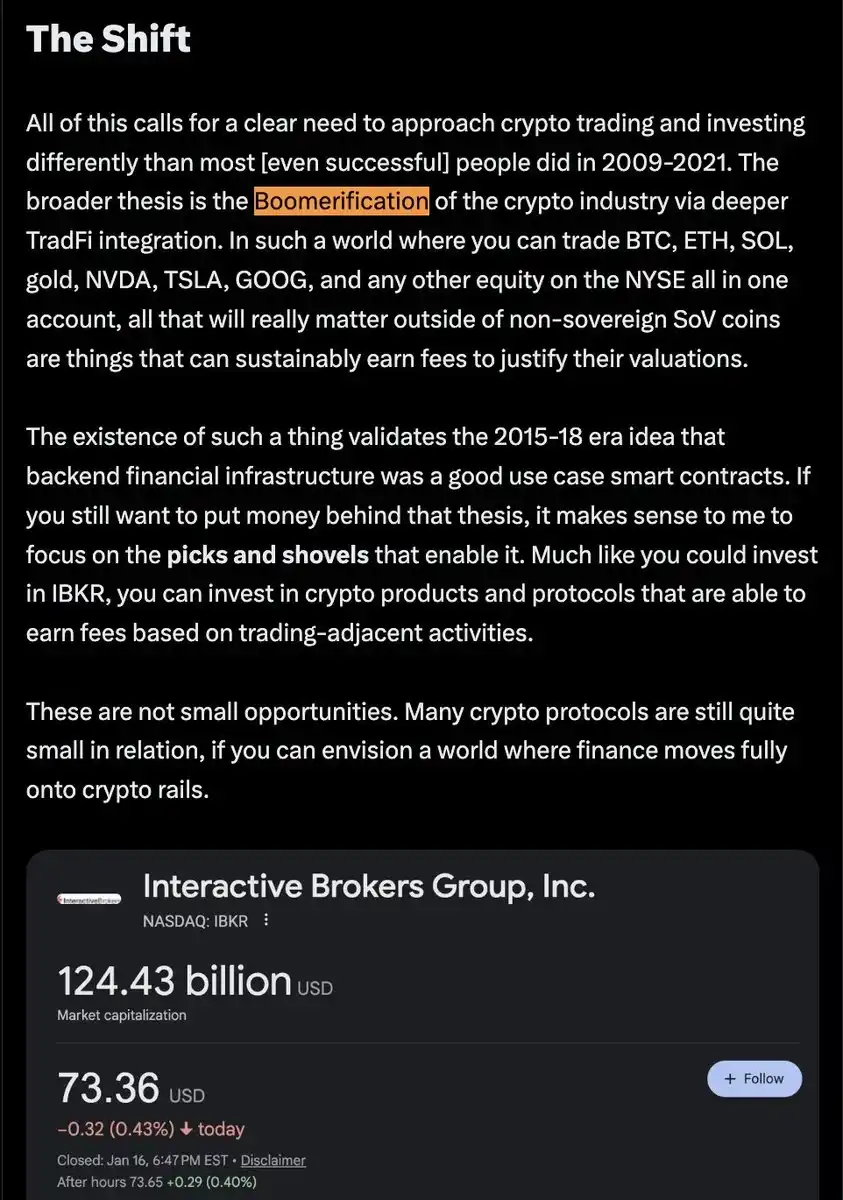
Eight months have passed, and the market action has reflected this trend. "Aging" investment styles primarily have two flavors, as their portfolios have always contained two types of assets: stocks that generate income, and gold which retains value without needing to generate income. Bitcoin has already played out the gold script (ETFs, institutional allocation, inclusion in retirement portfolios), while a handful of protocols are now playing out the stock script. But the vast majority of assets in the market fit neither category.
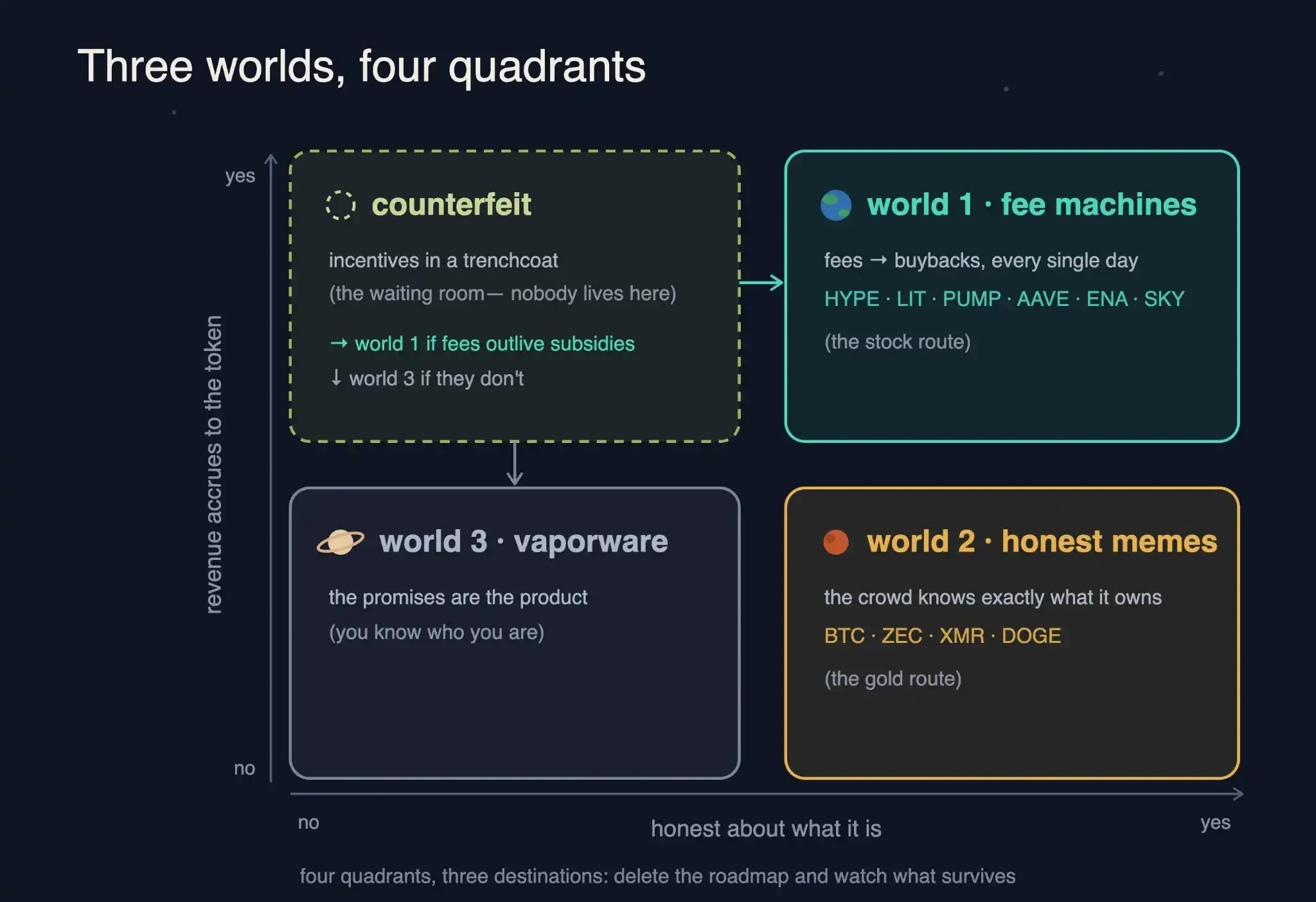
To sort projects into categories, we need a map. This map consists of three categories, two of which are relatively small.
The Litmus Test
How to categorize millions of tokens into these three groups? Don't trust market data sites that classify based solely on project promoters' intentions. Instead, ask two questions:
- Does the token actually receive a distribution of earnings (e.g., fees, buybacks, or burns)?
- Are the relevant parties honest about the nature of this asset?
The second question sounds subjective; we can make it concrete: Delete the project's roadmap and see what remains.
- If everything remains the same, you're holding a "Meme Coin." Dogecoin is still fun, Bitcoin is still digital gold, Monero and Zcash are still (in a sense) privacy currencies. People hold these tokens typically for ideals, narratives, or humor, not relying on a roadmap—some don't even have one. Ironically, this makes Meme coins the purest assets in crypto.
- If nothing remains, you're holding an abandoned project/vaporware. The initial promise itself was the product, like "banks will adopt it" (or similar claims).
- If cash flow remains, you're holding one of the very few (maybe around fifteen) genuine business entities in crypto. To be clear, deleting the roadmap would harm such projects, but not kill them. Without future HIPs (Improvement Proposals) as support, the HYPE would be much reduced. After all, HIP-3 went from a line on the roadmap to facilitating the first licensed S&P 500 perpetual contract in about a year (more on this later). While the growth premium would shrink, the exchange would still generate profits while you sleep.
A roadmap built on cash flow is worlds apart from one built on nothing. Old-school investors have always been willing to pay a high premium for growth, provided it's built on a real business.
The beauty of this test is you don't have to delve into others' intentions or argue with the "bagholder army" about whether partnerships are real. Just remove all empty promises and see what's left.
In other words: In "Meme Coins," the price contains zero promise; in real businesses, promise is part of the composition; in "vaporware," price is entirely promise. These are three distinct categories, each with completely different playbooks.
Category One: Crypto Businesses
Protocols that earn fees from products people actually need and give those fees back to token holders. Examples include: Hyperliquid, Pump.fun, Lighter, Aave, Ethena, and Sky. Viewed differently, they are like shares of a profitable, public company executing a buyback program. This is crypto's path to convergence with TradFi.
Hyperliquid remains the exemplar. The mechanism:
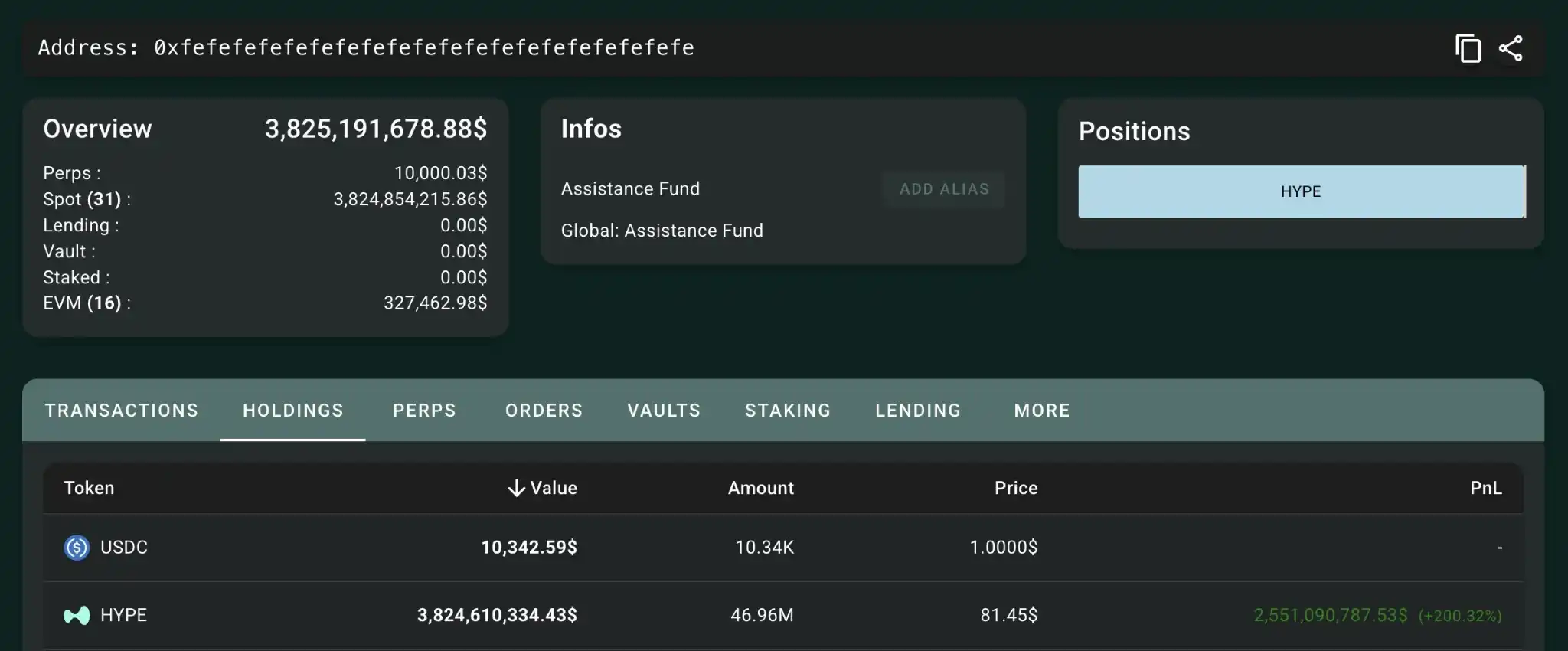
- The Aid Fund takes ~97% of protocol fees and buys HYPE tokens on-chain, having accumulated over $1.3 billion in buys.
- As of late August, yields from idle USDC reserves on the platform are also used for the same buy operation.
Hype Aid Fund
-
Zooming out, according to FT, crypto buybacks in 2026 are estimated at $638 million, with ~90% from Hyperliquid and Pump.fun alone.
When traditional investors entered, they brought discounted cash flow (DCF) models. Now, there are crypto assets to which those models can actually be applied.
Two caveats, however.
First: The analogy to stocks breaks at exactly the moment it matters most. These "earnings" often stem from transaction fees, which are cyclical. In a downturn, volume collapses and valuation multiples compress simultaneously; even a great business can see its token price drop 60%+. HYPE was at $22 earlier this year. So, assess these assets based on "through-cycle" fee revenue, not peak annualized figures.
Second: Beware of "Pseudo-Category One" projects: incentives disguised as "revenue," like volume from point-farming or takers reliant on token emission subsidies. To be fair, almost every project starts this way (Hyperliquid also used a points system for its cold start). Those that survive the test graduate to Category One; those that don't, join the multitude of scams and jokes.
Category Two: Honest "Memes"
No revenue, no roadmap reliance, no pretense—perfectly fine. Category Two assets derive value entirely from collective belief, and the crowd knows it. That knowingness is the point; ironically, they become the purest assets in crypto if judged by the "roadmap" standard. This contains two major groups: yes, Bitcoin and Dogecoin are in the same category. Don't object until you read the next paragraph.
Non-Sovereign Store of Value (SoV) tokens (e.g., BTC, ZEC, XMR): "Meme" assets with monetary aspirations. Saying they have no roadmap is a bit reductive, but their roadmaps focus on security and usability improvements, not advertising on the Las Vegas Sphere.

Money is humanity's oldest, most successful "meme" (perhaps besides religion); gold ran the "people think it's valuable" playbook for 5,000 years without anyone demanding an earnings call. Boomers hold gold not for cash flow but as a ballast asset, supported by flow, scarcity, and the logic of currency debasement. This is gold's path to "aging," and Bitcoin has already walked it: ETF plumbing, corporate treasuries, mandated institutional allocation. The asset is the same, the holder base changed. ZEC and XMR are trickier because "privacy" is exactly what a fully surveilled, boomer-permeated system cannot provide. This is why ZEC's impressive run this cycle is on its own schedule, not tracking BTC. These assets will rely more on narrative, drawing flows from BTC, ETH, SOL, and fiat seeking to escape wealth confiscation.
Make no mistake: calling them "meme" assets isn't pejorative. This is where I part ways with the DCF-only crowd: an honest monetary meme with a path to institutionalization or a strong enough narrative is absolutely investable.
Attention tokens (e.g., DOGE, PEPE, and various "shitcoins"/memes): same category, different ambitions—some want to be money, others aim to be fun or go viral.
The key here is they never went down the institutionalization/mainstreaming path: no cash flow like stocks, and no credible monetary premium like gold. This doesn't mean they can't be traded; they're entertainment products. Perfectly fine for those willing to play the game. Personally, I dabble occasionally, but it's a secondary focus with far smaller position sizes than my core holdings.
The safest way to play is to buy the leaders in the "early-late" stage and ride the wave. You won't get 1000x returns this way, but it's a profitable approach; however, as with many things in trading, easier said than done.
Within this category, a few assets I favor: BTC and ZEC have been discussed. For pure memes, while I have favorites, I won't give picks—choose your own adventure with animal picture coins or emerging narratives.
Category Three: Vaporware / Fake Hype
Most projects live here. They are essentially the same "nothing" as Dogecoin, just without the honesty and humor. Applying the earlier tripartite theory: their price is built entirely on empty promises. Vaporware is essentially Category One cosplay without the self-awareness of Category Two. These projects have neither a realistic hope of monetary premium nor the ability to generate future cash flow.
However, merely identifying something as "fake hype" or a "scam" isn't a trading strategy. This is where most people trip up. Identifying a project as vaporware doesn't mean you can "short it for free money"; because in the short and medium term, price has little to do with intrinsic value and much to do with market structure and positioning:
- Only a small fraction of total supply is actively trading. Years of "bagholders" hold large, dormant positions at high cost bases; they don't sell on the first move up.
- Thin order books above and scarce spot lending lead to heavy shorting in perps. Shorts' liquidations (or eventual capitulation) become the prey, and bounty hunters always come. When positioning is crowded and sentiment blindly bullish, a squeeze is easy: funding turns deeply negative, the squeeze feeds on itself. Dormant supply tends to wake up and sell into strength, which is what ultimately caps the move.
- Catalytic events (e.g., ETF filings, legal wins, exchange listings) temporarily transform vaporware into a liquid trading asset. This creates a perfectly tradeable setup, but it's distinct from holding an asset for the long term.
If you're not an experienced derivatives trader, I strongly recommend ignoring this category. It reduces noise and pares your watchlist to a dozen names. If you do trade them, especially using cross margin, be careful. Even some larger caps have seen 4-5x moves in a matter of days.
Convergence: The "Picks and Shovels" Play
This is the core logic of the map and why Category One and Category Two are tightly linked: Category One's cash flow is largely fueled by Category Two activity.
Look at the most profitable fee machines' position in the meme ecosystem: Pump.fun is the upstream creation factory, charging a toll on every token minted; Hyperliquid and Lighter are the downstream, where winners congregate with the deepest books, largest volume, and highest leverage. The casino doesn't need to know which table will be hot tonight—it profits regardless.
This leads to the most valuable perspective shift in this piece: The smart way to be long memes is to own the infrastructure. You don't need to pick which "dog" will win; you capture the overall traffic's yield, and the payoff is real buybacks, not hopium. I still trade individual meme tokens occasionally in short cycles, but my long-term "meme" holdings are actually HYPE, LIT, and PUMP. Be long the house, don't linger at the table.
On ETH & SOL
Surely someone asks: "So which 'category' do ETH and SOL belong to?" Good question. They are rare hybrids: both Category One business entities and Category Two call options embedded within.
Price of ETH or SOL = Value supported by fees + Probability the market assigns to it becoming money × The value of that money.
Once you see it this way, the seemingly schizophrenic, self-justifying arguments make sense: SOL bulls cite REV (a Category One argument); ETH bulls cite "ultra-sound money," treasury buys (a Category Two argument), and BTC's security budget problems; BTC maxis attack ETH's centralization: both sides' bears attack the dimension where the other coin excels.
ETH suffers an identity crisis: priced as money yet scrutinized by old-school investors like a business needing value capture. In this framework, BTC is the version where the option has been fully exercised: pure money, no business attached; frankly, it gets better press precisely because it lacks this confusion.
In short, don't force-fit these hybrids. Price the option component, and be honest about which part of the valuation you're buying. You can trade them like "animal pictures" (NFTs): based on attention and flows, not like a religionist. When Tom Lee started buying ETH, there was still an easy money trade. One final note: the "non-sovereign SoV" thesis that originally drew me into this space has been beaten up over the past few years, leading to early participants becoming increasingly jaded or disinterested, but that's another topic.
Strategy: Cycle Holds vs. Theta Plays
All of the above boils down to a crucial distinction in portfolio construction, the question I get asked most. There are two main types of long positions in crypto, and confusing them often leads to the "roundtrip to zero" (making money then losing it all).
"Cycle Holds" are assets you can hold across multi-year cycles; the filter is now one sentence: The asset must be on one of the two mainstreaming paths. The "stock path" includes HYPE, LIT, PUMP; the "gold path" includes BTC and ZEC. The "inflation hedge/fiat debasement" thesis doesn't watch the Fear & Greed Index or care about whatever ridiculous, chaotic nonsense happens on-chain. For these, you must either size to survive drawdowns or be nimble enough to hedge/short the reversal (easier said than done).
"Theta Plays" cover everything else, and the hold period is much shorter than people think. Historically, even the hottest memes run for a quarter or two. The biggest counterexample is PEPE, but even it fell over 80% before making new highs. This means even the "exception" is better traded (scalped) than held.
The takeaway: For "attention tokens," use a theta play. For vaporware, if you must, play the late cycle and remember what "the bell" means. My entire meme strategy has only two legs:
1) Short-term trade the tokens themselves;
2) Cycle hold the casino.
Another habit to break: waiting for the Bitcoin "jolt." The old regime logic was BTC leads, alts follow, so investors timed entries based on BTC's explosive moves. This cycle, assets with their own demand drivers aren't waiting in line—I have the evidence on my books.
Before continuing, a reminder: remember that post-October 10th, the market structure hasn't changed; if anything, it's worse. Avoiding over-leverage on alts remains crucial.
The Evidence
I promised evidence earlier; here it is. Dispersion is no longer just a prediction; it's happening in plain sight. HYPE was at $22; LIT was around $0.8; ZEC was basing near $250 months before BTC made any move. By the time BTC had its first real upside impulse last month, all three were already up ~3x from their yearly lows. While strong alts often base or show relative strength before BTC finally bottoms, moves of this magnitude are rare. Many missed the entry because "BTC looks terrible."
To be precise: the low and the impulse are no longer synchronized as they used to be. This price action couldn't happen if crypto were still viewed as a single asset class: everyone basing together, waiting for the index signal, and timing alt entries off BTC's chart. Yet, assets with independent demand drivers started moving ahead of the pack.
Thus, a falsifiable prediction for the coming cycle: correlations within "categories" will exceed correlations between them. Category One trades on fee multiples, Category Two on flows and monetary narratives, Category Three on float/derivative mechanics and late-cycle sentiment; as the market gets better at distinguishing categories, the "everything up together" beta trade continues to decay. There are revenue dashboards now, outlets like the FT audit buyback data. Pick your lane and use the appropriate strategy. It's perfectly fine to ignore categories you're not interested in or that don't match your skills.
The Great Unlock
I believe perpetual platforms like Hyperliquid and Lighter will be legally operable and available to users in the US by 2027 at the latest. This view isn't as contrarian as it sounds. In fact, by August 19th, it was no longer "non-consensus": at a White House meeting with crypto executives, the President name-dropped the exchange, stating CFTC Chair Mike Selig was working to "bring Hyperliquid to the US market in a fully compliant and legal manner." HYPE token spiked on the comment, hitting ATHs. The other side of the market reaction is more telling: Cboe shares fell as much as 6.1%, CME shares fell as much as 3.4% during the same session.
- The CLARITY Act passed the House 294-134, cleared the Senate Banking Committee, and is scheduled for its first procedural Senate vote on September 15th.
- The SEC and CFTC issued joint classification guidance in March, and tokenized trading rules for Nasdaq and NYSE were approved in the spring.
- Chair Atkins has consistently said the "innovation exemption" is imminent, implying a bullish case even if CLARITY fails.
If the cloture vote fails, the legislative path stalls; but the exemption route and the CFTC's stance aren't Congress-dependent, so it's not game over. I expect CLARITY could pass in the post-midterm "lame duck" session. (PANews note: refers to the period between a new Congress being elected and taking office, when the outgoing Congress meets.)
The infrastructure is ready, awaiting regulatory permission. Tweaks may be needed before approval, or maybe not. Regardless, it's close; I believe it's moving faster than many think.
Summary
For better or worse, crypto's serious side is now deliberately "boring": cash flows, dividend policies, licensed indices, even S&P perps. Crypto was born to escape a certain framework, and that framework has become its destination—a deeply ironic ending.
I'm neither sad about this nor can I change it. This path was chosen years ago. When the mania runs hot, I'll still "rent a table," but my entire cycle holds pass the same test: even if price action retains the wild volatility and "wicking" of early crypto, traditional boomer investors can underwrite them using the logic of stocks or gold.
Quality assets become "aged," memes stay "Gen Z," and vaporware holders continue their long march toward "doomerdom."
As for the opening line of ridicule, it was always correct, just aimed at the wrong group. The savvy boomer investors weren't ignoring crypto; they were filtering with their criteria: cash flow, growth, dividend policies—things you can actually underwrite. For years, the screen showed nothing. Category One is the first time results appear. So, the poor ones were never the ~20% of the population owning over half of US household wealth; it was those holding empty "roadmaps" and nothing else.
This time, be nice to the boomers holding the purse strings. After all, if they don't come to take the hot potato, the ones who might have to learn to have fun staying (relatively) poor could be us.
Related reading: What Are We Losing in the AI Era? — An Ordinary Person's 2029 Observation