Author: a16z crypto
Compiled By: Baohua Blockchain
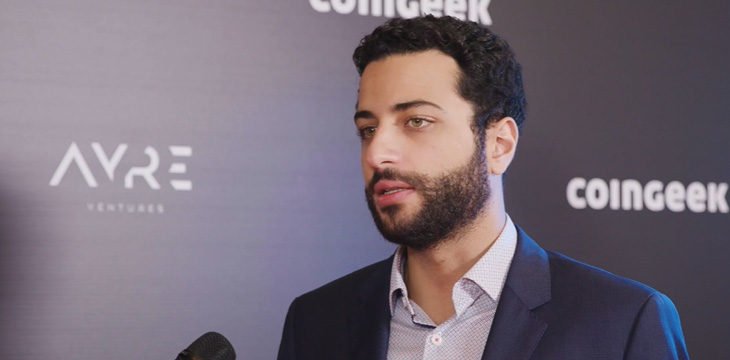
From a Stanford rowing athlete to one of the youngest General Partners (GPs) at the world's top venture capital firm a16z Crypto, Jad Wahab's career trajectory defies all conventions of Silicon Valley. In an industry often swept up by speculation and frenzy, he cuts through the fog of cycles with the technical foundation of a "cypherpunk" and a cool, quantitative perspective.
In Jad's view, blockchain is not a fleeting asset frenzy, but rather the "cloud computing moment" that traditional finance and Wall Street are experiencing. Stablecoins are reshaping trillion-dollar settlements, decentralized networks are breaking the bottlenecks of AI computing power and energy, and each underlying technological iteration is quietly overturning the old world's distribution of interests. While most are still debating price fluctuations, top-tier capital is already betting on a decades-long infrastructure revolution. In this prolonged game between technological idealism and commercial reality, where exactly are the tenfold opportunities of the future hidden? What kind of people can build cycle-defying, great products? The following in-depth dialogue will deconstruct this fund manager's foundational cognition and ultimate vision.
Origins at Stanford and Institutional Markets: From Rower to a16z General Partner
Host: The entire world has been profoundly transformed by the internet and computers, with everything running on code and networks. Yet, the underlying logic of the traditional financial system seems extremely disconnected and even somewhat irrational. The significance of stablecoins and blockchain for the financial system and Wall Street is akin to what cloud computing was for the digital transformation of enterprise software. The two pillars of the Western economy are largely information technology and financial markets, and blockchain is the true fusion point of these two. Its ultimate form must be such that the public naturally uses financial or network services running on blockchain, coordinating all products with underlying protocols. When this industry truly succeeds, people won't even mention the word "cryptocurrency" anymore.
Host: Today we're connecting with Jad Wahab, the newest General Partner at a16z Crypto. Welcome to the show!
Jad Wahab: Thank you, it's a pleasure to be here.
Host: Let's dive deep into your journey today. You were recently officially promoted to General Partner, becoming one of the four GPs at a16z Crypto. Before that, you were a Partner. But digging into your background reveals that you initially joined a16z not even on the Crypto team, but as an intern in the Institutional Go-to-Market team. How did you progress from a non-core technical role in institutional outreach to deeply engaging in the complex, wild world of cryptocurrency investing?
Jad Wahab: I grew up in the suburbs of Philadelphia. In high school, my main passion and sport was rowing, which was a key reason I ended up attending Stanford University. Early at Stanford, I wasn't immediately focused on computer science. As a kid, I dabbled in some basic programming, but it was never my primary focus. I attended a very traditional prep high school on the East Coast, which didn't even offer formal computer science or programming courses.
After entering Stanford, I gradually developed an intense interest in cryptocurrencies. Around my sophomore year, I started looking for a summer internship. During my freshman and sophomore years, I worked as a research assistant in the economics department, researching the cost-benefit analysis of nuclear energy policy—a highly specialized field. I spent my days reading numerous Department of Energy budget reports, many of which were still on paper, digitizing them.
Host: This background isn't widely known. You later championed an investment at a16z into decentralized physical infrastructure (DePIN), particularly the distributed energy project Daylight. This seems deeply connected to your early academic and research experiences.
Jad Wahab: Yes, I've always been fascinated by the concept of "networks"—whether the physical internet, power transmission grids, or global financial settlement networks. This exploration of network mechanisms ties together much of my academic interest from college and naturally became a direct gateway into the crypto space.
In my sophomore year, there was a career fair specifically for student athletes. I was directed to speak with Ben Gardner and Ronnie Harris, who were part of a16z's Go-to-Market institutional team and recruiting for two interns, one of which was earmarked for a Stanford football player. We hit it off and stayed in touch, and with other friends on the team, I ended up getting the offer. I interned with the institutional team for two summers and a full academic year, back in 2018.
During my internship, my true passion remained cryptocurrencies and network protocols; I believed decentralized networks represented the next generation of the internet. So, I tried to assist the crypto team as much as possible outside my daily duties. I was fortunate to work with Jesse Walden (now founder of Variant, then an Investing Partner at a16z Crypto). By early 2019 or summer, Eddy Lazzarin had also joined the team.
During my sophomore summer, a major project in the enterprise GTM team was to build a structured framework to help traditional CIOs and institutions understand the crypto industry's roadmap. At the time, most teams were building Layer 1 blockchains, bridges, and basic network protocols, with few exploring decentralized network layers geared towards real business applications or with economic incentives.
My core thought was: If the goal of blockchain is to host fully decentralized applications, then any app built on top of traditional centralized infrastructure cannot be truly decentralized. The internet, in reality, is highly centralized at its base, heavily reliant on a few Tier 1 telecom operators and subject to strict government regulation. There are countless physical choke points, like undersea cable landing stations and core data exchange centers. People think the internet is a cloud floating in the sky, but it's firmly tied to specific physical nodes on the ground.
Host: Absolutely. The public often thinks the internet is open and distributed, but over the past few decades, it has trended towards centralization and control, with many countries building powerful national firewalls to strictly control information flow.
Jad Wahab: Exactly. This led me to think deeply: Can we reconstruct underlying network routing protocols, like building a decentralized IP protocol or BGP mechanism, similar to how Ethereum designed decentralized incentive protocols? I led a research project on decentralized internet service providers. This project was later selected for one of a16z's earliest "Crypto Startup Schools" (which evolved into the later CSX accelerator program). That was around late 2019 to early 2020.
The Game Between Cypherpunk and Pragmatism: How a Technological Revolution Transcends Ideology
Host: Looking back, your path is fascinating: from a non-crypto intern, to an accelerator project participant, to a Partner, and now a GP guiding the next wave of industry investment. You've accumulated a rare global panoramic view across institutions and academia.
Jad Wahab: I feel incredibly fortunate; many things aligned at the right time. While at Stanford, I interned and also served as a teaching assistant for Professor Dan Boneh. Dan is a titan in modern cryptography, teaching core courses on cryptography and blockchain systems at Stanford, and has long been a research advisor to a16z. Dan is the top scholar; learning under him was a great honor.
Around graduation, instead of starting a commercial company, I took the research project from the accelerator to the research team at Protocol Labs, best known for Filecoin. The team had exceptional engineering and R&D capabilities. As Filecoin's mainnet was nearing completion, the research team was exploring the company's next long-term initiatives. One project, codenamed "Paddles," was a joint effort with MIT exploring distributed energy network mechanisms.
Coincidentally, a16z Crypto's founding GP, Ali Yahya, had co-founded an early company with Protocol Labs' founder Juan Benet during college; they are close friends and long-time academic partners. During my time at Protocol Labs, I worked closely with research lead Evan Miyazono and Juan, exploring incentive-driven network layers.
As that research concluded, I was in my fifth year at Stanford in a joint degree program. I was clear that I wanted to be in the crypto space long-term but wasn't sure whether to continue in academic incubation or move into full-time investing. At that moment, Eddy Lazzarin, then an Investing Partner who had been at a16z for two years, called me. He said the team was looking for non-traditional investors with technical and research backgrounds and asked if I'd be interested in interviewing for a full-time Partner role. I said yes almost immediately.
Host: Wait, this breaks the mold. A core principle known from a16z's early days is that all core investors and GPs had to be highly successful second-time entrepreneurs or executives with experience running high-growth companies. It's very rare in traditional venture capital for someone in their early 20s with an academic/intern background to join an investment team directly.
Jad Wahab: It is. The investment industry typically looks for people in their late 20s or early 30s who have been core product leads or BD executives at high-growth startups. My background was different.
During the interviews, the team had me speak with all core partners. In retrospect, many previously disconnected dots formed a line: I worked closely with Stacy during my internship; Dan Boneh gave me high praise as a TA; when Ali asked Dan for a reference, Dan said I was "incredibly efficient and reliable"; and my research work with Evan and Juan at Protocol Labs gave the team deep insight into my technical skills. All this consensus led to me joining a16z Crypto's full-time investment team in late 2020. When Chris Dixon later announced my promotion to GP, he mentioned that internally I was like an "omnipresent force," which is a recognition of my consistent high-level output.
Host: In the crypto world, many are just chasing profits, but you always exude a pure "cypherpunk" philosophical essence. Where does this core spirit come from? What initially drew you so deeply to cryptocurrency?
Jad Wahab: Part of it is my inherent disposition. I've always had a rebellious streak; I'm not one to blindly follow authority. The idea of using pure mathematics, cryptography, and open-source code to rebuild the internet's architecture, even replacing the outdated and inefficient global financial system, is profoundly appealing to me. The philosophical concepts in Satoshi's whitepaper—using code to limit sovereign money hyperinflation, hedge against fiat devaluation, and constrain centralized power with technical covenants—intellectually stunned me.
I vividly remember Thanksgiving 2017, at home in the role of the "tech-savvy college student" often called to fix Wi-Fi or set up devices. My grandmother asked me, "Jad, I keep hearing about Bitcoin on TV. Should I buy some?" While I'd heard classmates talk about it, I hadn't delved deep. To answer her, I downloaded and read the Bitcoin whitepaper that night. For an entire week, I reread it, working through the decentralized ledger and proof-of-work consensus. That whitepaper was a true awakening moment for me.
My entry into this field has always been anchored by two core points: First, a genuine commitment to the non-sovereign hard money and cypherpunk philosophy represented by Bitcoin. Second, an obsession with open-source, decentralized network architecture. Blockchain isn't just open-source software; it's the first time an economic incentive layer has been natively introduced into an open protocol, making permissionless, global decentralized collaboration networks commercially self-sustaining.
Host: This touches on the industry's core tension: the tension between cypherpunk idealism and commercial realism. How do you view the evolution of these two forces over the past few years?
Jad Wahab: There's a famous sardonic remark about libertarians: "The good news is they're often right; the bad news is they keep losing." In a way, the history of cryptocurrency over the past decade-plus aligns with this.
Cypherpunks are absolutely right: Fully decentralized, censorship-resistant systems have irreplaceable resilience in technical robustness and philosophical purity; they achieve lofty socio-ideological goals. But in the real competition of free markets, the projects that achieve the greatest commercial success and mainstream adoption are often highly pragmatic. To gain widespread use, they inevitably compromise or sacrifice some pure ideological tenets.
This evolution is common in technological history; the open-source software movement is the most vivid precedent. The mindset of maintainers and developers in commercial open-source today is fundamentally different from that of early believers like Richard Stallman of the Free Software Foundation 40 years ago. Today, Linux runs on over 90% of cloud servers and mobile devices. While the pure open-source movement conceded in its ideals, it won decisively in the real world.
Any true political or social revolution initially needs a powerful, penetrating ideology to awaken the masses and break the old system's monopoly. However, the struggle can't stay in the streets forever; it must eventually transition to drafting constitutions, building institutions, and solving practical livelihood problems—as seen in the American Revolution or French Revolution. Technological revolutions follow the same pattern: If a new technology can't ultimately transform into efficient products that ordinary consumers can use daily without thinking, and can't beat traditional solutions in cost and efficiency, it can't achieve a qualitative leap.
Bitcoin's social contract as a neutral store of value is established and widely accepted. Today, the growing number of blockchain protocols and applications don't just sell philosophy; they genuinely reduce counterparty risk, platform manipulation risk, and settlement costs for users. Idealism and commercial pragmatism are like yin and yang, both indispensable.
Investment Paradigm and Timing Philosophy: How Long-Cycle Capital Evaluates Founders' Core Traits
Host: Around 2018, traditional Wall Street institutions discussing this technology often used a politically correct slogan: "Blockchain, not Bitcoin." Now, as a GP at a16z Crypto managing a multi-billion dollar fund, how do you balance these two forces?
Jad Wahab: Naming our fund "a16z Crypto" carries deep meaning. "Crypto" encompasses two dimensions: It's the overarching term for the class of crypto assets built on cryptography, creating native assets and wealth systems independent of sovereign states or single corporations. Simultaneously, it's the technological protocol using native token economies to build entirely new decentralized internet services.
In the lifecycle of venture capital and technological innovation, "timing" is everything. Many applications that run smoothly today failed completely 5 to 10 years ago, fundamentally because the underlying throughput, settlement latency, and high gas fees couldn't support a commercial loop. Back then, the network was limited to Bitcoin and early Ethereum L1, with extremely slow and expensive transactions.
Today, we have mature Ethereum Layer 2 ecosystems, high-throughput, low-latency chains like Solana, and new zero-knowledge proof systems. Data throughput has increased tens of thousands of times, network response times are compressed to milliseconds, and per-transaction fees approach zero. This structural leap in underlying infrastructure allows products to win the mainstream market purely on efficiency, not just on users' speculative frenzy for tokens.
Host: Traditional venture capital is typically constrained by liquidity; equity raised usually takes 7 to 10 years or longer to exit via an IPO in public markets. In crypto, decentralized tokens often gain high secondary market liquidity very early in a project's lifecycle. How does this drastically different liquidity environment reshape your investment time horizon and decision logic?
Jad Wahab: This is indeed a unique structural feature of crypto. Traditional tech companies stay private longer partly due to increasing compliance burdens and ample capital in private markets. Decentralized networks, to achieve global permissionless consensus and validator economics, often need to issue and circulate native assets very early upon protocol launch.
Early public trading is a double-edged sword: On one hand, it provides founding teams with a powerful global capital formation tool at the embryonic stage. On the other hand, being exposed to 24/7 fluctuating public market prices can subject less-resolute teams to immense external emotional noise and pressure.
Precisely because of this high-liquidity environment, a16z must be even more steadfast in practicing ultra-long-cycle fundamental investing. Truly great commercial value is invariably built over 10 or even 20 years. If a founder's sole motivation for entering this space is to cash out at a token pump and buy yachts or beachfront mansions, this type of purely short-term financially-driven entrepreneur cannot withstand the brutal test of cycles.
Host: In the early stages, lacking comprehensive financial statements, how do you accurately identify and screen for founders with the "long-termist" gene for success?
Jad Wahab: We have a counterintuitive set of criteria for evaluating founders. Psychological research shows: A person's prediction accuracy about a close friend's personality test is often worse than that of a complete stranger who spends 10 minutes observing their living room. Close friends are filled with subjective projections, emotional biases, and preconceived notions; objective observers can often capture the most truthful behavioral evidence from direct physical facts.
We've found two clear common denominators in top-tier founders with immense potential:
First, unconventional top-tier attraction (Talent Magnet). This isn't about being the life of the party or smooth networking skills. It's when top engineers, scientists, and business partners encounter them, they are genuinely captivated by their vision and ambition, wanting to join their journey at almost any cost to build something incredible together.
Second, a near-addictive love for "playing the game itself," not an obsession with winning. Tennis legend Andre Agassi painfully admitted in his autobiography that he hated tennis but forced himself to the top with a brutal compulsion to win. Novak Djokovic, when asked why he started playing tennis, answered simply: "I just loved the feel of the ball hitting the racket." The founders who can build great companies over 10-year spans are often like Djokovic. They find the highest reward in the daily, craft-like process of building an exceptional product. For them, "the only reward for doing something well is the opportunity to do more and harder work." This intrinsic drive cannot be explained by purely financial incentive models.
The Ultimate Vision: On-Chain Wall Street, Energy-Computing DePIN, and the "Post-Crypto" Era
Host: Having discussed the founder's core, let's look at current investment sectors. In today's crypto market, which areas are you and a16z Crypto most bullish on and dedicating the most energy to?
Jad Wahab: In the short to medium term, the areas with the strongest real product-market fit (PMF) remain financial infrastructure and next-generation capital market applications.
The most unstoppable trend right now is the explosion of stablecoins. Stablecoins are essentially a major upgrade to the global financial system's plumbing. There's immense real-world demand for USD liquidity, whether in developing countries plagued by hyperinflation or emerging economies with capital flow restrictions—areas poorly served by traditional central banks and cross-border settlement systems. Stablecoins provide a near-frictionless, inflation-resistant savings and payment mechanism for billions lacking smooth access to Western financial networks. The trillions in real quarterly on-chain settlement volume proves it's not just a speculative tool but the most efficient cross-border clearing network humanity has ever seen.
Around next-generation on-chain finance, we're focusing on these core areas:
New decentralized exchanges (DEX) and liquidity infrastructure: Including block trading mechanisms, derivative protocols, prime brokerage services, and liquidity aggregation routing.
Prediction markets and advanced derivative networks: Covering options, structured notes, and perpetual contract mechanisms.
On-chain wealth management tools for non-traditional ultra-high-net-worth individuals: Serving those with massive on-chain digital assets who are underserved by traditional private banks.
Beyond pure on-chain finance, another strategic area I personally devote immense energy to is DePIN (Decentralized Physical Infrastructure Networks), especially energy networks and distributed computing markets.
The rapid iteration of AI models is hitting a critical physical bottleneck—energy shortages and constraints on advanced semiconductor chips. Relying solely on traditional tech giants to build nuclear power plants and supercomputing centers via centralized balance sheets has a clear capital efficiency ceiling. Decentralized blockchain protocols can use sophisticated token economics to coordinate third-party energy producers and idle compute nodes scattered globally, achieving the most efficient distributed allocation of capital in the physical world. If third parties outside the tech "Magnificent 7" want a seat at the global energy and compute table, blockchain is the indispensable foundation.
Host: Among on-chain financial products, why have perpetual contracts (Perps) shown such explosive growth and user stickiness? What makes them unique?
Jad Wahab: Perpetual contracts' core appeal lies in their intuitive simplicity and high capital efficiency. They are essentially "Delta 1" linear derivatives offering high leverage; a move of X% in the underlying results in a strictly X% multiplied by the leverage move in the contract value, without the complexities of time decay (Theta) or implied volatility surfaces of traditional futures/options. They are an incredibly intuitive risk hedging and directional exposure tool for both professional traders and retail users. More importantly, in on-chain decentralized perpetual markets, traders directly interact with transparent liquidity pools or smart contracts, completely eliminating the counterparty default risk and platform manipulation risk associated with traditional centralized brokers.
Host: You've made an excellent analogy: Blockchain is bringing traditional finance into the digital era. What is the fundamental advantage of transforming traditional financial assets into on-chain assets?
Jad Wahab: The fundamental advantage is one word: efficiency.
Just as email was a dimensional leap over physical mail, as Excel spreadsheets revolutionized manual ledger books, the difference in circulation efficiency brought by digitization is orders of magnitude.
The vast majority of Wall Street's work today involves thousands of traders across institutions manually verifying and reconciling transactions in isolated, private Excel sheets. Traditional financial institutions operate with countless fragmented, incompatible private databases and clearing gateways. Imagine a public, distributed "super spreadsheet" open to everyone, achieving global, instant consensus and state finality, where all institutions can settle atomically on the same underlying ledger without trusting each other—this would eliminate trillions in clearing friction costs.
Blockchain, with its permissionless decentralized consensus, ultimately answers the foundational ledger ownership questions: "Who has read rights? Who has write rights? How do we prevent double-spending?" Wall Street institutions may not be enthusiastic about publicly using the ideological term "decentralized" due to compliance, but they have a strong real-world interest in "eliminating counterparty default risk, flattening inter-institutional settlement delays, and removing single points of failure."
Ultimately, this industry's victory will be marked by complete "de-labeling." When you pick up your phone, connect your Apple Watch, or shop online today, you don't shout, "I'm using TCP/IP internet!" Similarly, in the future, when people use cross-border transfers, credit, or asset allocation, the underlying execution will be via smart contracts on blockchains, and the public won't even mention terms like "cryptocurrency" or "Web3."
Host: How long do you estimate this complete financial infrastructure overhaul will take?
Jad Wahab: This is not a two- or three-year sprint; it's a decades-long, profound paradigm shift.
In the next two to three years, we'll see global circulating USD cash and offshore settlement funds convert into on-chain stablecoins at an even more astonishing rate. Over the next 10 to 20 years, or longer, the majority of global capital market assets—securities, fixed income, derivatives—will complete on-chain tokenization and settlement. From the birth of the internet in the 1990s, the global digitalization process is a century-spanning historical progression. Blockchain is the decisive piece tackling the core financial settlement network in this process.
Life Beyond Investing: Intentional Abstract Painting and Men's Wear Fit Philosophy
Host: When you step away from the hardcore financial architecture, crypto tokenomics, and intense project evaluations, what is your daily life like? Any lesser-known hobbies? You mentioned earlier that a stranger walking into someone's apartment can immediately see their true character. If someone walked into your home now, what would they see?
Jad Wahab: This might come as a huge contrast to many. If someone walked into my apartment, they might think an elementary school art teacher lives here. The walls are covered with colorful, seemingly random paintings. I've been intensely into oil painting the past few years; it's my most important outlet for creative expression.
Host: What do you paint? Still life, landscapes?
Jad Wahab: All intentionally rudimentary abstract paintings.
In a venture capital career, almost all work is strictly built on quantitative metrics, objective facts, logical closure, and market feedback. The commercial market has its own ruthless, objective rules; it doesn't care about your subjective feelings. Painting is the complete opposite: Facing a blank canvas, the only thing that matters is your internal experience and pure joy during creation. It doesn't need to cater to any external market judgment. This pure flow state, completely unaligned with rational market forces, is a deeply healing process I immensely enjoy.
Host: At the show's end, a customary question with your personal touch: Is there something incredibly trivial to others that you have an obsessive, strong principle about?
Jad Wahab: Yes. Most men's pants are incredibly ill-fitting, too narrow and tight.
Over the past two decades, fashion has been dominated by specific high-fashion trends and skinny fits, so many people, regardless of age or body type, wear extremely tight jeans or form-fitting athleisure pants. It wasn't until two years ago I realized: I spent the first twenty-plus years of my life wearing shoes and pants that were the wrong size. Not just pants; modern off-the-rack shirts are often cut too long, with tail lengths three to four inches beyond a proper fit, forcing many men to tuck them in to look proportional. Standard sizing in mass-produced menswear is severely misaligned with most men's actual skeletal proportions.
Host: Haha, I never expected such a systematic and passionate take on men's clothing fit!
Jad Wahab: I probably shouldn't have gone off on this tangent publicly, because the pants I'm wearing today might not be perfect either. I'll likely face ruthless fashion criticism on Twitter after this airs.
Host: This has been an incredibly insightful and profound conversation. Thank you so much for your candor today!
Jad Wahab: Thank you for having me. It's been a pleasure!