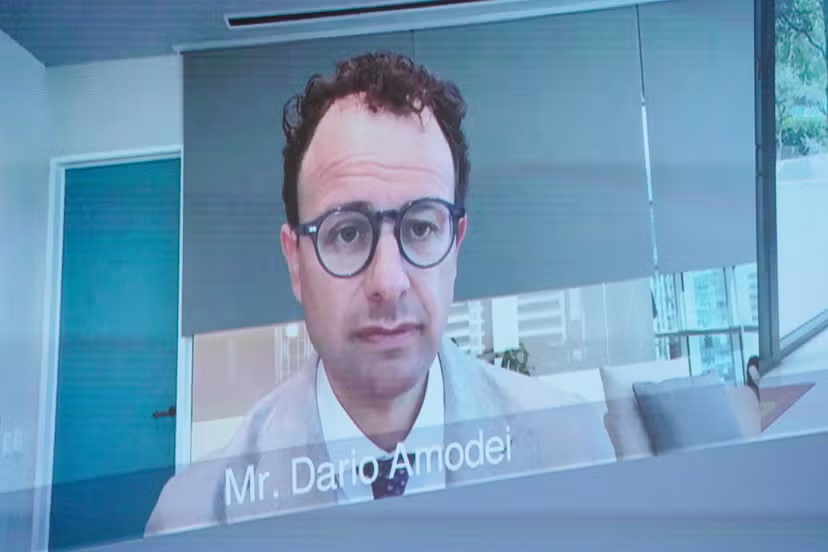
Crypto PAC announces support for 32 House candidates in US midterms

cointelegraphPublished on 2026-10-06Last updated on 2026-10-06

Abstract

The crypto industry-backed political action committee Fairshake, supported by Coinbase, Ripple Labs, and Andreessen Horowitz, announced initial spending of $6 million to back six out of 32 U.S. House of Representatives candidates for the 2026 midterm elections. The PAC plans to support 19 Republican and 13 Democratic incumbents, with total spending expected to exceed $100 million on ads for House and Senate races, including at least $30 million in Ohio’s Senate race. Fairshake, which reported $122 million cash on hand, aims to support pro-crypto candidates from both parties who voted to advance the Digital Asset Market Clarity Act, a bill that recently failed a key Senate vote.

Fairshake, the political action committee (PAC) backed by contributions from Coinbase, Ripple Labs and Andreessen Horowitz, announced that it would initially spend a combined $6 million on six House of Representatives candidates out of 32 people the group planned to back ahead of the 2026 US midterm elections.

On Monday, Fairshake said that it would support 19 Republican and 13 Democratic incumbents in US House races for 2026. The PAC is expected to spend more than $100 million on ads supporting House and Senate candidates in 2026, including at least $30 million in Ohio’s Senate race to back Republican Jon Husted over Democrat Sherrod Brown.

“Fairshake has always been and always will be an issue-focused organization,” said Fairshake spokesperson Geoff Vetter. “We back pro-crypto candidates who support American innovation in both parties.”

According to the crypto-backed PAC, three Republican and three Democratic candidates will each receive $1 million in spending ahead of the 2026 midterms. These politicians included Oregon Representative Janelle Bynum, California Representative Derek Tran and Nevada Representative Steven Horsford on the Democratic side and Arkansas Representative French Hill, Michigan Representative Bill Huizenga and Wisconsin Representative Bryan Steil as Republicans.

All 32 candidates Fairshake said would receive its support voted to advance the Digital Asset Market Clarity Act, a bill that had been expected to establish clear roles for US financial agencies in overseeing digital assets. The legislation failed to pass a crucial Senate vote, leaving the Republican-led bill’s future uncertain ahead of the midterm elections. Many polls showed Democrats favored to take majority control of both the House and Senate in 2027.

Vetter said in August that Fairshake had “$122 million cash on hand” ahead of the midterms as part of its plan to “help build the largest pro-crypto caucus in American history.” The consumer advocacy group Public Citizen reported that the PAC had spent $82 million on ads opposing or backing candidates as of June, less than half of the $189 million it estimated came from advocacy groups and companies aligned with the crypto industry.

Related: CLARITY vote failure could stoke more crypto PAC spending in key races

Related Questions

QHow much does Fairshake plan to spend on House and Senate candidates in the 2026 elections?

AFairshake is expected to spend more than $100 million on ads supporting House and Senate candidates in the 2026 elections.

QWhat is the Digital Asset Market Clarity Act, and how did the candidates Fairshake supports relate to it?

AThe Digital Asset Market Clarity Act is a bill intended to establish clear roles for US financial agencies in overseeing digital assets. All 32 candidates Fairshake is supporting voted to advance this legislation.

QWhich companies and entities are listed as major backers of the Fairshake PAC?

AThe Fairshake PAC is backed by contributions from Coinbase, Ripple Labs, and Andreessen Horowitz.

QHow many House candidates does Fairshake plan to support for the 2026 midterms, and what is the partisan breakdown?

AFairshake plans to support 32 House candidates for the 2026 midterms. The breakdown is 19 Republicans and 13 Democrats.

QWhich six candidates are specifically mentioned to receive an initial $1 million each from Fairshake?

AThe six candidates are: Democrats Janelle Bynum (Oregon), Derek Tran (California), Steven Horsford (Nevada); and Republicans French Hill (Arkansas), Bill Huizenga (Michigan), and Bryan Steil (Wisconsin).

Related Reads

Google says hackers use AI agents to find and exploit software flaws

Google Threat Intelligence Group (GTIG) has for the first time identified attackers using AI large language model frameworks to automate software vulnerability discovery and exploitation without step-by-step human direction. In a report published Monday, researchers described a tool found on an exposed staging server that compared software versions, identified potential flaws, and generated and executed exploit code. GTIG said threat actors used LLM frameworks to fully automate vulnerability discovery and exploitation without a human in the loop, hosting a multi-agent vulnerability research and weaponization framework designed to conduct continuous differential analysis comparing code before and after patch announcements on popular web applications, autonomously discovering and exploiting software vulnerabilities. Google warned these automated workflows give organizations less time to apply security patches before attackers develop ways to exploit vulnerable systems. Attackers are leveraging AI agent frameworks to automate patch reverse engineering via differential analysis and weaponizing N-day vulnerabilities. Vulnerability disclosures more than doubled between January and August, with exploited zero-days averaging eight per month in 2025 and 11 per month from January through August 2026, reaching 22 in August. Automated workflows also accelerate attackers' ability to move from initial access to domain administrator access, as cited in an August 2026 PaperCut campaign where attackers achieved that control within minutes. GTIG said two PHP vulnerabilities involved in exploitation attempts were discovered using LLM analysis. Anthropic also warned that AI-assisted attacks have evolved into multi-agent operations automating most of the cyberattack cycle from discovery to exploitation and data theft.

cointelegraph13m ago

Google says hackers use AI agents to find and exploit software flaws

cointelegraph13m ago

Coin-Stock Trend Indicator丨Third-largest BTC treasury company Twenty One Capital buys $10 million in BTC for the first time since July 2025; Bitmine total holdings value drops $2.5 billion in a week (November 17)

This week's crypto stock snapshot notes that the recent US equity move was merely an oversold rebound rather than a new high, with the impact of the Democratic midterm election win still spreading and Nvidia founder Jensen Huang's resignation controversy evolving into a broader AI-sector storm. The week's biggest US market event is Anthropic's IPO on November 19, though its fundraising and valuation fall short of SpaceX's record. Japanese stocks remain favored by Morgan Stanley analysts despite AI-related weakness, while Korean stocks fell 2.59% to 4,968.45, their lowest since February 2. In crypto stocks, last week's market crash hit DAT treasury companies hard, with ETH treasury firm Bitmine's holdings value dropping from $14.3 billion to $11.8 billion in a week, nearly all due to ETH's price decline. Listed companies (excluding miners) bought a net $51.86 million in Bitcoin last week, down 45.2% week-over-week. Strategy bought 485 BTC at $68,887 each for about $33.4 million, bringing total holdings to 850,849 BTC; Metaplanet bought none. Capital B bought 12 BTC at $77,500.2, holding 3,550 BTC; Strive bought 251 BTC at $69,853 for about $17.53 million, holding about 43,404 BTC. Total tracked holdings reached 1,171,317 BTC, up 0.04% week-over-week, worth about $75.53 billion, or 5.8% of Bitcoin's circulating market cap. Twenty One Capital bought 154.32 BTC for about $10 million in cash, its first purchase since July 2025, bringing holdings to about 43,700 BTC and making it the third-largest listed Bitcoin treasury; CEO Rapha Zagury said volatility creates opportunity and the firm bought the dip. BitMine added 7,653 ETH last week, holding 6,077,745 ETH (4.97% of total supply, 0.03% short of its 5% goal) plus 216 BTC, a $180 million investment in Beast Industries, $67 million in Eightco Holdings, and $448 million in cash and securities; its ETH holdings are worth about $11.1 billion at $1,823 per ETH. Chairman Tom Lee attributed ETH's 28% two-week drop to Nvidia-related turmoil triggering Asian margin selling and investors raising cash for Anthropic's reported November 18 IPO, saying it contradicts improving fundamentals. DeFi Development Corp. added 9,482 SOL, with Solana treasury holdings reaching about 2.62 million tokens, growing for a 10th straight week; its CHAD preferred stock raised enough to buy over 230 SOL today. CZ said Japan-listed ASIAN STAR will distribute 8 million yen worth of BNB to shareholders and pursue Japanese real estate tokenization on BNB Chain. DeFi Technologies reported Q3 2026 revenue of $18.3 million (down about 18% year-over-year), operating income of $7 million, and net profit of $22.3 million, with $53.4 million in cash and stablecoins and $48.2 million in digital assets. Ripple-backed Evernorth disclosed its 346 million XRP was booked at $342 million versus an initial $847 million record value, with cumulative impairments of $505 million, a nearly 60% decline.

marsbit38m ago

Coin-Stock Trend Indicator丨Third-largest BTC treasury company Twenty One Capital buys $10 million in BTC for the first time since July 2025; Bitmine total holdings value drops $2.5 billion in a week (November 17)

marsbit38m ago

SMIC Closes In on Global No. 2

SMIC is closing in on the global foundry industry's second place. In the first three quarters of 2026, the company reported revenue of 60.618 billion yuan (up 22.43% year-on-year) and net profit of 7.314 billion yuan (up 91.57%), with gross margin hitting a four-year high of 25.59%. In Q2, Samsung held 5.9% of the global foundry market versus SMIC's 5.4%—a gap of just 0.5 percentage points, down from 1.4 points the previous quarter. Revenue-wise, the two were only about $254 million apart in Q2, and SMIC's Q4 guidance of $3.32–3.38 billion would exceed Samsung's Q2 level. Growth is no longer driven mainly by smartphones, whose share of wafer revenue fell from 21.5% to 14.3%, amid a 15.2% decline in domestic smartphone shipments. Instead, industrial and automotive revenue nearly doubled, rising from 11.9% to 19.3% of revenue, while computer and tablet revenue grew about 55%. SMIC has invested in BCD processes covering battery management, digital isolation, and smart power switches, with some processes meeting Grade 0 automotive standards. AI demand is also creating new opportunities in mature-node chips such as power management, controllers, and specialty memory; customer pull for these AI-supporting chips exceeded expectations, prompting SMIC to trim engineering and R&D wafers to prioritize mass-production orders. Q3 wafer shipments exceeded 3 million 8-inch equivalent wafers for the first time, with utilization at 97.3%. A key financial inflection point: after tripling capacity over a decade (from 339,000 to 1.1168 million wafers per month), SMIC's capital expenditure is falling—Q3 capex dropped 56.5% year-on-year to 7.423 billion yuan, and cash paid for fixed assets fell over 30% versus 2024 and 2025. Major expansion projects in Shanghai, Beijing, Tianjin, and Shenzhen are 95–98% complete, with construction-in-progress declining from 92.619 billion to 62.652 billion yuan as projects transfer to fixed assets. However, management cautions that longer equipment lead times could disrupt capex pacing, and Q4 gross margin guidance of 26–28% is below Q3's 29.9% due to new capacity and R&D costs. The next decade's challenge is not just overtaking Samsung, but proving that past massive investments can steadily convert into real profits and cash flow.

marsbit46m ago

SMIC Closes In on Global No. 2

marsbit46m ago

Trading

Spot
活动图片