Author: Zhou, ChainCatcher
The U.S. Bureau of Labor Statistics released the August CPI on Friday, showing overall prices rose 3.4% year-on-year and 0.4% month-on-month, with both readings matching market expectations. Core CPI, excluding food and energy, slowed to 2.4% year-on-year, the lowest since March 2021, but increased 0.3% month-on-month, higher than the expected 0.2%. Gasoline prices rose 3.9% month-on-month, contributing to more than one-third of the overall monthly increase, while the energy index rose 2.1% month-on-month.
In the stock market, before the data release, Asian-Pacific markets fell across the board. The Nikkei 225 closed down 1.93%, South Korea's KOSPI closed down 1.76%, and China's four major A-share indices collectively opened lower and closed in the red. After the data release, U.S. stocks opened higher but then retreated, ultimately closing with gains. The S&P 500 rose 0.9%, while the Dow and Nasdaq both gained about 1%. All three major indices still fell for the week overall.
Additionally, the yield on the 10-year U.S. Treasury note settled at 4.974%, nearing the 5% mark, up from 4.783% a week ago. Brent crude oil settled at $104.61 per barrel, accumulating a weekly gain of over 8%. Factors such as Houthi attacks on Saudi energy facilities and shipping risks in the Strait of Hormuz continued to push oil prices higher.
The crypto market experienced a dip, followed by a rally, then another surge before giving back gains. After the data release, Bitcoin initially fell to around $76,000 before rallying to a high of $79,837. The daily 50-day moving average briefly crossed above the 200-day moving average, but as rate hike expectations quickly heated up, the price soon fell back, invalidating the golden cross on the same day it formed. Ethereum once climbed back above $2,600 intraday, showing stronger resilience than Bitcoin.
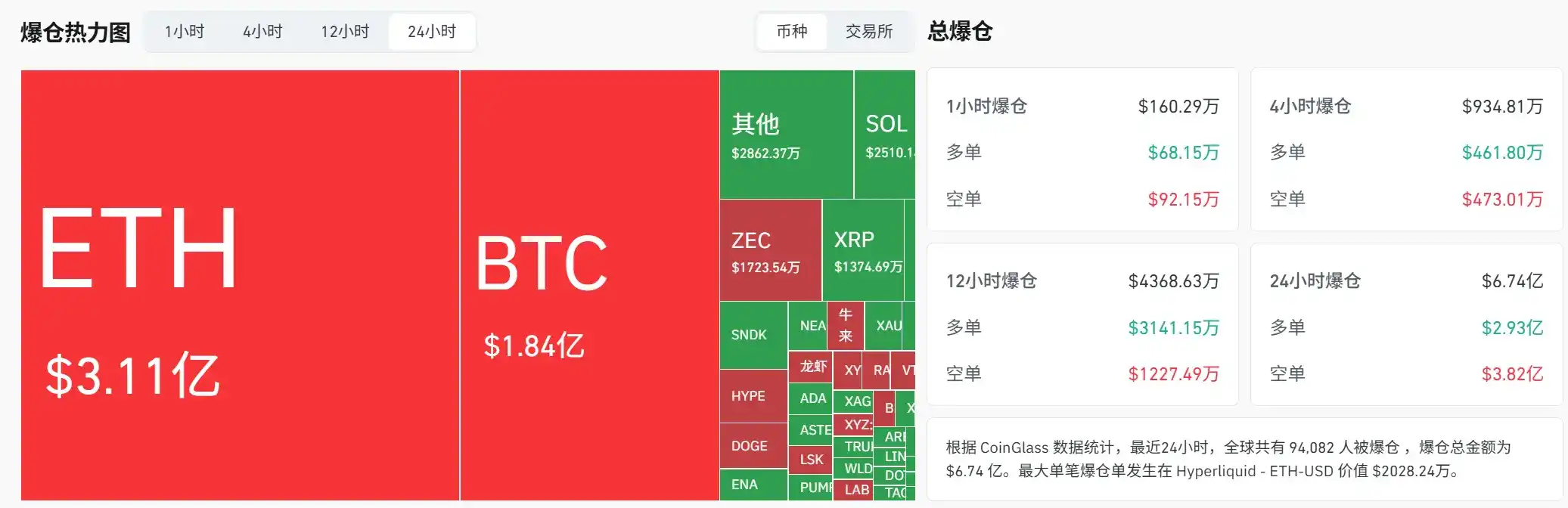
According to Coinglass data, as of press time, total liquidations across all exchanges reached $674 million over 24 hours, with approximately 94,000 traders liquidated. Ethereum led with $311 million in liquidations, followed by Bitcoin with $184 million. The largest single liquidation order occurred on an ETH-USD position on Hyperliquid, amounting to approximately $20.28 million.
Rate Hike Probability Jumps to 80%, Uncertainty Lingers for Next Week's Fed Decision
For the Federal Reserve, the significance of the August CPI data had been elevated even before its release. Bank of America analysts had previously noted that the August jobs report was more of an appetizer, while the CPI was the main course truly determining the direction of the September 15-16 FOMC meeting. The bank believed that unless the jobs data showed a significant downside surprise, it would be difficult for non-farm payrolls to be the ultimate deciding factor for a rate hike, and maintained its call for a September hike. The subsequently released August non-farm payrolls, which added 162,000 jobs—about triple expectations—had already moved the rate hike discussion forward a step.
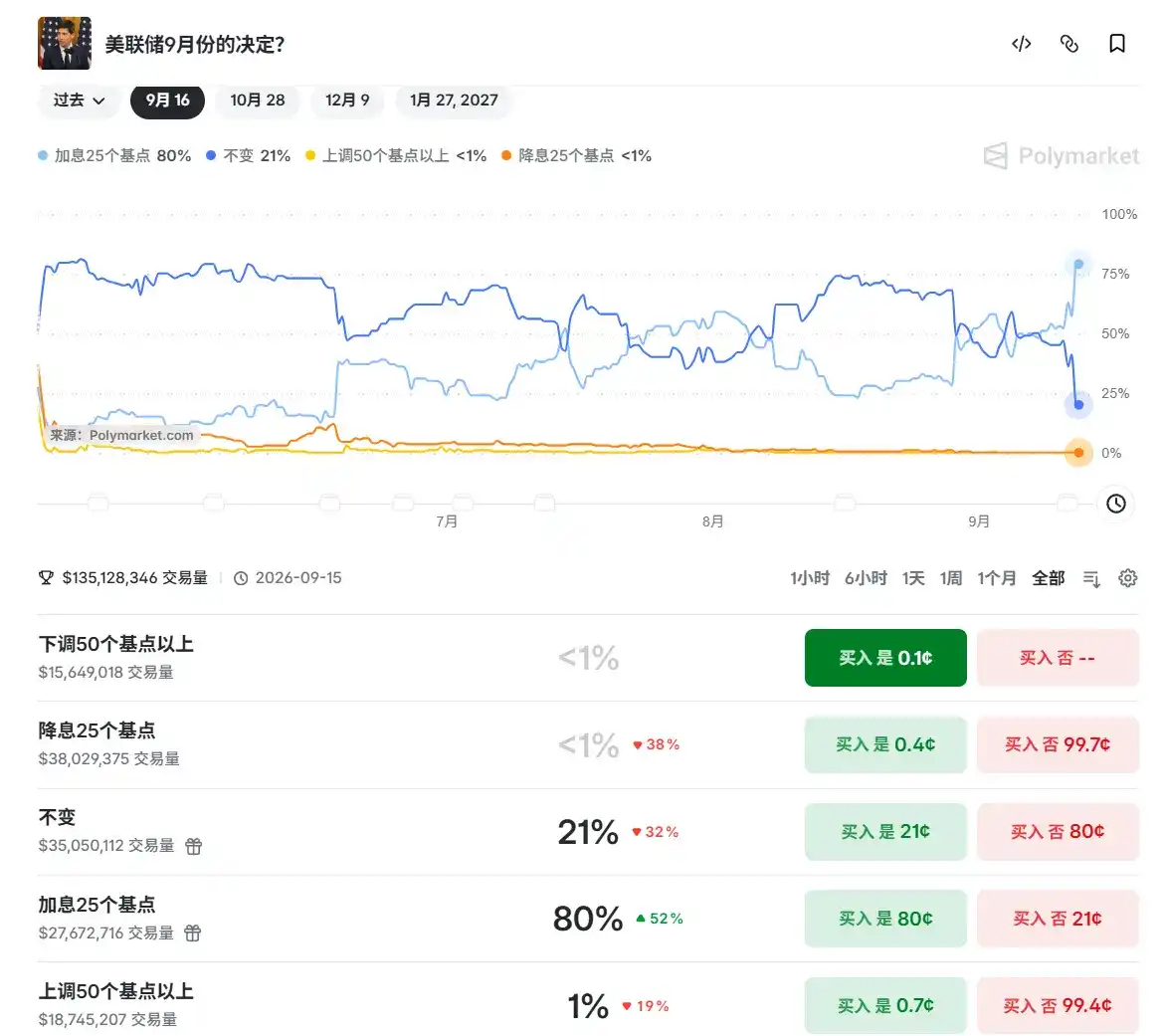
Following the CPI data, market sentiment towards next week's Fed meeting has clearly shifted hawkish. The latest data from Polymarket shows that markets are pricing in an 80% probability of a 25 basis point Fed rate hike on September 16, a 21% probability of no change, and about a 1% probability of a 50 basis point or more hike. Probabilities for rate cut-related contracts are all below 1%. Before the CPI release, maintaining rates unchanged was the option with the highest probability for a considerable time, only being rapidly overtaken by the rate hike option around the data release.
CICC research pointed out that the August CPI has already touched the Fed's rate hike threshold, predicting a 25 basis point hike on September 16, and that the Fed may lower its unemployment rate forecast while raising its inflation forecast, signaling tightening. The financial blog Zero Hedge emphasized that core CPI was hotter, and super core inflation was even hotter, with education and communication services prices seeing historic increases, including a record surge in mobile communication service prices.
Goldman Sachs economist Alexandra Wilson-Elizondo stated that the day's CPI data superficially aligned with what investors hoped to see but actually increased the uncertainty around next week's rate decision. She believes the data did not fully reflect some recent inflationary pressures and showed little evidence of inflation returning to target in the near term.
Energy remains the exogenous variable in this narrative. Houthi attacks on Saudi energy facilities, shipping risks in the Strait of Hormuz, and Saudi Arabia closing its East-West pipeline continue to fuel supply concerns. The coexistence of high oil prices and high interest rates has also led Wall Street to reframe the question to: How long will high rates last, and can policy curb inflation without significantly harming the economy and corporate profits?
RBC Capital Markets has adjusted its forecast for this year's path from expecting rate cuts to anticipating three hikes, believing high rates could further suppress corporate earnings and stock valuations. Fed whisperer Nick Timiraos, in his latest article, noted that investors have largely concluded the Fed will hike rates for the first time in three years next week, with the harder question being what comes after.
Almost no one inside the Fed believes a single 25 basis point hike is sufficient to lower inflation. If the Fed chooses to hike next week, most investors would interpret it as a correction to a previously misplaced interest rate level, with the hike being more the start of a correction, making a one-and-done move unlikely. Since the 1990s, the Fed has rarely stopped after just one hike.
Fed Chair [Note: 'Walsh' appears to be a potential placeholder/error; likely refers to Powell or another official] said in July that he does not believe the Fed is good at fine-tuning. Analysts judge that a chair skeptical of fine-tuning is unlikely to declare the job done after just a 25 basis point hike. Markets currently expect at least three cumulative hikes by June next year, up from the previous expectation of two.
For risk assets, Friday's rally primarily stemmed from the policy path becoming clearer, even though the underlying inflationary pressure hasn't truly subsided. Reduced policy uncertainty explains why U.S. stocks could still close higher despite rising rate hike expectations. The true pricing moment remains the September 16 decision, the dot plot, and [the Chair's] press conference.
Bitcoin's Golden Cross Lasts a Day, Resistance Emerges Around $82,000
The crypto market's reaction to this data was more intense. In the four hours after the CPI release, Bitcoin first dipped to $76,000, then rebounded to break above $79,000, before falling back to around $77,600. According to Coinglass data, $471 million was liquidated across all exchanges in these four hours, with $348 million from short positions and $123 million from long positions—a classic liquidation of both longs and shorts.
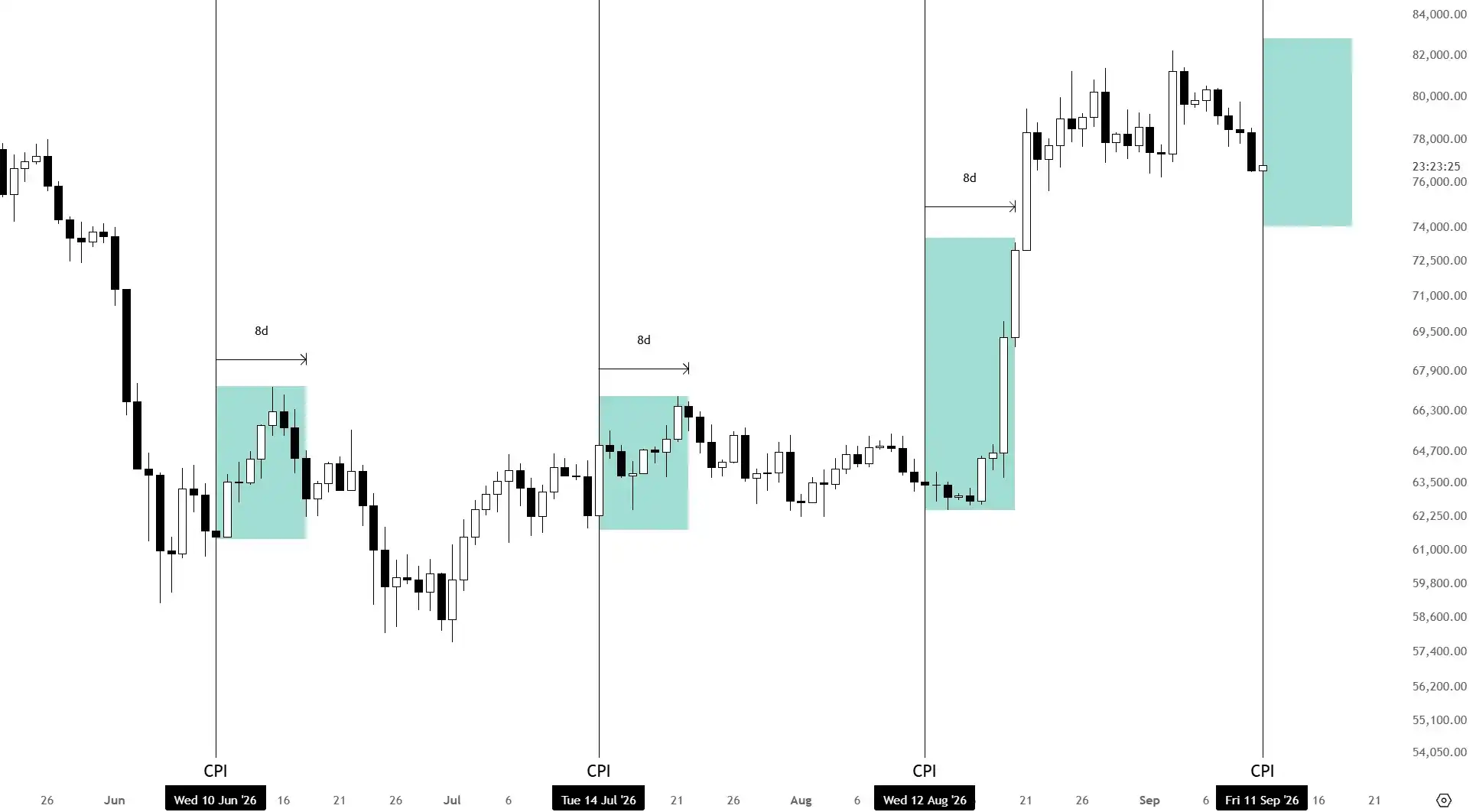
Noted trader Killa shared statistics indicating that in the past three instances following U.S. CPI releases, Bitcoin rose over 5% within 8 days. He believes the market has already priced in negative news and a bear trap has been set.
Looking over a longer timeframe, the crypto market has seen significant volatility recently. According to Coinglass data, Bitcoin rose 24.95% in August, its best-performing month so far this year. Momentum has weakened entering September, with a 1.83% decline so far this month.
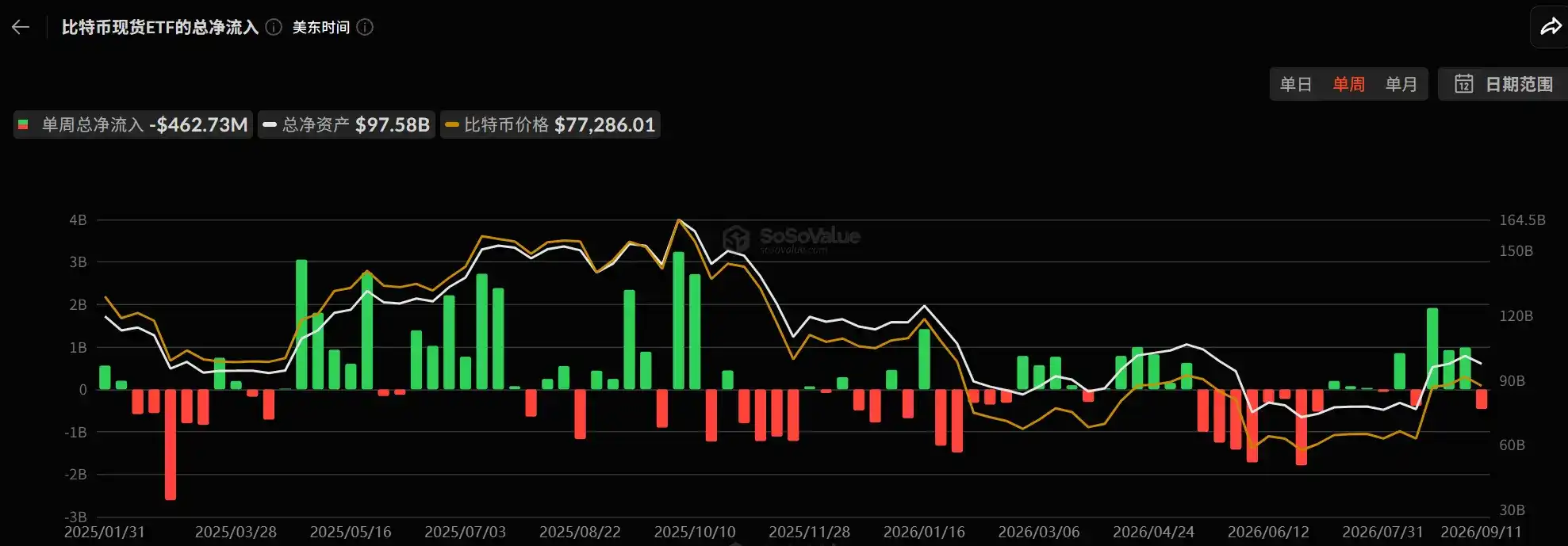
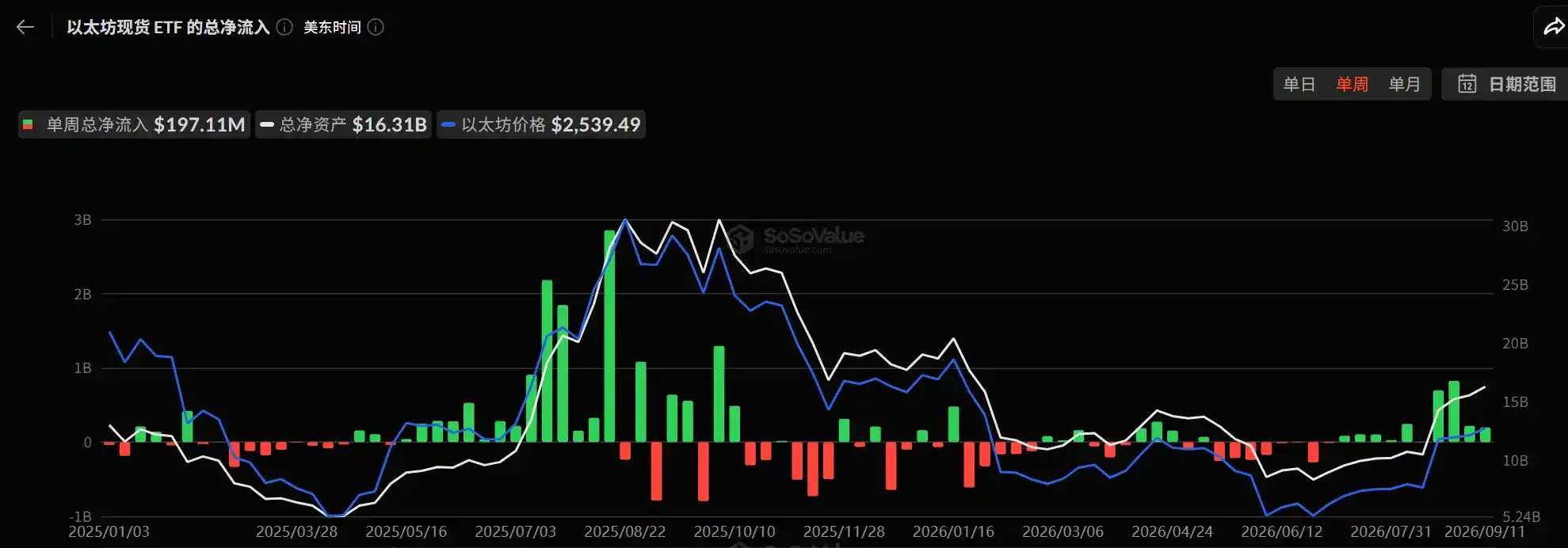
In terms of fund flows, Bitcoin and Ethereum spot ETFs are diverging. According to SoSoValue data, Bitcoin spot ETFs saw net outflows of $463 million for the week, with net assets of about $97.58 billion, corresponding to a Bitcoin price of approximately $77,286. Ethereum spot ETFs saw net inflows of $197 million over the same period, with net assets of about $16.31 billion, corresponding to a price of about $2,539.
For publicly-listed treasury companies, according to SoSoValue data as of September 8 Eastern Time, global listed companies significantly slowed their Bitcoin accumulation last week. Net purchases, excluding mining companies, totaled $267 million, down 48% from the previous week. The overall holdings of listed companies combined to 1,119,973 BTC, down 2.38% from the previous week, with a market value of about $87.77 billion, representing 5.6% of Bitcoin's circulating market cap.
Among them, MicroStrategy's latest purchase occurred on August 31, buying 4,600 BTC. Its total holdings now stand at 845,050 BTC, currently at a slight floating profit. According to MicroStrategy's latest 8-K filing, the company has raised approximately $20.9 billion this year, ranking fourth in U.S. equity issuance size, behind only SpaceX, Alphabet, and Intel. In contrast, Ethereum treasury company Bitmine continues to accumulate against the trend, adding 28,086 ETH last week. Its total holdings reached 5,929,200 ETH, with an average cost of $3,347, resulting in a floating loss of about $5 billion at current prices.
Technically, on September 12, Bitcoin once rose to $79,837, with the daily 50-day moving average briefly crossing above the 200-day moving average. The price subsequently retreated, and the golden cross disappeared on the same day. This was Bitcoin's first daily golden cross since November 2025 and the fastest to become invalid. Short-term momentum cooled simultaneously. Similar golden crosses that appeared in 2021, February 2023, October 2024, and May 2025 were each followed by a pullback period. The golden cross often acts as a lagging indicator, with a significant portion of the gains often already realized by the time it appears.
Regarding on-chain holdings, analyst Murphy pointed out that short-term holder holdings are mainly distributed between $59,000 and $81,000. A break above $82,000 would mean all these holdings are in profit, creating an incentive for short-term funds to cash out. The most concentrated holdings for long-term holders also peak between $81,000 and $82,000, including holdings that became long-term after being trapped at cost and are prone to exit near breakeven. For the whale group holding over 100,000 BTC, besides two clusters around $40,000, the rest are also concentrated between $78,000 and $82,000.
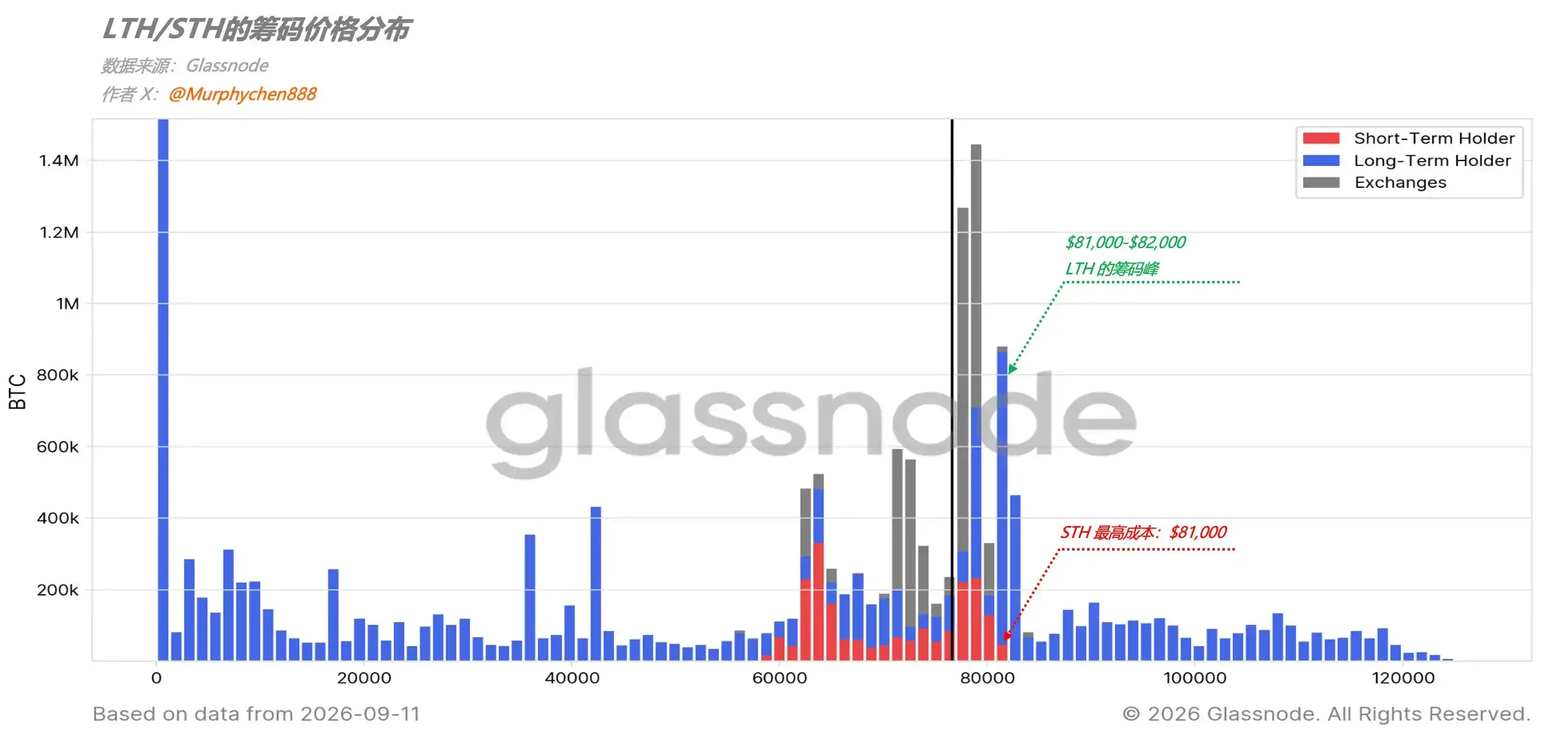
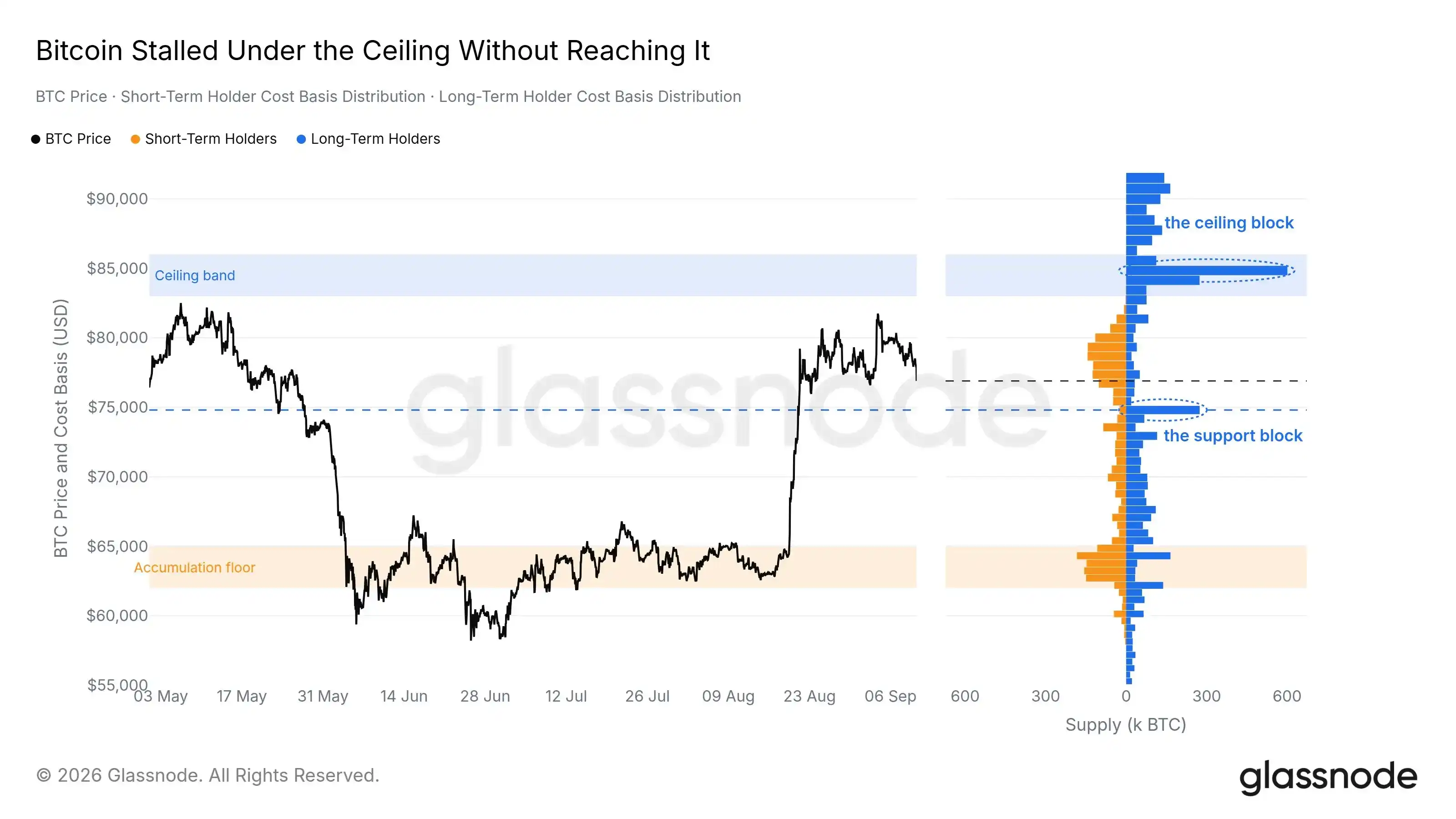
Glassnode noted that Bitcoin is currently facing supply pressure from long-term holders near $83,000-$85,000. If it breaks below this newly formed concentration zone, $75,000 will become a key level to watch. Further downside could lead back to the accumulation platform near $60,000.
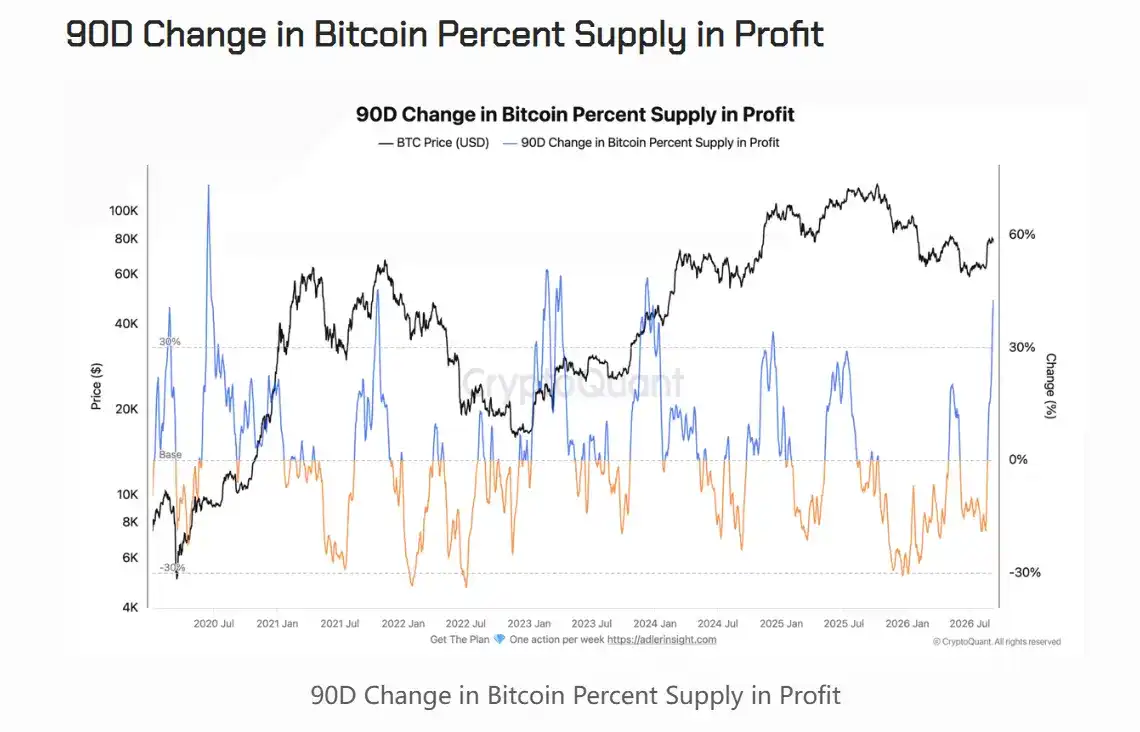
CryptoQuant analyst Axel Adler Jr. noted that the percentage of Bitcoin supply in profit has recovered from about 47% at the end of June to about 69%. The 90-day change has also quickly turned positive from -19% in early August to about 41%, marking one of the faster recoveries in Bitcoin's history.
Next week's regulatory calendar coincides with the FOMC meeting. Grayscale Head of Research Zach Pandl stated that the U.S. CLARITY Act, aimed at establishing comprehensive rules for the crypto market, will face a procedural vote in the Senate on September 15, requiring 60 votes to pass. Republicans currently hold 53 seats, so Democratic support is still needed for progress. Even if the bill does not pass this year, regulatory clarity will continue to advance in areas like stablecoins, token issuance, tokenized securities, and perpetual futures.
Coinbase CEO Brian Armstrong pointed out that Bitcoin reaching $400,000 by 2030 remains a reasonable target, and he personally believes the bottom of this cycle may have already been seen. He also stated that regardless of the September 15 vote outcome, the SEC and CFTC are already prepared to advance rules under their existing authority, and the industry may still gain new regulatory clarity around the time of the vote.