Coinbase to Remove 10 Altcoins from its Futures Contract

cryptonews.ruPublished on 2026-08-13Last updated on 2026-08-13

Abstract

Cryptocurrency exchange Coinbase has announced the suspension of futures contracts for 10 altcoins. Trading for these contracts will be halted on August 26 at approximately 21:00 Turkish time. The affected perpetual futures contracts (PERP) are for the following assets: Memecoin ($MEME), The Sandbox ($SAND), Moonbirds (BIRD), Blur (BLUR), Katana (KAT), SPX6900 ($SPX), Zora (ZORA), Axie Infinity (AXS), Gensyn (AI), and LayerZero (ZRO). Coinbase stated that any positions remaining open at the end of the trading day will be closed automatically. The final settlement price will be based on the average index price over the 60-minute period prior to the trading halt, and the funding rate for the final period will be set to zero. The exchange noted it has recently been making consistent decisions to delist assets from its futures platform.

Cryptocurrency exchange Coinbase has announced the suspension of futures contracts for 10 cryptocurrency assets, including Memecoin ($MEME), The Sandbox ($SAND), and Moonbirds (BIRB).

According to Coinbase, trading in these futures contracts will be suspended on August 26 at approximately 21:00 Turkish time.

The contracts to be suspended and delisted are as follows:

  • Memecoin ($MEME-PERP)
  • The Sandbox ($SAND-PERP)
  • Moonbirds (BIRB-PERP)
  • Blur (BLUR-PERP)
  • Katana (KAT-PERP)
  • SPX6900 ($SPX-PERP)
  • ZORA (ZORA-PERP)
  • Axie Infinity (AXS-PERP)
  • Gensyn (AI-PERP)
  • LayerZero (ZRO-PERP)

Coinbase stated that positions remaining open by the end of the trading day will be automatically closed.

According to the exchange's statement, the final settlement price will be calculated based on the average index price over a 60-minute period prior to the trading suspension.

It was also announced that the funding rate applied during the final funding period for the respective contracts will be set to zero.

The Coinbase futures trading platform, which once pursued an aggressive listing policy, has recently been making decisions to sequentially delist its assets.

*This is not investment advice.

end-content

Related Questions

QWhich cryptocurrency exchange announced the suspension of futures contracts for 10 altcoins?

ACoinbase announced the suspension of futures contracts for 10 altcoins.

QOn what date and time will trading for the affected futures contracts be suspended on Coinbase?

ATrading for the affected futures contracts will be suspended on August 26th at approximately 21:00 Turkish Time.

QWhat will happen to positions that remain open at the end of the trading day for these contracts?

APositions that remain open at the end of the trading day will be automatically closed by Coinbase.

QHow will the final settlement price be determined for these contracts?

AThe final settlement price will be calculated based on the average of the index price over a 60-minute period before trading is suspended.

QList at least five of the ten altcoin futures contracts being delisted from Coinbase.

AFive of the ten altcoin futures contracts being delisted are: Memecoin (MEME-PERP), The Sandbox (SAND-PERP), Moonbirds (BIRB-PERP), Blur (BLUR-PERP), and Katana (CAT-PERP).

Related Reads

Conversation with Macro Analyst Jordi Visser: Micron Has 60%-80% Upside, the Longevity Economy Is a High-Confidence Main Theme

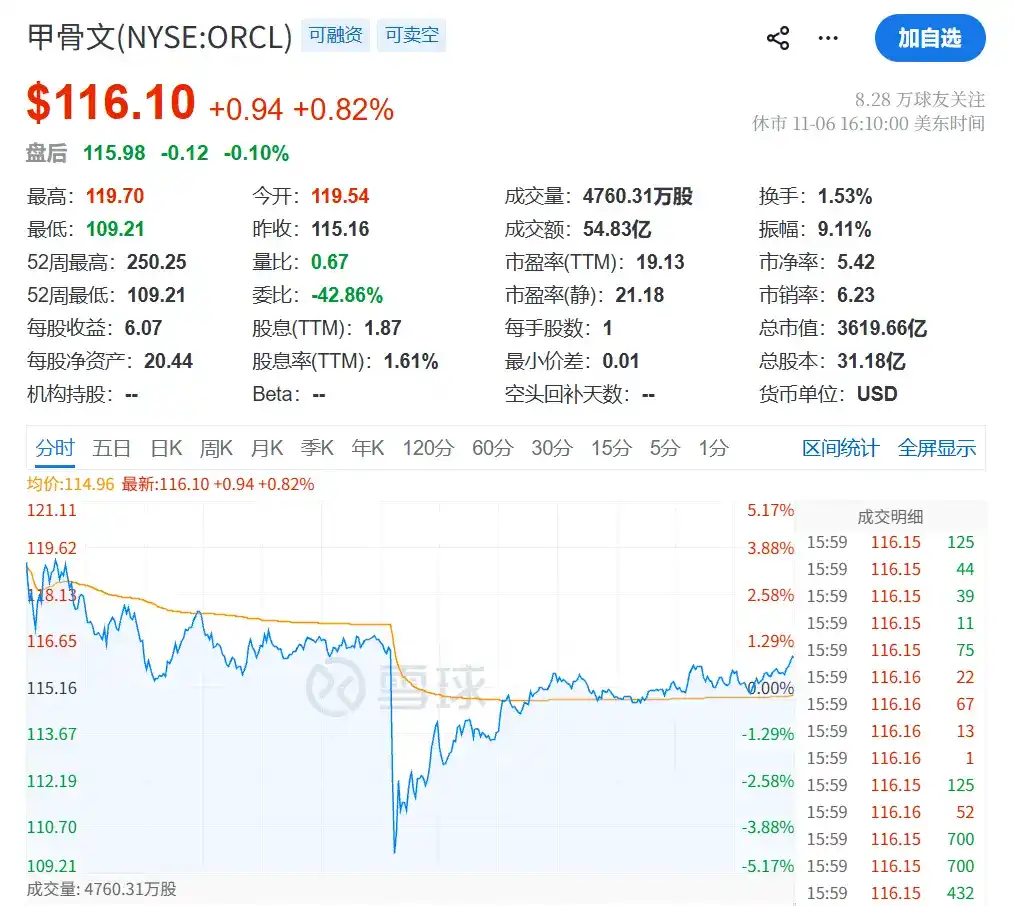
Macro analyst Jordi Visser argues that AI is the sole real driver of the economy today, with traditional GDP metrics failing to capture its value—AI-driven productivity shows up in corporate profit margins instead, as large firms grow revenue while hiring freezes. He attributes rising Treasury yields to AI-related capex and debt issuance, not Fed policy, and views credit default swap widening as a concentration-risk hedging issue rather than an AI bubble. He expects hyperscaler external financing to peak as data centers come online and free cash flow turns positive (citing Oracle's guidance). On labor, he sees Microsoft's buyout of 27% of its workforce as a template: AI-driven revenue-per-employee surges will push governments toward redistributing profits from capital to labor via tax restructuring, since personal income tax bases erode. He warns the market is discounting risks like labor turmoil, political gridlock, memory/data center bottlenecks, and cybersecurity. His key themes are agentic compute and the longevity economy. He is bullish on Eli Lilly as the purest longevity play, predicting it will become the S&P 500's largest company by 2030, and on Micron, which he re-entered around $800 with only ~10% downside and 60-80% upside, citing humanoid robot RAM demand, SpaceX's 10GW compute plan, and long-term supply agreements through 2030. He also holds crypto as his largest allocation, expecting 2027 to mark a breakout year for blockchain commercial applications and payment networks.

marsbit53m ago

Conversation with Macro Analyst Jordi Visser: Micron Has 60%-80% Upside, the Longevity Economy Is a High-Confidence Main Theme

marsbit53m ago

Michael Saylor: Four Centuries of Digital Credit Evolution

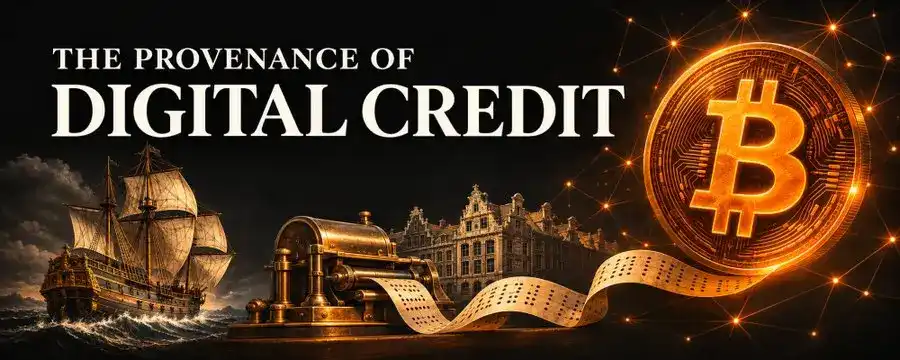
Michael Saylor traces the four-century evolution of digital credit, showing how centuries of financial infrastructure paved the way for Bitcoin-based corporate treasuries. The story begins in 1602 with the Dutch East India Company, which separated a company's capital duration from investors' holding periods through transferable shares. Preferred stock followed, exemplified by the Baltimore and Ohio Railroad's 6% perpetual preferred dividend in 1836 and Delaware's 1899 recognition of distinct share classes. Exchanges and tickers—from the 1792 Buttonwood Agreement to the 1867 stock ticker and 1971 Nasdaq—gave ownership a public market. U.S. securities and commodities law (1922–1974) established the distinction between assets a company holds and securities it issues. The 1940 Investment Company Act's "40% test" still shapes how bitcoin treasury companies use common stock, preferred stock, and debt. Tax law dating to 1921–1954 distinguishes return of capital from income, allowing preferred dividends to reduce cost basis before gains are realized. Shelf registration (Rule 415, 1982–1983) and at-the-market programs (1982, 2005) let companies prepare financing in advance and raise capital at market prices. Buybacks, recognized since 1828 with the 1982 Rule 10b-18 safe harbor, let firms manage capital in both directions. Bitcoin, launched in 2008–2009 and classified as a commodity by the CFTC in 2015, provides a new reserve asset, while companies supply capital structure, dollar liquidity, and distribution policy. Digital credit thus combines over 400 years of corporate ownership transfer, roughly 190 years of U.S. preferred stock, more than a century of tax cost-recovery rules, and four decades of modern shelf and ATM regulation into a familiar framework for investors.

marsbit2h ago

Michael Saylor: Four Centuries of Digital Credit Evolution

marsbit2h ago

The Hidden Risks Behind Anthropic's Nearly $1 Trillion Bet

Anthropic's IPO filing reveals a fragile, high-risk financing mechanism behind its AI ambitions. The company has committed to up to $895.4 billion in data center spending through 2045, with profits squeezed by rising compute costs. Rather than paying upfront for hardware, Anthropic relies on supplier-backed financing: Broadcom arranged a $63 billion equipment financing deal under which it absorbs losses if Anthropic defaults—up to roughly $43 billion once equipment is delivered. Google and AMD similarly tie funding to hardware leases or deployments. This shifts risk onto chipmakers' balance sheets, and because custom TPUs serve a narrower ecosystem than Nvidia GPUs, resale risk is higher. Analysts warn that while individual loans appear safer, risk concentration across the system is rising and harder to assess. Anthropic also can issue up to $42 billion in convertible notes to Broadcom to cover rent, with interest rates rising from 9% to 13% and conversion terms worsening if revenue targets are missed. Despite holding $146.6 billion in liquidity as of September 30, its massive forward obligations and tangled partnerships could limit access to investment-grade financing. Key concerns: whether revenue growth can outrun compute costs and cover future commitments, and whether drawing on credit lines signals distress. Anthropic's Direct initiative—separating data center leasing from chip purchases—and IPO proceeds could give it more flexibility, but ultimately debt repayment depends on end-customer revenue.

marsbit12h ago

The Hidden Risks Behind Anthropic's Nearly $1 Trillion Bet

marsbit12h ago

Trading

Spot
活动图片