Bitcoin fails to reclaim $80K as Bessent fuels yen strength around 153 per dollar

cointelegraphPubblicato 2026-09-09Pubblicato ultima volta 2026-09-09

Introduzione

Bitcoin (BTC) struggled to reclaim the $80,000 level, facing headwinds from geopolitical tensions. The market's focus shifted to the surging Japanese yen, which traded around 153 per dollar, its strongest since February. US Treasury Secretary Scott Bessent hinted at potential further joint interventions with Japan, asserting asymmetric information advantage. Concurrently, US-Iran strikes pushed Brent crude oil above $100 per barrel, souring sentiment for risk assets like stocks and Bitcoin, which dipped 0.4%. Despite the yen's rally, data shows yen short interest remains near record highs. Analysts warn of a vulnerable "carry trade" unwind, a risk amplified by the Bank of Japan's anticipated interest rate hike later in September, which could impact broader market liquidity.

Bitcoin (BTC) struggled below $80,000 on Wednesday as attention refocused on the Japanese yen.


Key points:


  • Bitcoin saw further macro headwinds as US-Iran strikes pushed Brent crude oil above $100 per barrel.
  • The Japanese yen continued to trade around 153 per dollar, its highest levels since February as yen shorts stayed near record highs.
  • US Treasury Secretary Scott Bessent hinted at further interventions in yen currency markets to come.


Bitcoin lacks momentum as Iran strikes sour risk-asset mood


Data from TradingView showed the local upside in the BTC/USD pair reversing as it attempted to revisit the $80,000 mark. BTC is currently down by around 0.4% on the day.
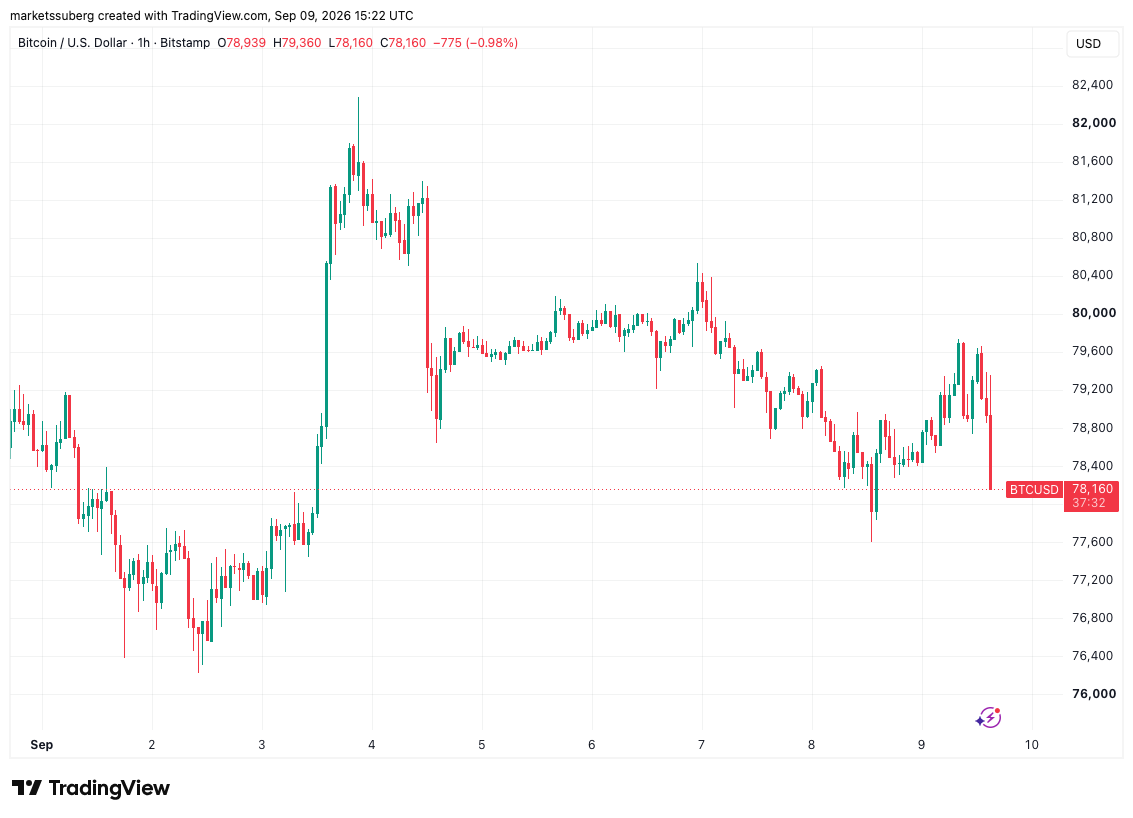

BTC/USD one-hour chart. Source: Cointelegraph/TradingView


US stocks also drifted lower at the Wall Street open, fueled by fresh US strikes on Iranian oil tankers. The tensions helped send oil prices to new three-month highs, building on gains from the day prior.


At the time of writing, WTI crude traded above $96 per barrel, while Brent crude surged above $101 per barrel for the first time since late July.
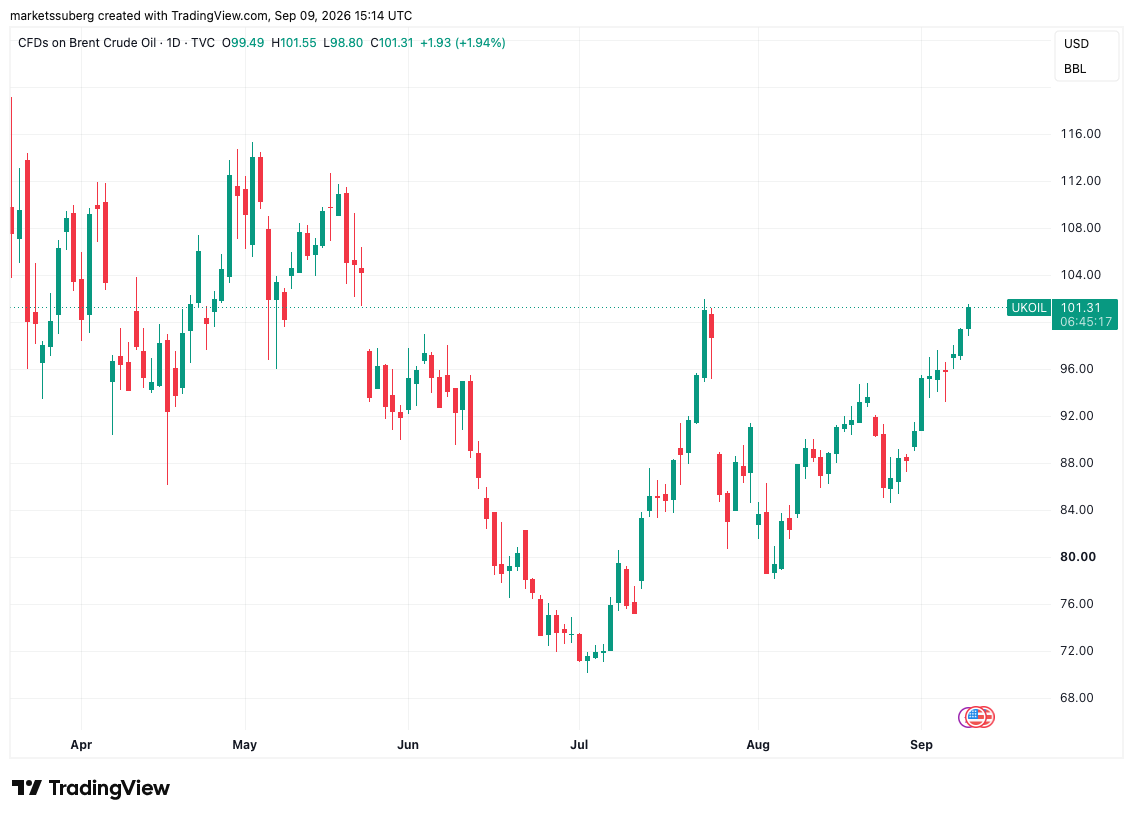

CFDs on Brent crude oil one-day chart. Source: Cointelegraph/TradingView


Traders also eyed fresh developments in the yen as Japan’s currency hit its highest levels against the dollar since February. It is currently at $0.0065, up 6.5% since the start of August.
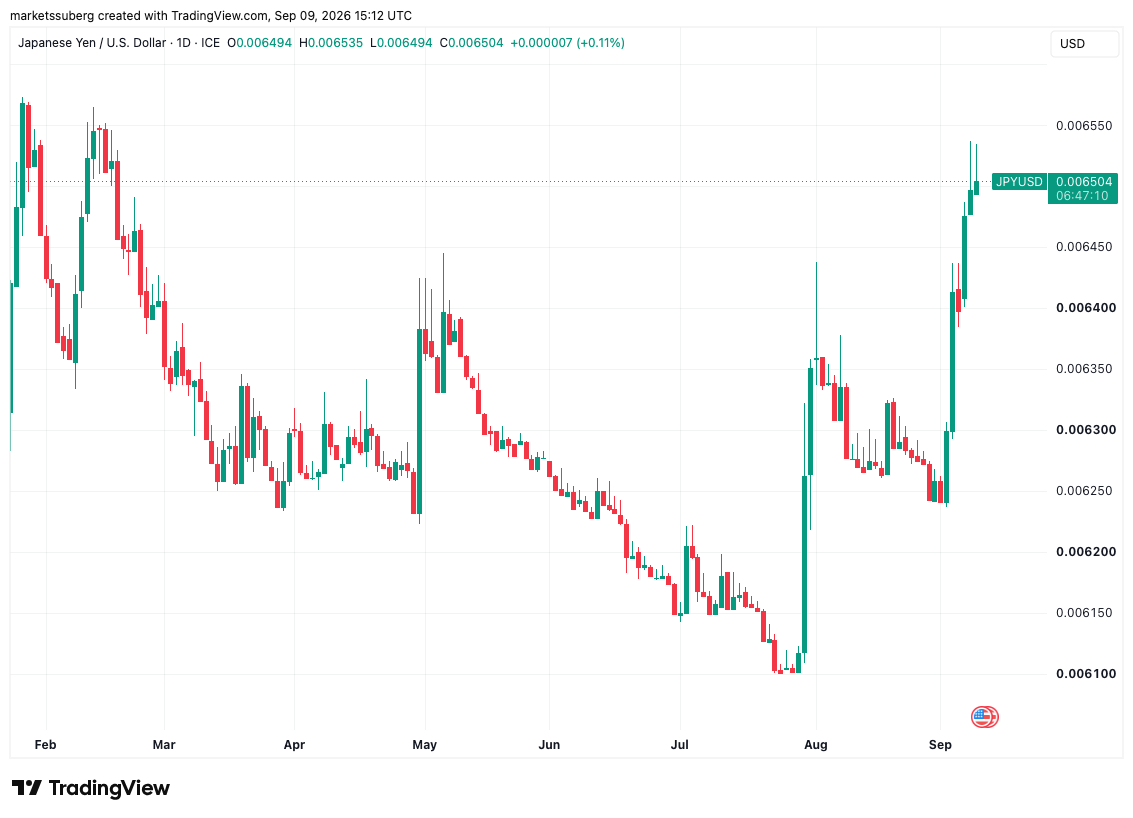

JPY/USD one-day chart. Source: Cointelegraph/TradingView


Previously, Cointelegraph reported on repeated joint interventions in foreign exchange markets by Japan and the US, which resulted in the rapid strengthening. The yen’s gains continued despite speculation that Washington may keep Japan from selling US Treasuries as part of future interventions.


Yen short interest lingers near record highs


Citing data from Bloomberg on Wednesday, Barchart flagged record yen short positioning at the start of September, with the total hovering above 5 trillion yen.


Related: Bitcoin SOPR metric sees longest profit run of 2026 as new analysis challenges bear market
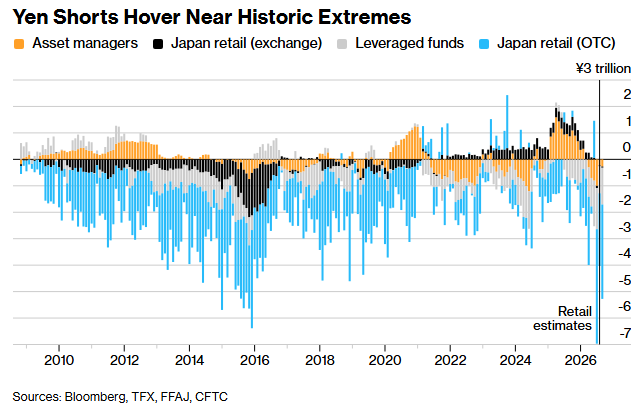

Japanese yen short positioning. Source: Barchart on X.com


In subsequent commentary, Charu Chanana, chief investment strategist at Saxo, told Reuters that the yen’s continued strength would have implications for these shorts as part of an unwinding of the yen carry trade. The USD/JPY pair is key for liquidity conditions that could ultimately impact crypto markets.


“The carry trade is vulnerable because this unwind is happening before the BOJ has even delivered its expected hike,” she said.


“Some yen shorts have already been cut, but positioning still looks sizeable, so further yen strength can turn a gradual reduction in leverage into a much faster, self-reinforcing unwind.”


The risk was exacerbated by the Bank of Japan’s anticipated 0.25% interest-rate hike at its next meeting on Sept. 28.


Last month, US Treasury Secretary Scott Bessent suggested that the door was open to future yen intervention operations. This week, he doubled down on those hints, appearing to dare short traders to bet against central banks.


“When we intervene with the Japanese yen, I have pretty good insight into what the Bank of Japan is going to do, what Japanese policymakers are going to do. I have asymmetric information. I am the house now,” he said in an event at Southern Methodist University in Texas on Tuesday, quoted by the Financial Times.



Domande pertinenti

QWhy did Bitcoin struggle to reclaim the $80,000 level on Wednesday?

ABitcoin struggled to reclaim $80,000 due to a combination of factors including souring risk sentiment from fresh US strikes on Iranian oil tankers, which pushed oil prices higher, and increased attention on the strengthening Japanese yen and potential market interventions.

QWhat actions by the US contributed to the rise in oil prices mentioned in the article?

AFresh US strikes on Iranian oil tankers contributed to the rise in oil prices, sending Brent crude above $101 per barrel for the first time since late July and WTI crude above $96 per barrel.

QWhat did US Treasury Secretary Scott Bessent imply about future actions regarding the Japanese yen?

AUS Treasury Secretary Scott Bessent hinted at further interventions in the yen currency markets, stating that he possesses 'asymmetric information' about the actions of Japanese policymakers and is effectively 'the house' in such operations, daring short traders to bet against central banks.

QWhat risk does Charu Chanana from Saxo identify regarding the Japanese yen's strength?

ACharu Chanana identified that the yen's continued strength could lead to a rapid, self-reinforcing unwind of the substantial yen carry trade positions, especially as it occurs before the Bank of Japan's anticipated interest rate hike, turning a gradual reduction in leverage into a faster one.

QAccording to the article, why is the USD/JPY currency pair important for crypto markets?

AThe USD/JPY pair is key for global liquidity conditions. Changes in this pair, driven by factors like the unwinding of yen carry trades or central bank interventions, can impact the flow of capital and risk appetite, which ultimately affects crypto markets.

Letture associate

The Life and Death of an Ordinary Meme Coin

The Life and Death of a Meme Coin Despite their association with retail speculation, meme coins effectively attract attention and liquidity to new ecosystems. However, their viral nature and low creation barriers mean they typically have extremely short lifecycles. An analysis of 150 meme coins using survival analysis techniques reveals a harsh reality. The median meme coin reaches its all-time high (ATH) just 17.2 days after its first trade, with a quarter peaking within 1.6 days. The journey from ATH to a 95% crash takes a median of 370 days. Price performance is overwhelmingly negative: over half of the coins trade more than 95% below their ATH. Only 5 out of 151 sampled coins (3.3%) have ever reclaimed their ATH after a 90% drop. By 300 days post-launch, most coins retain only 10% of their initial value. The analysis of local peaks versus the ultimate ATH shows that two-thirds of Solana-era meme coins experienced only one significant price surge, peaking within days and never recovering. Chain activity, measured by addresses with a balance over $1, mirrors this pattern, with current activity for major meme coins below 7% of its peak. While the data paints a bleak picture for long-term holding, meme coin speculation is deeply embedded in market culture and continues to migrate to new platforms. The pursuit of asymmetric returns persists, driven by gambling dynamics rather than rational investment, suggesting this trend will continue evolving alongside on-chain financialization.

marsbit1 h fa

The Life and Death of an Ordinary Meme Coin

marsbit1 h fa

The Nightmare of Timers: Missing the Best 15 Days of Performance Over the Past 3 Years, Bitcoin Returns Would Underperform Cash

**Title: The Market Timer's Nightmare: Missing Bitcoin's Top 15 Days Leads to Underperformance vs. Cash** A Grayscale report highlights a critical risk for Bitcoin investors: the immense opportunity cost of being absent from the market during its brief, explosive rallies. Over the past three years, Bitcoin delivered a cumulative return of approximately 225%. However, its gains are hyper-concentrated. If an investor missed just the 5 best trading days, the return collapses to 95%. Missing the top 10 days slashes it to 27%. If the top 15 days (less than 1.4% of the period) are missed, the return turns negative at -11%, underperforming cash. In stark contrast, the Nasdaq 100 would still retain a 21% gain after removing its own best 15 days. These crucial surge days typically occur under conditions of peak pessimism—following panic sell-offs, regulatory clarity, or short squeezes—when holding cash feels safest. The repricing is also extremely rapid, often happening within hours before a clear "right-side" trend is apparent. Therefore, the greatest investment risk for assets like Bitcoin is not volatility or drawdowns, but the high probability of missing the few days that generate virtually all excess returns. The report concludes that time in the market is superior to timing the market, emphasizing strategies like dollar-cost averaging to ensure participation during these decisive moments.

marsbit1 h fa

The Nightmare of Timers: Missing the Best 15 Days of Performance Over the Past 3 Years, Bitcoin Returns Would Underperform Cash

marsbit1 h fa

Trading

Spot
活动图片