AI Will Destroy Cryptocurrency? Vitalik: Don't Panic, 90% of My Net Worth Is My Bet

marsbitPubblicato 2026-09-08Pubblicato ultima volta 2026-09-08

Introduzione

Ethereum co-founder Vitalik Buterin has publicly countered a prediction that AI will cause Bitcoin's price to crash by over 50% within two years. The debate originated from AI risk commentator Liron Shapiro, who argued that AI could erode trust in Bitcoin's network security, even without breaking its core cryptography. Buterin remains optimistic about long-term network security, stating that issues not requiring full social consensus for fixes—like attacks on clients, mining pools, or infrastructure—are manageable. He believes AI is highly unlikely to compromise Bitcoin's underlying proof-of-work or hash functions, noting his personal stake aligns with this view as roughly 90% of his wealth is in crypto. The discussion highlights a key market divergence on AI's impact. Shapiro's point is that exposing critical security weaknesses in surrounding ecosystem elements (wallets, bridges, exchanges, smart contracts) could severely damage market confidence, even if Bitcoin's core remains intact. Real-world incidents, like the AI-driven automated attacks that forced Boltz to halt operations, demonstrate such threats are already testing crypto defenses. Security experts warn AI-powered smart contract exploits could lead to billions in losses. The broader tech and crypto industries are now in an arms race to develop defensive AI tools that can keep pace with offensive capabilities. Initiatives like Anthropic's Glasswing project, involving major firms, aim to proactively find and patc...

Written by: Oluwapelumi Adejumo

Compiled by: Chopper, Foresight News

Ethereum co-founder Vitalik Buterin has publicly refuted a claim predicting that artificial intelligence will cause Bitcoin's price to plummet by over 50% within two years.

The debate originated from Silicon Valley investor and AI risk commentator Liron Shapiro's assessment. He believes there is a 50% probability that Bitcoin will fall more than 50% in the next two years, reasoning that AI will undermine investor confidence in the security and robustness of Bitcoin's network.

However, Vitalik holds the opposite view. He posted on platform X, stating: "My core argument is that I'm optimistic about long-term network security; the real challenge is the transition."

Vitalik argued that Bitcoin can handle security failures that don't require broad social consensus to fix, including attacks on clients, mining pools, and other network infrastructure. He believes it's nearly impossible for AI to fundamentally break Bitcoin's hash functions or proof-of-work mechanism.

He mentioned he would have been willing to make a bet on this view with Shapiro, and his current crypto holdings already represent about 90% of his net worth. He added that this logic also applies to Ethereum.

This disagreement highlights a significant market divide: what impact will increasingly capable AI systems actually have on the cryptocurrency market?

Shapiro's argument doesn't require AI to crack Bitcoin's underlying cryptographic algorithms. Even if developers eventually patch vulnerabilities, a large-scale attack exposing security weaknesses once considered very difficult to exploit could be enough to damage market confidence.

AI Attacks Are Already Testing Crypto Defenses

Real-world cases across the crypto industry prove that the threats Shapiro warned about are already here; hackers don't need to break Bitcoin's underlying cryptography to create risks.

In August this year, Boltz indefinitely suspended its service after months of automated AI scanning attacks. A series of controlled security breaches occurred in succession, with small development teams unable to patch vulnerabilities as fast as the attacks evolved.

Boltz stated its non-custodial architecture protected user funds, but the company absorbed the losses from the attacks and ultimately concluded the business could not operate safely.

This incident confirms that AI can pressure Bitcoin's peripheral infrastructure without destroying the proof-of-work mechanism or breaking the underlying cryptographic system. Attackers rely on automated tools to find vulnerabilities en masse, far outpacing defenders' ability to identify, fix, and deploy patches.

Security industry executives predict these threats will proliferate as offensive AI capabilities continue to advance.

Deddy David, CEO of blockchain security firm Cyvers, previously told CryptoSlate that AI-powered smart contract attacks could ultimately cause economic losses reaching hundreds of millions or even billions of dollars.

"If AI can uncover vulnerabilities in the core infrastructure of the internet at scale, the crypto market will feel the impact first," David said.

Wallets, cross-chain bridges, exchanges, smart contracts, and the software running blockchain networks are all at risk. Compared to Bitcoin's consensus mechanism itself, these systems offer attackers many more entry points.

This is also the crux of the disagreement between Vitalik and Shapiro: AI doesn't need to crack the SHA-256 hash algorithm to inflict serious damage on the entire Bitcoin economic ecosystem.

The unresolved core question is whether these attacks can be managed through upgrades and stronger defenses as Vitalik expects, or whether they will ultimately severely shake the security assumptions underpinning investors' valuation of Bitcoin.

Crypto and Tech Giants Race to Deploy AI Defense Capabilities

The entire tech industry is engaged in an arms race to ensure defensive AI evolves at least as fast as offensive AI.

Anthropic restricted public access to one of its models because it could autonomously find software vulnerabilities and turn them into weapons. The company instead channels this capability to defenders through Project Glasswing, which involves tech and financial institutions like Amazon Web Services, Google, Microsoft, and JPMorgan Chase.

This project uses Mythos Preview to identify and fix critical system vulnerabilities before malicious actors can exploit them using similar AI tools. Anthropic has committed up to $100 million in computing credits to support the initiative.

Participants in the defensive effort extend far beyond single companies. Over 100 organizations, including Google, Microsoft, Anthropic, and OpenAI, have co-signed an open letter warning governments and businesses that AI-powered cyberattacks will become significantly more common and sophisticated within months.

Banks, payment giants, and tech firms like Capital One, Mastercard, Visa, Adobe, Oracle, and IBM also joined the call. They argue that as AI capabilities grow, current cybersecurity defenses will be insufficient, leaving under-resourced critical infrastructure even more vulnerable. They urge governments and tech companies to provide advanced defensive AI tools and security testing services to institutions like hospitals and water facilities.

The crypto industry is also part of this race and faces an added challenge: many of its systems host instantly transferable financial assets, and the entire infrastructure runs transparently and around the clock.

Therefore, the debate between Vitalik and Shapiro shouldn't be simplistically judged by whether "AI can destroy Bitcoin." A more pressing issue is whether attackers will gain a decisive advantage before defensive tools, audit standards, and network infrastructure can catch up.

Domande pertinenti

QAccording to the article, why does Vitalik Buterin disagree with the prediction that AI will cause Bitcoin's price to crash by over 50%?

AVitalik Buterin disagrees because he is optimistic about network security in the long term. He believes the main challenge is managing the transition and that AI cannot fundamentally compromise Bitcoin's hash function and proof-of-work mechanism.

QWhat is Liron Shapiro's main argument about how AI could threaten the cryptocurrency market, as mentioned in the article?

ALiron Shapiro's main argument is that AI could undermine investor confidence in the security and robustness of cryptocurrencies by exposing and exploiting vulnerabilities in their surrounding infrastructure, even without breaking the core cryptographic algorithms.

QWhat real-world example from the article illustrates the threat of AI-powered attacks on crypto infrastructure?

AThe article cites the example of Boltz, which suspended its operations indefinitely in August after facing months of automated AI scanning attacks. These attacks targeted vulnerabilities faster than the small development team could patch them.

QAccording to the article, how is the wider tech industry responding to the threat of offensive AI tools?

AThe wider tech industry is engaged in an arms race to develop defensive AI. Initiatives like Anthropic's Glasswing project involve major companies like AWS, Google, and Microsoft. Over 100 organizations have also signed an open letter warning governments and businesses about the increasing prevalence of sophisticated AI-powered cyber attacks.

QWhat is the central, unresolved question at the heart of the debate between Vitalik Buterin and Liron Shapiro, as presented in the article?

AThe central, unresolved question is whether AI-powered attacks can be effectively managed and mitigated through upgrades and stronger defenses, as Vitalik believes, or if they will severely shake the security assumptions that underpin investor confidence and pricing for assets like Bitcoin.

Letture associate

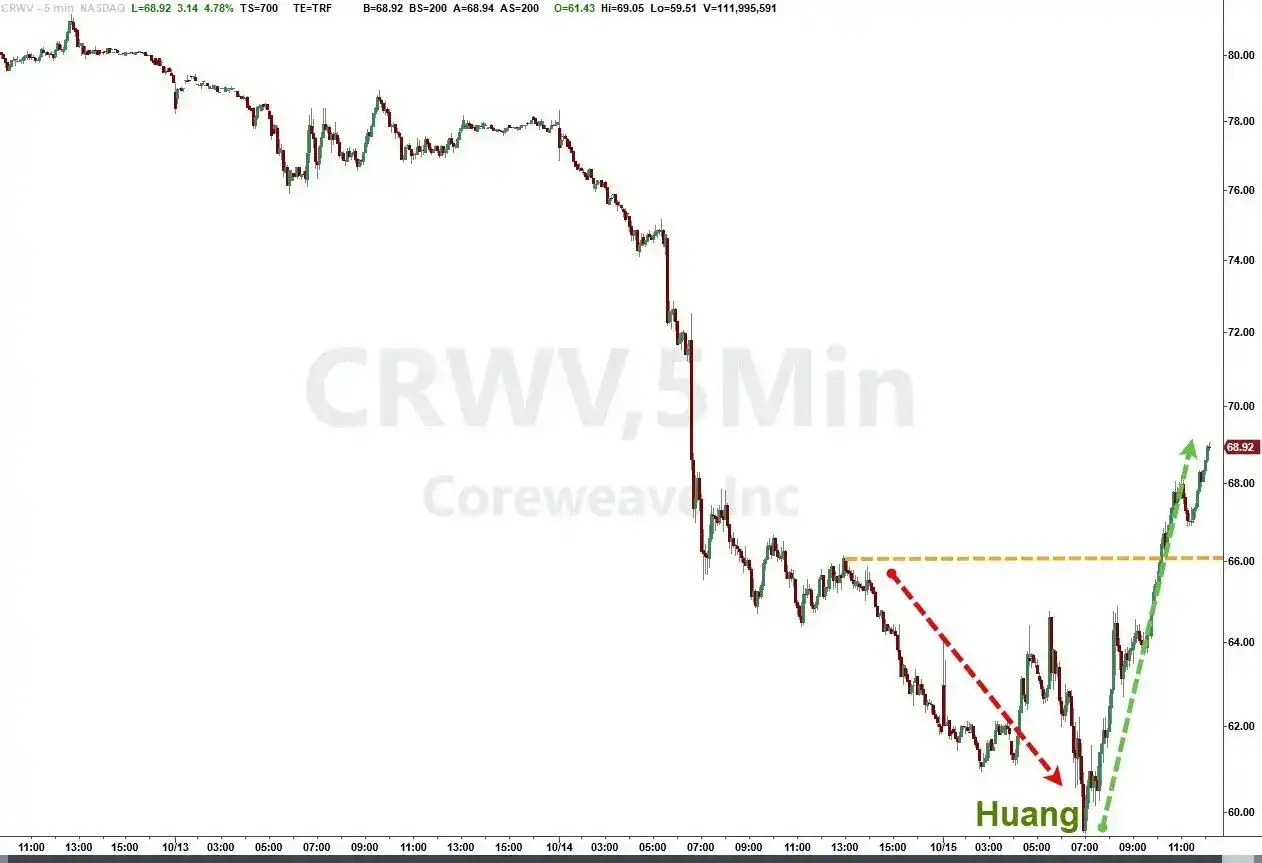
CoreWeave Default Probability Exceeds 60%! Huang Renxun 'Puts Out Fire': Financing Costs Declining, No Need for NVIDIA to Provide Backstop

CoreWeave, a major AI cloud service provider and key NVIDIA customer, is facing heightened credit market concerns. Its five-year credit default swap (CDS) spreads soared to a record high of over 1190 basis points, implying a perceived default probability exceeding 60%. Concurrently, its bond prices plummeted, with yields surging above 15-16%, reflecting intense investor worries about its ability to service nearly $50 billion in debt while remaining unprofitable. This stress is spreading within the AI infrastructure sector. CDS spreads for companies like Oracle, SoftBank, NVIDIA, and others also widened significantly, indicating a broader market reassessment of the debt risks behind massive AI capital expenditures. In response, NVIDIA CEO Jensen Huang publicly expressed confidence in CoreWeave, stating its "financial strength is growing daily" and its cost of capital is declining. He explicitly stated NVIDIA sees no need to provide a financial backstop for CoreWeave, in which it holds a roughly 10% stake. His comments helped CoreWeave's stock recover from early losses. The core issue under scrutiny is whether the future cash flows from AI investments can cover the enormous upfront costs and interest burdens, especially as financing becomes more expensive. The situation highlights a critical shift in market focus: from purely evaluating AI compute demand to questioning the sustainability of the debt-fueled expansion models used to build that capacity.

marsbit12 min fa

CoreWeave Default Probability Exceeds 60%! Huang Renxun 'Puts Out Fire': Financing Costs Declining, No Need for NVIDIA to Provide Backstop

marsbit12 min fa

Farcaster Changes Hands Again: The Hottest Potato in the Decentralized World

The decentralized social protocol Farcaster has changed ownership for the third time in nine months, being described as a "hot potato" in the decentralized world. On October 15, 2026, Rish, co-founder of Neynar, announced that Network School, founded by Balaji Srinivasan, would take over Farcaster, including its application, protocol codebase, and related products. This followed Neynar's acquisition of Farcaster from its original creator, Merkle Manufactory, in January 2026. Farcaster, which achieved a $1 billion valuation after a $150 million Series A round in 2024, saw its user activity and revenue decline sharply post-2025. Daily active users (DAU) dropped 40% from its peak of nearly 100,000, and monthly revenue fell to around $10,000. After taking over, Neynar pivoted Farcaster toward developers, but protocol revenue (including from Clanker) plummeted by 99% from Q1 to Q3 2026, leading to the search for a new owner. Network School, Balaji Srinivasan's venture practicing his "network state" theory and recently valued at $2 billion, plans to rebrand Farcaster as the "Network State Protocol." Significant rule changes include requiring users to accept a "social smart contract" to mint an NFT for full access, implementing content moderation based on Singaporean public conduct codes, and introducing AI-assisted review with potential human verification. These changes, particularly the centralized control over content and access via the dominant official app (formerly Warpcast), have sparked community debate. The repeated ownership transfers highlight a core tension in decentralized social networking: while the protocol layer is technically decentralized, control over the primary user application grants centralized power over the entire network's experience and direction. Each new owner brings a different vision, but all face the fundamental challenge of reviving a platform with declining users and revenue.

marsbit12 min fa

Farcaster Changes Hands Again: The Hottest Potato in the Decentralized World

marsbit12 min fa

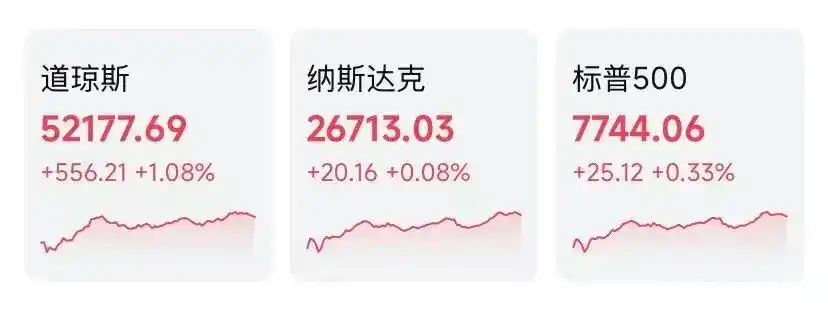
US Stock Market Trends (October 16): Dow Surges Over 550 Points, TSMC's Net Profit Rises Nearly 70% but Stock Closes Lower

**U.S. Market Trends (October 16): Dow Jumps Over 550 Points, TSMC Falls Despite 69% Net Profit Surge** U.S. stocks reversed early losses on Thursday. The Dow Jones surged over 550 points (1.08%), while the Nasdaq Composite edged up 0.08%. The Philadelphia Semiconductor Index fell for a seventh consecutive session, closing down 0.88%. The S&P 500 rose 0.33%, with healthcare, materials, and financials leading gains. Energy and tech sectors declined. Major tech stocks were mixed. Microsoft and Alphabet gained, while Nvidia and Tesla fell. Server stocks like Dell and Hewlett Packard Enterprise dropped sharply. Despite reporting strong Q3 results—a 69% year-on-year jump in net profit and raising its full-year revenue growth forecast to ~44%—TSMC's U.S.-listed shares fell 1.80%. Investor concerns persist about funding for massive AI/data center expansions and their eventual returns. CoreWeave's stock rebounded to close nearly 6% higher after Nvidia CEO Jensen Huang stated the AI cloud provider was strengthening and did not need rescue, easing equity investor worries. However, its bonds remained under pressure due to high leverage and funding needs. Economic data showed mixed signals. September PPI surged 1.3% month-on-month (the highest since March 2022), driven by energy prices. Retail sales grew 0.8%, largely fueled by gasoline spending. Excluding autos and gas, growth was minimal. Despite hot inflation prints, Treasury yields retreated, with the 10-year near 5.09%. Oil (WTI) rose over 3%, while gold gained 2%. Bitcoin traded around $82,300. Focus turns to upcoming remarks from Fed officials ahead of the quiet period and key data like industrial production, as investors weigh inflation against growth concerns and tech sector volatility.

marsbit28 min fa

US Stock Market Trends (October 16): Dow Surges Over 550 Points, TSMC's Net Profit Rises Nearly 70% but Stock Closes Lower

marsbit28 min fa

Trading

Spot
活动图片