After the $320 Million Liquid Network Incident: When One Line of Defense Fails, What Can Digital Asset Platforms Still Safeguard?

marsbitPublished on 2026-09-11Last updated on 2026-09-11

Abstract

Following a series of recent security incidents in the digital asset space, a key question resurfaces: how should platforms define true security? This is highlighted by the $320 million exploit on the Bitcoin Liquid Network, where assets were transferred not due to compromised keys, but a software vulnerability. Similar events on Cosmos EVM and at Triple-A, involving code bugs and social engineering, underscore a common theme: breaches are often inevitable, but their ultimate impact depends on the depth of a platform's defenses. The critical lesson is that security shouldn't rely on a single, unbreachable gate. The real measure is what happens after the first line fails. Does one compromised credential grant full system access? Can a single point of failure lead to massive asset loss? Effective security lies in layered protections—isolating identities, permissions, critical operations, and asset storage so that a breach in one area is contained. Examining BIT's (formerly Matrixport) updated Trust Whitepaper reveals this philosophy in practice. Its system employs principles like least privilege access, multi-party authorization for sensitive actions, continuous behavioral monitoring, and keeping most assets in cold storage. This creates a series of "gates": a stolen identity doesn't grant full permissions, having a permission doesn't allow independent action, and an online breach doesn't expose core assets. Furthermore, BIT grants its security team a "veto power" to halt pr...

The recent series of security incidents has once again brought the digital asset industry back to a familiar question: What truly constitutes 'security' for a platform?

In early September, a major security incident occurred on the Bitcoin sidechain Liquid Network. Attackers exploited a validation vulnerability in the Elements software, leading to the transfer of approximately 4,000 BTC, worth around $320 million at the time of the incident. Notably, the related PAK and Federation keys themselves were not compromised. This brings to light a more worthy question for discussion: When the keys themselves are not breached, how can an asset transfer that should never have happened still pass through the system?

Similar risks have also emerged in other areas. In August, attackers exploited a critical security vulnerability in Cosmos EVM to attack multiple networks, with six networks actually exploited. The related vulnerability had previously been reported through a bug bounty program. In July, Triple-A fell victim to a social engineering attack where attackers obtained personnel credentials and further accessed the operational environment, ultimately resulting in the transfer of some company-owned assets. However, as client funds were independently stored in trust accounts and isolated from the compromised operational environment, they were not affected.

The causes of these three incidents are different, yet they collectively point to a more realistic issue: Security incidents may be difficult to completely avoid, but when a single link in the code, personnel, or permissions chain is breached, where exactly will the risk stop?

The real thing to guard against is not just 'being breached,' but how far the risk can go.

A more pertinent question than 'whether there was an attack' is: After the first line of defense fails, how much further can the attacker go? If one account is compromised, is that sufficient to perform critical asset operations? If one permission is breached, can they continue to access more core systems? When issues arise in the online environment, how much core asset is truly exposed in the attack path?

This is also a key insight from the recent incidents: The ultimate impact of an attack depends not only on what the attacker breached, but also on how many layers of defense remain in the system after the breach.

If the compromise of a single account can directly access core permissions, or if a problem in the online environment can directly affect a large amount of core assets, then any weak link can be rapidly amplified. Conversely, if there are multiple layers of isolation between permissions, critical operations, risk monitoring, and asset storage, a single breach may not necessarily escalate into a total compromise.

In other words, measuring a platform's security capability is not just about 'whether the first door can be held,' but also about: after the first door is breached, how many doors are left behind it.

Following the attack chain, where are BIT's 'next doors'?

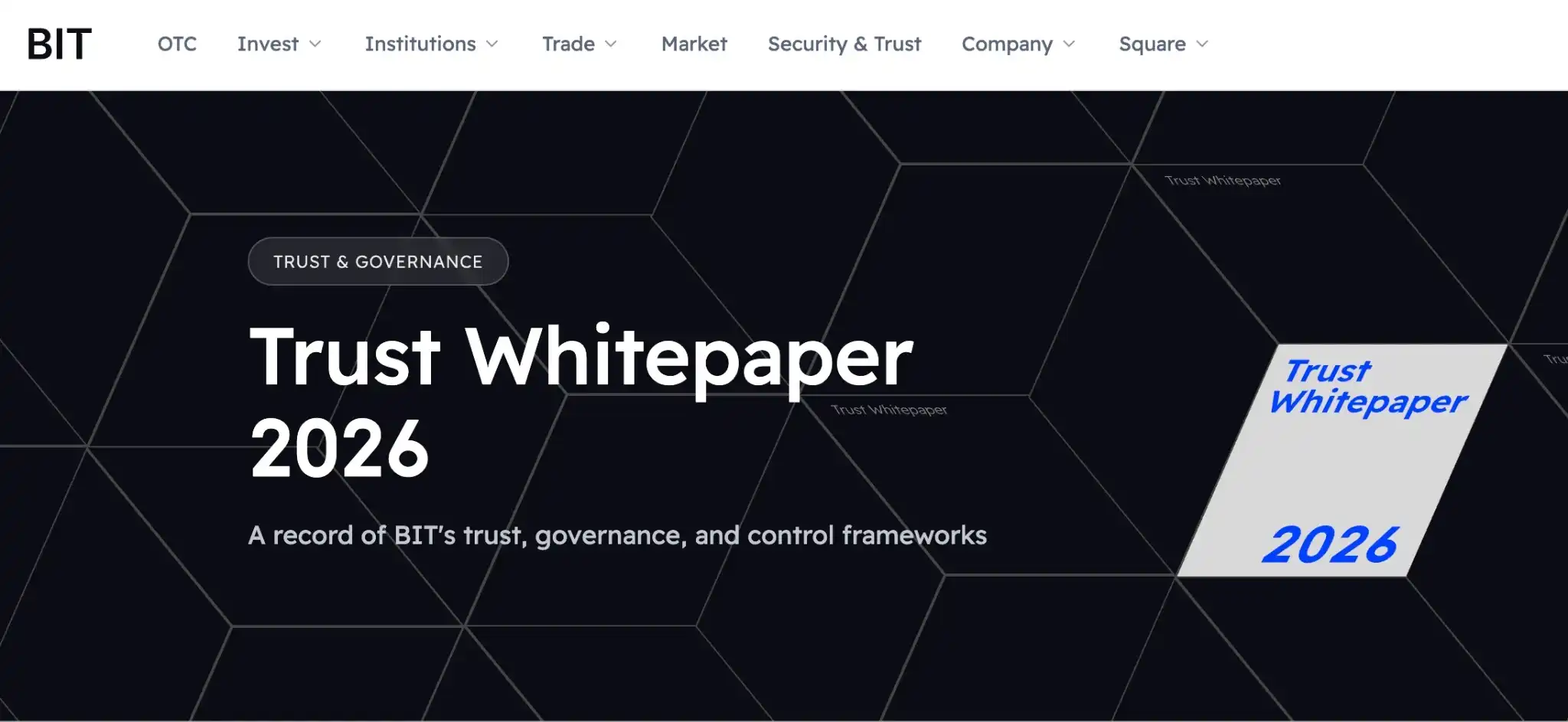
Recently, the global digital financial services platform BIT (formerly Matrixport) released the "BIT Trust Whitepaper" V2.0 (https://www.bit.com/whitepaper). If we re-examine this whitepaper along the question of 'what happens after the first line of defense fails,' one noteworthy aspect is that BIT's security system does not rely on any single line of defense. Instead, it establishes multiple layers of protection between identity, permissions, operations, and assets.
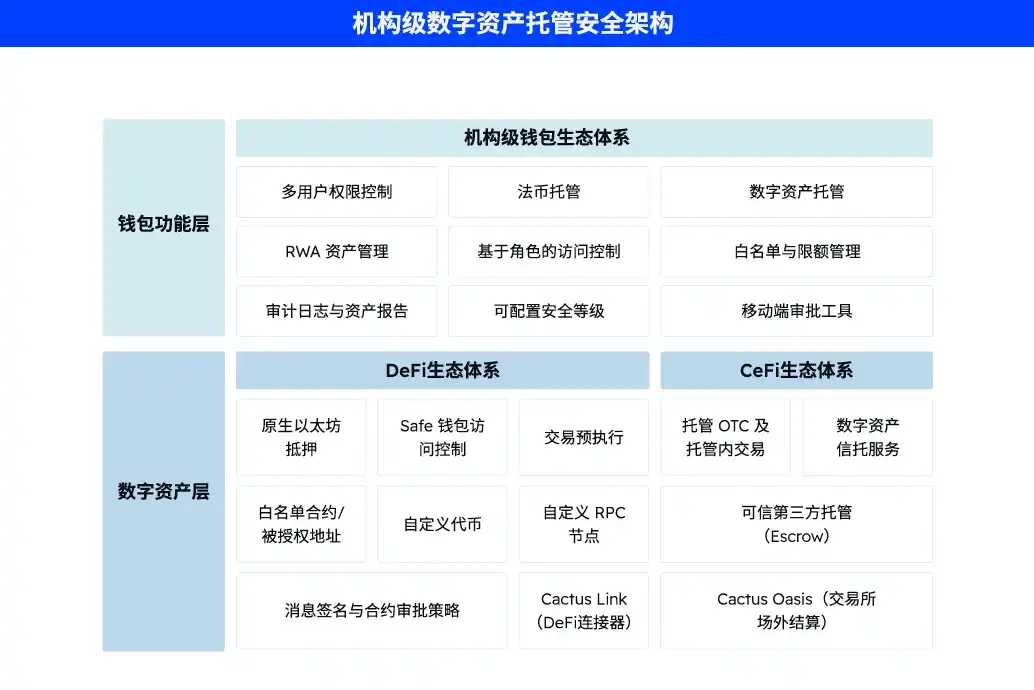
For example, obtaining account credentials does not mean an attacker has all the permissions needed to complete critical asset operations. The whitepaper discloses that BIT limits the systems and operations employees can access based on the principle of least privilege; critical operations involving asset transfers, account security, permission changes, and the generation and approval of transaction instructions require the participation of at least two authorized personnel. This layered approach also extends to institutional-grade digital asset custody scenarios, as exemplified by Cactus Custody.
Successfully passing identity verification does not mean subsequent operations get a continuous 'green light.' BIT conducts ongoing monitoring for behaviors such as abnormal logins, abnormal devices, and abnormal withdrawals. On the asset side, the majority of digital assets are stored in cold wallets, further reducing the exposure of core assets when issues arise in the online environment.

Looking at these mechanisms together, BIT's security logic becomes more intuitive: a compromised identity does not equal obtaining all permissions; obtaining one permission does not equal the ability to independently complete critical operations; passing identity verification does not mean subsequent behaviors are no longer subject to risk assessment; and problems in the online environment do not mean all core assets are simultaneously exposed.

What truly determines how far an attack can ultimately go are precisely these 'does not equal' conditions. This does not mean any attack can be completely avoided, but it does mean that even if one line of defense is breached, there are still opportunities to detect anomalies, restrict permissions, or isolate risks.

The gap in security often lies in what happens after the first door is breached.

When risk is discovered, who has the real authority to press the 'stop button'?

However, having a few more technical lines of defense is not everything. In the Cosmos EVM incident, a noteworthy detail is that the related vulnerability had been reported through a bug bounty program, but based on the information available at the time, it was initially assessed as not leading to the loss of funds in known production network configurations.

This also exposes another often-overlooked issue: Discovering a risk does not mean it has been accurately assessed and adequately addressed.

After a vulnerability is submitted, who determines its severity? If the security team deems the risk unacceptable, do they have the authority to prevent the product from going live? When business progress conflicts with security judgment, who has the final say?

The "BIT Trust Whitepaper" V2.0 discloses that when product plans, requirements, architecture, or launch changes pose significant security risks or do not meet security baselines and compliance requirements, the security team holds a 'one-vote veto' right. They can suspend related activities and require rectification and re-review before proceeding.

The truly noteworthy aspect of this mechanism is not just an additional layer of approval, but that it answers a very practical question: When risk truly emerges, is there someone with the authority to say 'no.' For a security system, the ability to discover problems is important, but ensuring that security judgments can genuinely influence business decisions is equally crucial in determining whether a line of defense is merely written in policy or can truly function effectively.

As business becomes more complex, 'security' is no longer just about assets in a wallet.

As digital financial platforms begin to simultaneously connect different types of assets and financial infrastructure, such as digital assets, U.S. stocks, and RWAs, security issues also extend beyond the wallet and account levels. Who handles the assets, which institutions they pass through, and where they are cleared and held also become important parts of users' risk assessment.

This is also where the "BIT Trust Whitepaper" V2.0 further elaborates on the security and trust system. Beyond risk control and security measures, the whitepaper also discloses the regulatory, audit, and independent verification arrangements corresponding to different business entities. This allows external parties to better assess: who is responsible for what, which mechanisms can be verified, and to what extent these mechanisms cover.

Taking BIT's U.S. stock business as an example, its securities business is operated by Matrix Gelephu Pte. Ltd. and is regulated by the GFSO. The related business also connects to U.S. licensed financial institutions and corresponding clearing and custody infrastructure.

For ordinary users, these seemingly complex financial arrangements can ultimately be boiled down to a few simple questions: Who handles my assets? Through which steps? What are the respective responsibilities of the different institutions? Can the identities and regulatory statuses of these institutions be checked?

This is where 'verifiability' truly becomes meaningful—security cannot rely solely on what a platform claims; it also depends on what users and the outside world can verify.

Looking back at the Liquid Network, Cosmos EVM, and Triple-A incidents, the entry points are completely different, yet they all remind the market: No single line of defense should be assumed to never fail. What truly creates a gap in security may not be a single security technology itself, but who can establish sufficient isolation and checks and balances between identity, permissions, operations, assets, and organizational decision-making, making it harder for a local breach to escalate into a total compromise.

From this perspective, what is noteworthy about the "BIT Trust Whitepaper" V2.0 is not just how many security measures it lists, but whether these measures can form a complete defense system: if one link fails, there is another layer; if the next layer fails, there is still an opportunity to continue identifying, blocking, and isolating risks.

For digital asset platforms, 'never being attacked' may be a difficult promise to make permanently. But another thing can be continuously built: True security is ensuring that even if one line of defense fails, a single breach does not easily escalate into a total compromise. And when these lines of defense not only exist but can also be continuously verified by the outside world, 'trust' is no longer just a statement made by the platform itself.
Trending Cryptos

Related Questions

QAccording to the article, what common question arises for digital asset platforms following security incidents like the Liquid Network hack?

AThe article highlights the recurring question of how a digital asset platform can truly be considered 'secure,' especially when an asset transfer can occur even without the core keys being compromised.

QWhat key shift in security philosophy does the article suggest is needed, based on the recent incidents?

AThe article suggests that the focus should shift from merely preventing the initial breach to limiting how far an attack can progress ('risk propagation'). The key measure of security is not just if the 'first gate' holds, but how many subsequent gates exist behind it.

QHow does BIT's security approach, as described in its Trust Whitepaper, implement the concept of 'multiple gates' or layers of defense?

ABIT implements multiple layers of defense through principles like least privilege access, multi-signature authorization for critical operations (requiring at least two authorized personnel), continuous risk monitoring for anomalous behavior, and the physical isolation of most digital assets in cold wallets. This ensures a breach in one area (e.g., a credential) does not grant full system access.

QWhat specific power does BIT grant its security team to ensure safety judgments impact business decisions?

ABIT grants its security team a 'one-vote veto' power. This allows them to suspend product launches, feature changes, or other activities if they identify major security risks or non-compliance with security baselines, ensuring safety concerns can override business pressures.

QBeyond technical safeguards, what does the article identify as a crucial component for building user trust in a platform's security?

AThe article identifies 'verifiability' as crucial. Trust is built not just on what a platform claims, but on what users and external parties can independently verify—such as regulatory statuses, audit arrangements, and clear disclosures about which entities handle assets at different stages.

Related Reads

Malicious Scam: AI Junk Papers Falsely List Top Scholars as Authors, Hinton, Fei-Fei Li, LeCun, Andrew Ng, and Others Affected

A disturbing scheme has emerged in which obscure, fee-charging journals are publishing AI-generated "slop" papers falsely attributed to leading AI researchers, including Geoffrey Hinton, Yann LeCun, Yoshua Bengio, Fei-Fei Li, Christopher Manning, Michael I. Jordan, Andrew Ng, and Stuart Russell. The case came to light when Alan Said, a computer science professor at the University of Gothenburg, received a Google Scholar alert for a paper he never wrote. When he complained, the paper was not removed—its author name was simply swapped, twice, showing that content is irrelevant and only prestigious names matter. The journals involved—AIJRI, AJAMRI, and AJFMR—share editors, editorial boards, and visual styling, claim to be peer-reviewed and open access, and charge publication fees. Their domains were registered in 2026 yet host archived "past issues," and some listed editorial board members, like Kanakaraju Manupati, were unaware of their association. Christopher Manning, who has seen fake papers under his name in other similarly named journals, called this "a worse scam" and urged Google Scholar not to index such content. Researchers believe the motive is to lure unsuspecting PhD students into paying to publish. Similar cases date back to at least 2023, when Diomidis Spinellis documented a journal that published AI-generated papers under real scholars' names; his analysis found most sampled articles appeared AI-written. The core danger lies downstream: once indexed by search engines, these papers appear on scholars' profiles, get cited, and may even contaminate future AI training data in a closed loop of AI-generated, AI-indexed, AI-learned content. Proposed remedies include stronger DOI and ORCID identity verification, better AI detection, and reforming publication-count-based evaluation—but the cost of generating fake papers is near zero while the burden of correction falls entirely on the victims.

marsbit31m ago

Malicious Scam: AI Junk Papers Falsely List Top Scholars as Authors, Hinton, Fei-Fei Li, LeCun, Andrew Ng, and Others Affected

marsbit31m ago

Adoption on the Ground, Wealth Evaporating: Three Financial Statements Explain the Painful Roots of the Crypto Industry

The crypto industry is finally seeing real adoption—stablecoins, tokenized funds, prediction markets, lending protocols, and AMMs have moved from whitepapers to reality, with figures like Treasury Secretary Bessent projecting stablecoins to reach $2 trillion and BlackRock's Larry Fink predicting all assets will be tokenized. Yet the mood is grim. Using a three-statement framework, the author explains why. Income statement: Revenue is decent—up about $8 billion since 2021—but excluding Tether, it has actually fallen by roughly $3 billion, while costs (engineers, BD, validators, auditors) largely flow to industry participants. Cash flow statement: Operating cash flow is approximated by revenue, and capex is minimal, so financing cash flow is what matters. Historically, VC money paid most salaries and rents. Combined revenue and VC investment fund the industry; what's left is investor profit, which must be shared with LPs to keep raising. Compared with 2021–2022, cash inflows have dropped about $15 billion. Balance sheet is the real problem: About $26.6 billion flowed in this year, but since last October, Ethereum and Solana alone have lost roughly $350 billion in market value—paper wealth evaporation, not cash outflow. Crypto assets are priced extremely high relative to cash flow, so even growing tokenized stocks and stablecoins can't fill a $350 billion hole. Closing it via revenue would require 35x industry revenue growth—about 350 Hyperliquid-scale businesses. Two paths out by 2027–2028: income-generating tokens (a few HYPE-level tokens could restore the balance sheet to its 2024 peak, even if fully replacing ETH/SOL losses would need 350 Hyperliquids), or a $350 billion rise in store-of-value assets like BTC, ETH, SOL, and ZEC—roughly a 30% BTC gain, or over 60% after accounting for ETF holders and non-reinvesting bitcoiners, or ETH and SOL returning to all-time highs. The bottom line: people are unhappy simply because prices fell.

marsbit34m ago

Adoption on the Ground, Wealth Evaporating: Three Financial Statements Explain the Painful Roots of the Crypto Industry

marsbit34m ago

Currently the only spot Bitcoin ETF on the European continent—why did an Asian group, BIT, secure it?

BIT Asset Management AG (BIT AM), the Swiss subsidiary of Singapore-based BIT Group (formerly Matrixport), received FINMA approval on October 20, 2026, to launch Bitcoin Fund ETF (ticker BBIT), Switzerland's first physically-backed bitcoin ETF and currently Europe's only spot bitcoin ETF. It is expected to list on the SIX Swiss Exchange in November. The approval took roughly 18 months and required BIT AM to overcome three hurdles: obtaining an exemption from Switzerland's risk-diversification rules to hold a single asset, meeting FINMA's custody requirements (bitcoin held in segregated cold storage at a Swiss bank, with custody by AMINA), and satisfying investor-protection standards for retail sales under the Financial Services Act. Unlike debt-based ETPs, BBIT is a Swiss fund structure, so fund assets are segregated from the manager's own assets and holdings are disclosed daily. Switzerland's non-EU status allows FINMA to grant exemptions unavailable under the UCITS framework. BIT AM traces its roots to Crypto Fund AG, founded in 2017 and licensed by FINMA in 2018, which launched Switzerland's first crypto fund in 2021 and expanded into ETPs in 2023. Matrixport acquired the firm from Crypto Finance in September 2024. BBIT offers in-kind BTC subscription, daily holdings disclosure, Swiss bank custody, and lower fees than IBIT. It targets Swiss private banks, pension institutions, and high-net-worth clients—Switzerland holds roughly CHF 2.9 trillion in cross-border private wealth—and gives Asian investors an alternative to US ETFs, with European trading hours and Swiss jurisdiction. BIT is also expanding its "Bridge Into Tomorrow" strategy through BIT Securities (US and Hong Kong stock trading), the XAUm gold token, and Cactus Custody's Swiss custody services.

marsbit34m ago

Currently the only spot Bitcoin ETF on the European continent—why did an Asian group, BIT, secure it?

marsbit34m ago

AI Attack Targets Mining: 64,000 BTC Mining Machines Hijacked for 20 Hours

A large-scale hijacking of Bitcoin mining equipment recently came to light after BTC dropped to around $62,000. Roughly 64,000 BTC miners, representing about 13 EH/s of hashrate, were redirected to the OCEAN mining pool, with mining rewards sent to an attacker-controlled BTC address. OCEAN's total hashrate briefly approached 50 EH/s before falling back to about 40 EH/s. A hosting provider, CoreX Hosting, issued an early warning, and mining service provider Luxor traced the issue to its Commander software. The attacker ultimately received only 0.162 BTC, but mining revenue for the affected period was lost, and Luxor said it would fully compensate the dozen or so affected customers at normal mining rates. Luxor, which raised $16 million in late October, described the incident as a "complex, AI-assisted attack." CEO Nick Hansen said the company paused most new feature development to harden its security infrastructure. The event showed no Bitcoin consensus rules were broken and no double-spend occurred; the risk lay in miner fleet management software. Such tools can push pool settings to thousands of machines at once, so a single compromised credential or API endpoint can redirect massive hashrate. The attacker did not need to steal hashrate itself, only redirect it to a pool paying rewards to a chosen address by changing stratum endpoints and worker names. Estimated potential losses were about $17,000 per hour, or roughly $410,000 per day, for 13 EH/s, implying compensation of about $34,000 to $340,000 depending on outage duration. The case highlights that mining pool architecture security and miner management software security are distinct, and that software-layer security deserves greater attention as management dashboards evolve into unified entry points for hashrate, energy contracts, and AI compute scheduling.

Odaily星球日报1h ago

AI Attack Targets Mining: 64,000 BTC Mining Machines Hijacked for 20 Hours

Odaily星球日报1h ago

How Does The New York Times Consume Jensen Huang and His Leather Jacket?

This article examines how The New York Times and other mainstream Western media covered the downfall of Nvidia CEO Jensen Huang in November 2026, arguing that the coverage went far beyond legitimate reporting into character assassination. Within four days, the Times published 36 Huang-related pieces, including two opinion columns — one by Anand Giridharadas mocking Huang's leather jacket and body in crude terms, another by his own biographer Stephen Witt recasting his洗碗工 past and a $1,000 tip to a Denny's server as narcissistic performance. The article argues race is only the surface layer: beneath it lie conflicts of interest involving the columnists' backgrounds, the Sulzberger family's hereditary control of the Times through 0.48% of shares, the paper's reliance on 13.76 million politically homogeneous subscribers, undisclosed AI content-licensing revenue and foundation funding of AI journalists, and competing business interests among media owners (Bezos, Murdoch, Ellison) whose companies are either Nvidia customers or chip competitors. It contrasts the treatment of Huang with that of white CEOs who faced similar scandals, invokes the "racial triangulation" and "perpetual foreigner" frameworks, and concludes that Huang became a scapegoat for broader AI-bubble anxiety, in the Girardian sense — a crisis, a moral accusation, a marked victim, and a collective condemnation.

marsbit1h ago

How Does The New York Times Consume Jensen Huang and His Leather Jacket?

marsbit1h ago

Trading

Spot

Hot Articles

How to Buy ONE

Welcome to HTX.com! We've made purchasing Harmony (ONE) simple and convenient. Follow our step-by-step guide to embark on your crypto journey.Step 1: Create Your HTX AccountUse your email or phone number to sign up for a free account on HTX. Experience a hassle-free registration journey and unlock all features.Get My AccountStep 2: Go to Buy Crypto and Choose Your Payment MethodCredit/Debit Card: Use your Visa or Mastercard to buy Harmony (ONE) instantly.Balance: Use funds from your HTX account balance to trade seamlessly.Third Parties: We've added popular payment methods such as Google Pay and Apple Pay to enhance convenience.P2P: Trade directly with other users on HTX.Over-the-Counter (OTC): We offer tailor-made services and competitive exchange rates for traders.Step 3: Store Your Harmony (ONE)After purchasing your Harmony (ONE), store it in your HTX account. Alternatively, you can send it elsewhere via blockchain transfer or use it to trade other cryptocurrencies.Step 4: Trade Harmony (ONE)Easily trade Harmony (ONE) on HTX's spot market. Simply access your account, select your trading pair, execute your trades, and monitor in real-time. We offer a user-friendly experience for both beginners and seasoned traders.

8.1k Total ViewsPublished 2024.03.29Updated 2026.09.28

How to Buy ONE

Discussions

Welcome to the HTX Community. Here, you can stay informed about the latest platform developments and gain access to professional market insights. Users' opinions on the price of ONE (ONE) are presented below.

活动图片