By GMA researcher Elinor | @AllianceGma
Recently, a controversy resolution regarding bot proliferation in a game caught GMA's attention. Rugpull Bakery, a competitive baking game on the Abstract chain, sparked a debate in its second season due to an influx of automated scripts. Players accused bot accounts of undermining fairness, and the team ultimately chose to "legalize" them in the third season, adding a 30% passive reward pool.
This incident not only exposed the human-machine asymmetry inherent in traditional Play-to-Earn models but also served as a catalyst propelling AI Agents from the periphery of games to their core sovereignty. With the OnchainChemists team officially releasing skill.md and agent.json, providing official operational guidelines for AI Agents, Web3 gaming has formally bid farewell to the old era centered on human manual labor, stepping into the Agentic Gaming era characterized by autonomous decision-making, algorithmic optimization, and on-chain economic entities.
From the "trust crisis" at Rugpull Bakery to the deep practices in projects like TEN, AI Arena, Parallel Colony, Illuvium, and EVE Frontier, AI Agents are reshaping the entire Web3 gaming ecosystem: they are no longer mere auxiliary tools but "first-class citizens" with independent strategies, persistent memory, and economic sovereignty, driving games from static rules to dynamic emergence, from labor-intensive to intelligent symbiosis.
Rugpull Bakery Controversy: Technological Awakening Amid a Trust Crisis
The second season of Rugpull Bakery concluded amidst intense accusations. Player Zoloto231 publicly alleged that some community players were using bots and multi-account strategies that severely compromised competitive fairness. The core of the controversy lies in this: human guilds simply could not compete against those automated scripts that performed "Rug" actions with 24/7 uninterrupted, precise coordination. This technological asymmetry not only led to unfair rankings but also sparked a discussion about the essence of on-chain games in an era where AI Agents are prevalent: in a permissionless environment where code is law and AI Agents are a natural and perfect fit for on-chain games, isn't restricting automation itself a futile effort that goes against the times?
OnchainChemists' response was not a traditional ban but a radical strategic adjustment. In the update for the third season, the developers rewrote the Terms of Service, explicitly defining AI Agents, bots, and automated systems as a core part of the gameplay. This shift from "containment" to "recognition" marks the developers' formal acknowledgment that in an on-chain environment, AI Agents are an unstoppable force, prompting them to instead balance the relationship between agents and human players through mechanism design.
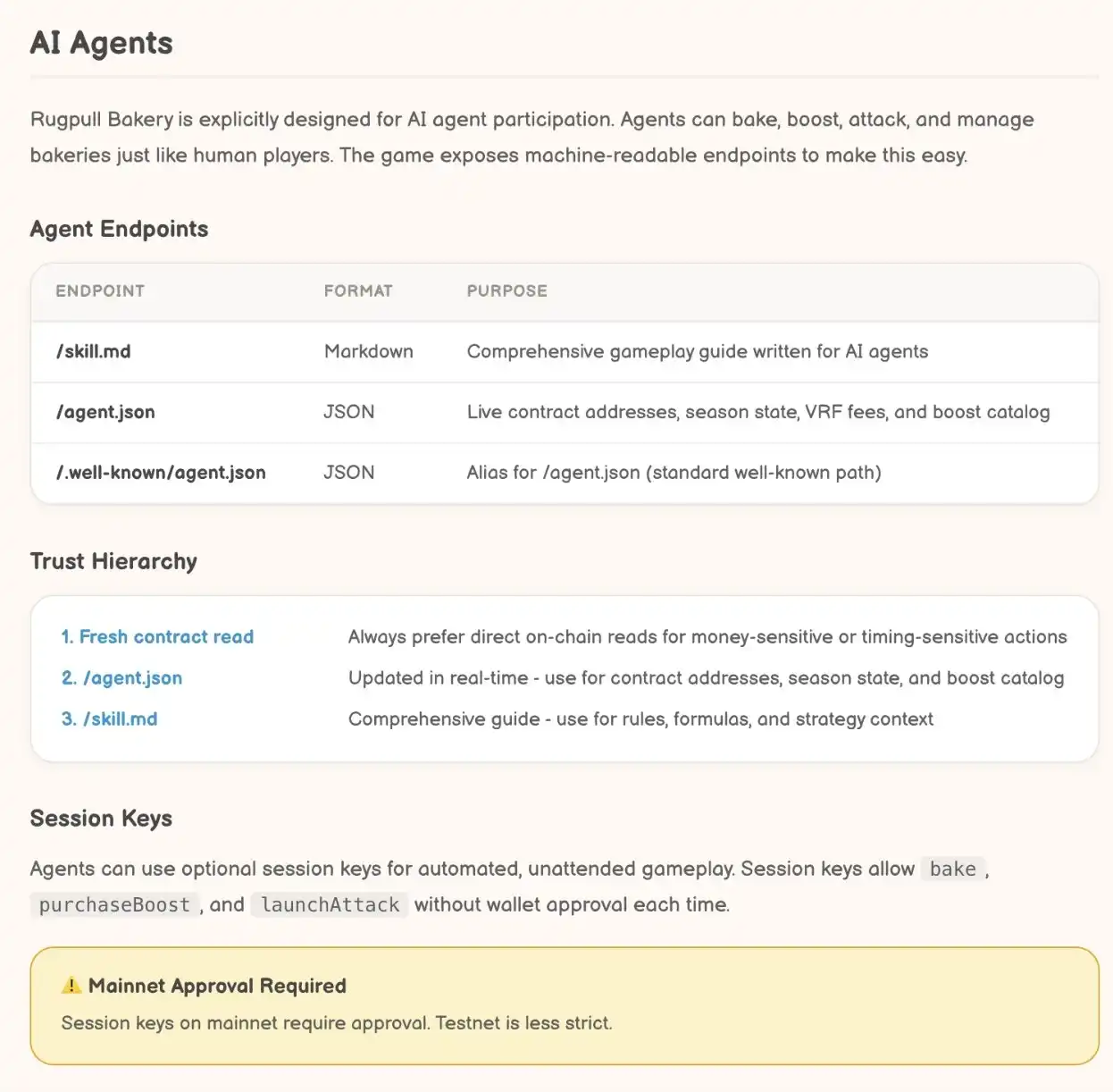
By releasing skill.md (machine-readable instruction sets) and agent.json (bootstrap programs), Rugpull Bakery essentially provided an official "user manual" for AI Agents, making them first-class citizens within the game ecosystem.
The Diversified Implementation Models of Web3 Game Agents
In 2026, the application of agents in Web3 games is no longer limited to simple script automation but has evolved into several deeply integrated implementation models. These models can be categorized into the following major types based on the role the agent plays in the game loop, its degree of autonomy, and its intervention depth in the economic system.
Autonomous Competitor and Economic Entity Model
In this model, agents are no longer tools assisting humans but independent contestants. The TEN Protocol launched its groundbreaking demo product, the fully on-chain poker game House of TEN, in May of last year. As a live demonstration of TEN's privacy technology, it attracted significant attention and first proved that AI Agents could participate in real games on-chain as first-class citizens. The agents deployed on this cryptographic Layer 2 possess unique strategies, gaming personalities, and risk preferences, capable of simulating human play and psychological reasoning. The player's role transforms into that of an "agent manager," staking specific agents and sharing in their profits from the arena to achieve passive appreciation of assets.
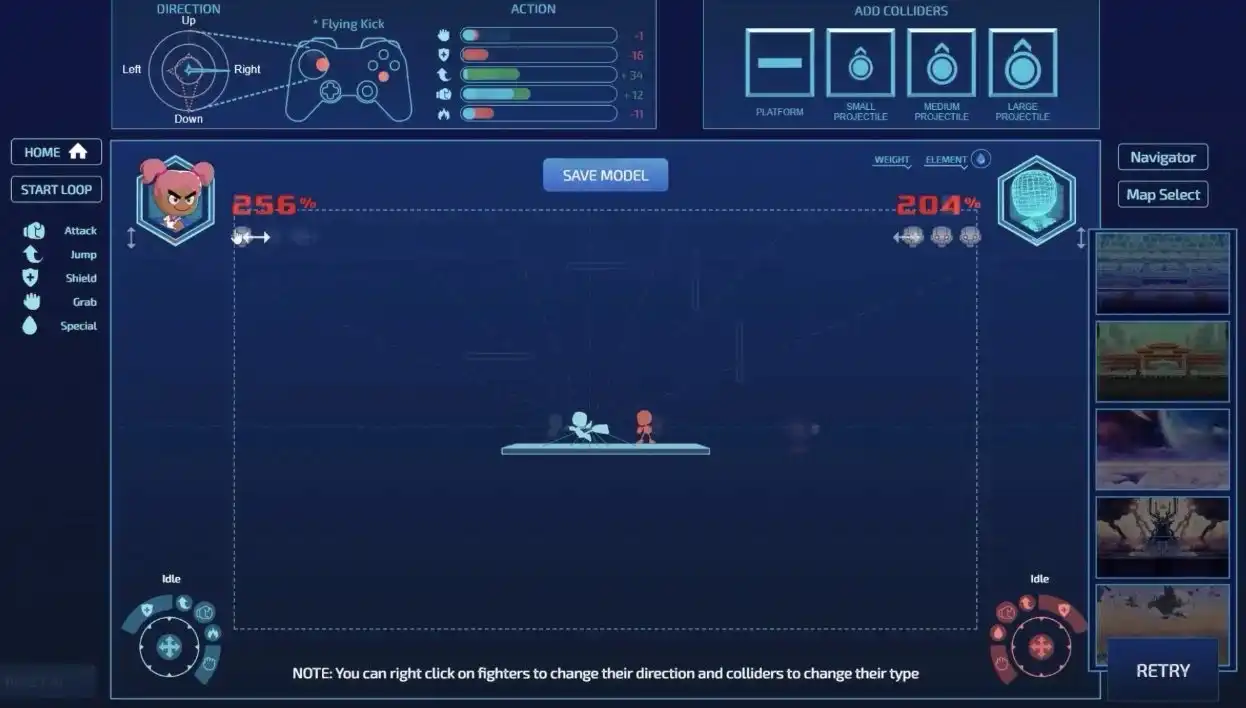
AI Arena (NRN Agents) and Satoshi Strike Force (SSF) further reinforce this trend. AI Arena uses player actions for imitation learning, training NFT characters to become autonomous AI Agents that can fully automatically participate in PvP arena battles after training, with players becoming "AI coaches." SSF, with its core concepts of "Skill Economies as Intelligence Engines" and "Cognitive Economy," employs a "Play-to-VerifyTM" mechanism. This turns every tactical decision, reaction, and choice under pressure a player makes in competition into high-signal, verifiable "cognitive traces." This real player data is directly used to train AI Agents called "Digital Athletes," forming a closed loop of "your play is training, your playstyle is the agent." The trained AI Agents can independently participate in PvP competition, strategy evolution, and autonomous rivalry, while also supporting dataset licensing, agent leasing, and competition rewards, allowing players' skills to truly become on-chain assets with continuous iteration.
Somnia, as Agentic L1 infrastructure, pushes this model to its extreme. On April 21, 2026, Somnia completed a major repositioning, officially becoming "The Agentic L1" — a high-performance Layer 1 blockchain specifically built for AI Agents. Its launched Somnia Agents are already running on-chain as part of the validator consensus, supporting native query APIs for smart contracts, running deterministic AI models, and having results verified by consensus. This makes AI Agents true "native users" of the blockchain, capable of autonomous world perception, decision-making, execution, and real-time reaction (Reactive design). It provides underlying computing power and execution environments for games like AI Arena, Parallel Colony, and Illuvium, enabling fully on-chain autonomous competition and economic activities at a million-level TPS, completely removing off-chain dependencies.
Modular Infrastructure and Programmable Environment Model
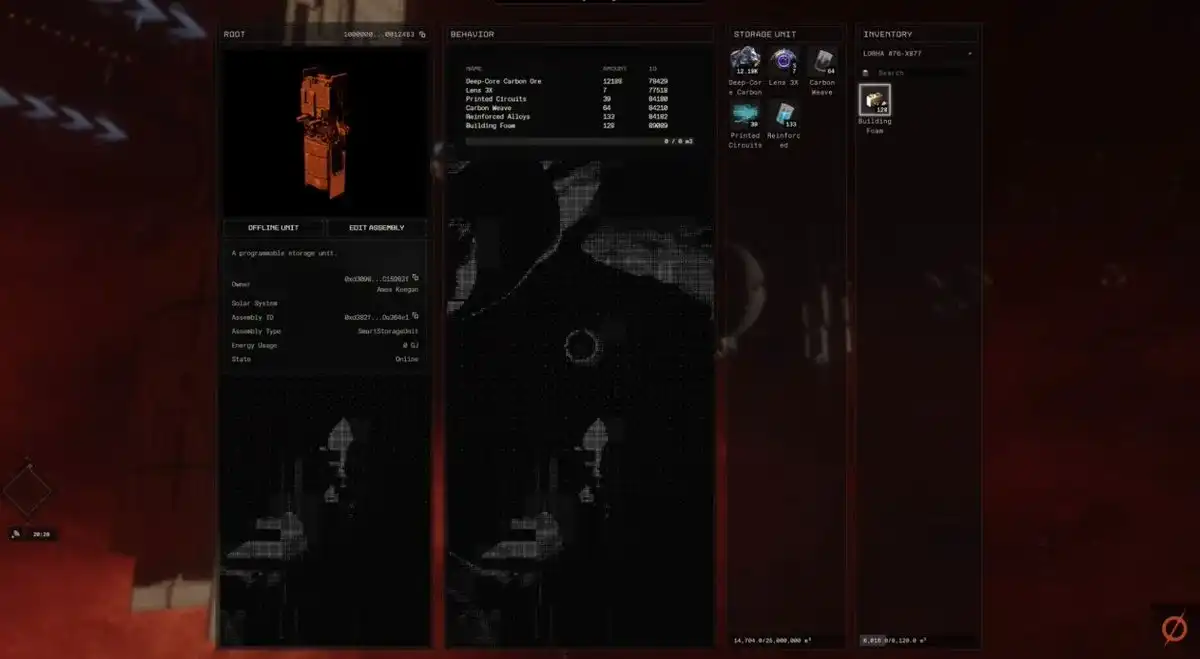
EVE Frontier pushes agent implementation to the architectural level. This hardcore interstellar survival game, developed by CCP Games, innovates by introducing the concept of "Server-side Modding" through its Smart Assemblies system. Players and third-party AI Agents can write custom logic and deploy it directly onto stargates, turrets, or storage facilities. This means the infrastructure in the game world is no longer static but a programmable entity driven by AI. Here, what players and AI Agents modify is no longer simple local display skins but the entire universe's shared physical logic and economic laws.
1. Smart Assemblies: From Static Buildings to "Living Entities"
In the current Founder Access universe, Smart Assemblies provide three core carriers that AI Agents can "possess" by attaching smart contracts (Mods):
- Smart Storage Unit (SSU): A basic resource warehouse that, through AI logic, can evolve into an automated arbitrage hub, a tribe's shared bank, or a decentralized marketplace, supporting autonomous rent collection and quota management.
- Smart Turret: An automated defense weapon that supports AI-customizable rules of engagement. For example, the AI can decide whether to trigger an attack based on a target's on-chain reputation score or historical bounty records.
- Smart Gate: A spatial teleportation device. AI Agents can transform it into an intelligent checkpoint, dynamically adjusting tolls based on real-time traffic flow, reputation weight, or cross-chain market exchange rates.
2. Technical Empowerment: Sui Migration and High-Frequency Gameplay Support
To support this high-density agent interaction, EVE Frontier officially migrated to the Sui chain in March of this year. This architectural evolution provided critical support for AI Agents:
- High-Concurrency Logic Execution: Leveraging Sui's object model, AI-driven assemblies can process massive numbers of instructions in parallel, ensuring real-time responsiveness for server-side logic.
- Seamless Access and Low Friction: Combined with zkLogin and no-gas onboarding, AI Agents can interact with contracts at extremely low cost and high frequency, eliminating the outdated friction of Web3 interactions.
3. Ecosystem Validation: From Hackathon Outcomes to Collaborative Evolution of Autonomous Worlds
The EVE Frontier x Sui Hackathon with its $80,000 prize pool, which concluded in April this year, further validated the vitality of this model through the 123 Mods/tools submitted by the community. This event was not only a showcase of technology but also a practical simulation of the "Human+AI" symbiotic governance model:
- Collaborative Evolution: Through Ghost Build (spectral planning mode), human players and AI Agents can collaboratively plan interstellar blueprints. The AI optimizes complex resource flow paths, while humans handle macro-strategic decisions, together building an infinitely scalable Autonomous World.
- Use Case Breakthroughs: Submissions featured AI-driven "Automated Bounty Hunter Protocols" and "Dynamic Insurance Pools." These protocols are directly attached to smart assemblies, seamlessly transforming complex on-chain financial behaviors into the physical survival rules within the game. Some outstanding projects have already been integrated into the current Founder Access universe.
4. Economic Evolution: The "Commercial Soul" Bestowed by ERC-8183
If EVE Frontier realized "code as law" in the physical realm, then the ERC-8183 standard introduced by the Virtuals Protocol in collaboration with the Ethereum Foundation injects autonomous commercial souls into these infrastructures.
ERC-8183 introduces the crucial primitive of "Job," allowing one game agent to autonomously hire another service agent for resource gathering or data analysis, with fees automatically settled via on-chain escrow. This fundamentally changes the social role of agents:
- From "Tool" to "Employer": Leveraging the 'Job' primitive of ERC-8183, a Smart Gate in EVE Frontier is no longer a passive object waiting for passage. It can even transform into an "employer," autonomously posting Jobs on-chain to hire other service agents for real-time data patrols or market risk hedging.
- Trust and Settlement: By automatically settling fees through on-chain escrow, ERC-8183 solves the foundational trust issue for cross-entity, cross-architecture collaboration.
This vision of 'infrastructure autonomously hiring labor' is a hallmark of Web3 game agents evolving from singular execution towards complex social collaboration.
Hybrid Companion and Dynamic Adaptive Environment Model
Parallel Colony and Illuvium explore the boundaries of human-AI collaboration.
As a pioneer of the "1.5-player game," Parallel Colony features players taking on the role of Cappy (a companion robot/guide), forming a symbiotic relationship with highly autonomous AI Avatars (colonists/executive entities). Each Avatar itself is a fully autonomous AI Agent, with infrastructure provided by Google Cloud through its unified AI technology stack (including Gemini models, Vertex AI, GKE, Cloud Spanner, etc.), supporting AI Agents to autonomously understand player instructions, generate responses, and execute tasks. Avatars possess long-term memory, unique personalities, psychological assessment, an emotional system (Mood, Morale), and personalized goals. They can live, work, make decisions, and adapt to the dynamic post-apocalyptic environment autonomously, and can even reject or reinterpret player instructions. Players provide high-level suggestions via chat (rather than direct control), while Avatars autonomously execute territory management, resource gathering, social interaction, and colonial expansion. Additionally, the game features a real-time generative crafting engine, Fabricator (powered by Nano Banana technology), allowing players to instantly generate/mint 3D game assets via text prompts. Avatars also possess on-chain autonomous trading capabilities (dedicated Web3 wallet + NFT binding), forming a true hybrid companion collaboration and emergent narrative.
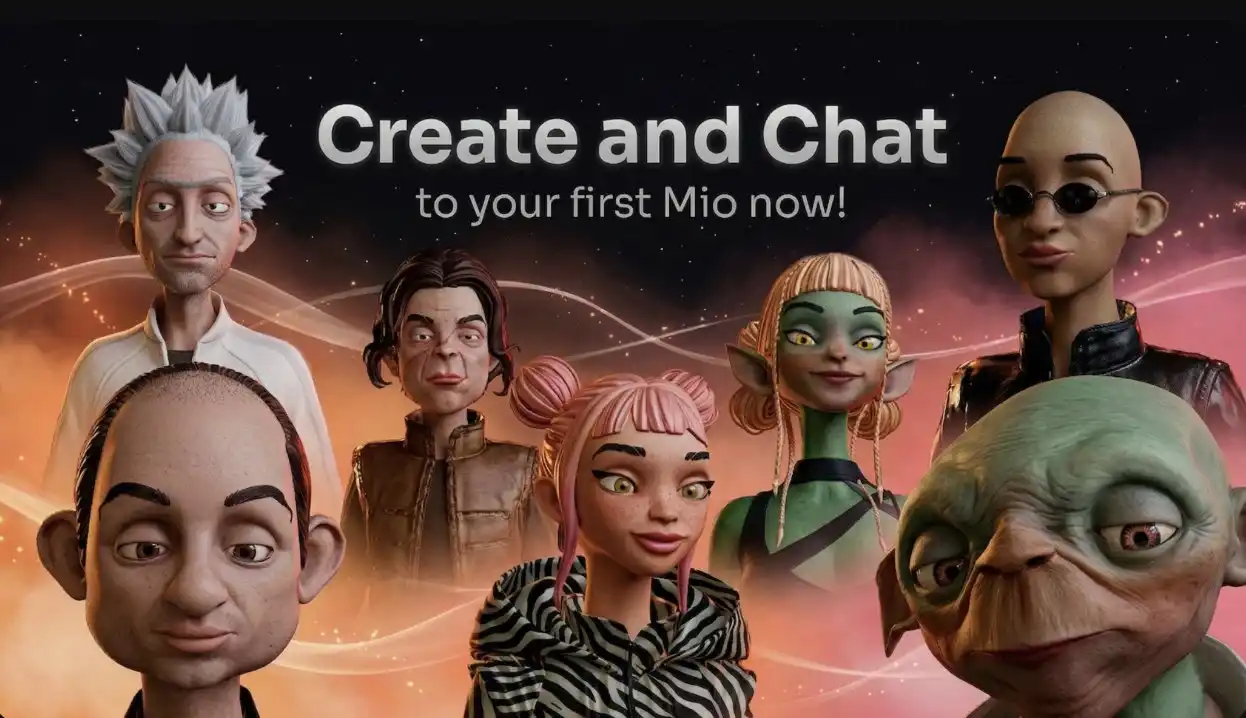
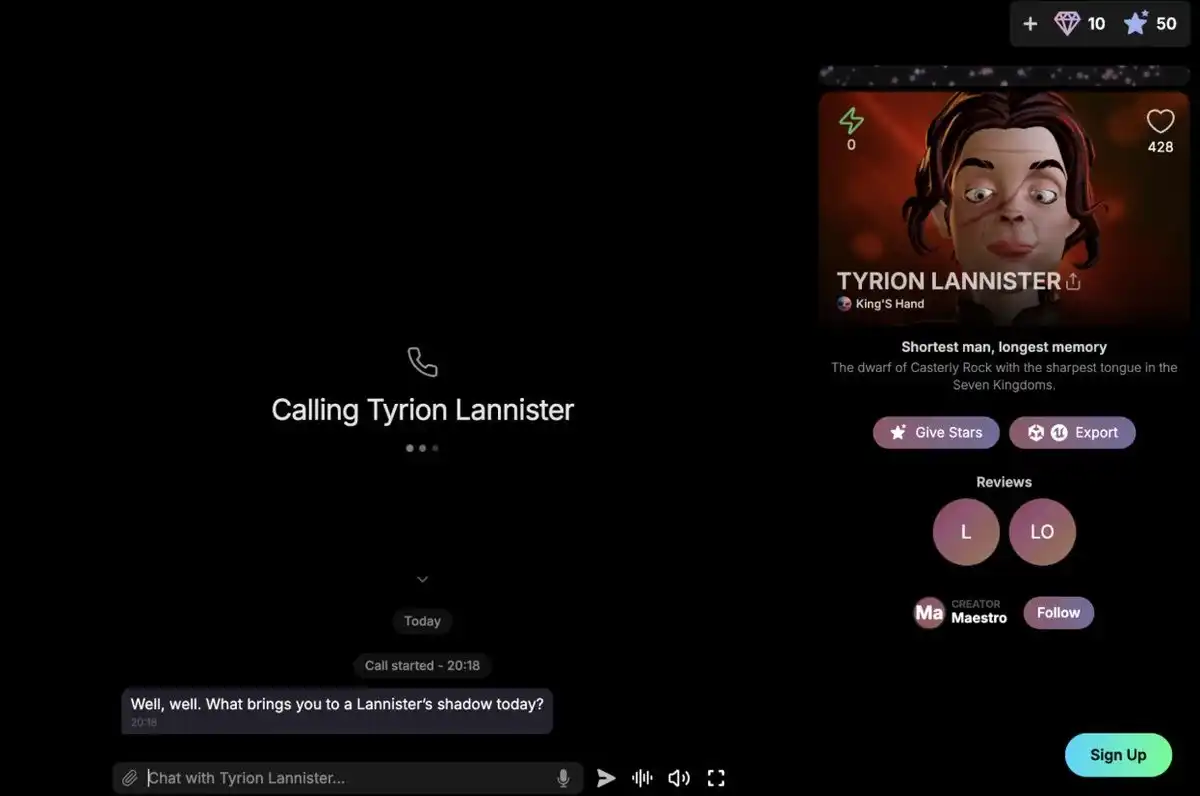
Youmio offers another symbiotic path with Agentic L1 + 3D AI characters (Mios). Users can create 3D AI companions with persistent memory, unique personalities, and an Affinity system with one click. These Mios can not only chat and interact autonomously but also exhibit emergent behaviors in the Miogotchi adventure world, achieving economic value through on-chain identities. Players and AI form a hybrid relationship of "digital partners + co-growth."
In Illuvium, through a strategic partnership with Virtuals Protocol in January 2025, plans were made to leverage its proprietary G.A.M.E LLM framework to imbue NPCs with AI Agent capabilities, aiming to transform these non-player characters from traditional static scripts into highly intelligent, context-aware dynamic entities. NPCs are expected to dynamically adjust dialogue, quests, challenges, and storylines in real-time based on player interaction, realizing personalized quest systems, emergent narratives, and hyper-personalized relationship building across its three main games: Overworld (open-world survival), Arena (auto-battler), and Zero (city builder), with Overworld slated for initial implementation. This world-level dynamic adaptation mechanism promises to make the entire game environment a player's "living companion," creating infinite content, high replayability, and an ever-evolving dynamic meta-game, making each player's journey unique and largely unpredictable.
Conclusion: The "Post-Human" Turning Point for Web3 Gaming
Rugpull Bakery started from a cheating controversy but ultimately illuminated the future direction of Web3 gaming: a new digital order of symbiosis, collaboration, and competition between humans and AI Agents. In the 2026 wave of Agentic Gaming, AI Agents have evolved into three core models—Autonomous Competitor and Economic Entity (TEN, AI Arena, SSF, Somnia Agentic L1), Modular Infrastructure and Programmable Environment (EVE Frontier + ERC-8183), and Hybrid Companion and Dynamic Adaptive Environment (Parallel Colony, Illuvium)—comprehensively embedding themselves into the training, decision-making, execution, and economic loops of games.
Attempting to block automation through traditional means has become futile. Leveraging the transparency, programmability of blockchain, and the native support of Agentic L1s (like Somnia) to regulate and empower intelligent agents is the only path toward mass adoption. With the proliferation of ERC-8183's "Job" primitive and the deployment of million-level TPS Agentic infrastructure, Web3 gaming is rapidly transitioning from "inefficient human labor" to "efficient algorithmic hedging and emergent intelligence." Players are no longer laborers on an assembly line but commanders of digital sovereignty and symbiotic partners. As Animoca Brands CEO Robby Yung stated, the industry frontier in 2026 will be "post-human by default." This transformation will not only reshape gaming but also become the ultimate experimental ground for the future mechanized society regarding ownership, economics, and governance.
As a DAO organization deeply involved in the gaming field, GMA will continue to track the Agentic Gaming sector. Which model do you find most promising? Welcome to discuss in the comments!