2027 Hegota Upgrade Could Put Stablecoins on Ethereum’s Gas-Fee Market

TheNewsCryptoPubblicato 2026-09-08Pubblicato ultima volta 2026-09-08

Introduzione

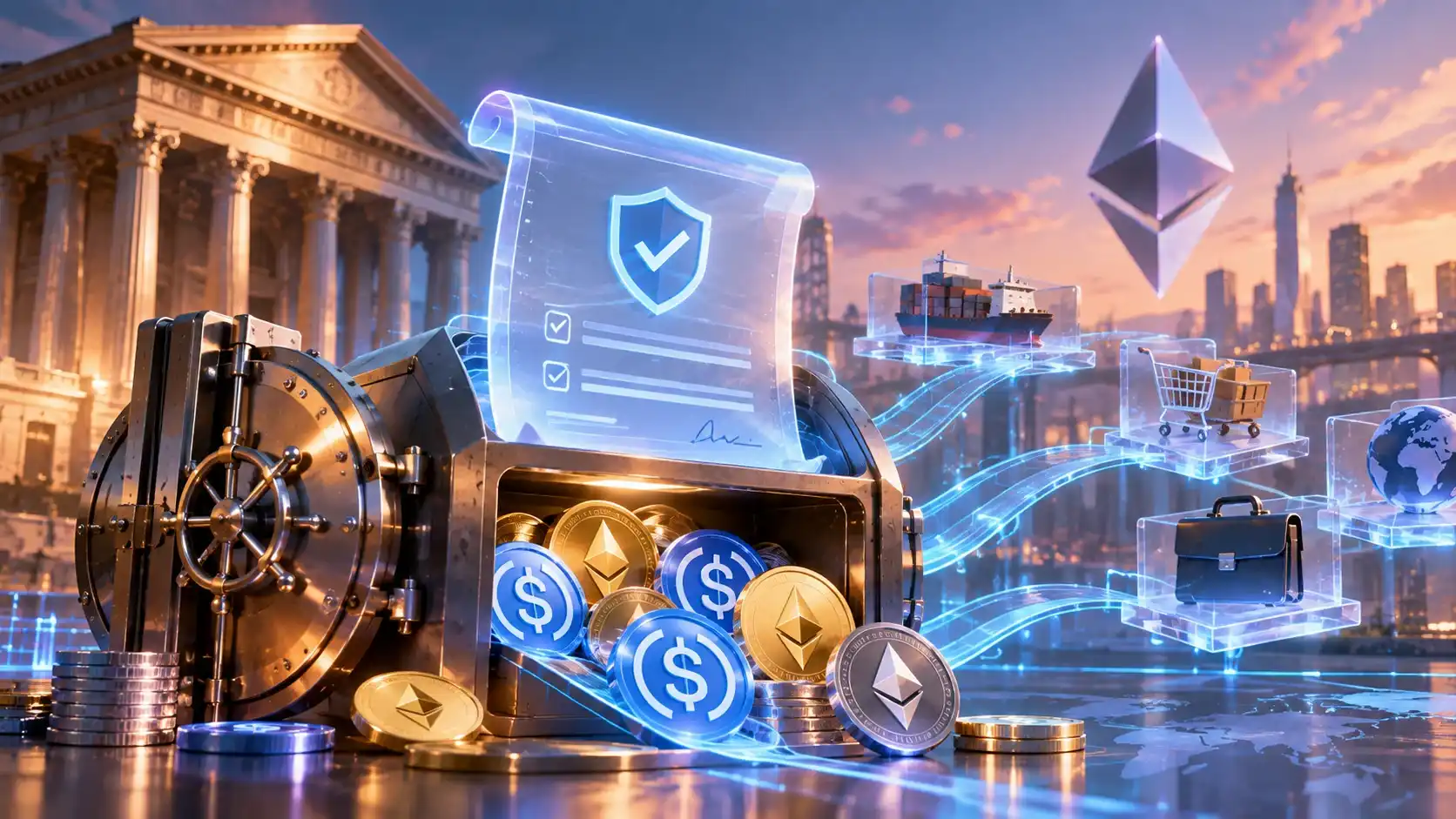
Ethereum developers have confirmed EIP-8141, "Frame Transactions," for inclusion in the 2027 Hegota upgrade. This will allow users to pay transaction fees using stablecoins (e.g., USDC, USDT) instead of needing to hold ETH for gas, removing a major user onboarding barrier. While the protocol still settles fees in ETH, wallets or apps can handle this conversion seamlessly for the user. The update does not reduce demand for ETH, as the network is still paid in ETH for every transaction. Instead, it is expected to expand Ethereum's user base, increasing overall network activity and ETH consumption. The Hegota upgrade is part of a broader roadmap aiming for a quantum-resistant Ethereum by 2029.

Ethereum developers have confirmed EIP-8141, known as Frame Transactions, for inclusion in the planned 2027 Hegota upgrade. The change is straightforward in concept but significant in impact; users will be able to pay transaction fees using stablecoins like USDC, USDT, or RLUSD without needing to hold ETH in their wallet for gas.

Right now, one of Ethereum’s most persistent friction points is this: you can hold $10,000 in USDC and still be unable to send it without a separate ETH balance to cover gas. That barrier has kept millions of potential users away from the network. EIP-8141 is built specifically to remove it.

How It Actually Works

The important distinction here is that Ethereum’s protocol still settles gas fees in ETH; that doesn’t change. What changes is the user-experience layer on top of it.

Under Frames, a payments app or wallet can cover the gas cost on the user’s behalf, charge the user in stablecoins, and settle the ETH fee at the protocol level without the user ever touching ETH directly.

The authorising part of the transaction, fee payment, and execution are treated as separate but linked components, which hints that if a trade fails, any permissions granted alongside it are withdrawn rather than left open.

Some wallets already offer a version of this through third-party relayer infrastructure. Moreover, EIP-8141 brings it into Ethereum’s ordinary transaction flow natively, and no third party is required.

What This Means for ETH Demand?

The immediate reaction from some corners of the market has been bearish: if users don’t need ETH for gas, does demand fall? The answer is no. Ethereum’s protocol still gets paid in ETH at every transaction. The demand destruction concern doesn’t hold up under the actual mechanics of the proposal.

What it does is remove the single biggest onboarding barrier for mainstream users: the requirement to buy and hold ETH just to use a network where they may never want ETH as an asset.

Quantum Resistance by 2029

The Hegota upgrade sits within a broader roadmap the Ethereum Foundation’s Protocol cluster has now made public. The target is a quantum-resistant Ethereum L1 across execution, consensus, and data layers by December 2029, aligning with migration timelines independently set by Google, Cloudflare, and Microsoft.

Significantly, EIP-8141 expands Ethereum’s addressable user base. More users transacting on the network means more ETH consumed at the protocol level, even if those users never hold it directly. The upgrade is a net positive for network activity and long-term ETH fundamentals.

Crypto Market Highlights

Arbitrum (ARB) Drops 15% as Bearish Pressure Mounts

TagsCryptomarketETHEREUMGas Feesstablecoins

Crypto di tendenza

Domande pertinenti

QWhat is the name and expected release year of the Ethereum upgrade that will allow users to pay gas fees with stablecoins?

AThe upgrade is called the Hegota upgrade, and it is planned for 2027.

QAccording to the article, what specific problem does EIP-8141 (Frame Transactions) aim to solve?

AEIP-8141 aims to solve the problem where users cannot send assets like USDC without holding a separate balance of ETH to pay for transaction gas fees, which is a major barrier to onboarding new users.

QUnder the proposed Frame Transactions system, who is responsible for converting the user's stablecoin payment into the ETH required by the Ethereum protocol?

AA payments application or wallet covers the gas cost on the user's behalf, charges the user in stablecoins, and settles the ETH fee at the protocol level.

QWhy does the article argue that demand for ETH will not fall even though users can pay gas fees with stablecoins?

ADemand for ETH will not fall because the Ethereum protocol itself still requires that every transaction's gas fee is ultimately settled in ETH, so the ETH is still consumed.

QBeyond the stablecoin gas payments, what major technical goal is the Ethereum Foundation targeting for its protocol by December 2029?

AThe Ethereum Foundation is targeting a quantum-resistant Ethereum L1 across its execution, consensus, and data layers by December 2029.

Letture associate

Founders Fund Leads $5 Million Token Purchase of ANVL: What Exactly is This "Non-Lending" DeFi Protocol Doing?

On October 6th, Founders Fund, led by Peter Thiel, invested $5 million to purchase ANVL tokens from the DeFi protocol Anvil's treasury. The round included participation from Pantera Capital and others, alongside angel investors like Compound founder Robert Leshner. Anvil is not a lending protocol. Instead, users lock assets like ETH or USDC into its vault to generate a verifiable on-chain "Letter of Credit" (LOC). This LOC acts as an economic guarantee, proving the user has sufficient locked collateral to back financial commitments, without borrowing funds. The protocol applies this mechanism to use cases like payment guarantees for merchants (via integration with Flexa) and enabling instant deposits for traders on exchanges like Bullish. Anvil's economic model is unique: it charges zero protocol fees. Its native token, ANVL, derives value solely from governance rights over parameters like supported collateral types. The total supply is 100 billion tokens. Despite an 83% price surge on the investment news, ANVL remains down approximately 89% from its all-time high. The protocol's Total Value Locked (TVL) has also fallen about 87% from its peak of ~$109 million in July 2025 to around $14 million currently. The investment represents a strategic bet that on-chain credit guarantees could become a significant category. Key factors to watch include the rate of real enterprise adoption through Anvil's SDK, the long-term sustainability of its zero-fee model, and the broader migration of traditional trade finance needs to blockchain infrastructure.

marsbit1 h fa

Founders Fund Leads $5 Million Token Purchase of ANVL: What Exactly is This "Non-Lending" DeFi Protocol Doing?

marsbit1 h fa

Mathematical Explosion: OpenAI Overnight Solves 722 Math Problems, Quasi-Riemann Hypothesis Proven

OpenAI has stunned the global mathematics and AI communities by releasing a GitHub repository containing 722 manuscripts addressing 372 previously unresolved major mathematical problem families, all reportedly generated by an unreleased internal AI model. The announcement, made without prior peer review, has provoked both excitement and alarm among mathematicians. The most notable breakthrough claims to be a proof of a "quasi-Riemann Hypothesis," establishing a zero-free region for Dirichlet L-functions with real part greater than 7/8 and eliminating the Landau-Siegel zeros—a significant leap in analytic number theory. The work has reportedly undergone formal verification using Lean. Other highlighted results include: unconditionally proving the NP-hardness of the basic semidefinite programming (SDP) threshold for approximation algorithms, based solely on P ≠ NP and circumventing the Unique Games Conjecture; proving the rational Hodge conjecture for abelian varieties with complex multiplication (CM); and resolving both the symmetric and asymmetric Mahler conjectures in convex geometry. According to OpenAI, most proofs were generated automatically by the model, with an average "thinking" time of just three hours per problem. This unprecedented scale and speed have sparked intense debate about the future of human mathematicians. While some express fear about the concentration of intellectual power, others see it as the dawn of a new era of discovery driven by AI. The mathematical world is now tasked with scrutinizing these claims, which, if verified, would represent historic milestones.

marsbit1 h fa

Mathematical Explosion: OpenAI Overnight Solves 722 Math Problems, Quasi-Riemann Hypothesis Proven

marsbit1 h fa

As Midterm Elections Approach, the Real Trade in U.S. Stocks Isn't About Who Wins

With the US midterm elections approaching in early November, political uncertainty has re-emenrged as a market variable. While market participants are weighing potential shifts in congressional control and policy direction, historical data suggests midterm elections themselves are not a definitive negative catalyst for US equities. Since 1937, the S&P 500 has averaged a positive gain of 9.2% in midterm election years, though this lags behind the 13.3% average for non-election years. A more consistent historical pattern is increased market volatility and a tendency for stronger performance concentrated in the fourth quarter, as political uncertainty is resolved. The article, citing analysis from J.P. Morgan and Capital Group, argues that the market's primary concern is policy path uncertainty rather than which party wins. This uncertainty tends to depress markets in the run-up to the vote, with a potential rebound afterward as the political risk premium dissipates. However, the article cautions against attributing market performance solely to the election. Recent midterm years like 2018 and 2022 saw significant market declines primarily driven by factors like Federal Reserve tightening and inflation, not the election outcome itself. The core argument is that the midterm election's impact on markets is often secondary to more fundamental drivers. Regardless of whether the result is a unified or divided government, the market's longer-term trajectory has historically been determined by underlying economic conditions. For the current environment, the key variables to watch post-election are not political labels but the path of interest rates, corporate earnings trends, and whether any actual policy changes materially alter cash flow expectations for businesses. The election may influence sentiment and policy expectations, but the sustainability of any year-end rally will ultimately depend on these core fundamentals of profitability, rates, and economic data.

marsbit1 h fa

As Midterm Elections Approach, the Real Trade in U.S. Stocks Isn't About Who Wins

marsbit1 h fa

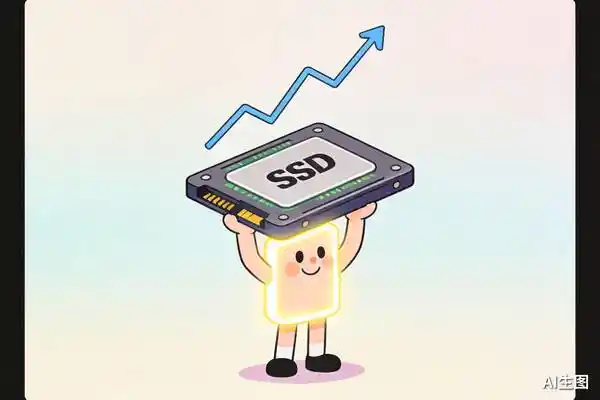
AI Can't Change 'DNA': How Long Can SanDisk Stay Strong?

**AI Cannot Alter the "DNA": How Much Longer Can Western Digital's Run Last?** This analysis examines the sustainability of the current "super cycle" for NAND flash memory, driven by AI, with a focus on Western Digital (WD). The core argument is that while AI demand has fundamentally shifted NAND's role from a data warehouse to an essential component on the compute path, especially for AI inference, this does not eliminate the industry's cyclical nature. The piece first assesses the supply-demand dynamics. On the supply side, major producers are showing capital expenditure restraint for NAND, prioritizing DRAM/HBM. Capacity growth through 2028 relies heavily on technological upgrades (increasing 3D layers to 300+) and expansion primarily from China's YMTC, rather than new fabs. Global new fab capacity from players like Samsung and WD/Kioxia is concentrated post-2029. This results in estimated bit supply growth (CAGR ~24% for 2026-2028) largely driven by higher per-wafer output. Demand is undergoing a structural shift. AI-related NAND demand (for data lakes, KV cache, and staging) is forecast to grow at a 75% CAGR from 2025-2028, becoming the dominant driver. Data center demand will surpass 50% of total NAND demand in 2026. Consumer demand (PC, smartphone) is being squeezed and is expected to decline or stagnate. A key 2027 demand catalyst is NVIDIA's Rubin platform with its dedicated contextual memory storage (ICMS). The analysis concludes that a supply-demand deficit will persist into 2027. However, 2028 is identified as a potential inflection point where supply (led by YMTC's new fab) could outpace demand, ending the price rally. For Western Digital, the analysis models a more conservative path than management's guidance. It forecasts Average Selling Price (ASP) peaking in FY28 (ending June 2028) before declining in FY29-30 as the market loosens, though supported by long-term agreements (LTAs) and a higher mix of data center products. Consequently, margins and profits are expected to peak in FY28 and then contract. The valuation suggests WD's current price largely reflects a neutral scenario, with limited short-term upside unless the market becomes convinced that prices will remain stable post-2028. The fundamental takeaway is that despite AI's transformative impact, NAND's cyclical "DNA" remains intact.

marsbit2 h fa

AI Can't Change 'DNA': How Long Can SanDisk Stay Strong?

marsbit2 h fa

Trading

Spot

Articoli Popolari

Come comprare GAS

Benvenuto in HTX.com! Abbiamo reso l'acquisto di GAS (GAS) semplice e conveniente. Segui la nostra guida passo passo per intraprendere il tuo viaggio nel mondo delle criptovalute.Step 1: Crea il tuo Account HTXUsa la tua email o numero di telefono per registrarti il tuo account gratuito su HTX. Vivi un'esperienza facile e sblocca tutte le funzionalità,Crea il mio accountStep 2: Vai in Acquista crypto e seleziona il tuo metodo di pagamentoCarta di credito/debito: utilizza la tua Visa o Mastercard per acquistare immediatamente GASGAS.Bilancio: Usa i fondi dal bilancio del tuo account HTX per fare trading senza problemi.Terze parti: abbiamo aggiunto metodi di pagamento molto utilizzati come Google Pay e Apple Pay per maggiore comodità.P2P: Fai trading direttamente con altri utenti HTX.Over-the-Counter (OTC): Offriamo servizi su misura e tassi di cambio competitivi per i trader.Step 3: Conserva GAS (GAS)Dopo aver acquistato GAS (GAS), conserva nel tuo account HTX. In alternativa, puoi inviare tramite trasferimento blockchain o scambiare per altre criptovalute.Step 4: Scambia GAS (GAS)Scambia facilmente GAS (GAS) nel mercato spot di HTX. Accedi al tuo account, seleziona la tua coppia di trading, esegui le tue operazioni e monitora in tempo reale. Offriamo un'esperienza user-friendly sia per chi ha appena iniziato che per i trader più esperti.

559 Totale visualizzazioniPubblicato il 2024.12.12Aggiornato il 2026.06.02

Come comprare GAS

Discussioni

Benvenuto nella Community HTX. Qui puoi rimanere informato sugli ultimi sviluppi della piattaforma e accedere ad approfondimenti esperti sul mercato. Le opinioni degli utenti sul prezzo di GAS GAS sono presentate come di seguito.

活动图片