$STONK, the native token of the StonkFun platform, has lost 26% of its price, just a day after reaching new record highs above $0.30. $STONK is the primary tool for distributing StonkFun's profits and tracking the trend of reflection tokens.
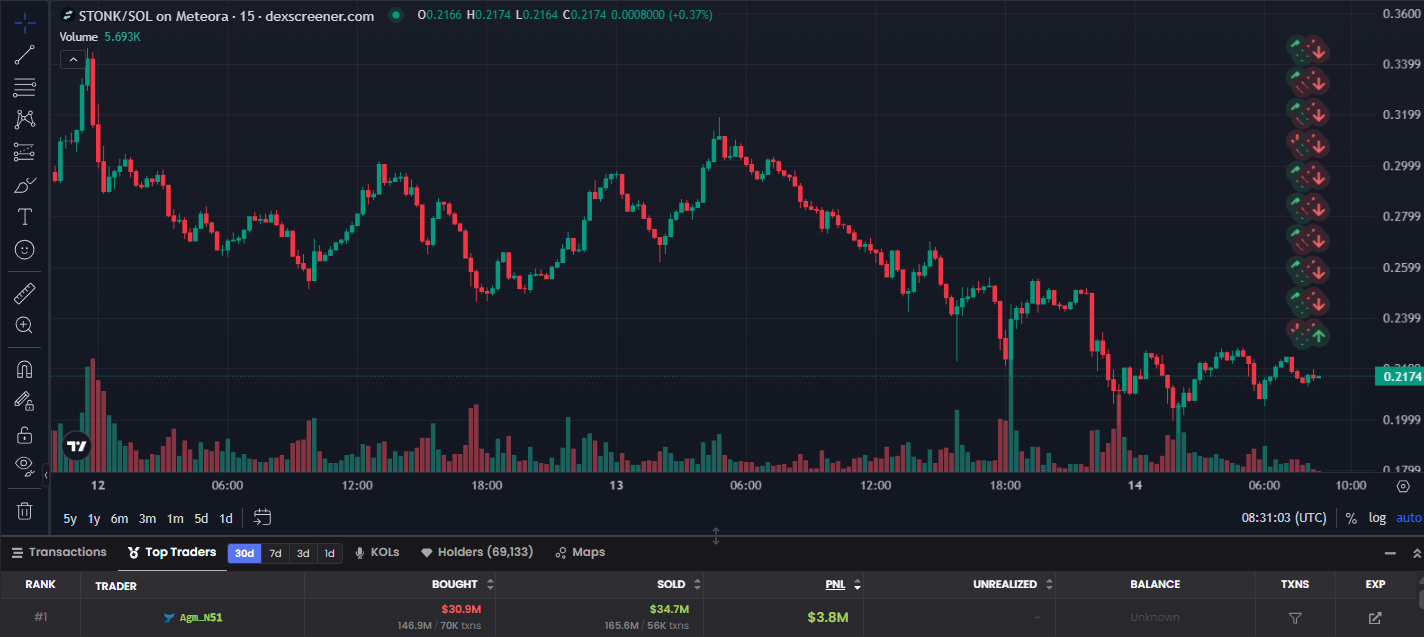
On Monday, $STONK shares plunged to $0.22, losing over 26% of their value during the Asian trading session. The asset bounced back from local lows of $0.20, but this raised questions about the sustainability of StonkFun's upward trend.
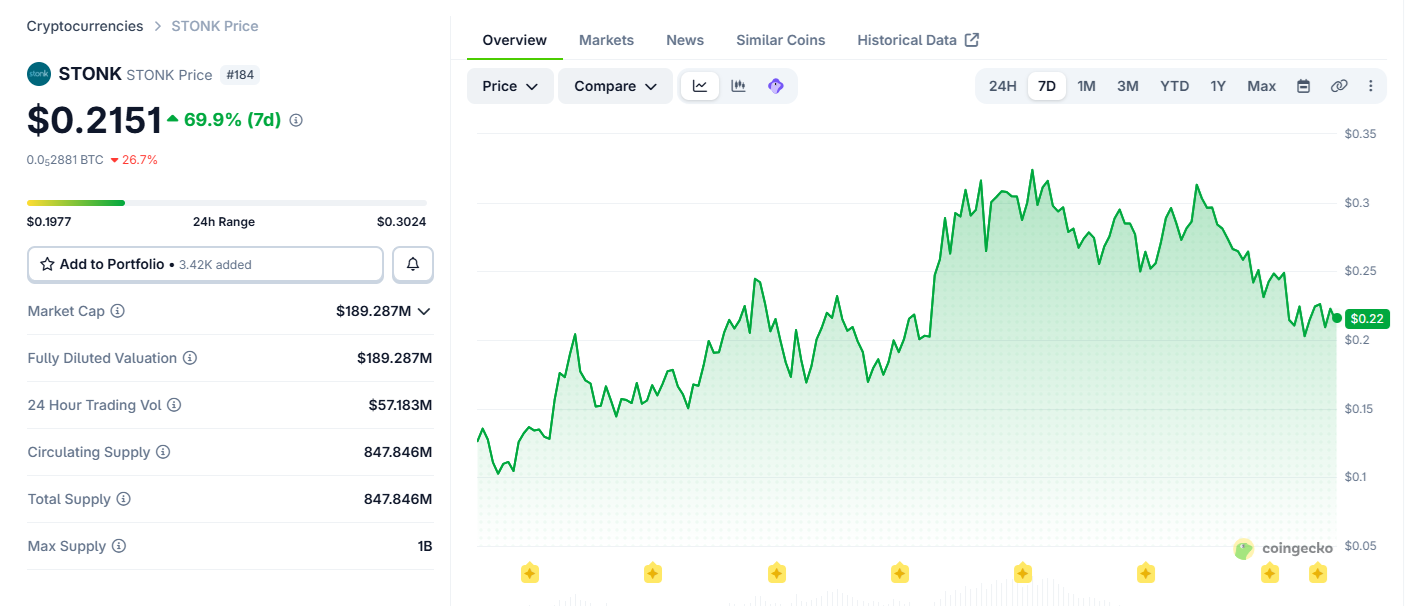
$STONK is also a revenue-sharing token, using StonkFun's fee collections for regular token burns. As of September 14, about 15% of the total token supply had been burned.
The value of $STONK also depends on the activity of the StonkFun platform and the availability of attractive "runners" among newly launched reflection tokens. Approximately 60% of StonkFun's revenue is used to purchase $STONK on the open market and burn tokens, while the rest remains with the platform.
As Cryptopolitan reported, the trend for reflection tokens expanded in September, primarily on Solana .
Why is $STONK Vulnerable?
Most of the trading volume for $STONK is concentrated on Meteora, accounting for over 41% of all volume. The largest liquidity pool has only $2.8 million in available liquidity, meaning $STONK is vulnerable to slippage.
$STONK is barely traded on perpetual futures markets and is a relatively new asset, so its price can be subject to high volatility.
While $STONK encourages trading to earn a share of platform revenue, early buyers and large players have also become a source of selling pressure. The leading $STONK trader secured a net profit of $3.8 million by selling tokens worth $30 million. The trader also repurchased $STONK near recent local lows.
Additional selling pressure came from influencers who secured profits of up to $78,000.
$STONK has a relatively small number of connected wallet clusters. Despite this, the token may face persistent pressure from early buyers and remain volatile as it is still in a price discovery phase.
StonkFun Tokens Remain High-Risk
The main appeal of StonkFun lies in the potential for short-term profits from trending tokens. Another importanttracis the incentive to hold and earn dividends, as well as owning reflected assets.
As of September 14, $ZCAT remains the most popular token on StonkFun, reflecting ZCash (ZEC). $ZCAT also outperformed the market due to mentions from influencer Ansem.
Other popular StonkFun tokens started to fall alongside $STONK, losing over 30% of their value in the past 24 hours.
With StonkFun assets, one must choose between the high promised passive income and potential losses of over 50% that can occur within hours.
Other sources of losses are accelerating "vampire attacks" and competing platforms. Part of the Solana crowd might also switch to Robinhood. PumpFun also attempted to integrate reflection tokens , siphoning some traffic from StonkFun.
Despite recent setbacks, StonkFun even surpassed Robinhood in weekly revenue, generating $7.39 million last week. The reflection token model has changed the meme-trading mechanics by introducing demand for token-linked rewards.
This model might stay with us for a long time, but the platform wars for reflection tokens are just beginning. Recently, BNB Chain added reflection tokens to its meme platform FourMeme, starting with stock-based tokens on the 4Stock platform.
As of September 2026, rewards for using Reflection tokens largely depend on the existing infrastructure on Solana . Most of the shares are owned by partners with XStocks, the leading tokenization platform on Solana.
end-content