Rapper Afroman: Doesn't Understand Bitcoin, but Becomes a New Crypto Freedom Fighter

Foresight NewsPubblicato 2026-06-09Pubblicato ultima volta 2026-06-09

Introduzione

Joseph "Afroman" Foreman, the rapper famed for "Because I Got High," has become an unlikely symbol for the crypto community's libertarian ideals. Following a 2022 police raid on his Ohio home, which yielded no charges, Foreman used the footage to create viral songs mocking the officers, leading to a lawsuit he ultimately won. His defense of free speech against government overreach resonated deeply with attendees at the Bitcoin 2024 conference in Las Vegas, where he performed. Despite admitting he knows little about cryptocurrency and owns none, event organizers saw his personal fight as embodying Bitcoin's core ethos of individual sovereignty and resistance to centralized control. Foreman, a self-described "icon of weed culture," has long performed for paying crowds but found a new political voice after his legal battle. His platform, which includes federal marijuana legalization and police accountability, aligns with the diverse, anti-establishment crowd at the Bitcoin conference, though he remains unaffiliated with any major party. The event featured an auction of his memorabilia, celebrating him as a modern "freedom fighter." In a final surprise, Foreman used his stage time to announce his candidacy for the 2028 U.S. presidential election, thrilling the remaining audience before launching into his signature hit.


Author: Jessica Klein, Wired

Translation: Saoirse, Foresight News


Joseph Edgar Foreman, better known by his stage name Afroman, is taking a long drag from a blunt. In a makeshift backstage lounge at The Venetian in Las Vegas, partitioned by curtains, the 51-year-old rapper is unhurried, even as thousands wait outside. The joint was rolled by his videographer, a woman in a tight evening minidress and clear sky-high heels. This grand venue is a world away from the dive bars he toured for over two decades.


Foreman is wearing his courtroom suit, an American flag-print outfit he now wears everywhere. In 2022, police, suspecting him of drug-related crimes and kidnapping, raided his Winchester, Ohio home. They found nothing incriminating except a jar of 'green herbal substance,' THC concentrate wax, paraphernalia, and over $5,000 in cash. After the raid, Foreman released songs mocking the officers involved, joking about receding hairlines and their wives, and humiliating them in various ways. Seven officers sued him for defamation and invasion of privacy, seeking $4 million. Foreman won the case, and clips from the trial went viral, earning him widespread public support.


After all, going viral is Foreman's specialty. He claims his 2000 college party anthem "Because I Got High" originally promoted free expression — a debatable point, but he is undeniably skilled at capturing attention. His calm demeanor during the trial and his emphasis on free speech drew millions to his music. Footage from his home security cameras, showing officers entering his house, was used in music videos, further boosting his popularity. The most viral, "Lemon Pound Cake," mocked an officer who seemed overly interested in a cake on the kitchen counter during the search. The video garnered nearly 10 million views on YouTube, and the so-called "Cake Cop" later reported receiving hundreds of lemon pound cakes as harassment.


The rapper's victory cast him as a "freedom fighter" in the public eye, which is why he traveled to Las Vegas to perform for a crowd of libertarian-leaning crypto enthusiasts. Craig Deutsch, the programming director for the Bitcoin conference, said Foreman's "fight for his right to create songs about police who illegally entered his home perfectly aligns with Bitcoin's core ethos." The annual Bitcoin conference attracts a diverse crowd: industry professionals, early Bitcoin adopters, and QAnon followers distrustful of government systems. It has also become a key campaign stop. Donald Trump delivered a keynote in 2024 during his presidential run; JD Vance spoke the following year. Now in its second year in Las Vegas, attendance is up despite Bitcoin's price being about $33,000 lower than last year.


Host Gregg Davis enters the smoky greenroom, finding Foreman surrounded by a small entourage: former pimp Bishop Don "Magic" Juan, an assistant in an emerald suit, men taking turns passing a blunt, and two young women in tight, shiny dresses.


"How should I introduce you?" Davis asks.


"Speak from the heart," Foreman replies. "Talk about the struggle, the hustle, the American Dream — if you remember that word — then just bring out Afroman."


The host jokingly thanks Foreman for "making the room smell so nice." Shortly after, his manager enters, politely informing him that hotel staff have smelled marijuana and are threatening to call the police.
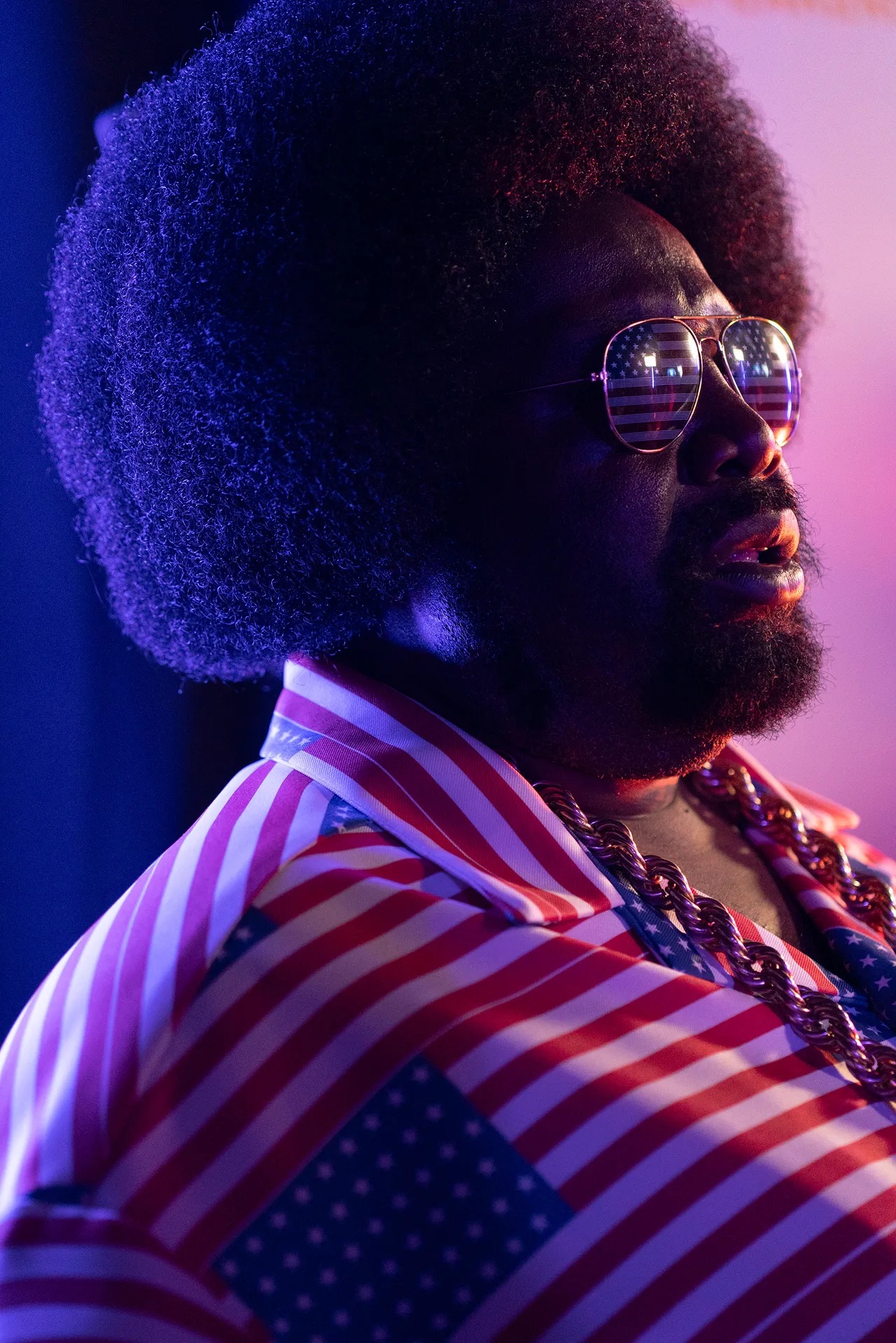

Joseph Edgar Foreman, widely known as rapper Afroman, rose to fame with "Because I Got High," a comedy song about the consequences of smoking marijuana. The song was nominated for a Grammy in 2002. Photo: Gabriella Angotti-Jones


"Okay, okay, I got it," Foreman says, turning to his crew. "They want us to put it out. Everybody, take a few last hits."


He has 20 minutes until he takes the Bitcoin conference's "Satoshi Main Stage," named after Bitcoin's pseudonymous creator. The rapper admits he knows nothing about cryptocurrency, doesn't own a single Bitcoin, and doesn't understand its logic. He pauses briefly, trying to think of something that will resonate with the crypto faithful, then lets it go. "I'm 51," he says. "I'll just wing it. It'll work out."


Foreman learned to sing in church and started writing raps at 12. His first song, he recalls, mocked a bully girl at his new school who had a mustache, with lyrics like, "Hairy Carrie ruins herself, so the hair on her lip gets no breeze." As an adult, back in Mississippi, he recorded "Because I Got High" shortly after quitting his job at a chicken processing plant, distributing 500 copies at a Mardi Gras party in New Orleans. Kids took it home and uploaded it to Napster; within days, Foreman says, it spread globally. In 2001, Universal Records flew to New York to sign him; the song earned a Grammy nomination the next year.


But Foreman's peak was fleeting. He never matched the success of his ode to marijuana-induced slacking. He parted ways with Universal and began self-releasing music online in 2004. For two decades, he's sustained a career performing his hit at college parties worldwide. He never intended to be an activist, but libertarian themes slowly seeped into his work. In an early interview with Time, he said, "I don't want to agitate anybody. I just thought, 'We're all potheads, let's just have some fun.'" In 2014, he partnered with the NORML legalization advocacy group for a positive spin on the song, highlighting medicinal benefits like glaucoma relief.


But these were often business opportunities, not deep convictions. Foreman tours relentlessly, taking gigs for the paycheck. He opened for Snoop Dogg on the 2018 Puff Puff Pass tour; he was paid $2,500 to perform three songs at a Pennsylvania frat party before police shut it down. He's had his own legal troubles: in 2015, he slapped a woman who rushed the stage, resulting in a $65,000 settlement and court-ordered anger management classes. After the Ohio raid but before his trial went viral, he even filed to run for U.S. President in 2024.


Earlier this year, millennials were surprised to see the party-rap icon from their youth re-emerge as a defender of the First Amendment. When a judge asked during the trial if the police entering his home gave him the right to mock them in song, Foreman responded, "They kicked my door down with guns, they searched my premises. Yes, I have freedom of speech. I could be in my backyard having fun, taking a bad situation and making it fun with my expression." He argued that since the officers chose to enter his home and appear on his security footage, using them in his video was fair game. The jury sided with him in just six hours. Foreman says he plans to write 50 to 100 songs about the officers who raided his home.


Overall, as he puts it, he's a "marijuana icon" first, with politics layered on top. This deeply appeals to the Bitcoin community. Rap is protest music, and Bitcoin is often called "the money of rebellion." Foreman fits into a lineage of conference speakers like former NSA whistleblower Edward Snowden and Silk Road founder Ross Ulbricht — the latter pardoned by Trump in 2025 after 11 years in prison for operating the dark web marketplace.


Conference organizer Deutsch says, "Whether Afroman is deep into crypto or not, in my mind, he is a Bitcoiner."


The morning before his performance, Foreman heads to Top Golf on the Las Vegas Strip. His companions include actor Christopher McDonald (who played Shooter McGavin in "Happy Gilmore"), a 19-year-old Amish boy on his Rumspringa (who had performed a cover of Weird Al Yankovic's "Amish Paradise" with Foreman the night before), two men from California, and Don Juan. It's all part of his paid appearance package for the Bitcoin conference. As a professional entertainer, he plays along: coaching the Amish boy on rapping, engaging with crypto fans, even as he's just beginning to grasp their zeal for digital currency.
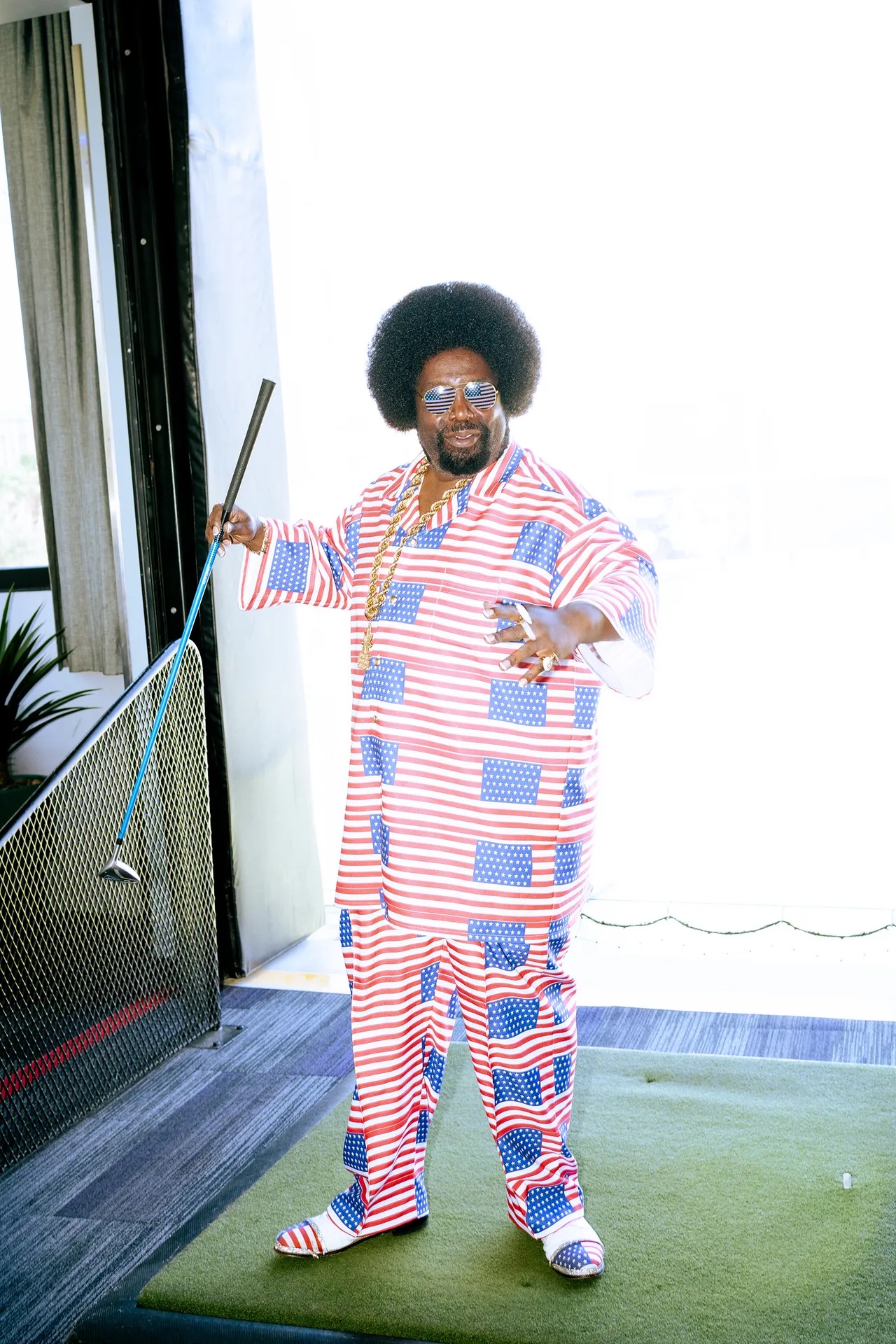

As part of his appearance at the Bitcoin conference, Foreman spent a morning at Top Golf on the Las Vegas Strip. Photo: Gabriella Angotti-Jones


Laken Schafer, 29, is Foreman's videographer. They met at a cannabis-themed wedding where she was filming and he was officiating. Foreman hired her because he "didn't want a sweaty male cameraman." Photo: Gabriella Angotti-Jones


Don Juan tends to Foreman throughout. They met through a mutual friend about 15 years ago and reconnect annually at the "Players' Ball," the pimp convention Don Juan started in 1974 for his birthday. He calls Foreman a "gentle giant," sitting beside him as his videographer tees off in heels. On the table is Don Juan's signature custom cup, featuring a diamond-encrusted silhouette of a woman.


Don Juan explains to Foreman, "Bitcoin keeps going up in value, and most regular people don't understand it." He once bought crypto but lost his private keys. He believes a figure like Afroman can introduce it to people outside the bubble.


Learning that one Bitcoin is worth about $77,000 and that someone once traded 10,000 Bitcoin for two pizzas in 2010 (worth about $41 at the time), Foreman remarks, "It's tough for the average person to get a whole Bitcoin."


He has a realization: "So it's like stocks? You buy it, hold it, and hope it goes up?"


The Bitcoin community, once a small group of cypherpunks wanting financial transactions free from government control, is now filled with political opportunists — many urging the U.S. government to hoard crypto to boost its price. In recent years, the conference has featured crypto-friendly Republican politicians, with MAGA merch everywhere, though political views aren't monolithic. This suits Afroman: he's not aligned with any party, focusing on issues that directly affect him. He supports jury trials in family court (he's divorced), federal marijuana legalization, civilian oversight boards for police (as a Black man, he feels this deeply); he's anti-war, against foreign aid, supports sex work legalization, and wants reparations for descendants of slaves.


Despite Trump's appearance at the conference, Foreman doesn't align with him. "The policy of qualified immunity for police is a deal-breaker for me," he says, also rejecting the glorification of Nazis and Confederate statues. "As a Black man, those are red lines."


Foreman has beliefs, but he advocates most fiercely when they intersect with his self-interest. During his 2024 presidential run, his two main platforms were: recreational marijuana legalization and mandatory body cameras for all police officers.
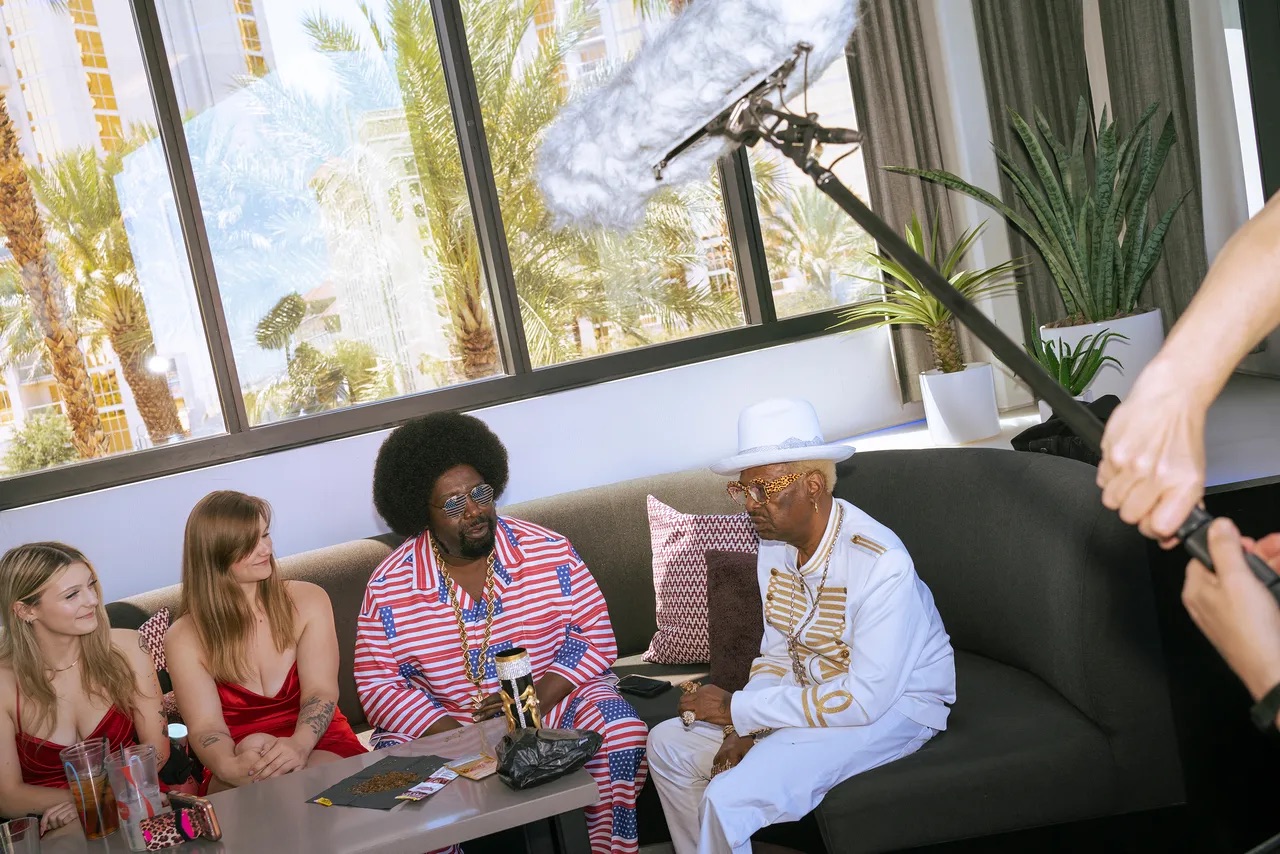

Afroman (from left) with his assistant Lilly Music, Laken Schafer, and Don Juan. Photo: Gabriella Angotti-Jones


Don Juan praises Foreman: "He's powerful now. People want something new. He's not just a rapper; he has a strong personality. Running Afroman for president isn't far-fetched."


Foreman declares, "I guarantee you, if I'm president, all these problems will be solved."


The three-day conference expo hall is filled with Bitcoin mining company booths. Suited professionals mingle with enthusiasts in sailor hats and Bitcoin logo face paint. In one corner, a mannequin sports Afroman's signature afro. A nearby glass case displays auction items: Afroman-signed rolling papers, a used ashtray, and commemorative bills with his portrait.


The items are listed by Scarce City, an auction house specializing in crypto memorabilia like old Bitcoin magazines and a harmonica set owned by crypto promoter and antivirus pioneer John McAfee. Last year, when Ross Ulbricht spoke, Scarce City auctioned three of his prison IDs and sneakers; one ID sold for 5.5 Bitcoin after bidding wars, worth about $371,000.


Scarce City's general manager, Sam Kimbrow, followed Foreman's trial and reached out in January to auction his items, hoping to help with legal fees, including the iconic American flag suit from court. The 40-year-old says assembling this collection fulfills "a millennial fantasy," hoping it shows a younger generation that artists can stand up for their rights.


"The core ethos of what we auction is freedom and personal sovereignty," she says. "Afroman is a living, modern-day freedom fighter."


After the auction, the flag suit sold for about $4,000 worth of Bitcoin, the ashtray for about $230 worth, but the signed rolling papers received no bids.


The auction didn't significantly benefit Foreman. He reveals he was paid a flat fee (undisclosed) to participate in Las Vegas events for three days. But he states his reason plainly: "They said one thing: 'Afroman, there's money involved!'"


On the conference's final day, an hour before his main stage performance, Foreman does an on-stage interview for elite attendees who bought the "Whale Pass" for $12,999 — an event closed to most media. The interviewer is Tracy Hoyos-Lopez, Kraken's head of strategic initiatives, known for influencing Trump's embrace of Bitcoin. All sixty seats fill quickly.


Asked about his mindset during the police raid, Foreman replies, "I'm used to police automatically thinking I'm a criminal. I'm patient. I wait for them to realize they're wrong."


"Through freedom of speech, we can call out corruption in the system," Foreman continues. "Once you see the problem, you can address it. Once it's addressed, you can fix it. I even hope this raid will make me enough money that I'll be glad the police came to my house."


According to Billboard, after winning the case, Foreman's music streams surged over 500%, helping cover the $20,000 in property damage from the raid.


The audience is fully on his side. Under a ceiling of colorful planet decorations, they sing along to "Because I Got High," even if they don't know all the words. They cheer when Foreman explains using footage of the actual officers who wronged him in his videos. Hoyos-Lopez concludes, "The greatest asset in America, in the Constitution, is freedom of speech. And Afroman, you have exercised that right to perfection."
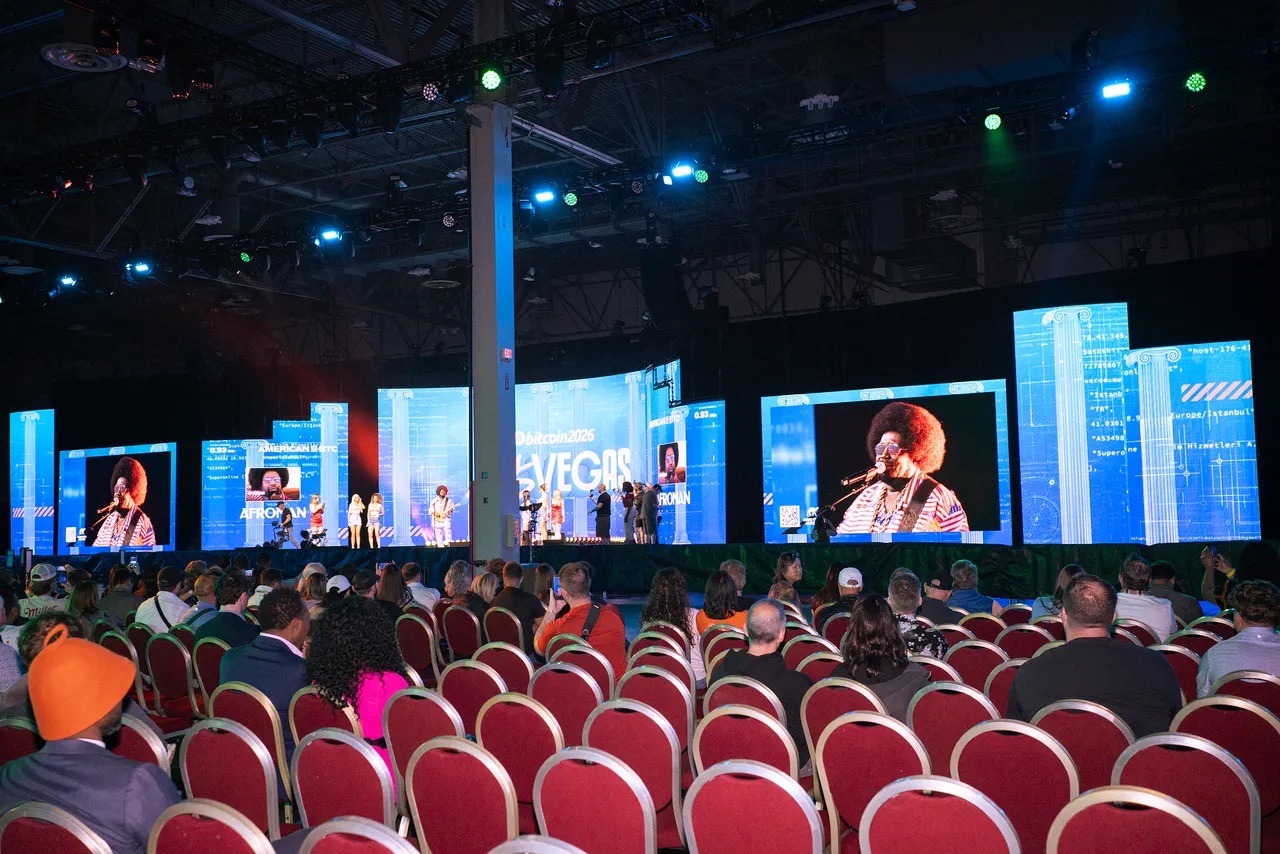

On the final night of the Bitcoin conference, Foreman took the Satoshi stage to perform his most famous song and make a special announcement. Photo: Gabriella Angotti-Jones


On the Bitcoin conference's closing night, Foreman takes the Satoshi stage, performs his hit, and makes a major announcement.


By the third day, the crowd has thinned, and The Venetian ballroom isn't packed. But the remaining audience nearly fills the 8,000 seats, there specifically for Afroman. As the only performer who's lived a protest story, the vibe isn't electric, but a middle-aged white woman in the front row gets up to dance.


Before starting, Foreman almost forgets his announcement. "Damn, I'm high," he says. "I almost forgot to tell y'all: I'm running for president in 2028."


The crowd erupts. Someone yells, "Afroman for president!"


Then, strumming a borrowed guitar shaped like the letter B, he launches into the song that made him famous.


Domande pertinenti

QWho is Afroman and what is he best known for in his music career?

AAfroman, whose real name is Joseph Edgar Foreman, is a rapper best known for his 2000 hit single 'Because I Got High,' a comedic song about the consequences of smoking marijuana, which earned him a Grammy nomination in 2002.

QWhat legal event in 2022 transformed Afroman into a symbol of free speech and a 'freedom fighter'?

AIn 2022, police raided Afroman's Ohio home on suspicion of drug-related and kidnapping offenses. He was not convicted. He later released songs and a music video using footage from the raid to mock the officers. When seven of them sued him for defamation and privacy invasion, he won the case, championing freedom of speech. The legal victory and his response made him a symbol of free speech.

QWhy was Afroman invited to perform at the Bitcoin conference despite not knowing about cryptocurrency?

ABitcoin conference organizers, like program director Craig Deutsch, believed Afroman's fight for his right to create songs about the police raid and his victory in court aligned perfectly with Bitcoin's core pursuit of individual liberty and resistance against the traditional system.

QWhat significant announcement did Afroman make during his performance at the Bitcoin conference's closing night?

ADuring his performance on the Nakamoto Stage, Afroman announced his candidacy for the 2028 U.S. Presidential election.

QAccording to the article, what were some of the items auctioned by Scarce City on Afroman's behalf, and what was the result?

AScarce City auctioned Afroman's personal items, including his signed rolling papers, a used ashtray, and his iconic American flag suit worn during his court appearances. The flag suit sold for the equivalent of about $4,000 in Bitcoin, the ashtray for about $230 in Bitcoin, but the signed rolling papers received no bids.

Letture associate

Vitalik's Vision for the Next Evolution of On-Chain Finance: How to Reconstruct DeFi with an 'Options Mindset'?

Vitalik Buterin recently proposed a conceptual shift for DeFi: replacing traditional Collateralized Debt Positions (CDPs) and forced liquidations with an options-based mechanism. This aims to address key vulnerabilities in current DeFi lending. The traditional CDP model, foundational to protocols like MakerDAO and Aave, allows users to borrow against collateral but relies on real-time oracles and triggers sudden, mandatory liquidations during price volatility. This can cause cascading sell-offs, oracle manipulation risks, and significant MEV extraction, exacerbating market stress. Vitalik's alternative envisions splitting an asset like 1 ETH into two complementary components: one offering stable/index-like exposure and the other absorbing the opposite risk/reward. Instead of a hard liquidation threshold, a user's exposure to the target asset would gradually and smoothly deviate (following a near-quadratic curve) as the collateral price moves. The system would primarily depend on "slow oracles" for periodic settlement rather than instant price feeds. Key potential benefits include: the elimination of abrupt, forced liquidations; drastically reduced reliance on vulnerable real-time oracles; and inherent resistance to certain MEV exploits centered on liquidation auctions. The article posits that for Ethereum DeFi to maintain its relevance amid competition from faster, cheaper chains, it must compete on sophisticated financial engineering and robustness—not just transaction speed or yields. The core value proposition should shift towards offering users clearer, more manageable risk structures, greater autonomy, and resilience in extreme scenarios, moving DeFi from high-risk experimentation towards becoming reliable financial infrastructure.

marsbit27 min fa

Vitalik's Vision for the Next Evolution of On-Chain Finance: How to Reconstruct DeFi with an 'Options Mindset'?

marsbit27 min fa

AI Agent Completely Transforms Web3 Gaming: From the Rugpull Bakery Bot Controversy to the New 2026 Agent Paradigm

This article explores how the AI Agent paradigm is fundamentally transforming Web3 gaming, moving from a disruptive force to a core, legitimized element. It begins with the controversy in the competitive baking game Rugpull Bakery, where automated scripts caused fairness issues. Instead of banning them, the developers integrated AI Agents into the official gameplay by providing technical documentation (skill.md, agent.json), marking a shift towards "Agentic Gaming." The piece outlines three primary implementation models for AI Agents in Web3 games by 2026: 1. **Autonomous Competitors & Economic Entities:** AI Agents act as independent players with unique strategies. Examples include TEN Protocol's poker agents, AI Arena's trainable NFT fighters, and Satoshi Strike Force's "Digital Athletes" trained on player data. The Somnia blockchain is highlighted as a dedicated "Agentic L1" infrastructure supporting this model at scale. 2. **Modular Infrastructure & Programmable Environments:** This model, exemplified by EVE Frontier, allows AI Agents to program game world logic itself. Using "Smart Assemblies" (e.g., Smart Turrets, Smart Gates), Agents can modify shared economic and physical rules on-chain, creating dynamic, player/AI-built worlds. The ERC-8183 standard further enables these automated entities to hire other AI services for complex tasks. 3. **Hybrid Companions & Dynamic Adaptation:** Here, AI serves as a collaborative partner. In Parallel Colony, highly autonomous AI Avatars work alongside human players who provide high-level guidance. Illuvium plans to use AI to make NPCs dynamic and responsive, creating personalized, emergent narratives for each player. The conclusion posits that Web3 gaming has reached a "post-human" inflection point. Blockchains' transparency and programmability, combined with new standards and infrastructure like Somnia, make integrating and governing AI Agents not just viable but essential. The future lies in a symbiotic digital order where players transition from manual laborers to commanders and partners of algorithmic intelligence.

marsbit1 h fa

AI Agent Completely Transforms Web3 Gaming: From the Rugpull Bakery Bot Controversy to the New 2026 Agent Paradigm

marsbit1 h fa

Trading

Spot
Futures

Articoli Popolari

Cosa è BITCOIN

Comprendere HarryPotterObamaSonic10Inu (ERC-20) e la sua posizione nel mondo delle criptovalute Negli ultimi anni, il mercato delle criptovalute ha assistito a un aumento della popolarità delle meme coin, catturando l'interesse non solo dei trader, ma anche di coloro che cercano coinvolgimento comunitario e valore di intrattenimento. Tra questi token unici c'è HarryPotterObamaSonic10Inu (ERC-20), un progetto intrigante che mescola riferimenti culturali nel tessuto delle criptovalute. Questo articolo esplora gli aspetti chiave di HarryPotterObamaSonic10Inu, analizzando i suoi meccanismi, l'etica guidata dalla comunità e il suo coinvolgimento con il panorama crittografico più ampio. Che cos'è HarryPotterObamaSonic10Inu (ERC-20)? Come suggerisce il suo nome, HarryPotterObamaSonic10Inu è una meme coin costruita sulla blockchain di Ethereum, classificata secondo lo standard ERC-20. A differenza delle criptovalute tradizionali che possono enfatizzare l'utilità pratica o il potenziale investimento, questo token prospera grazie al valore di intrattenimento e alla forza della sua comunità. Il progetto mira a creare un ambiente in cui gli utenti coinvolti possono riunirsi, condividere idee e partecipare ad attività ispirate a diversi fenomeni culturali. Una caratteristica notevole di HarryPotterObamaSonic10Inu è la zero tassa sulle transazioni. Questo elemento allettante tende a incoraggiare il trading e il coinvolgimento della comunità, privo di costi aggiuntivi che possono scoraggiare i trader di piccole dimensioni. L'offerta totale della moneta è fissata a un miliardo di token, un numero che segna la sua intenzione di mantenere una circolazione sostanziale all'interno della comunità. Creatore di HarryPotterObamaSonic10Inu (ERC-20) Le origini di HarryPotterObamaSonic10Inu sono avvolte in un certo mistero; i dettagli sul creatore rimangono sconosciuti. Lo sviluppo di questo token non presenta un team identificabile o un piano esplicito, cosa non rara nel settore delle meme coin. Invece, il progetto è emerso organicamente, con il suo progresso fortemente dipendente dall'entusiasmo e dalla partecipazione della sua comunità. Investitori di HarryPotterObamaSonic10Inu (ERC-20) Per quanto riguarda investimenti esterni e finanziamenti, HarryPotterObamaSonic10Inu rimane ambiguo. Il token non elenca alcuna fondazione di investimento conosciuta o un sostegno organizzativo significativo. Invece, la linfa vitale del progetto è la sua comunità di base, che informa la sua crescita e sostenibilità attraverso azioni collettive e coinvolgimento nello spazio crittografico. Come funziona HarryPotterObamaSonic10Inu (ERC-20)? In quanto meme coin, HarryPotterObamaSonic10Inu opera principalmente al di fuori delle strutture tradizionali che governano spesso il valore degli asset. Ci sono diversi aspetti distintivi che definiscono il funzionamento del progetto: Transazioni senza tasse: Senza costi fiscali sulle transazioni, gli utenti possono comprare e vendere liberamente il token senza preoccuparsi di costi nascosti. Coinvolgimento della comunità: Il progetto prospera sull'interazione della comunità, sfruttando le piattaforme social per creare entusiasmo e facilitare il coinvolgimento. Discussioni, condivisione di contenuti e coinvolgimento sono elementi cruciali che aiutano ad espandere la sua portata e a favorire la lealtà tra i sostenitori. Nessuna utilità pratica: Va notato che HarryPotterObamaSonic10Inu non offre un'utilità concreta all'interno dell'ecosistema finanziario. Piuttosto, è classificato come un token principalmente per attività di intrattenimento e comunitarie. Riferimento culturale: Il token incorpora astutamente elementi della cultura pop per attirare interesse, collegandosi a appassionati di meme e seguaci delle criptovalute. HarryPotterObamaSonic10Inu esemplifica come le meme coin operino in modo diverso rispetto ai progetti di criptovalute più tradizionali, entrando nel mercato come costrutti sociali innovativi piuttosto che come asset utilitari. Cronologia di HarryPotterObamaSonic10Inu (ERC-20) La storia di HarryPotterObamaSonic10Inu è segnata da diversi traguardi notevoli: Creazione: Il token è emerso da un meme virale, catturando l'immaginazione di molti appassionati di criptovalute. Le date di creazione specifiche non sono disponibili, sottolineando la sua crescita organica. Inserimento negli scambi: HarryPotterObamaSonic10Inu ha fatto il suo ingresso in vari scambi, consentendo un accesso e un trading più facili da parte della comunità. Iniziative di coinvolgimento della comunità: Attività in corso volte a migliorare l'interazione della comunità, comprese gare, campagne sui social media e generazione di contenuti da parte di fan e sostenitori. Piani di espansione futura: La tabella di marcia del progetto include il lancio di una collezione NFT, merchandising e un sito di eCommerce relativo ai suoi temi culturali, coinvolgendo ulteriormente la comunità e cercando di aggiungere più dimensioni al suo ecosistema. Punti chiave su HarryPotterObamaSonic10Inu (ERC-20) Natura guidata dalla comunità: Il progetto dà priorità al contributo collettivo e alla creatività, garantendo che il coinvolgimento degli utenti sia al centro del suo sviluppo. Classificazione come meme coin: Rappresenta l'epitome delle criptovalute basate sull'intrattenimento, distinguendosi dai veicoli d'investimento tradizionali. Nessuna affiliazione diretta con Bitcoin: Nonostante la somiglianza nel nome del ticker, HarryPotterObamaSonic10Inu è distintivo e non ha alcuna relazione con Bitcoin o altre criptovalute consolidate. Focus sulla collaborazione: HarryPotterObamaSonic10Inu è progettato per creare uno spazio per la collaborazione e la condivisione di storie tra i suoi detentori, fornendo un canale per la creatività e il legame comunitario. Prospettive future: L'ambizione di espandersi oltre il suo presupposto iniziale verso NFT e merchandising delinea un percorso per il progetto per potenzialmente entrare in strade più mainstream all'interno della cultura digitale. Poiché le meme coin continuano a catturare l'immaginazione della comunità crittografica, HarryPotterObamaSonic10Inu (ERC-20) si distingue per i suoi legami culturali e il suo approccio centrato sulla comunità. Anche se potrebbe non adattarsi al modello tipico di un token orientato all'utilità, la sua essenza risiede nella gioia e nella camaraderia coltivate tra i suoi sostenitori, evidenziando la natura in evoluzione delle criptovalute in un'epoca sempre più digitale. Con la continuazione dello sviluppo del progetto, sarà importante osservare come le dinamiche della comunità influenzano la sua traiettoria nel panorama in continuo cambiamento della tecnologia blockchain.

1.7k Totale visualizzazioniPubblicato il 2024.04.01Aggiornato il 2024.12.03

Cosa è BITCOIN

Come comprare BTC

Benvenuto in HTX.com! Abbiamo reso l'acquisto di Bitcoin (BTC) semplice e conveniente. Segui la nostra guida passo passo per intraprendere il tuo viaggio nel mondo delle criptovalute.Step 1: Crea il tuo Account HTXUsa la tua email o numero di telefono per registrarti il tuo account gratuito su HTX. Vivi un'esperienza facile e sblocca tutte le funzionalità,Crea il mio accountStep 2: Vai in Acquista crypto e seleziona il tuo metodo di pagamentoCarta di credito/debito: utilizza la tua Visa o Mastercard per acquistare immediatamente BitcoinBTC.Bilancio: Usa i fondi dal bilancio del tuo account HTX per fare trading senza problemi.Terze parti: abbiamo aggiunto metodi di pagamento molto utilizzati come Google Pay e Apple Pay per maggiore comodità.P2P: Fai trading direttamente con altri utenti HTX.Over-the-Counter (OTC): Offriamo servizi su misura e tassi di cambio competitivi per i trader.Step 3: Conserva Bitcoin (BTC)Dopo aver acquistato Bitcoin (BTC), conserva nel tuo account HTX. In alternativa, puoi inviare tramite trasferimento blockchain o scambiare per altre criptovalute.Step 4: Scambia Bitcoin (BTC)Scambia facilmente Bitcoin (BTC) nel mercato spot di HTX. Accedi al tuo account, seleziona la tua coppia di trading, esegui le tue operazioni e monitora in tempo reale. Offriamo un'esperienza user-friendly sia per chi ha appena iniziato che per i trader più esperti.

4.0k Totale visualizzazioniPubblicato il 2024.12.12Aggiornato il 2026.06.02

Come comprare BTC

Cosa è $BITCOIN

ORO DIGITALE ($BITCOIN): Un'Analisi Completa Introduzione all'ORO DIGITALE ($BITCOIN) L'ORO DIGITALE ($BITCOIN) è un progetto basato su blockchain che opera sulla rete Solana, con l'obiettivo di combinare le caratteristiche dei metalli preziosi tradizionali con l'innovazione delle tecnologie decentralizzate. Sebbene condivida un nome con Bitcoin, spesso definito “oro digitale” a causa della sua percezione come riserva di valore, l'ORO DIGITALE è un token separato progettato per creare un ecosistema unico all'interno del panorama Web3. Il suo obiettivo è posizionarsi come un asset digitale alternativo valido, anche se i dettagli riguardanti le sue applicazioni e funzionalità sono ancora in fase di sviluppo. Cos'è l'ORO DIGITALE ($BITCOIN)? L'ORO DIGITALE ($BITCOIN) è un token di criptovaluta esplicitamente progettato per l'uso sulla blockchain di Solana. A differenza di Bitcoin, che fornisce un ruolo di stoccaggio di valore ampiamente riconosciuto, questo token sembra concentrarsi su applicazioni e caratteristiche più ampie. Aspetti notevoli includono: Infrastruttura Blockchain: Il token è costruito sulla blockchain di Solana, nota per la sua capacità di gestire transazioni ad alta velocità e a basso costo. Dinamiche di Offerta: L'ORO DIGITALE ha un'offerta massima fissata a 100 quadrilioni di token (100P $BITCOIN), sebbene i dettagli riguardanti la sua offerta circolante siano attualmente non divulgati. Utilità: Sebbene le funzionalità precise non siano esplicitamente delineate, ci sono indicazioni che il token potrebbe essere utilizzato per varie applicazioni, potenzialmente coinvolgendo applicazioni decentralizzate (dApp) o strategie di tokenizzazione degli asset. Chi è il Creatore dell'ORO DIGITALE ($BITCOIN)? Attualmente, l'identità dei creatori e del team di sviluppo dietro l'ORO DIGITALE ($BITCOIN) rimane sconosciuta. Questa situazione è tipica tra molti progetti innovativi nel settore blockchain, in particolare quelli allineati con la finanza decentralizzata e i fenomeni delle meme coin. Sebbene tale anonimato possa favorire una cultura guidata dalla comunità, intensifica le preoccupazioni riguardo alla governance e alla responsabilità. Chi sono gli Investitori dell'ORO DIGITALE ($BITCOIN)? Le informazioni disponibili indicano che l'ORO DIGITALE ($BITCOIN) non ha alcun sostenitore istituzionale noto o investimenti di venture capital prominenti. Il progetto sembra operare su un modello peer-to-peer incentrato sul supporto e sull'adozione della comunità piuttosto che su percorsi di finanziamento tradizionali. La sua attività e liquidità si trovano principalmente su exchange decentralizzati (DEX), come PumpSwap, piuttosto che su piattaforme di trading centralizzate consolidate, evidenziando ulteriormente il suo approccio di base. Come Funziona l'ORO DIGITALE ($BITCOIN) Le meccaniche operative dell'ORO DIGITALE ($BITCOIN) possono essere elaborate in base al suo design blockchain e alle caratteristiche della rete: Meccanismo di Consenso: Sfruttando il proof-of-history (PoH) unico di Solana combinato con un modello di proof-of-stake (PoS), il progetto garantisce una validazione efficiente delle transazioni contribuendo all'alta performance della rete. Tokenomics: Sebbene meccanismi deflazionistici specifici non siano stati dettagliati ampiamente, l'ampia offerta massima di token implica che potrebbe soddisfare microtransazioni o casi d'uso di nicchia che devono ancora essere definiti. Interoperabilità: Esiste il potenziale per l'integrazione con l'ecosistema più ampio di Solana, inclusi vari piattaforme di finanza decentralizzata (DeFi). Tuttavia, i dettagli riguardanti integrazioni specifiche rimangono non specificati. Cronologia degli Eventi Chiave Ecco una cronologia che evidenzia traguardi significativi riguardanti l'ORO DIGITALE ($BITCOIN): 2023: Il dispiegamento iniziale del token avviene sulla blockchain di Solana, contrassegnato dal suo indirizzo di contratto. 2024: L'ORO DIGITALE guadagna visibilità poiché diventa disponibile per il trading su exchange decentralizzati come PumpSwap, consentendo agli utenti di scambiarlo contro SOL. 2025: Il progetto assiste a un'attività di trading sporadica e a un potenziale interesse per impegni guidati dalla comunità, sebbene non siano state documentate partnership significative o avanzamenti tecnici fino ad ora. Analisi Critica Punti di Forza Scalabilità: L'infrastruttura sottostante di Solana supporta alti volumi di transazioni, il che potrebbe migliorare l'utilità di $BITCOIN in vari scenari di transazione. Accessibilità: Il potenziale basso prezzo di trading per token potrebbe attrarre investitori al dettaglio, facilitando una partecipazione più ampia grazie a opportunità di proprietà frazionata. Rischi Mancanza di Trasparenza: L'assenza di sostenitori, sviluppatori o di un processo di audit pubblicamente noti potrebbe generare scetticismo riguardo alla sostenibilità e all'affidabilità del progetto. Volatilità del Mercato: L'attività di trading è fortemente dipendente dal comportamento speculativo, il che può comportare una significativa volatilità dei prezzi e incertezze per gli investitori. Conclusione L'ORO DIGITALE ($BITCOIN) emerge come un progetto intrigante ma ambiguo all'interno dell'evolvente ecosistema di Solana. Sebbene tenti di sfruttare la narrativa dell'“oro digitale”, la sua partenza dal ruolo consolidato di Bitcoin come riserva di valore sottolinea la necessità di una chiara differenziazione della sua utilità e struttura di governance. L'accettazione e l'adozione future dipenderanno probabilmente dall'affrontare l'attuale opacità e dalla definizione più esplicita delle sue strategie operative ed economiche. Nota: Questo rapporto comprende informazioni sintetizzate disponibili a ottobre 2023, e potrebbero essersi verificati sviluppi oltre il periodo di ricerca.

99 Totale visualizzazioniPubblicato il 2025.05.13Aggiornato il 2025.05.13

Cosa è $BITCOIN

Discussioni

Benvenuto nella Community HTX. Qui puoi rimanere informato sugli ultimi sviluppi della piattaforma e accedere ad approfondimenti esperti sul mercato. Le opinioni degli utenti sul prezzo di BTC BTC sono presentate come di seguito.

活动图片