The Federal Reserve, now chaired by Trump appointee Warsh, will hold its first policy meeting under his leadership on September 15-16. Market consensus is nearly unanimous: a 25 basis point hike, pushing the federal funds rate into the 3.75% to 4.00% range.
Warsh, who took the oath of office in May, has long been known as a hawk. At the Jackson Hole symposium in August, he placed the blame for persistently high inflation back on the Fed itself, emphasizing that he would not let up until there was clear and sufficient evidence of inflation trending down.
This stance directly clashes with the public position of his nominator. Trump has repeatedly stated that the US should enjoy the world's lowest interest rates, and that the Fed should serve economic growth, not just focus on inflation. White House economic advisor Hassett relayed that the President is "not happy, but respects the Fed's independence" regarding the rate hikes.
The market's tool for quantifying this conflict is the CME FedWatch Tool. Traders use real money to bet on whether the next meeting will result in a hike, cut, or hold, with the probabilities calculated in real-time, like a poll voted with cash. That figure currently stands at about 87%.
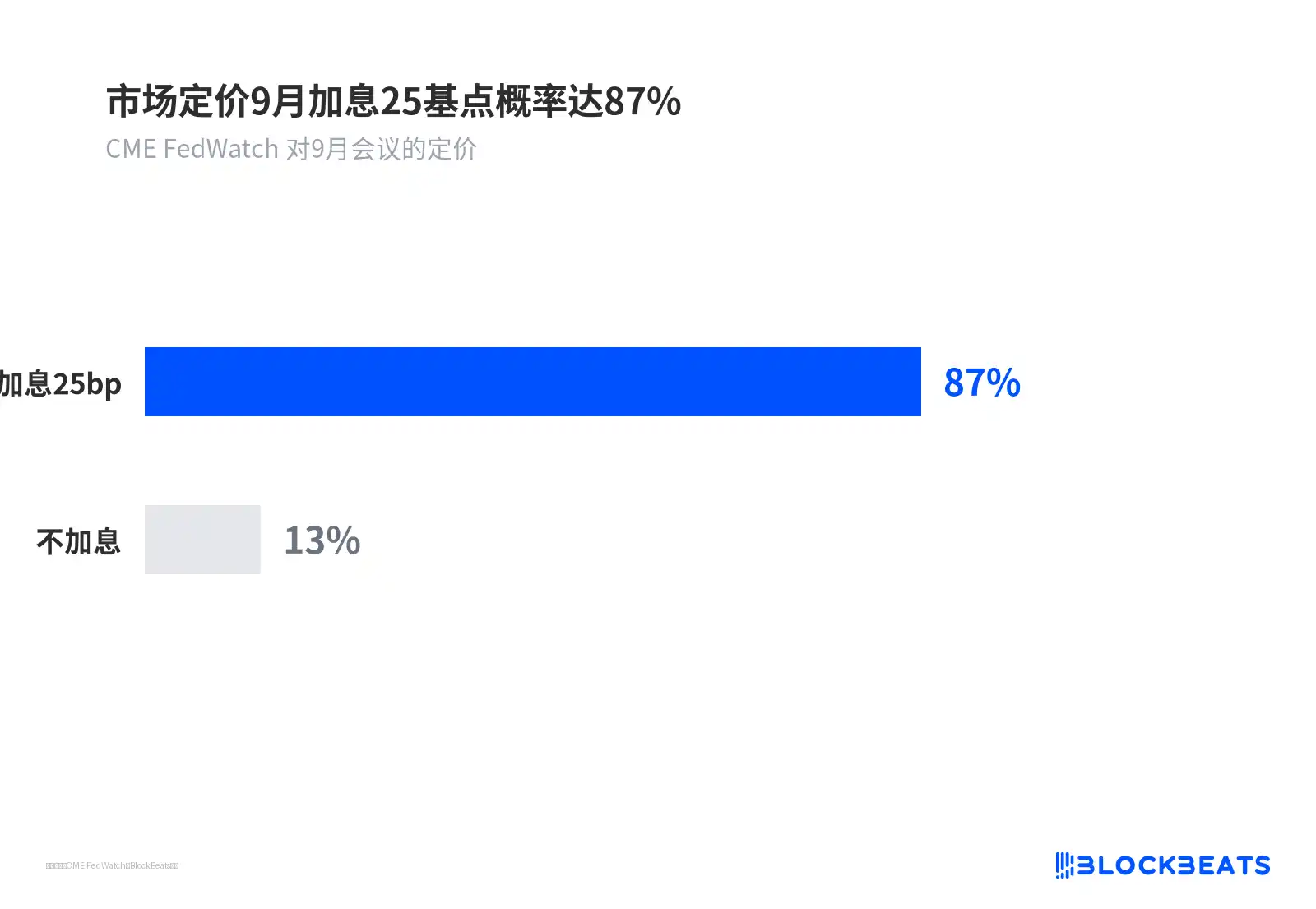
Market Pricing Shows 87% Probability of a 25 bp Hike in September
Inflation and Oil Prices Push Hike Probability to Nearly 90%
Inflation has remained above the 2% target for roughly 65 months. This round of rate hike expectations isn't a result of White House pressure; inflation data and oil prices pushed the market there first.
The August core CPI (the inflation reading excluding the two most volatile items, food and energy) rose 0.3% month-over-month, higher than expected. The energy component surged 16.3% year-over-year. Escalating Middle East conflicts and disruptions to shipping lanes in the Strait of Hormuz have pushed Brent crude near $107, with the increase feeding directly into overall prices. The strength in the core reading also suggests pressures are spreading from gas stations to a broader range of goods and services.
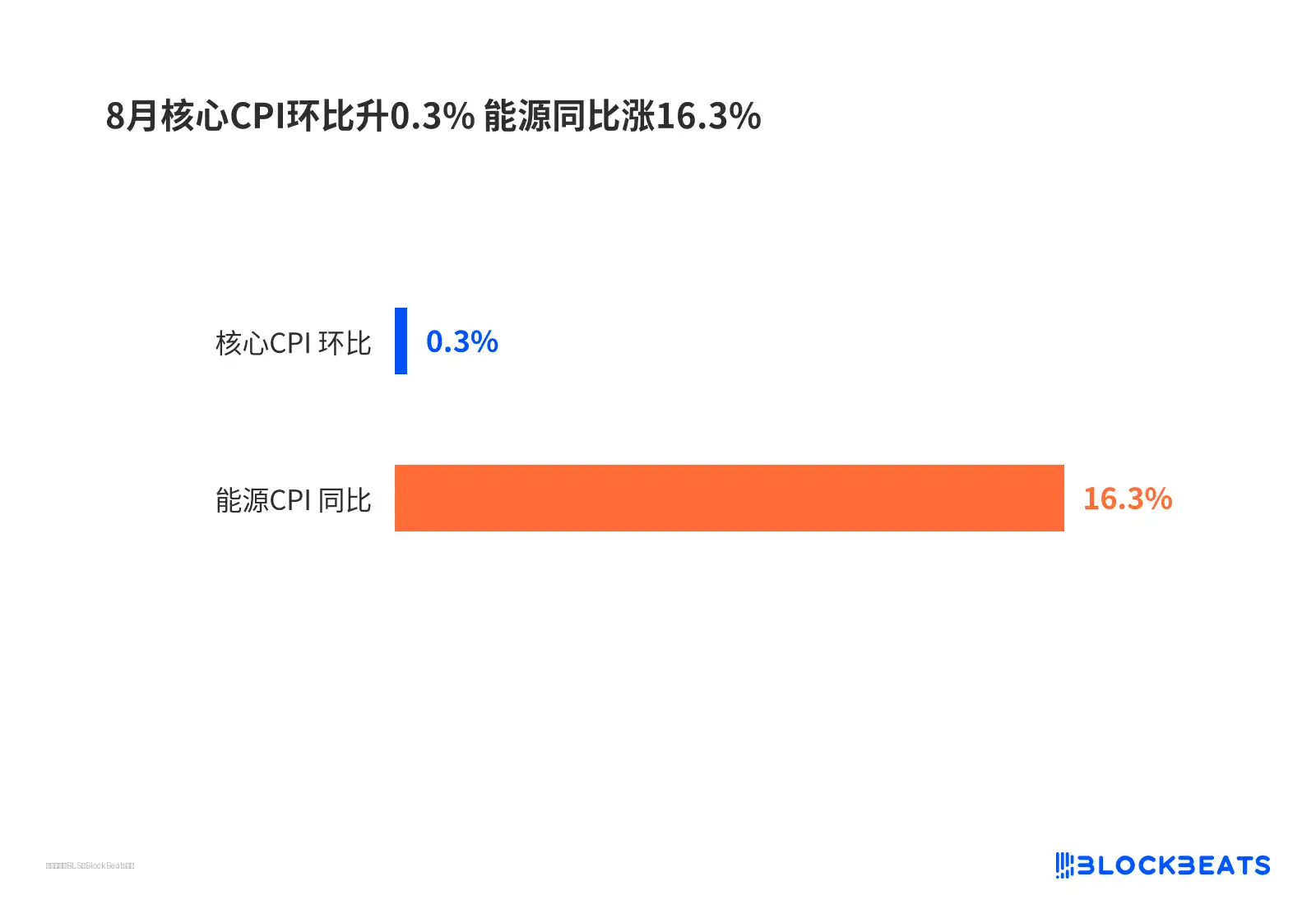
August Core CPI Rose 0.3% MoM; Energy Up 16.3% YoY
The bond market reacted first. The yield on the 10-year Treasury note broke above 5%, and futures market pricing for a September hike jumped from around 70% before the CPI release to near 87%.
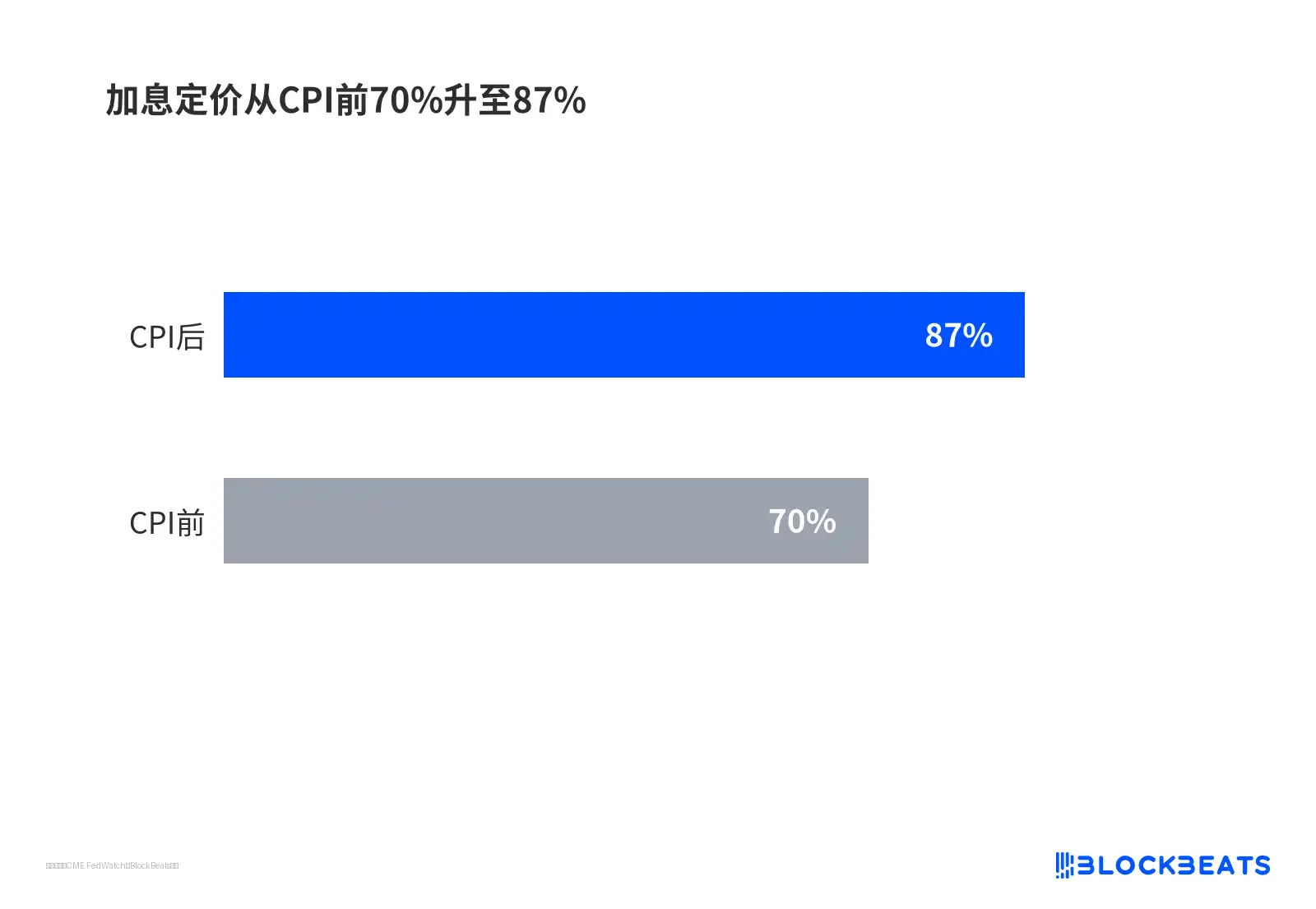
Hike Pricing Rose from 70% Pre-CPI to 87%
In a Reuters survey of 101 economists, 86 forecast a 25 basis point hike this time, with some respondents expecting at least one more hike before the first quarter of next year. Following the data, Goldman Sachs and JPMorgan also switched their forecasts from holding steady to hiking. This simultaneous pivot by the market, investment banks, and surveys has been uncommon over the past two years.
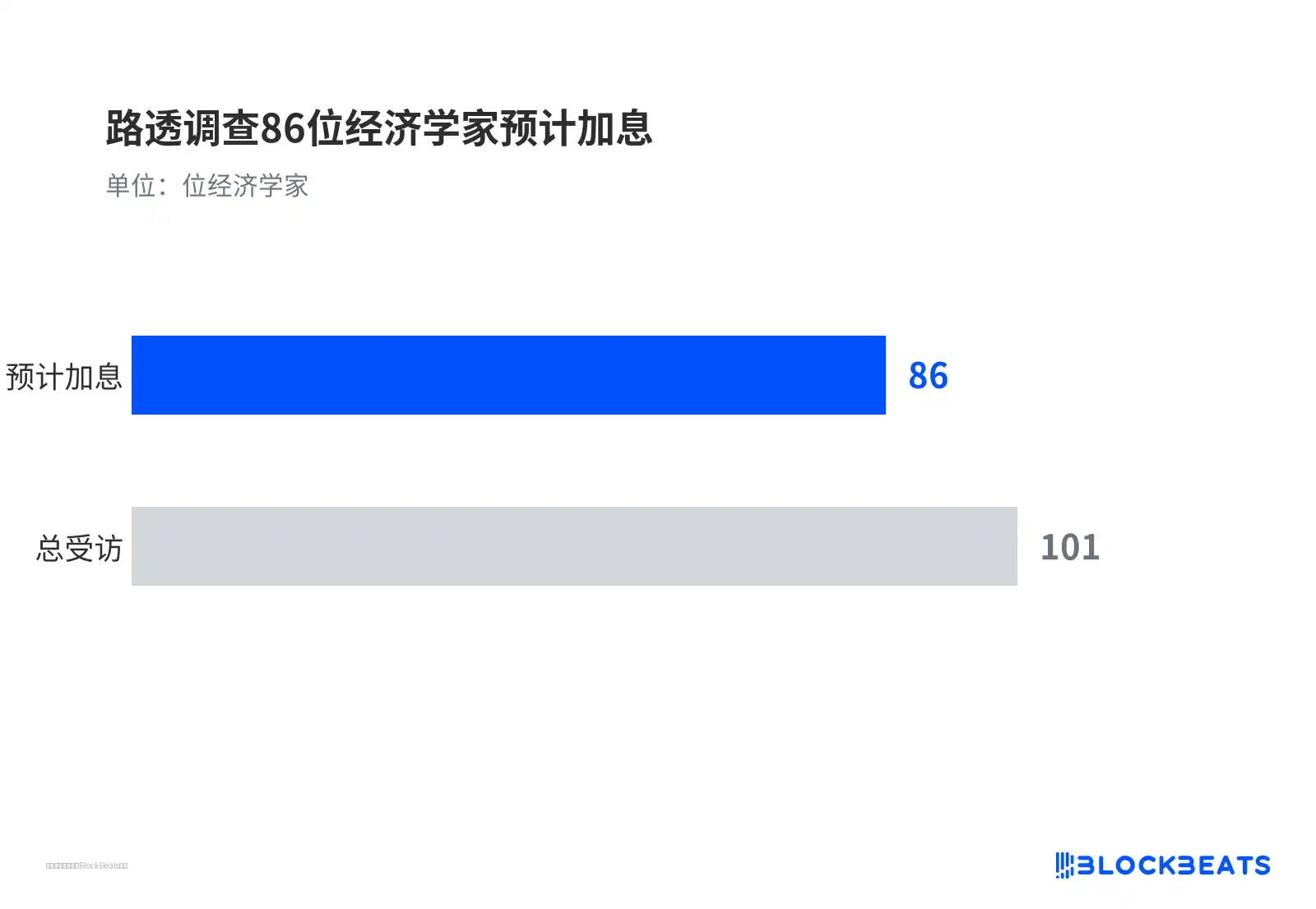
Reuters Survey: 86 Economists Forecast a Hike
Hawkish Record Collides with White House's 'Lowest Rates'
The focus of this meeting isn't just on whether to hike rates, but also on how Warsh answers a sharper question: will his rate decisions follow the data, or the White House.
Warsh served as a Fed Governor from 2006 to 2011. He was nominated by Trump in January 2026 and confirmed by the Senate in May by a vote of 54 to 45. Trump's instruction at his swearing-in was to "do your own thing"; now the market is testing the substance of that statement.
The mechanism of conflict lies here. Trump needs low rates to support growth and the midterm elections. Warsh needs evidence of declining inflation to fulfill his promise of taking responsibility for high inflation. If he follows the 87% market pricing and hikes in his first meeting, he would be demonstrating with action that his nomination came with no policy strings attached. If he holds steady, the market would immediately question the credibility of his hawkish rhetoric.
The Fed's rate decisions are legally free from direct presidential command; what a president can do is limited to public remarks and personnel nominations. Some Democratic senators previously questioned whether Warsh might become a White House puppet, a label that adds an extra layer of credibility significance to his first-meeting stance.
After the Hike, the Most Expensively Valued Assets Face Pressure First
A rate hike landing doesn't mean risk assets will immediately fall, but the rise in the discount rate will first compress valuations of the most expensive assets.
For the crypto market, higher real rates squeeze both liquidity and risk appetite simultaneously. Bitcoin and Ethereum's sensitivity to rate expectations has been particularly pronounced in this cycle.
The situation for US stocks is more complex. Strategists at Goldman Sachs, Morgan Stanley, and others believe corporate earnings can still support the indices, but yields standing above 5% themselves constitute valuation pressure, leading to divergence among institutions weighing resilient profits against overly high rates. These remain hypotheses, not established facts.
Dot Plot and White House Tone Will Determine Terminal Rate Pricing
The first verifiable reading after the meeting is the dot plot, the anonymous projections of each committee member for the future path of rates. If it hints at more hikes in 2027, market pricing for the terminal rate will be revised upward again. If it points to just this one hike, it signals the committee remains in wait-and-see mode. Pre-meeting discussions about the depth of internal divisions remain speculative for now.
The White House's tone is another variable. If the "not happy but respects independence" line continues, it indicates pressure remains at the level of public rhetoric, which the market can treat as noise.
The immediate feedback in asset prices will determine whether the 87% probability has been fully digested. If Bitcoin and the S&P 500 show limited declines after a hike lands, it suggests expectations were already priced in. If they show sharp volatility, it conversely indicates some positioning adjustments haven't been completed, leaving room for pricing to swing back.