KB Bank to launch South Korea’s first crypto investment fund

CointelegraphPubblicato 2022-02-21Pubblicato ultima volta 2022-02-21

Introduzione

The investment fund will be the first offered by a bank in the country and is expected to include a type of crypto index and ETFs.

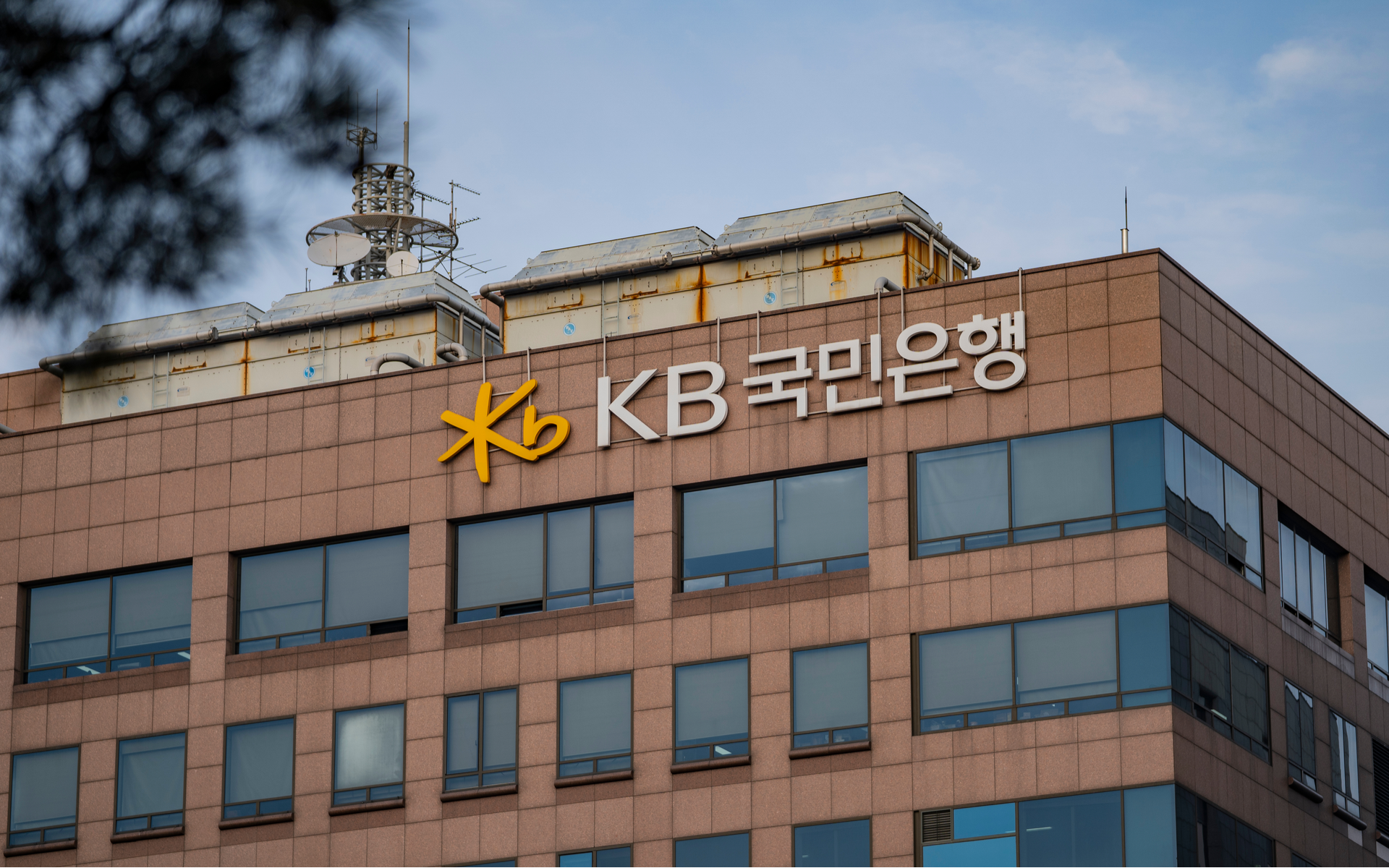
Kookmin Bank is preparing to become the first bank in South Korea to offer crypto investment products to retail investors.

KB announced on Feb. 21 that it had formed a Digital Asset Management Preparatory Committee to determine product and strategy capabilities regarding digital assets and artificial intelligence investment funds. The bank expects to launch crypto exchange-traded funds (ETFs) and futures products. The committee will also assess risk and compliance issues for the investment funds.

The plans were confirmed by KB’s Head of Index Quant Management Honggun Kim in the official release from the bank. He said, “We will launch a virtual asset-themed equity fund, etc. We plan to publish periodicals as well.”

KB Financial Group, the country’s largest by net profit, had about $520 billion in total assets as of September 2021 according to the research platform MacroTrends.

The current plans are to launch a crypto investment index fund and a fund that utilizes an Outsourced Chief Investment Officer (OCIO), also referred to as outsourced investment management, in order to provide guarantees on principal investments. The OCIO fund may also be used in retirement pensions.

Such OCIO that may be considered includes Grayscale and Fidelity Asset Management, each of which offers crypto investment funds. Fidelity Canada launched a spot Bitcoin ETF last December though such a product has yet to be approved in the U.S.

In launching a new investment fund for its customers, KB is responding to a market that has become increasingly receptive to crypto and nonfungible token (NFT) investments. Close competitor, Shinhan Bank, has dedicated an entire section of its mobile banking app to help customers manage their NFT collections on Klaytn, the country’s leading blockchain.

KB is now following Singaporean megabank DBS by announcing new retail crypto investment products. DBS Bank CEO Piyush Gupta stated on Feb. 14 that the bank would work to scale its crypto operations in 2022.


Letture associate

SociFi Dream Shattered? Farcaster Pivots to Bet on Wallet Track

Farcaster, a decentralized social network protocol, has announced a major strategic shift after 4.5 years, abandoning its "social-first" approach to adopt a "wallet-first" growth model. Co-founder Dan Romero acknowledged that despite initial success—such as a surge to 100,000 daily active users (DAU) in early 2024 driven by features like Frames and the DEGEN airdrop—user engagement and revenue sharply declined later that year. By October 2025, monthly revenue had dropped 99% from its peak. The platform will now prioritize building a high-quality wallet within its official app, Warpcast, focusing on the intersection of wallets and social interaction. The new user journey emphasizes wallet funding and utility as key activation points. Farcaster is also enhancing its financial infrastructure through the acquisition of token launch platform Clanker and offering incentives like a 10% reward on USDC deposits. Frames, interactive mini-apps within the social feed, enable "content as transaction" capabilities, allowing users to mint, trade, and pay directly in their feeds. Despite raising $150 million in a 2024 Series A round at a $1 billion valuation, the move has drawn criticism. Some argue it signals the end of the SocialFi dream and a return to a transaction-focused model reminiscent of the 2017 ICO era. Others note challenges in a competitive wallet market and potential feature bloat. Farcaster remains an open protocol, and users can choose alternative clients, but the shift underscores a broader industry reality: pure Web3 social networks may struggle without integrating high-value financial tools to drive user engagement and retention.

marsbit5 min fa

SociFi Dream Shattered? Farcaster Pivots to Bet on Wallet Track

marsbit5 min fa

12.9 Today's Market: Why the Drop? BTC\SOL\ETH\BNB\RDNT\STABLE\TRUMP\Horse to Success\bibi Trading Advice

The cryptocurrency market experienced significant volatility, with $212 million in liquidations over 24 hours, including a single $2.14 million Bitcoin liquidation on Hyperliquid. Market sentiment remains nervous, with high turnover reflecting short-term bearishness, though long-term holders remain steady. The Federal Reserve's upcoming meeting is a key focus, as interest rate decisions may influence market direction. Bitcoin’s support is near $88,100, with a potential dip to $85,200–85,900 offering a buying opportunity. Resistance is at $93,400. SOL may see support at $125.8 and $124, with potential accumulation near $120. ETH has supports at $2,955, $2,865, and $2,805, with resistance at $3,282. BNB’s key level is $898; holding above may lead to a bounce toward $939. Meme coins are highly risky, with many projects on BSC and SOL facing extreme volatility and potential scams. High-cap tokens like BIBI are relatively safer. Patience and strict stop-losses are advised. Specific tokens: - 马到成功 (Horse to Success): Accumulating near $2M market cap with strong community support. - ZEC: Showing strength, possibly entering a major upward trend if it holds key levels. - RDNT: Avoid chasing pumps—likely a temporary bounce. - TRUMP: Unlikely to rally this cycle due to locked supply; may perform in the next bull market if Trump remains politically relevant. - STABLE: Bearish due to high fully diluted valuation and lack of catalysts; consider shorting. Overall, December is to accumulate during consolidation while preserving capital for larger opportunities in Q1 2026.

金色财经14 min fa

12.9 Today's Market: Why the Drop? BTC\SOL\ETH\BNB\RDNT\STABLE\TRUMP\Horse to Success\bibi Trading Advice

金色财经14 min fa

Financial On-Chain Transformation: A Blueprint for the Overhaul of the U.S. Capital Market

The article "Financial On-Chaining: A Blueprint for the Transformation of U.S. Capital Markets" explores the potential systemic overhaul if the U.S. financial system migrates to blockchain technology, as suggested by SEC Chair Paul Atkins. It outlines seven key structural shifts: 1. Market Dynamics: Transition to T+0 settlement, enabling 24/7 trading and real-time regulatory oversight by the SEC, increasing capital velocity but eliminating traditional market buffers. 2. Banking Sector: Banks would operate with near-transparent balance sheets, reducing risks like asset-liability mismatches but potentially accelerating bank runs. Programmable collateral could unlock new financing efficiency. 3. Real Economy: Democratization of assets through fractional ownership and "micro-IPOs" for SMEs, injecting liquidity premium into U.S. assets. 4. Geopolitics: Digital reinforcement of dollar dominance via tokenized Treasuries and money market funds, attracting global capital through efficiency and transparency. 5. Risk Evolution: Systemic risks would shift from human-driven panics to technical failures (e.g., smart contract bugs, oracle manipulation), making crises faster and more technical. 6. Winners and Losers: Infrastructure builders, new asset managers, and hybrid talent would thrive; traditional intermediaries and opaque industries would decline. 7. Realistic Timeline: Full adoption in two years is unlikely due to technical, legal, and political hurdles, but gradual implementation (e.g., in Treasuries, repos) is inevitable as efficiency drives change.

比推27 min fa

Financial On-Chain Transformation: A Blueprint for the Overhaul of the U.S. Capital Market

比推27 min fa

Trading

Spot
Futures
活动图片