A pair of twins from Jiujiang, Jiangxi, have IPOed again today.
27 years ago, 23-year-old Cai Huabo brought his sister Cai Lijiang to Shenzhen's Huaqiangbei, starting a memory storage business from a small counter of just a few square meters.
Today, the company they founded, Longsys, landed on the main board of the Hong Kong Stock Exchange, completing its 'A+H' layout. The opening price was HK$236 per share, with a total market capitalization of approximately HK$107.5 billion. Currently, Longsys's A-share market cap is about 154 billion yuan.
From a counter in Huaqiangbei to becoming the world's second-largest independent semiconductor memory manufacturer, and now to the Hong Kong Stock Exchange, Cai Huabo and Cai Lijiang have walked a 27-year journey. This listing also happens to coincide with a supercycle in the storage industry.
In the first half of 2026, Longsys's operating revenue reached 24.088 billion yuan, a year-on-year increase of 136.26%; net profit attributable to shareholders reached 10.577 billion yuan, a year-on-year increase of 71528.66% (approximately 715 times).
The explosive performance has also rapidly increased the wealth of this pair of twins from Jiangxi. In July this year, Longsys's A-share price hit a historical high of 749.88 yuan per share intraday, with the total market cap once exceeding 322.45 billion yuan. Based on their combined approximately 42% shareholding, their corresponding shareholding value was about 135.4 billion yuan.
The IPO offering price for Longsys's H-share listing is HK$236, with a global offering of 26.0778 million shares, raising approximately HK$6.136 billion. Cornerstone investors include Transsion, Lenovo, Lens Technology, the TCL Group, Ingenic, CITIC Asset Management (Hong Kong), etc., collectively subscribing for US$151 million (approximately HK$1.185 billion).
27 Years, From Huaqiangbei to the Hong Kong Stock Exchange
The final offer price for Longsys's H shares is HK$236 per share, equivalent to about 202 yuan based on the September 7 exchange rate, representing a discount of approximately 44% compared to the A-share closing price of 358.22 yuan.
Just a month ago, Longsys completed a private placement in the A-share market, raising approximately 3.7 billion yuan with an issue price of 560 yuan per share, issuing 6.6071 million shares to 21 investors. Currently, the A-share price has fallen compared to the private placement price.
The high-price A-share private placement, contrasted with the significantly discounted H-share offering, has also been a focal point of market skepticism.
However, for Longsys, the significance of this H-share financing goes beyond just supplementing funds. According to the disclosed use of proceeds, the funds will mainly be used for R&D, strategic investments and acquisitions, and supplementing working capital. More importantly, the company hopes to use this opportunity to continue extending upstream in the storage industry chain, enhancing capabilities in chip design, product development, and supply chain integration.
In other words, Longsys hopes to transform the profits brought by this storage cycle into chips for the next round of technology and product competition. As for what this company does and how it went from a Huaqiangbei counter to where it is today, the answer lies in the story that began 27 years ago.
In 1996, after graduating from high school, Cai Huabo carried his luggage from Jiujiang, Jiangxi, south to Shenzhen's Huaqiangbei and started selling electronic components.
In 1999, the 23-year-old Cai Huabo joined forces with his twin sister Cai Lijiang to start a business—taking the last characters of their names and adding their zodiac animal, the 'dragon', 'Longsys' was established just before the turn of the century.
In the early days, Longsys mainly engaged in storage trading, buying low and selling high, profiting from cycles. But memory storage is not an ordinary commodity. Its price fluctuates wildly, and inventory cycles are long. Hoarding the right goods can quickly amplify profits; hoarding the wrong goods can just as quickly break the capital chain.
Longsys encountered such pitfalls early on.
In 2002, a large batch of Hitachi AG-AND flash memory the company had stocked up couldn't be sold, and the capital chain was once on the verge of breaking. The turning point came from Apple's iPod. The demand for NAND flash was driven up, the USB flash drive market suddenly became tight, and Cai Huabo repurposed the accumulated flash memory into USB drives, eventually selling them all.
This 'narrow escape' made Cai Huabo see a problem clearly: if Longsys only ever did trading and OEM, it would be difficult to truly control its own destiny.
In 2002, he took his team to Taiwan to look for technology partners but was turned away. Years later, recalling this experience, he said: 'That was an experience full of frustration, but it forced me to start reflecting.'
It was also from that time that he decided the company must have its own R&D capabilities and not rely entirely on external supply.
The subsequent three transformations were the real watershed moments for Longsys.
The first was the shift from OEM to its own brand.
By 2010, Longsys's OEM business had already exceeded 200 million yuan. But Cai Huabo's evaluation of this business wasn't high: 'The company experienced the helplessness of being an OEM, only able to earn thin, high-risk profits from brand owners.'
In 2011, Longsys began making embedded eMMC and solid-state drive storage products and simultaneously launched its own brand FORESEE, gradually moving from OEM towards self-developed products.
The second was the acquisition of Lexar.
In 2017, Longsys acquired the Lexar brand and related assets from Micron.
The logic behind this acquisition was straightforward: Longsys had tried to establish a ToC brand through cooperation with large distributors but found that even if the products were better than market leaders, it was difficult to change consumer brand perception.
So it simply chose to buy a brand already familiar to consumers globally.
After the acquisition, Longsys did not rush to turn Lexar into a 'Chinese brand' but retained the international team and continued its independent operation.
This path worked.
In 2025, Lexar's global sales revenue was 4.741 billion yuan, a year-on-year increase of 34.53%, with products sold in over 60 countries and regions worldwide.
The third transformation was making its own chips.
In 2020, Longsys established a chip design team.
In 2025, its own controller chips entered the market in large volumes. By the end of April 2026, the company's R&D team had grown to 1,262 people, five R&D centers had been established, and it owned 645 authorized patents, including 229 invention patents.
From purchasing wafers and making modules to designing controller chips, Longsys truly started moving upstream.
On August 5, 2022, it listed on the ChiNext board with an issue price of 55.67 yuan.
Currently, based on 2025 storage product revenue, Longsys is the world's ninth-largest storage product manufacturer, the world's second-largest independent semiconductor memory manufacturer, and China's largest independent memory manufacturer, accounting for approximately 1.2% of the global market share.
Its customers include Dell, Lenovo, Mindray, OPPO, Samsung, Transsion, and Xiaomi, among others. By 2025, 66.8% of the company's revenue came from regions outside mainland China.
Capital has also gathered around it. As early as 2019, the National Integrated Circuit Industry Investment Fund had already taken a stake and is currently the company's sixth-largest shareholder. Institutions like Yuanhe Puhua, Juyuan Juxin, and Lihe Venture Capital are also on its shareholder list.
Adding the cornerstone investors for this H-share listing, Longsys's 'circle of friends' is already quite impressive.
Earning 10.5 Billion in Half a Year, But the Money Didn't Stay
The most直观 manifestation of Longsys's current surge is in its gross margin.
In 2023, the company's gross margin was only 4.7%; it increased to 15.8% in 2024; further rose to 18% in 2025; and in the first half of 2026, the gross margin jumped directly to 58.2%.
Revenue grew from 10.125 billion yuan in 2023 to 22.766 billion yuan in 2025; net profit shifted from a loss of 828 million yuan to a profit of 1.423 billion yuan, and in the first half of this year, it has already achieved a profit of 10.577 billion yuan.
The increase in operating revenue and the rapid growth in profit are mainly due to the rise in memory chip prices.
Starting from the second half of 2025, AI infrastructure investment accelerated, and the supply-demand relationship in the memory market began to change.
Large models not only require computing power but also larger memory capacity and higher bandwidth. AI vendors like Nvidia continue to drive demand for HBM (High Bandwidth Memory) and enterprise-grade SSDs. Memory manufacturers shifted more capacity to high-end products, tightening the supply of other memory products, and prices also began to rise.
Longsys happens to be on this industry chain.
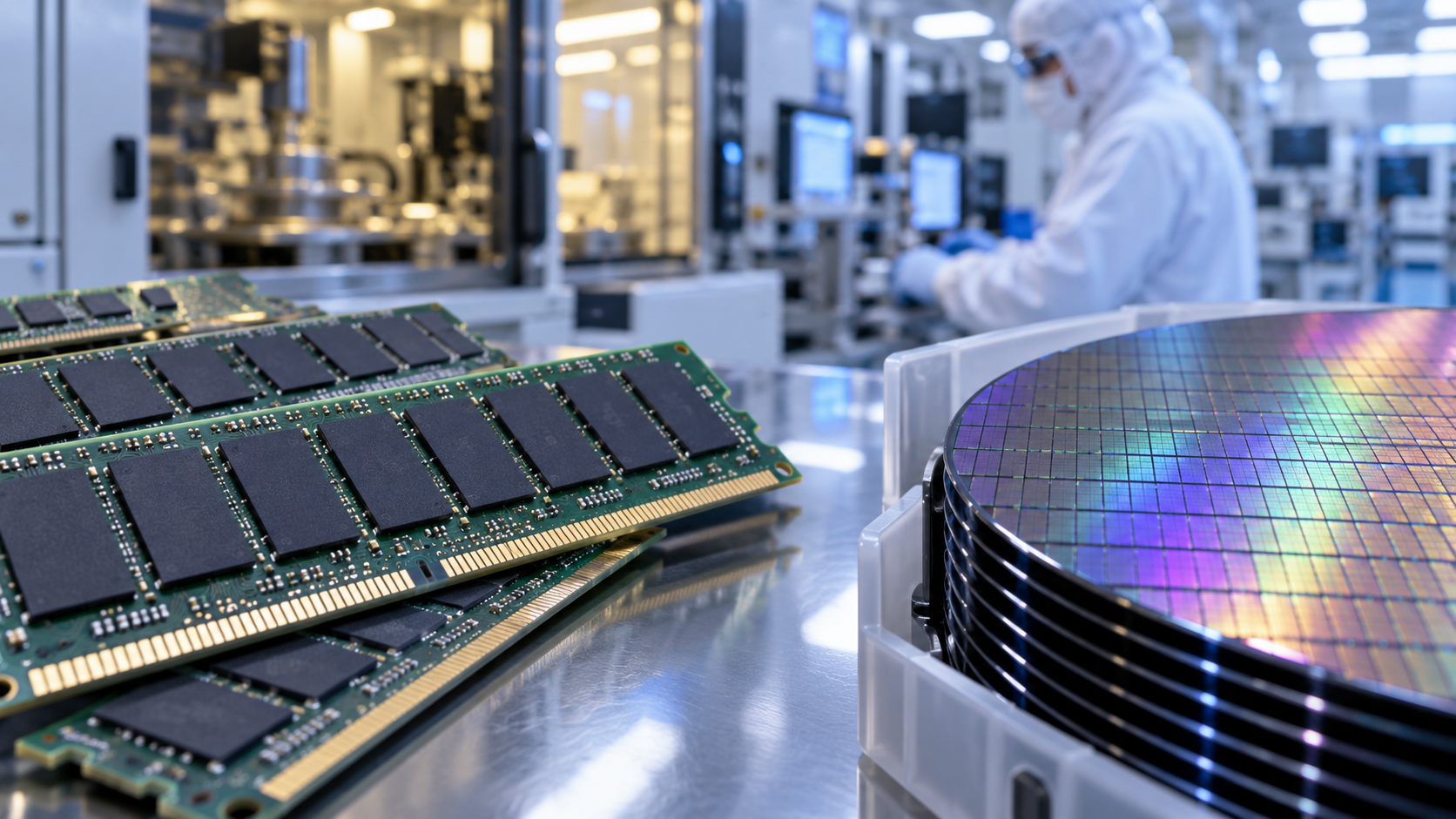
It does not produce memory wafers but purchases memory wafers and controller chips from IDMs and controller chip suppliers. It then performs packaging, testing, mounting, and assembly to produce products like USB drives, memory modules, solid-state drives, and embedded storage for mobile phones.
The profit from this business mainly comes from the price difference between procurement cost and selling price.
When prices rise, inventory purchased in advance can be sold at higher prices, rapidly expanding the gross margin.
The inventory that Longsys previously purchased at lower costs happened to catch this wave of price increases. The prospectus points out that the price increase for some memory wafers has already exceeded records from the past decade.
According to Frost & Sullivan, the global semiconductor memory product market size reached $275.4 billion in 2025. The combined effect of market demand growth and memory price increases has become the direct cause of Longsys's profit surge.
But inventory is also the biggest risk in this round of market conditions.
In the first half of 2026, the company's net cash flow from operating activities was -3.151 billion yuan; as of the end of June, the book value of inventory reached 25.777 billion yuan, accounting for 60.12% of total assets; short-term and long-term borrowings combined exceeded 15.4 billion yuan.
The company booked a lot of profit on its books, but not all of that profit was converted into cash inflows.
The inventory turnover days extended from 190.7 days in 2025 to 317.2 days in the first four months of 2026. The prospectus also warns that due to product price increases, some customers have reduced, delayed, or downgraded orders due to budget constraints, resulting in an overall decline in the company's sales volume and order intake compared to previous years.
This is the cyclical nature of the memory business: during price increases, inventory multiplies profits; during price declines, inventory can also become a risk of impairment.
The stock price has already reflected this contradiction in advance.
At the end of August 2025, Longsys's A-share price was only 95.46 yuan, with a market cap of about 40 billion yuan. By early July 2026, the stock price hit an intraday high of 749.88 yuan, and the market cap once surged to 322.45 billion yuan. Currently, Longsys's market cap has retreated to 154 billion yuan.
This cycle pushed Longsys to its peak but also brought it back to reality: rising storage prices can quickly bring gains, but whether those gains can be converted into cash and whether inventory can be digested before prices fall determines how far this round of growth can really go.
Entrepreneurs from Jiangxi
In this wave of the artificial intelligence tide, people from Jiangxi are standing at the forefront.
Chen Tianshi, founder of Cambricon; Yu Kai, founder of Horizon Robotics; Peng Zhihui, founder of Zhiyuan Robotics; Cai Huabo and Cai Lijiang, founders of Longsys; Zou Zhinong, founder of TFC Optical Communications—all are from Jiangxi.
Looking further back, the figures of founders from Jiangxi have long been scattered across China's commercial landscape: Cheng Wei, founder of Didi; Liang Ruybo, co-founder of ByteDance; Luo Yuhao, co-founder of miHoYo; Wang Guobin, founder of Tubatu; Yang Bing, founder of Dewu; Wu Xubo, entrepreneur behind GreedyGame.
Looking at traditional industries: Wang Wenjing, founder of Yonyou; Li Liangbin, founder of Ganfeng Lithium; Li Yihai, founder of Jimin Kexin; Yang Wenlong, founder of Renhe Pharmacy—all hail from Jiangxi.
The same is true in the consumer field: Nie Yunchen, founder of Heytea; Bao Caisheng, founder of Master Bao; Huang Jin, founder of Luxixi; Yu Huiyong, founder of Pagoda.
From AI chips, robotics, storage, and optical communications to internet platforms, gaming, new tea drinks, medicine, new energy, and agriculture, founders from Jiangxi have almost spanned the main tracks of China's commercial development over the past few decades.
Jiangxi borders six provinces: Hubei, Anhui, Zhejiang, Fujian, Guangdong, and Hunan, standing precisely at the crossroads of industrial migration in southeast China.
There are no 985 universities here, and Gaokao competition is extremely fierce. Many young people choose to go out, to Shenzhen, Suzhou, Shanghai, Beijing, accumulating resources and seeking opportunities where industries are most concentrated.
From Duan Yongping founding BBK and incubating OPPO and vivo, to Cheng Wei founding Didi; from Chen Tianshi and Yu Kai betting on AI chips, to Peng Zhihui entering embodied intelligence; to Cai Huabo and Cai Lijiang turning the storage business from a Huaqiangbei counter into a listed company—their entrepreneurial directions have constantly changed, but they have all accomplished one thing: transforming individual technology, judgment, and business acumen into cross-regional, cross-industry corporate competitiveness.
Cai Huabo is the most typical of this type.
Without the halo of a prestigious university, he understood the industry from a counter in Huaqiangbei and then step by step moved upstream. On the March 2026 'Hurun Global Rich List,' he ranked 553rd globally with a wealth of 52 billion yuan, becoming the richest person in Jiujiang, Jiangxi.
In recent years, those who left Jiangxi have also begun to return to build their hometown.
Zou Zhinong's TFC Optical Communications built a production base in Gao'an; Yuan Jiangtao's JLC deployed a manufacturing base in Ji'an. They are bringing production capacity and supply chains home, aiding Jiangxi's electronic information industry development with industrial feedback. Capacity repatriation is becoming a new默契 (tacit understanding).
Conclusion
The 2008 financial crisis once shattered the memory market. When Longsys had just recovered, Cai Huabo set a goal for the company: 'Our goal is to earn stable, small profits every month, not to pursue cyclical large gains, because cyclical gains can become unstable due to market fluctuations.'
Eighteen years later, he encountered a cycle where he earned 10.5 billion yuan in half a year.
But storage is a typical cyclical industry; the faster it rises, the faster it falls.
This is not just Longsys's problem; it's a proposition that all cyclical industries must face: after making money during high prosperity, can this money be retained before the cycle turns?
For Longsys, listing is not the endpoint of this market cycle. The real test lies in whether, after prices fall back and inventory pressure mounts, it can return the business to the goal Cai Huabo originally set—being able to earn stable profits continuously without relying on cyclical surges.
This article is from the WeChat public account '融中财经' (ID:thecapital), author: Li Bingzhi.