# Technology Related Articles

HTX News Center provides the latest articles and in-depth analysis on "Technology", covering market trends, project updates, tech developments, and regulatory policies in the crypto industry.

NVIDIA's Technology and Pop Mart's Operations Are Not Ten-Year Moat

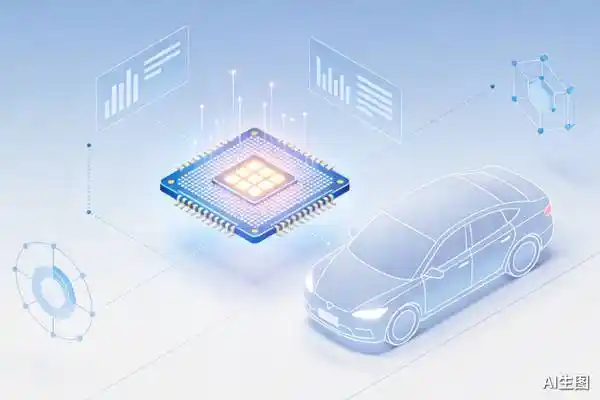
This article argues that management, operations, and technology are "capabilities" rather than true "moats." Drawing on Duan Yongping's horse-and-jockey metaphor, the author contends that a real moat is something that persists even if management is mediocre for years—such as brand mindshare (Coca-Cola, Moutai), network effects, scale effects, switching costs, or IP rights. Capabilities, by contrast, must be re-earned every year. Using this framework, the author critiques several cases. Snack brands like Three Squirrels and Bestore lack moats because the category is inherently homogeneous; success there depended on continuous operational effort rather than structural differentiation—better to build a moat in channels (as Zhao Yiming Snacks did) than in branding. Pop Mart's real potential moat is its brand, IP portfolio, artist network, supply chain, and prime global retail locations—not its operations, and even that moat is still "in progress." The core argument concerns Nvidia. The author rejects the analogy to 2011 Apple after Steve Jobs, when the moat (iPhone brand, iOS/App Store ecosystem, high switching costs, dispersed consumers) was already built, letting Cook focus on execution. Nvidia differs: its customers are a handful of tech giants who constantly calculate costs and are building their own chips (Google TPU, Amazon Trainium, Microsoft Maia, Meta MTIA, OpenAI's Jalapeño, Tesla AI5); its leadership must be re-won every chip generation through non-standard forward-looking bets that can't be codified into process; and its CUDA switching-cost moat is being eroded as rivals like Anthropic treat chips from Nvidia, AMD, Amazon, and Google as interchangeable. Nvidia's moat depends heavily on the jockey—Huang's continual correct decisions—rather than existing independently of him. The author notes Nvidia's short-term results will likely remain strong, but investing is about five, ten, twenty years out, and proving or disproving a moat is a long process (as Google's AI-search question remains unresolved years after ChatGPT). Ultimately, a CEO with technical foresight versus one without makes vastly different long-term contributions.

marsbit11/14 11:46
NVIDIA's Technology and Pop Mart's Operations Are Not Ten-Year Moat

marsbit11/14 11:46

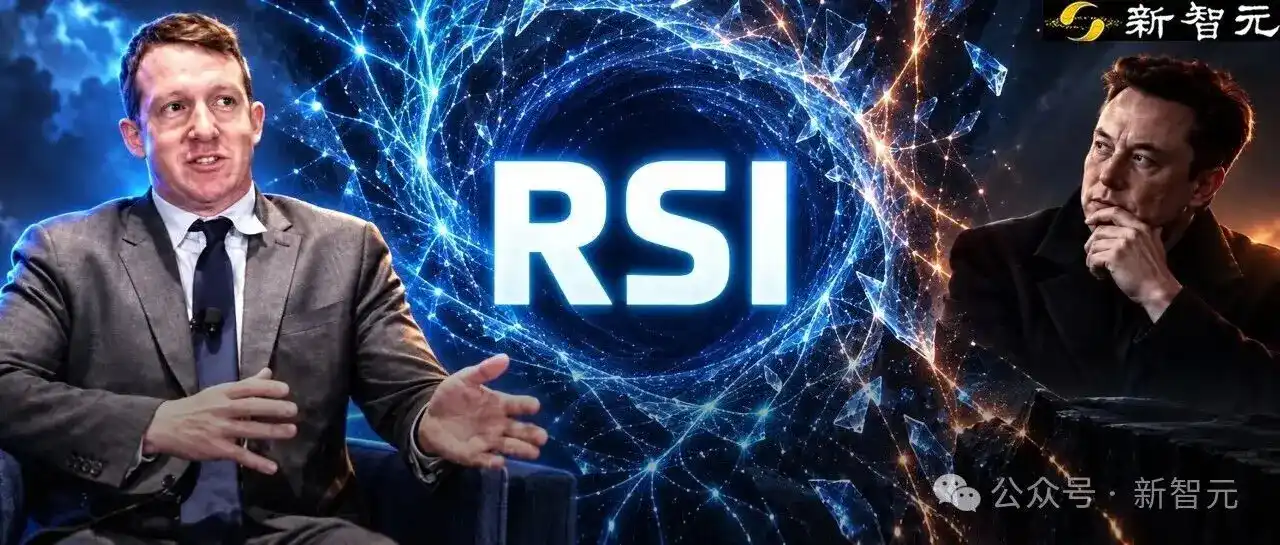
Breaking News: Anthropic Co-founder Reverses Position: RSI Moved Up to 2027, Humanity Has Only 6 Months Left

Anthropic co-founder Jack Clark has revised his prediction for when AI will achieve Recursive Self-Improvement (RSI) from 2028 to 2027, a shift Elon Musk endorsed. This signals a potential near-term threshold where AI, having demonstrated core creativity in mathematics and research, could begin designing and improving itself autonomously. Key developments include AI solving complex mathematical problems with novel proofs and showing improved "scientific taste" in research intuition, moving beyond mere pattern recognition. The article warns that RSI could trigger an intelligence explosion, rapidly accelerating progress beyond human control or comprehension. This would extend AI's impact from digital to physical realms: supercharging scientific discovery (e.g., new materials, drugs), advancing robotics (like Tesla's Optimus and NVIDIA's GR00T), and disrupting economic and labor structures by automating cognitive and creative work. A 2025 report titled "AI 2027" outlined a plausible path where AI agents integrate into workflows by 2025, automate programming by 2027, and potentially trigger a post-2027 intelligence explosion. This timeline represents a critical countdown, highlighting that AI's capability growth may outpace society's ability to adapt or establish control mechanisms. While 2027 is not a guaranteed deadline, it underscores a pivotal and potentially dangerous transition point for human civilization as it approaches the dawn of a new era shaped by artificial superintelligence (ASI).

marsbit10/15 21:46

Breaking News: Anthropic Co-founder Reverses Position: RSI Moved Up to 2027, Humanity Has Only 6 Months Left

marsbit10/15 21:46

As AI Becomes the Information Hub, What Is the Irreplaceable Value of Media?

The article examines the profound impact of generative AI on the media industry, particularly its challenge to traditional business models and the very definition of journalistic value. It analyzes this systemic shift across three key dimensions: production, distribution, and value. In production, AI amplifies capabilities, enabling proactive news discovery from vast datasets, industrialized content creation, and a shift from rigid hierarchies to fluid, task-based "AI-native" collaborations, though this risks increasing content homogenization. In distribution, a fundamental disruption is occurring. Generative AI acts as a new, "hidden" information hub, providing synthesized answers that reduce user clicks to original news sources, severing the traditional link between content consumption, audience attention, and advertising revenue. Simultaneously, AI facilitates "liquid content"—dynamic, adaptable narratives personalized for different audiences. This leads to the core value crisis. With the "content-attention-revenue" model breaking down, new economic models like a "calling economy," where publishers are paid for AI's use of their content, are emerging but face complex pricing and attribution challenges. Ultimately, the article argues that as AI becomes the information nexus, media's irreplaceable value migrates upstream: to the professional recording of reality, rigorous fact-checking and judgment, and the vital role of maintaining a shared public space for societal understanding and consensus-building in an increasingly fragmented information landscape.

marsbit10/15 19:17

As AI Becomes the Information Hub, What Is the Irreplaceable Value of Media?

marsbit10/15 19:17

Yuexin Semiconductor's Breakthrough: The First Provincial Capital "Squeezes" Onto the Table

The article discusses the rise of Yuexin Semiconductor (Yuexin) as a pivotal development for Guangzhou's ambitions in the integrated circuit (IC) industry. After an 18-year wait for a major domestic chip manufacturer, Guangdong province celebrated Yuexin's successful IPO on the Shenzhen Stock Exchange in October. Historically lagging behind regions like Shanghai and Beijing in semiconductor manufacturing, Guangzhou identified a strategic gap in the market. Instead of competing in advanced process nodes, Yuexin focused on differentiated "simulation characteristic processes" (180nm to 55nm), targeting analog chips crucial for consumer electronics and, more importantly, the automotive sector. Yuexin's establishment in 2017 and rapid mass production by 2019 marked a turning point, earning it the title "Guangzhou's First Chip." Its growth was supported by state capital, helping to establish an industrial cluster in the Huangpu district. However, the article notes challenges. Yuexin's revenue remains heavily reliant on the cyclical consumer electronics market. To solidify Guangzhou's goal of becoming a "third pole" in China's IC industry and support its own trillion-yuan automotive cluster transformation, the company must pivot towards higher-value segments like automotive-grade chips. The local automotive giants, such as GAC and XPeng, provide a built-in market demand. The piece concludes that Yuexin's significance extends beyond corporate success. It represents Guangzhou's capacity to develop capital-intensive hard technology, shifting its image from a trade and assembly hub. The strategic integration of the "core" (semiconductors) and "smart vehicle" industries is seen as key to recalibrating Guangzhou's economic structure and competitive position for the future.

marsbit10/14 10:31

Yuexin Semiconductor's Breakthrough: The First Provincial Capital "Squeezes" Onto the Table

marsbit10/14 10:31

Exclusive: DeepSeek Considering Entry into Embodied AI, Liang Wenfeng in Intensive Discussions with Related Entrepreneurs

Exclusive: DeepSeek Considers Entry into Embodied AI, Founder Liang Wenfeng in Intensive Discussions with Entrepreneurs DeepSeek founder Liang Wenfeng is exploring entering the embodied artificial intelligence (AI) sector. Sources reveal he has been engaging with entrepreneurs in robotics and AI-world interaction. DeepSeek is evaluating options, including building an in-house team or investing in related companies. Liang believes large language models (LLMs) are a path to Artificial General Intelligence (AGI), not the end goal. He sees a gap between current AI and "true intelligence." The reported advancement of OpenAI's GPT-6 in robotics tasks, with a 95% success rate, is a potential factor prompting this strategic review. DeepSeek acknowledges gaps with GPT-6 in some capabilities, leading to a reassessment of relying solely on LLM scaling for AGI competition. Embodied AI involves giving AI a "body" (like a robot) to perceive, understand, and act in the physical world. It addresses challenges like spatial understanding, continuous motion learning, and decision-making based on real-world feedback—key steps toward advanced AI. Giants like OpenAI, Google DeepMind, and Tesla are active in this space. Chinese firms like Zhipu and Kimi also have related initiatives. For DeepSeek, moving into embodied AI aligns with its core AGI goal but presents new challenges in hardware, motion control, and real-world data. Known for its focus on fundamental tech over rapid commercialization, DeepSeek might approach this through investment or partnerships (a "brain" and "body" model with robotics firms) rather than directly replicating hardware startups. Liang has previously invested in robotics company Unitree. The broader industry shift is from "language intelligence" to "physical intelligence." The next phase of AI competition may center on which systems can effectively integrate intelligence into the real world. For DeepSeek, embodied AI represents a critical strategic decision for the next stage of the AGI race.

marsbit10/12 22:01

Exclusive: DeepSeek Considering Entry into Embodied AI, Liang Wenfeng in Intensive Discussions with Related Entrepreneurs

marsbit10/12 22:01

活动图片