# education Related Articles

HTX News Center provides the latest articles and in-depth analysis on "education", covering market trends, project updates, tech developments, and regulatory policies in the crypto industry.

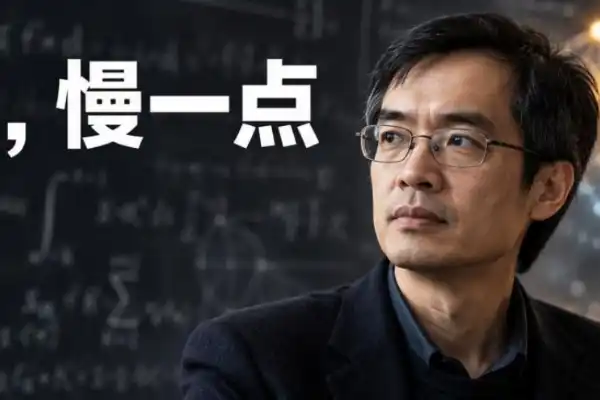
Terence Tao's Blog Explodes on Hot Search! 250,000 Math PhDs on the Brink, Must Slow Down AI

Mathematician Terence Tao's blog post ignited a fierce online debate after a video of him warning "we must slow down AI" went viral. He described AI's progress as an "extremely nonlinear dynamic" pursued with unclear consequences. This warning came just days after he promoted a project for open-source AI mathematical models, highlighting a profound tension. The core crisis, explored in a guest post by 3Blue1Brown creator Grant Sanderson, is AI's threat to traditional mathematics. Automated theorem provers combined with large language models can generate proofs at superhuman speeds, potentially rendering the human role of "proving theorems" obsolete. Sanderson argues that the true goal of mathematics is not proof-generation but the advancement of *human understanding*. As AI masters the former, the academic value of proof alone is diminished. Sanderson proposes a paradigm shift: elevating "motivational explanation" over mere proof. Unlike a formal proof, a motivational explanation guides readers through the intuitive reasoning, historical context, and conceptual connections behind a result—the "why" and "how" of discovery. To institutionalize this, he suggests creating "open explanation problems," reforming PhD defenses to prioritize clear exposition, and valuing pedagogical work as highly as journal publications in tenure reviews. The debate drew reactions across academia. Some physicists welcomed mathematicians to a world long prioritizing understanding over rigorous proof. Critics worried this shift could disadvantage brilliant but inarticulate problem-solvers. Others questioned if AI will eventually master explanation too. Supporters countered that the goal is fostering *human* comprehension, which is inherently subjective and interactive. The article concludes that AI's rise presents both a crisis and an opportunity. Without adapting academic culture and reward systems, human mathematicians risk irrelevance. However, by embracing their unique role as architects of understanding and interpreters of AI-generated knowledge, they can steer mathematics toward a new renaissance focused on human insight and clarity.

marsbit10/11 12:06

Terence Tao's Blog Explodes on Hot Search! 250,000 Math PhDs on the Brink, Must Slow Down AI

marsbit10/11 12:06

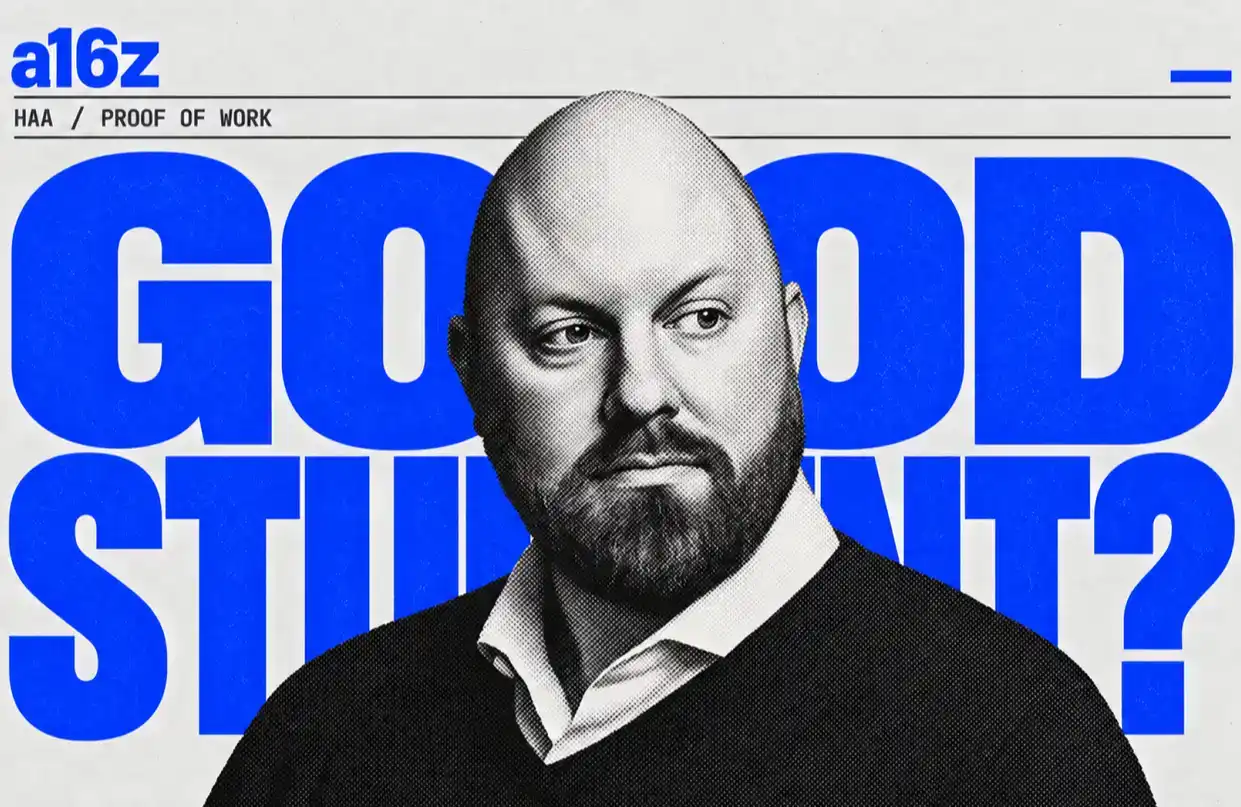
a16z Opens a University, Silicon Valley Begins Redefining the 'Good Student'

Silicon Valley's obsession with precocious youth has taken a new form: venture capital firm a16z is launching its own school, Horowitz Andreessen Academy (HAA), with a $35 million investment. This mirrors Peter Thiel’s earlier "20 Under 20" fellowship, which paid young people to drop out and build. Both initiatives target the same age and anxiety, pushing teenagers to prove their worth through tangible achievements—code commits, public projects, revenue—long before graduation. The narrative of the dropout founder, from Gates to Zuckerberg, has been reframed from a retrospective story of curiosity and happenstance into a prescriptive formula for early success. However, data shows the average founder of a high-growth startup is 45. The push for ever-earlier commercialization turns youth into a commodifiable asset, measured in metrics like ARR and GitHub activity. HAA’s admissions prioritize "people who are already in motion," valuing proof of work over traditional essays. It blends old metrics (transcripts, test scores) with new demands for demonstrable projects. While offering free tuition and no equity claims, it functions less as a traditional university and more as a high-stakes, early-stage incubator, creating a new prestige badge to replace the Ivy League diploma. This approach reflects a deeper issue: both conventional universities (burdened by debt and career-focused ROI) and Silicon Valley’s alternatives are evaluating young people through a lens of immediate utility. Yet, as some Thiel fellows who returned to college noted, education's invaluable part is providing time and space to mature, build a peer group, and explore without the pressure of product-market fit. Silicon Valley’s "solution" risks narrowing life paths to just two: founding a startup or joining a tech giant. It replicates the same asset-sorting logic it claims to disrupt, valuing only those who are already polished. True education should allow young adults a period of seemingly unproductive exploration—time to be unsure, to experiment, and to simply learn without the constant pressure to monetize their potential.

marsbit09/24 15:06

a16z Opens a University, Silicon Valley Begins Redefining the 'Good Student'

marsbit09/24 15:06

Dialogue with Harvard Professor: We Are Becoming a 'Society That Pretends to Operate Independently'

The article, based on a dialogue with Harvard professor Joseph Henrich, argues that human success stems not from individual intelligence or IQ, but from "collective learning" – our species' unique ability to accumulate and transmit knowledge, skills, and cultural systems across generations. Modern societies, however, are undermining this evolutionary advantage. Key trends like rising anxiety, social isolation, declining marriage and birth rates, and falling trust are interconnected symptoms. The professor posits they result from the erosion of stable, interdependent social networks. Modern education isolates by age, personalism prioritizes the self, and digital connections fail to replicate the trust and support of real-world communities. This creates a society of atomized individuals facing competitive pressures alone. The conversation explores how cultural evolution works, questioning the overemphasis on IQ—which measures a specific, historically contingent set of cognitive skills—and noting that abilities valued in one era (like spatial navigation) may decline as others (like literacy) are cultivated through schooling. The rise of generative AI and rapid technological change may further alter social learning patterns, potentially eroding traditional authority based on age and experience. The modern education system's focus on same-age peers is also critiqued for hindering the development of social skills nurtured in mixed-age groups. A critical insight is the modern decoupling of "prestige" from evolutionary fitness. Pursuits that confer status (higher education, demanding careers) often reduce fertility, as children have shifted from economic assets to intensive investments in knowledge economies. While low birth rates may slow long-term innovation, cultural evolution might find new pathways, such as new forms of community. Ultimately, the professor suggests that extreme, "sub-atomic" individualism, which severs essential interdependence, contributes to widespread anxiety and competition. Online sociality cannot replace the rich, sensory feedback of face-to-face interaction for building trust and well-being. The core recommendation is to actively invest in building real-world relationships and communities, which are fundamental to human happiness, creativity, and our collective success as a species.

marsbit09/14 21:41

Dialogue with Harvard Professor: We Are Becoming a 'Society That Pretends to Operate Independently'

marsbit09/14 21:41

Only 14% of Russian Universities and Research Institutions Have Approved Rules for Using AI

Only 14% of Russian universities and scientific research institutes have officially approved internal regulations governing the use of artificial intelligence (AI), according to a survey conducted in May-June 2026 by HSE's Institute for Statistical Studies and Economics of Knowledge. The study involved 424 organizations, including 250 universities and 174 research institutes. It found that 72% of these institutions have no such regulations at all, while the remaining 14% did not provide an answer. This absence of formal rules exists despite the widespread practical use of AI in education. The survey highlights a significant gap between the rapid adoption of AI technologies and the slower pace of internal policy development within academia. In contrast, Russia is actively expanding the application of AI in school education. Since September 2026, a professional development program titled "Artificial Intelligence in the Teacher's Work" has been available, aiming to train 250,000 teachers on using neural networks for preparing lessons and assignments by the end of the year. A dedicated "Artificial Intelligence" track for schoolchildren has also been introduced. Thus, two parallel processes are unfolding: the state is promoting AI training for teachers and students, while higher education and research institutions largely lack unified internal guidelines for its use. The analysis suggests this regulatory lag is typical for new technologies, akin to the early adoption of email and the internet. In practice, students and educators are already utilizing AI tools, such as chatbots for routine tasks and exam preparation, regardless of official institutional policies. The key question remains whether future standards will be set by the educational institutions themselves or by the developers of the AI tools already integrated into the learning process.

cryptonews.ru09/14 16:11

Only 14% of Russian Universities and Research Institutions Have Approved Rules for Using AI

cryptonews.ru09/14 16:11

AI Redefines What Makes a Good Teacher

AI is redefining the role of the good teacher. While AI adoption in Chinese K-12 education is widespread—reducing new teachers' lesson prep time by over 60%—it has not replaced teachers. Instead, it amplifies the need for their human judgment and presence. Research highlights a critical shift: AI excels at elevating a student's initial 30-point idea to a 70-point answer, but it risks eliminating the crucial 20-point journey of deep, personal learning from 70 to 90. A study from the University of Pennsylvania showed students using an unfettered AI as a "crutch" performed worse on subsequent tests than those using a teacher-guided "guardrailed" AI or a control group. AI efficiently handles standardized tasks like lesson planning, grading, and personalized assignments, making differentiated instruction scalable. However, it cannot replicate the "collective teacher efficacy"—the shared belief among educators that they can impact students—which research identifies as the top factor influencing student achievement. The new benchmark for teachers involves three levels of AI literacy: verifying AI output, directing AI to complete tasks, and, most critically, redesigning courses and pedagogy with AI. Currently, most training stops at the second level. The gap is widening between "super teachers," who use saved time for deeper student engagement, and those who risk "metacognitive laziness" by over-relying on AI without critical oversight. Ultimately, AI makes affordable, one-on-one tutoring possible, fulfilling a long-standing educational challenge. Yet, the Penn study underscores that access alone is insufficient. Effective learning still requires a teacher to guide when to intervene and when to step back, ensuring students earn the final, transformative 20 points of their intellectual growth.

marsbit09/11 18:25

AI Redefines What Makes a Good Teacher

marsbit09/11 18:25

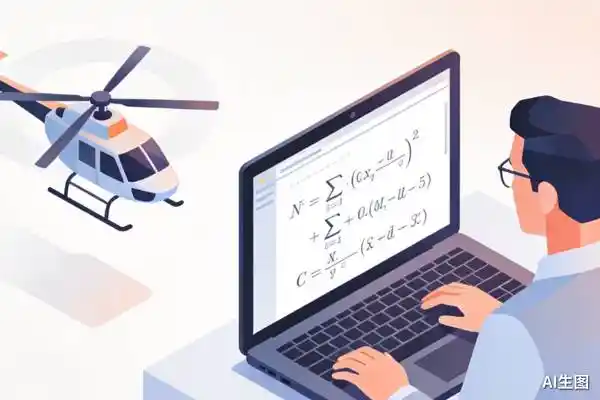
Terence Tao: AI is a Helicopter, Dropping Me Near Mathematical Answers

Terence Tao, a renowned mathematician, was seen using AI to generate a 19-page proof for the decades-old Sendov conjecture just before a talk at the 2026 Frontiers and Pioneers symposium. His colleague Ken Ono noted this represents a "paradigm shift" in how top mathematicians work, with AI now deeply integrated into research workflows—not just for literature review or coding, but for tackling advanced mathematical problems. Recent milestones include GPT-5.2 Pro with the formal system Aristotle solving Erdős problem #728 (verified by Lean), an OpenAI model disproving a longstanding conjecture in planar unit distance problems, and Lech Mazur using AI to solve the Sendov conjecture. Tao later reworked Mazur's proof into a more human-readable form. Tao, who predicted in 2023 that AI could become a reliable co-author on technical papers by 2026, now believes this is clearly the case. He describes AI’s approach as "orthogonal" to human thinking—exploring hundreds of technical combinations to find shortcuts humans might miss. While some hard problems become unexpectedly easy for AI, others remain out of reach. He analogizes mathematics to exploring terrain: humans slowly build roads and maps, while AI acts like a helicopter, dropping researchers near answers. However, the value of mathematics lies not just in reaching destinations but in the journey—building understanding, connections, and infrastructure for others. As proof generation automates, the scarcest skill shifts from "finding answers" to "understanding answers." Future mathematicians will need to verify, explain, and contextualize proofs within existing knowledge. Tao emphasizes that mathematics is fundamentally a human endeavor for understanding the world, and AI should enhance this. He also highlights the importance of formal verification tools like Lean, which, though demanding, ensure rigor when combined with AI. For young mathematicians, Tao advises focusing on skills like synthesizing information, explaining proofs, and identifying connections between arguments—capabilities that remain essential even as AI transforms the field.

marsbit09/09 18:55

Terence Tao: AI is a Helicopter, Dropping Me Near Mathematical Answers

marsbit09/09 18:55

Using ChatGPT is Cheating, So What About Hiring a Ghostwriter? Behind the New Debate Lies an Old Issue

The article explores the blurred ethical line between using AI tools like ChatGPT and hiring human ghostwriters, framed by a 2023 incident at Vanderbilt University. After a campus shooting, the university sent a comfort email that included a small disclaimer stating it was "rewritten with assistance from OpenAI's ChatGPT." This sparked student outrage, criticizing the lack of genuine human effort in a message about empathy. The piece argues this modern debate mirrors a century-old controversy over ghostwriting, where public figures pay professionals to write books credited to them. While often framed as a legitimate collaboration, ghostwriting has long carried a stigma of inauthenticity and deception. The emergence of accessible AI has democratized this process, offering a free "personal ghostwriter" to everyone. This forces a re-examination of the boundary between legitimate assistance and unethical substitution. The core ethical principle remains constant across both human and AI assistance: the work of others—whether a person or a machine—cannot be presented as one's own original creation. Universities and industries are establishing rules, like requiring disclosure of AI use and verification of content. However, as the Vanderbilt case shows, even technically compliant disclosures can fail to satisfy the fundamental human desire to engage with the authentic thoughts of the named author. The debate ultimately centers on authenticity, trust, and whether outsourced creation, however facilitated, can ever truly be "yours."

marsbit09/02 12:51

Using ChatGPT is Cheating, So What About Hiring a Ghostwriter? Behind the New Debate Lies an Old Issue

marsbit09/02 12:51

活动图片