Bitcoin ETFs Lost Nearly $390 Million Over the Week, While SOL ETFs Attracted New Capital

cryptonews.ruPublished on 2026-08-16Last updated on 2026-08-16

Abstract

Between August 10 and 14, 2026, the US spot Bitcoin ETF sector experienced a significant net outflow of $389.71 million, according to SoSoValue data. Outflows were recorded on four of the five trading days, primarily affecting major funds like Fidelity's FBTC ($153.23M outflow) and BlackRock's IBIT ($78.96M outflow). While Grayscale's BTC and Morgan Stanley's MSBT saw inflows, most Bitcoin ETFs ended the week with outflows or neutral flows. The spot Ethereum ETF sector also saw a net outflow of $2.26 million for the week, led by BlackRock's ETHA. In contrast, several altcoin-based ETFs attracted new capital. SOL-ETFs led with an inflow of $10.26 million, followed by funds tied to HYPE, XRP, LINK, and HBAR. DOGE-ETFs were an exception with a minor outflow. Activity in the Hong Kong market remained minimal. This follows a week where over $1 billion flowed into various crypto funds.

From August 10 to 14, 2026, the spot Bitcoin ETF sector in the United States recorded a total capital outflow of $389.71 million, according to data from SoSoValue.
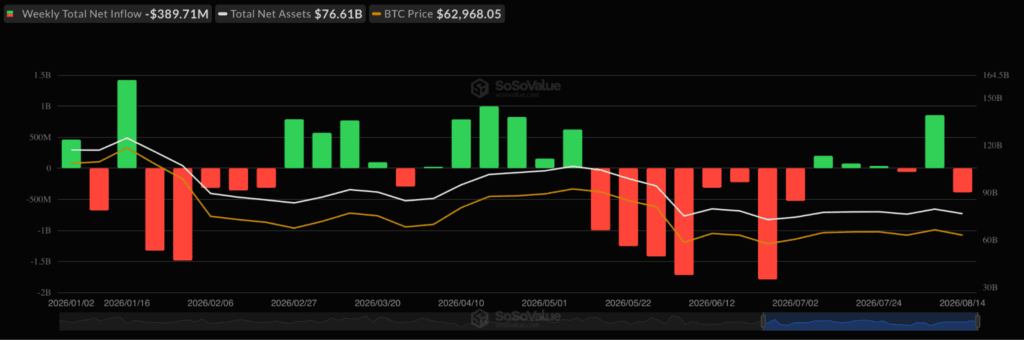
Dynamics of capital inflows/outflows from spot Bitcoin ETFs in the US. Data: SoSoValue.

Outflows were observed on four out of five trading days during the week:

  • August 10 — $144.67 million;
  • August 12 — $61.16 million;
  • August 13 — $131.13 million;
  • August 14 — $57.63 million.

The outflow during the reporting period came from BlackRock's IBIT — $78.96 million. At the same time, the largest single fund to see outflows was Fidelity's FBTC — $153.23 million.

The following funds also showed negative trends:

  • GBTC from Grayscale — $88.3 million;
  • ARKB from ARK Invest/21Shares — $70.36 million.

Only two funds recorded positive results:

  • BTC from Grayscale — $75.98 million;
  • MSBT from Morgan Stanley — $7.08 million.

Other Bitcoin ETFs also ended the week with outflows or without significant capital inflows.

Ethereum ETFs Lost $2.26 Million

The spot Ethereum ETF sector ended the week with a total outflow of $2.26 million, according to SoSoValue data.
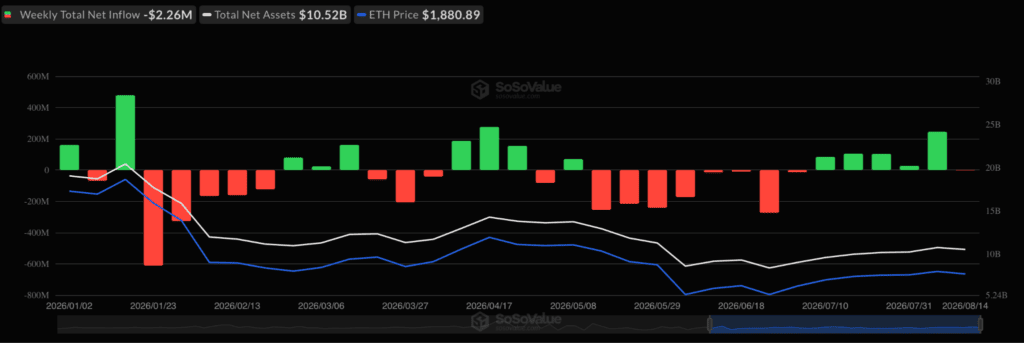
Dynamics of capital inflows/outflows from spot Ethereum ETFs in the US. Data: SoSoValue.

The largest outflow was recorded by BlackRock's ETHA — $16.39 million. Investors withdrew another $5.6 million from Fidelity's FETH.

At the same time, some of the losses were offset by:

  • $ETH from Grayscale — $15.07 million;
  • ETHB from 21Shares — $3.86 million;
  • MSSE from Morgan Stanley — $0.81 million.

Other funds based on Ethereum did not attract any assets under management during the week.

We explained what Ethereum ETFs are in a separate article:

$SOL-ETFs Became Leaders Among Altcoins

Unlike Bitcoin and Ethereum funds, some exchange-traded products based on altcoins showed positive trends.

The largest capital inflows were recorded by:

  • $SOL-ETFs — $10.26 million;
  • HYPE-ETFs — $2.74 million;
  • XRP-ETFs — $2.25 million;
  • LINK-ETFs — $1.23 million;
  • HBAR-ETFs — $0.46 million.

At the same time, DOGE-ETFs recorded an outflow of $0.56 million.

Other funds based on altcoins did not attract investments during the reporting period.

Activity remained minimal in the Hong Kong market as well: only 0.17 $ETH was added to spot Ethereum ETFs over the week.

Recall that last week, investors poured over $1 billion into various crypto funds.

end-content

Trending Cryptos

Related Questions

QWhat was the total net outflow from U.S. spot Bitcoin ETFs for the week of August 10-14, 2026?

AThe U.S. spot Bitcoin ETF sector recorded a total net capital outflow of $389.71 million for the week.

QWhich two Bitcoin ETFs were the only ones to record a positive inflow of capital during the reported week?

AThe two Bitcoin ETFs with a positive inflow were BTC from Grayscale with $75.98 million and MSBT from Morgan Stanley with $7.08 million.

QHow much capital did the U.S. spot Ethereum ETF sector lose during the same week?

AThe U.S. spot Ethereum ETF sector ended the week with a total net outflow of $2.26 million.

QAmong altcoin ETFs, which one attracted the most capital and how much was it?

AThe SOL-ETF was the leader among altcoin ETFs, attracting $10.26 million in capital.

QWhich Bitcoin ETF from a specific issuer experienced the largest single outflow of capital during the week?

AFBTC from Fidelity experienced the largest single outflow among individual Bitcoin ETFs, with $153.23 million withdrawn.

Related Reads

Democrats Plan to Investigate Apple, Meta and Musk, Trump's Silicon Valley Allies Face 'Reckoning'

Democrats, after winning majorities in both chambers of Congress, are rapidly setting investigative priorities targeting Trump's Silicon Valley allies. The House is preparing to examine Trump's use of Musk's AI chatbot Grok in planning a military operation to abduct Venezuelan President Maduro; Apple and Meta are under scrutiny over an ICE tracking app and local government data center agreements, respectively. The probe scope may extend well beyond these three companies, reviewing major corporations' most controversial business activities over the past two years and their ties to the Trump administration. Since Trump's second term, tech billionaires and executives have frequently attended White House events, donated to his ballroom project, and given gifts, while companies backed by Trump family members and Wall Street executives received billions in government funding. Groundwork Collaborative labeled Big Tech, private prison operators, and natural gas firms as "high-value" targets. Even before formal investigations begin, companies are preparing: Washington law firms are holding emergency meetings to advise founders and executives on congressional inquiries, and many are seeking to become Musk's personal counsel, anticipating subpoenas and high-profile legal work. Some VCs advise startups to close financing before year-end in case executives are called to testify or Pentagon spending shifts. Incoming House Oversight Committee Chairman Robert Garcia warned companies to "hire lawyers," and Senator Ed Markey said tech executives will need plenty of paper for subpoenas. Lawyers expect Democratic control of Congress to accelerate and intensify investigations, with detailed corporate inquiries potentially more effective than letters to Trump agencies since companies are more likely to respond and disclose dealings with officials. Apple, Meta, X, and Musk did not immediately respond to requests for comment. Covington & Burling lawyer Robert Kelner said the investigative wave is all but certain: "We've been telling clients, winter is coming. Now, winter is here."

marsbit13m ago

Democrats Plan to Investigate Apple, Meta and Musk, Trump's Silicon Valley Allies Face 'Reckoning'

marsbit13m ago

Anthropic's Strongest Model 4 Revealed for the First Time: RSI Soars at 2x Speed

Anthropic's unreleased "Model 4," reportedly trained between September and October, has surfaced via a third-party METR evaluation, scoring 178.6 on Anthropic's internal Aggregate Evaluation Capability Index (AECI)—outpacing public models Opus 5.5 (174.5) and Mythos 5.1 (172.5). Model 4 passed all 15 benchmarks at above 50% accuracy, a first compared with Opus 4.6 nine months earlier; removing three flawed benchmarks would push its score to 179.7. METR's 11-week investigation of internal data concludes Anthropic's model improvement has roughly doubled, with an inflection point in October 2025: AECI growth accelerated from about 15 points per year to 29 points per year (1.9x), meaning one year now covers what previously took two. Notably, METR estimates about 80% of this acceleration stems from AI assisting its own R&D rather than increased training compute, researcher headcount, or inference scaling—Claude is effectively helping build a stronger Claude. Internal employee surveys report self-assessed productivity gains rising from 1.3–1.4x in spring 2025 to about 5x by June and roughly 12x by October with Model 4, as researchers shift from using Claude as autocomplete to orchestrating many parallel agents, cutting idea-to-experiment time by up to 80%. METR researcher Ryan Greenblatt calls the report a signal pointing toward ASI within one to two years. Roughly 100 pages were submitted to Anthropic, but much of the most sensitive evidence—including a table forecasting future model capability scores—was redacted in the public version. METR sees no obvious bottleneck in algorithms, compute, or data over the next 12 months, and no brake in sight.

marsbit33m ago

Anthropic's Strongest Model 4 Revealed for the First Time: RSI Soars at 2x Speed

marsbit33m ago

US 401(k) proposal leaves door open to altcoins, but hurdles remain

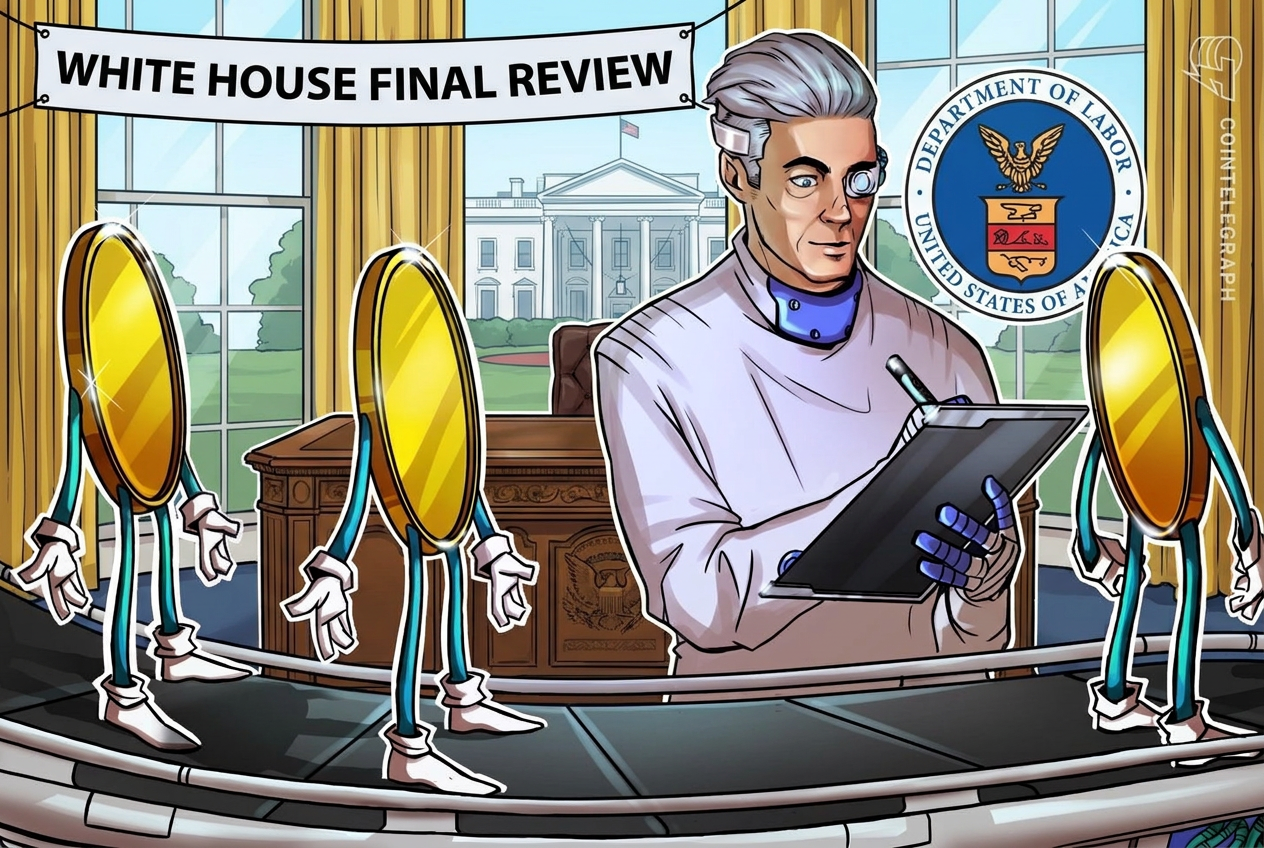
A proposed US Labor Department rule could allow smaller cryptocurrencies (altcoins) in 401(k) retirement plans, but experts say they face more hurdles than Bitcoin and Ether. The rule, now under White House final review, aims to ease offering alternative investments like crypto while giving employers and plan managers more legal protection. It doesn't specify which digital assets qualify or set a minimum market cap, but directs plan managers to weigh six factors: performance, fees, liquidity, valuation, benchmarks and complexity. Experts expect Bitcoin and Ether to be offered first given their established markets and investment products. Teresa Goody Guillén of Bellementis PLLC said altcoins aren't automatically excluded, but plan managers must show their choices are prudent, noting "big doesn't mean suitable, and small doesn't mean disqualified." Bernardo Brites of Trace Finance said most tokens fail on track record or benchmark, and the practical test is whether a plan committee can document a reliable daily price from a regulated wrapper. ETFs and managed funds will likely precede direct crypto holdings, fitting existing custody and recordkeeping systems. Brites expects some crypto options by 2027, ETFs at larger employers later that year, and wider availability by 2028, noting the rule changes legal risk, not infrastructure. Legal uncertainty remains: the proposal offers some lawsuit protection but doesn't prevent suits, and future administrations could reverse the rule, potentially making employers hesitant.

cointelegraph5h ago

US 401(k) proposal leaves door open to altcoins, but hurdles remain

cointelegraph5h ago

Russia finalizes crypto trading rules ahead of Nov. 17 rollout

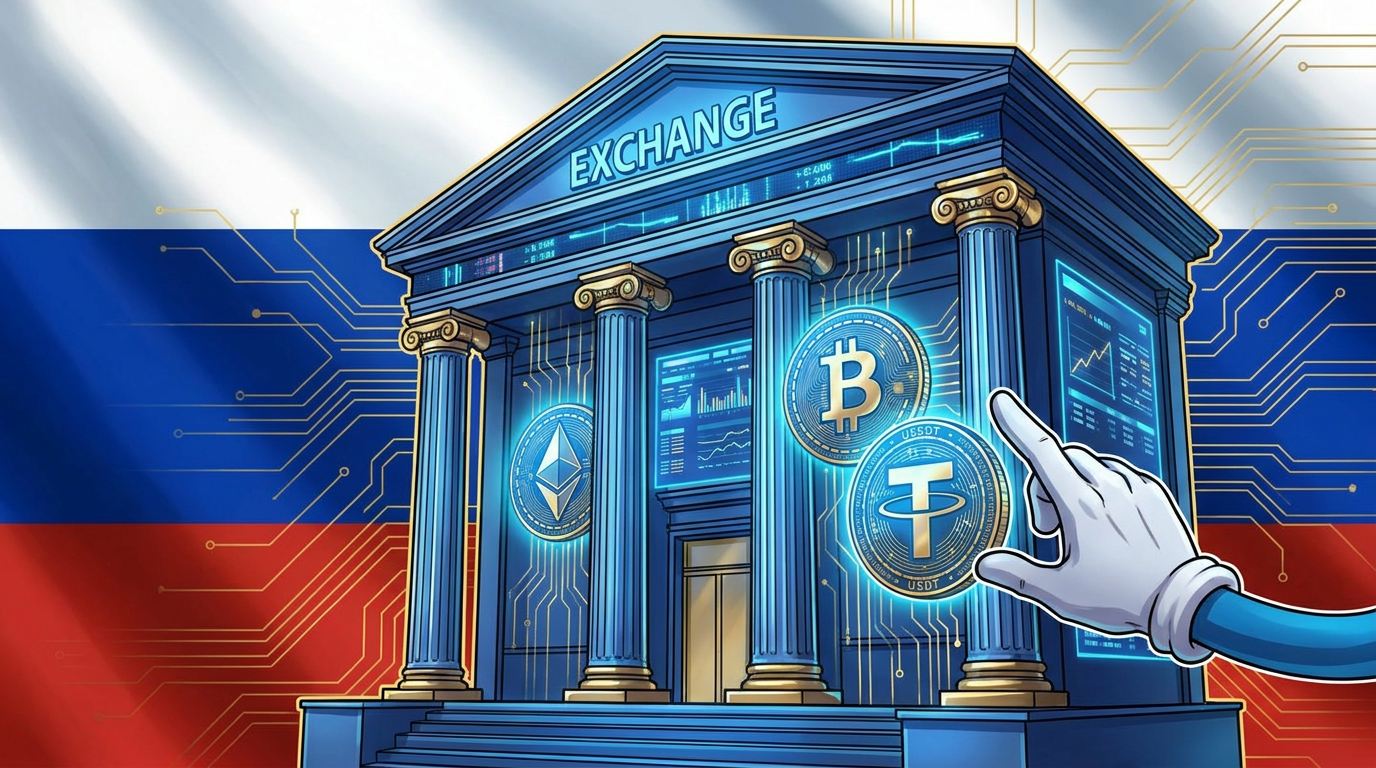
Russia’s central bank has finalized rules allowing exchanges to offer Bitcoin, Ether and Tether USDt to retail investors starting Nov. 17. Non-qualified investors can buy up to 300,000 rubles (about $3,700) in crypto annually through each intermediary, including brokers, asset managers and crypto exchange providers. Qualified investors face no purchase limits, but all investors must pass a mandatory test before trading. The directive builds on legislation signed by President Vladimir Putin on Aug. 4 establishing a regulated crypto market under central bank oversight. On Aug. 11, the Bank of Russia published draft regulations identifying BTC, ETH and USDT as eligible for public trading based on market capitalization, average daily trading volume and at least five years of price history on foreign exchanges. The law took effect Sept. 1, and the Bank of Russia later authorized Sberbank, the country’s largest bank, to offer crypto exchange services in October. Moscow Exchange, Russia’s largest securities exchange and a publicly traded company, is preparing to launch crypto trading on Dec. 1, initially offering the three cryptocurrencies through pilot transactions. While expanding regulated access, Russia is also tightening restrictions outside those channels. Direct peer-to-peer crypto trading will be prohibited starting July 1, 2027, transfers from regulated digital accounts to self-custody wallets are already banned, and cryptocurrency cannot be used to pay for goods and services.

cointelegraph6h ago

Russia finalizes crypto trading rules ahead of Nov. 17 rollout

cointelegraph6h ago

Trading

Spot

Hot Articles

What is $BITCOIN

DIGITAL GOLD ($BITCOIN): A Comprehensive Analysis Introduction to DIGITAL GOLD ($BITCOIN) DIGITAL GOLD ($BITCOIN) is a blockchain-based project operating on the Solana network, which aims to combine the characteristics of traditional precious metals with the innovation of decentralized technologies. While it shares a name with Bitcoin, often referred to as “digital gold” due to its perception as a store of value, DIGITAL GOLD is a separate token designed to create a unique ecosystem within the Web3 landscape. Its goal is to position itself as a viable alternative digital asset, although specifics regarding its applications and functionalities are still developing. What is DIGITAL GOLD ($BITCOIN)? DIGITAL GOLD ($BITCOIN) is a cryptocurrency token explicitly designed for use on the Solana blockchain. In contrast to Bitcoin, which provides a widely recognized value storage role, this token appears to focus on broader applications and characteristics. Notable aspects include: Blockchain Infrastructure: The token is built on the Solana blockchain, known for its capacity to handle high-speed and low-cost transactions. Supply Dynamics: DIGITAL GOLD has a maximum supply capped at 100 quadrillion tokens (100P $BITCOIN), although details regarding its circulating supply are currently undisclosed. Utility: While precise functionalities are not explicitly outlined, there are indications that the token could be utilized for various applications, potentially involving decentralized applications (dApps) or asset tokenization strategies. Who is the Creator of DIGITAL GOLD ($BITCOIN)? At present, the identity of the creators and development team behind DIGITAL GOLD ($BITCOIN) remains unknown. This situation is typical among many innovative projects within the blockchain space, particularly those aligning with decentralized finance and meme coin phenomena. While such anonymity may foster a community-driven culture, it intensifies concerns about governance and accountability. Who are the Investors of DIGITAL GOLD ($BITCOIN)? The available information indicates that DIGITAL GOLD ($BITCOIN) does not have any known institutional backers or prominent venture capital investments. The project seems to operate on a peer-to-peer model focused on community support and adoption rather than traditional funding routes. Its activity and liquidity are primarily situated on decentralized exchanges (DEXs), such as PumpSwap, rather than established centralized trading platforms, further highlighting its grassroots approach. How DIGITAL GOLD ($BITCOIN) Works The operational mechanics of DIGITAL GOLD ($BITCOIN) can be elaborated on based on its blockchain design and network attributes: Consensus Mechanism: By leveraging Solana’s unique proof-of-history (PoH) combined with a proof-of-stake (PoS) model, the project ensures efficient transaction validation contributing to the network's high performance. Tokenomics: While specific deflationary mechanisms have not been extensively detailed, the vast maximum token supply implies that it may cater to microtransactions or niche use cases that are still to be defined. Interoperability: There exists the potential for integration with Solana’s broader ecosystem, including various decentralized finance (DeFi) platforms. However, the details regarding specific integrations remain unspecified. Timeline of Key Events Here is a timeline that highlights significant milestones concerning DIGITAL GOLD ($BITCOIN): 2023: The initial deployment of the token occurs on the Solana blockchain, marked by its contract address. 2024: DIGITAL GOLD gains visibility as it becomes available for trading on decentralized exchanges like PumpSwap, allowing users to trade it against SOL. 2025: The project witnesses sporadic trading activity and potential interest in community-led engagements, although no noteworthy partnerships or technical advancements have been documented as of yet. Critical Analysis Strengths Scalability: The underlying Solana infrastructure supports high transaction volumes, which could enhance the utility of $BITCOIN in various transaction scenarios. Accessibility: The potential low trading price per token could attract retail investors, facilitating wider participation due to fractional ownership opportunities. Risks Lack of Transparency: The absence of publicly known backers, developers, or an audit process may yield skepticism regarding the project's sustainability and trustworthiness. Market Volatility: The trading activity is heavily reliant on speculative behavior, which can result in significant price volatility and uncertainty for investors. Conclusion DIGITAL GOLD ($BITCOIN) emerges as an intriguing yet ambiguous project within the rapidly evolving Solana ecosystem. While it attempts to leverage the “digital gold” narrative, its departure from Bitcoin's established role as a store of value underscores the need for a clearer differentiation of its intended utility and governance structure. Future acceptance and adoption will likely depend on addressing the current opacity and defining its operational and economic strategies more explicitly. Note: This report encompasses synthesised information available as of October 2023, and developments may have transpired beyond the research period.

4.8k Total ViewsPublished 2025.05.14Updated 2025.05.14

What is $BITCOIN

Discussions

Welcome to the HTX Community. Here, you can stay informed about the latest platform developments and gain access to professional market insights. Users' opinions on the price of BTC (BTC) are presented below.

活动图片