The Harvesting Nature of US Meme Stocks: A Look at FAMI and JINQIAN

marsbitPublished on 2026-09-03Last updated on 2026-09-03

Abstract

**From FAMI and JINQIAN: The Predatory Nature of U.S. Stock Memes** On September 2nd, a massive pump occurred around Farmmi (NASDAQ: FAMI), a small-cap mushroom farming company, and two related crypto tokens, JINQIAN and a memecoin named FAMI, on the Robinhood Chain. This frenzy was triggered by a viral narrative. On August 31st, crypto trader Rune publicly stated he bought 37.4% of a tiny, heavily shorted Nasdaq stock (over 92% short interest) for around $1.8 million, planning to tokenize it on Robinhood Chain and launch a paired memecoin to engineer a short squeeze, reminiscent of the GameStop saga. The community quickly linked this story to Farmmi (ticker FAMI), which produces a "Jinqian mushroom," fitting the described profile. Fueled by this narrative, the unofficial FAMI memecoin on Robinhood Chain surged over 10x in an hour, hitting nearly $100M market cap, while the actual FAMI stock rocketed over 300% on massive volume. However, the setup was fundamentally flawed. Investigation revealed Rune later stated his original post was AI-generated and not an actual plan. More critically, Robinhood Chain's official stock tokens require pre-approval and a custodied underlying stock. FAMI was never on this approved list. Therefore, the soaring "FAMI" token was merely a namesake coin created on September 1st with no real connection to the stock or any mechanism to buy shares and force a short squeeze. The episode highlights how compelling "meme stock" narratives—combining sma...

Author: @Mrjacknicee

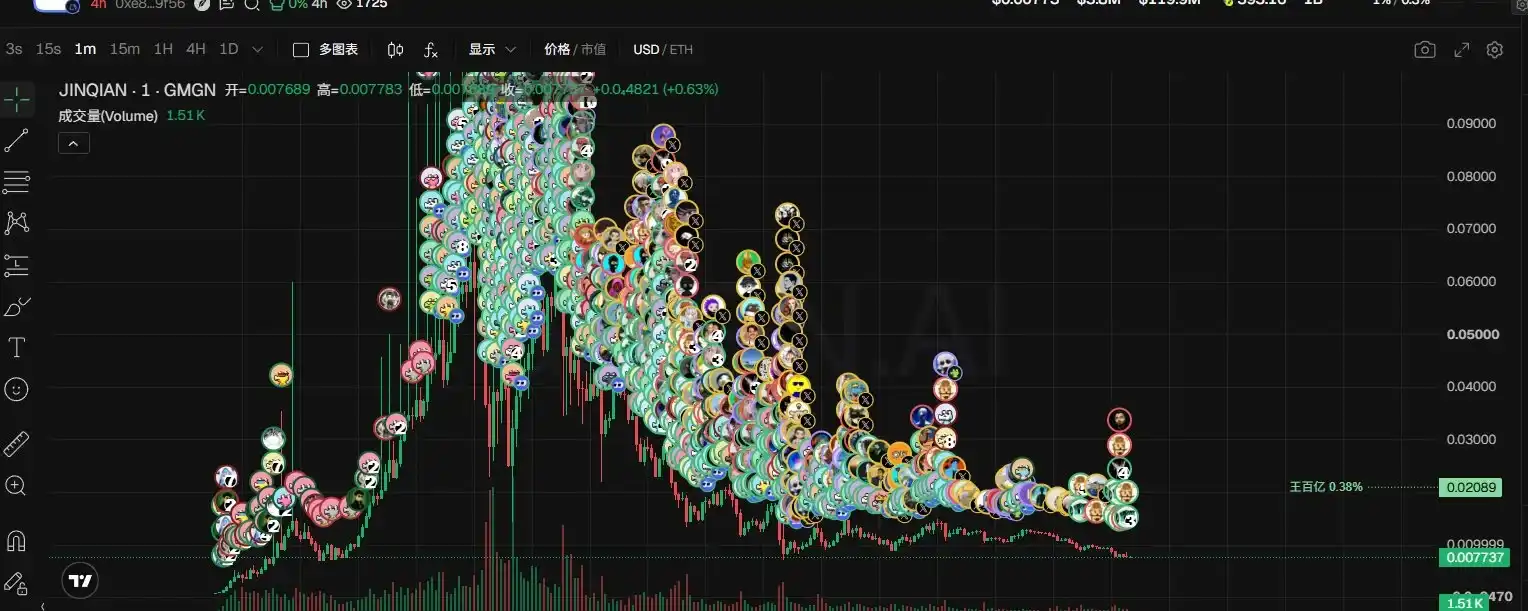
On September 2nd, on the Robinhood chain, a token called JINQIAN CA:0xe81880c1c5054245e036359f5c7be31606e79f56 saw its market cap surpass $70 million in just one hour.

JINQIAN, the Chinese pinyin for "money," was riding on the coattails of the NASDAQ-listed company Farmmi, which grows shiitake mushrooms. In Farmmi's annual report, there really was a record of a shiitake mushroom variety called Jinqian mushroom, which the community nicknamed the "money mushroom."

Meanwhile, Farmmi's main stock on NASDAQ, ticker FAMI, skyrocketed over 300% during the session, briefly touching around $0.4, with trading volume exploding to hundreds of millions of shares. A micro-cap company that was languishing around $0.12 a few days prior, with a market cap of just over $4 million, suddenly became the brightest star on the board.

On-chain, a token called "FAMI" also rose alongside JINQIAN, simultaneously pumping, its market cap once exceeding $100 million.

The story begins two days earlier.

A Good Narrative

On August 31st, crypto trader Rune (@RuneCrypto_) tweeted: He spent about $1.8 million to purchase 37.4% of the shares of a low-market-cap NASDAQ company over-the-counter (OTC). The numbers he provided were very specific: a market cap of about $4.8 million, a share price of about $0.12, and a short interest of 92.3%. This stock had nearly its entire float sold short.

He didn't hide his next plan either: tokenize this stock on the Robinhood Chain, then issue a paired meme coin, and use the on-chain funds to buy the actual stock to engineer a short squeeze. A short squeeze forces those who borrowed shares to short to buy them back at high prices to cover their positions.

This was, at first glance, a good story. Short squeezing is a narrative etched into Robinhood's bones.

On January 28, 2021, GameStop touched $483 intraday. A month before, it was at $18. Retail investors on Reddit bought a physical game disc seller into Wall Street's nightmare: short interest once exceeded 100% of the float. Shorts were waiting for it to go bankrupt, but ended up bleeding money. The leader was Keith Gill, known online as Roaring Kitty, who publicly tracked his position growing from $53,000 to $48 million, saying into the camera: "I like the stock."

Therefore, once Rune's story emerged, the only question was which company he had targeted. Because the community discovered that no NASDAQ stock simultaneously matched all the specific numbers he had disclosed.

But when emotions run high, details often get overlooked.

On September 2nd, when the community discovered the strange FAMI and JINQIAN tokens, they quickly connected the dots: Farmmi, NASDAQ ticker FAMI, a company in the edible mushroom business, with a product called JINQIAN mushroom, extremely small market cap. All the elements of a US meme stock were there. Let's go. (For the logic behind US meme stocks, see "The Logic of US Meme Stocks: Moving the Short Squeeze On-Chain, from BONER")

Emotions quickly soared.

The on-chain FAMI token surged 10x in an hour. Trading volume rapidly broke through $100 million. People rushed into the JINQIAN/FAMI liquidity pool: 4% transaction fee? Let's go. Slippage? Doesn't matter.

The actual stock wasn't idle either. NASDAQ-listed FAMI rose over 300% intraday, briefly touching $0.39–0.47, with trading volume expanding to hundreds of millions of shares. The on-chain FAMI token's market cap peaked near $100 million, nearly ten to twenty times the market cap of the actual company. A usually ignored mushroom company saw a single day's trading volume that could match its total volume from the past several years.

Why It Might Be a Scam

Amid the frenzy, Rune responded.

He said it wasn't him. That announcement about the acquisition—"I bought 37.4%," "I'm preparing to tokenize and squeeze"—was written and posted by Claude at his request. The person who actually issued the tokens on-chain and created the liquidity pool was someone else who borrowed his idea.

After the emotions subsided, someone checked the on-chain address of the token deployer. The truth was far more precise than the story.

The on-chain FAMI token contract was deployed on September 1st at 21:34 (UTC). It was a brand-new token minted just the previous afternoon.

Total token supply: 37,430,000 tokens. And Farmmi's actual stock also has a share count of approximately 37.43 million shares. The numbers align perfectly.

The deployer's first action wasn't a purchase, but a mint: transferring 14,223,400 tokens from the zero address to themselves. Do the division:

14,223,400 ÷ 37,430,000 ≈ 38.0%, very close to the 37.4% Rune mentioned.

Even the proportion of reserved tokens was performed according to the script. The token creator's goal was to make everyone believe: Rune is behind this.

But more important than truth or falsehood is another thing: This play was missing a crucial building block from the very beginning.

Robinhood has a hard requirement for its stock tokens, clearly stated in the official documentation: Only the official contract address is recognized. The same name, the same ticker, but a different contract address? Then it's not a Robinhood stock token. On-chain stock tokens can only be minted and issued by designated authorized participants to Robinhood Assets (Jersey), backed by corresponding custodial stock holdings. A community-issued token with the same name doesn't count. The ability to buy and sell FAMI stock in the stock trading app is part of the brokerage business page, a completely separate matter from on-chain stock tokens.

The official asset list includes over a hundred tickers: CRM, JNJ, LLY, QCOM... but FAMI, or Farmmi, is not on it.

This means there is no FAMI stock token on the Robinhood chain. The FAMI that skyrocketed was just a token with the same name, with no relation whatsoever to the stock. It was minted on September 1st.

What does this imply? The real US meme stock play, where the stock token serves as the other side of the liquidity pool, gets locked, and gets priced, requires that the stock first be on the official list and have an official stock token. FAMI simply isn't on the list. There never was a "FAMI stock token" on-chain. The FAMI that rose 10x today is just a token borrowing the ticker, with nothing backing it.

That transmission chain—on-chain funds buy meme coin → demand for tokenized stock → issuer buys actual stock on NASDAQ to engineer a short squeeze—only works when "that stock actually has an official stock token." FAMI isn't on the list.

The narrative was a good narrative. A heavily shorted small-cap stock, on-chain联动, a short squeeze—every word hits the nerves of the Robinhood retail crowd.

Unfortunately, the best narratives are often the ones that attract the wolves. Can retail investors really never win?


Related Questions

QAccording to the article, what are the two main cryptocurrencies that experienced a sharp price surge in connection with the Farmmi story?

AThe two main cryptocurrencies are JINQIAN (a meme token on Robinhood Chain) and FAMI (an unofficial token on Robinhood Chain with the same ticker as the Farmmi stock).

QWhat was the central investment narrative or plan proposed by trader Rune that fueled the speculative frenzy around Farmmi (FAMI)?

ARune's narrative involved acquiring 37.4% of a low-market-cap, heavily shorted NASDAQ stock (implied to be FAMI), tokenizing it on Robinhood Chain, and launching a paired meme coin to use crypto funds to buy the stock and engineer a short squeeze.

QWhy does the article argue that the 'FAMI' token surge was fundamentally disconnected from the actual 'meme stock' playbook?

AThe article argues that Robinhood Chain's official stock tokens are a whitelisted set of assets, and Farmmi (FAMI) is not on this list. Therefore, the surging 'FAMI' token was just a newly minted meme coin with no official link to the underlying stock, making the proposed mechanism of using crypto to drive a stock short squeeze impossible.

QWhat key detail did Rune later reveal that cast doubt on the legitimacy of the entire FAMI/JINQIAN event?

ARune later revealed that his original detailed plan for acquiring and tokenizing the stock was a text generated by the AI Claude. He was not the person behind the actual token launch and liquidity pool creation for FAMI and JINQIAN.

QWhat historical event is referenced in the article to explain why the 'short squeeze' narrative is particularly resonant on platforms like Robinhood?

AThe article references the GameStop (GME) short squeeze of January 2021, where retail investors on platforms like Robinhood coordinated to buy the heavily shorted stock, causing massive losses for hedge funds and epitomizing a 'meme stock' movement.

Related Reads

Hyperliquid API Wallet Permissions Keep Expanding: Once an AI Agent Is Attacked, It Could Drain the Main Account

As personal AI agents take over everyday financial decisions, Hyperliquid is seen as an ideal decentralized trading foundation thanks to its deep liquidity and composability. However, the API wallets that underpin automated trading have quietly seen their security boundaries erode across network upgrades over the past year. Lacking fine-grained permission policies, a compromised API wallet can even trigger staking slashing, spot locking, and priority fee burning, exposing the main account to total loss. The article traces how API wallets—originally scoped to prevent direct withdrawals or external transfers—have accumulated expanded permissions through successive upgrades, with no cap on margin exposure. A maliciously altered API wallet controlling an account with over ~$40M could buy 500,000 HYPE, stake it, link it to a malicious HIP-3 market, invite slashing, and lock the main account's funds for 183 days. Because API wallets are now the default trading method across the Hyperliquid frontend and third-party apps, and agents must interact with untrusted internet environments, prompt injection or key leakage can let attackers drain funds without ever stealing a private key. Existing fine-grained control via HyperEVM smart contracts introduces too much latency for high-frequency trading, while custodial solutions outsource trust to centralized middleware. The proposed fix is a lightweight bitmap permission field set at API wallet creation, recording which operation types the wallet may trigger—mirroring the mechanism already used in HIP-3 deployer sub-lists. Validating the signer against the main account's bitmap adds negligible overhead, and critically, old API wallets would never auto-inherit new permissions from future L1 upgrades. This would safely unlock staking and transfer interfaces, remove reliance on centralized custody, and pave the way for large-scale personal AI agent adoption on HyperCore.

marsbit21m ago

Hyperliquid API Wallet Permissions Keep Expanding: Once an AI Agent Is Attacked, It Could Drain the Main Account

marsbit21m ago

Upbit and Bithumb Customer Deposits Plunge 31.86%, Falling $1.87 Billion in 2026

Customer deposits in South Korean won at Upbit and Bithumb, South Korea's two largest crypto exchanges, fell 31.86% in the first nine months of 2026, according to regulatory disclosures published November 17. The platforms held about ₩5.36 trillion ($4 billion) in customer cash at end-September, down from ₩7.87 trillion at end-2025—a reduction of roughly ₩2.51 trillion ($1.87 billion). Upbit operator Dunamu saw deposits drop 31.9% from ₩5.83 trillion to ₩3.97 trillion, while Bithumb fell 31.8% from ₩2.04 trillion to ₩1.39 trillion. The figures were disclosed via South Korea's Financial Supervisory Service electronic filing system. Customer crypto holdings also lost value: Upbit's book value fell 10.9% from ₩62.23 trillion to ₩55.46 trillion, and Bithumb declined 13.1% from ₩17.90 trillion to ₩15.56 trillion. However, quantities of several major cryptocurrencies held for customers increased despite lower valuations—Upbit added 13,259 Bitcoin, 337,609 Ether and 1.22 million Solana versus year-end levels, and Bithumb reported higher holdings of Bitcoin, Ether, XRP and Solana. The data indicate the deposit decline does not necessarily mean investors withdrew entirely from the crypto market; disclosures do not explain whether funds went to bank accounts, crypto purchases or elsewhere. The drop comes amid weaker trading activity in South Korea's digital asset market, adding pressure on major exchanges.

TheNewsCrypto52m ago

Upbit and Bithumb Customer Deposits Plunge 31.86%, Falling $1.87 Billion in 2026

TheNewsCrypto52m ago

Trading

Spot
活动图片