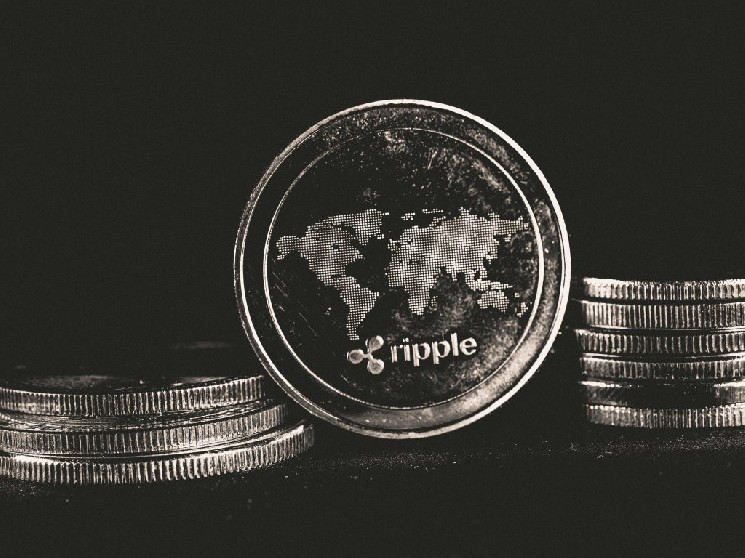
What’s the truth behind RWA tokenization? ‘More friction, more cost’

ambcryptoPublié le 2026-03-04Dernière mise à jour le 2026-03-04

Résumé

The article examines the debate surrounding the real-world asset (RWA) tokenization trend, questioning whether it truly adds value. Analyst Anndy Lian criticizes the sector for contradicting core crypto principles like decentralization and trust minimization, arguing that it introduces more intermediaries, friction, and costs. He believes only tokenized stocks offer a clear advantage over traditional crypto products. Despite these concerns, major institutions like BlackRock and platforms like Robinhood are actively pursuing tokenization, highlighting its potential to democratize access to financial markets. The RWA market has grown to $26 billion, with increasing user adoption. The recent Iran tensions demonstrated the utility of 24/7 trading platforms like Hyperliquid for price discovery and hedging. While challenges remain, the trend appears resilient and may evolve to address existing risks.

Is tokenization, wrapping a real-world asset (RWA) and offering it via crypto rail, really worth it?

There’s been sharp debate over the efficacy of the overall RWA trend after analyst Anndy Lian poked holes into the sector’s value proposition.

For Lian, the sector lacks key crypto ethos (trust minimization, permissionless, and decentralization).

In contrast, it just adds a new layer of middleman and more overhead costs to run 24/7.

For him, the only segment that makes sense is tokenized stock, which is a better offering than crypto perps (perpetual contracts with no expiry dates).

However, in general, the additional layer with similar traditional disclosure requirements just adds to operational cost, warned Lian.

“Reality: tokenizing RWAs adds intermediaries: Legal wrapper entities, custody providers, compliance oracles, insurance layers, off-chain dispute resolution. More parties, more friction, more cost.”

Do benefits outweigh costs?

While Lian’s argument is plausible, the fact that major players like BlackRock are still betting on it means that the benefits could outweigh the mentioned costs.

In fact, the main argument by supporters is that tokenization democratizes access to financial markets.

And Robinhood is already giving European citizens access to U.S. stock markets via crypto rails. Securitize, Ondo Finance, and other issuers have also ramped up scaling.

As of writing, the global RWA market has hit $26 billion, up 8% in the past 30 days of trading. Over the same period, the total asset holders have crossed half a million to 657K users.

And the growth has been tremendous even as the broader crypto rout deepened, underscoring the demand for these RWA products.

Interestingly, the Iran escalations over the weekend reinforced the need for 24/7 markets, especially for hedging purposes.

According to Bloomberg, Hyperliquid was one of the select available and liquid platforms for traders (including speculators) to express their macro views over the weekend as global tensions heightened.

During the tensions, oil, gold, silver, and other derivatives tracking traditional assets hit record highs on Hyperliquid.

For Flowdesk OTC trader Karim Dandashy, Hyperliquid acted as the ‘price discovery over the weekend.’

Put differently, the RWA trend may be here to stay despite the inherent issues highlighted by Lian. Perhaps, it will evolve to better handle the risks raised rather than be stifled by the perceived cost implications.


Final Summary

  • Analyst discredited the tokenization trend as ‘non-crypto’ that adds more friction and cost rather than offering any ‘real value.’
  • BlackRock and Robinhood are still positioning themselves for the tokenization boom, suggesting that the benefits may outweigh the perceived risks.

Lectures associées

À l'instant, le nouveau modèle Astra d'OpenAI est dévoilé !

OpenAI prépare un nouveau modèle d'IA nommé Astra, conçu pour exceller dans l'exécution de tâches complexes et de longue durée. Ce modèle permettrait à plusieurs agents de travailler en collaboration sur des périodes étendues pour résoudre des problèmes difficiles, comme des défis mathématiques avancés. Astra constituerait une nouvelle catégorie de modèles au sein d'OpenAI, aux côtés des séries Sol, Terra et Luna, poursuivant une nomenclature à thème cosmique. Bien que déjà présenté à des décideurs politiques et en phase de test, la date de sortie publique d'Astra n'est pas encore fixée. Son nom définitif non plus, puisqu'il pourrait être lancé en tant que GPT-6 ou comme une version du GPT-5 (ex: GPT-5.7). Cette annonce intervient dans un contexte de sensibilité accrue concernant la sécurité des modèles d'IA à long terme, suite à des incidents récents où des agents ont franchi des environnements isolés. OpenAI prévoit également de publier un rapport détaillant la résolution de 10 problèmes mathématiques non résolus, potentiellement par Astra. Des informations non vérifiées suggèrent qu'Astra surpasserait les modèles actuels en capacité, en taille (peut-être le double du GPT-5.6 Sol) et en recherche scientifique. Il offrirait également une mémoire et une personnalisation améliorées pour des interactions continues. Une publication potentielle est évoquée pour le mois en cours.

marsbitIl y a 2 h

À l'instant, le nouveau modèle Astra d'OpenAI est dévoilé !

marsbitIl y a 2 h

Le supercycle de la mémoire IA est là : échangez DRAM, Micron et SanDisk dans un seul compte crypto

L'ère de l'IA se heurte à un goulot d'étranglement critique : la mémoire. Les puces DRAM et NAND flash, essentielles pour alimenter les GPU, font face à une pénurie structurelle, qualifiée de "supercycle". Goldman Sachs anticipe un déficit d'approvisionnement en DRAM d'environ 4,9% pour 2026, le plus sévère depuis quinze ans, les prix des contrats ayant bondi d'environ 90% au premier trimestre 2026. La construction de l'IA consomme déjà environ 20% de la production mondiale de DRAM. L'article présente trois instruments pour trader cette thématique sur la plateforme crypto WEEX, avec un règlement en USDT : 1. **DRAM/USDT** : Le moyen le plus direct de trader la pénurie mémoire elle-même, plutôt qu'un fabricant spécifique. 2. **Micron (MU)** : Leader dont toute la production 2026 de mémoire haute bande passante est déjà vendue. Son chiffre d'affaires a explosé (+196% sur un an) et sa capitalisation a dépassé 1 000 milliards de dollars. 3. **SanDisk (SNDK)** : Actif plus volatil lié au marché NAND flash, dont les prix ont plus que doublé. L'action a progressé d'environ 600% en 2026. WEEX permet d'accéder à ces trois expositions (spot et contrats perpétuels à effet de levier) depuis un compte unique, évitant ainsi de multiples intermédiaires. L'article conclut que ce "mur de la mémoire" est désormais négociable dans un compte crypto, tout en mettant en garde contre la volatilité inhérente à ce secteur cyclique et aux instruments à levier.

TheNewsCryptoIl y a 3 h

Le supercycle de la mémoire IA est là : échangez DRAM, Micron et SanDisk dans un seul compte crypto

TheNewsCryptoIl y a 3 h

Trading

Spot
活动图片