# Freedom Related Articles

HTX News Center provides the latest articles and in-depth analysis on "Freedom", covering market trends, project updates, tech developments, and regulatory policies in the crypto industry.

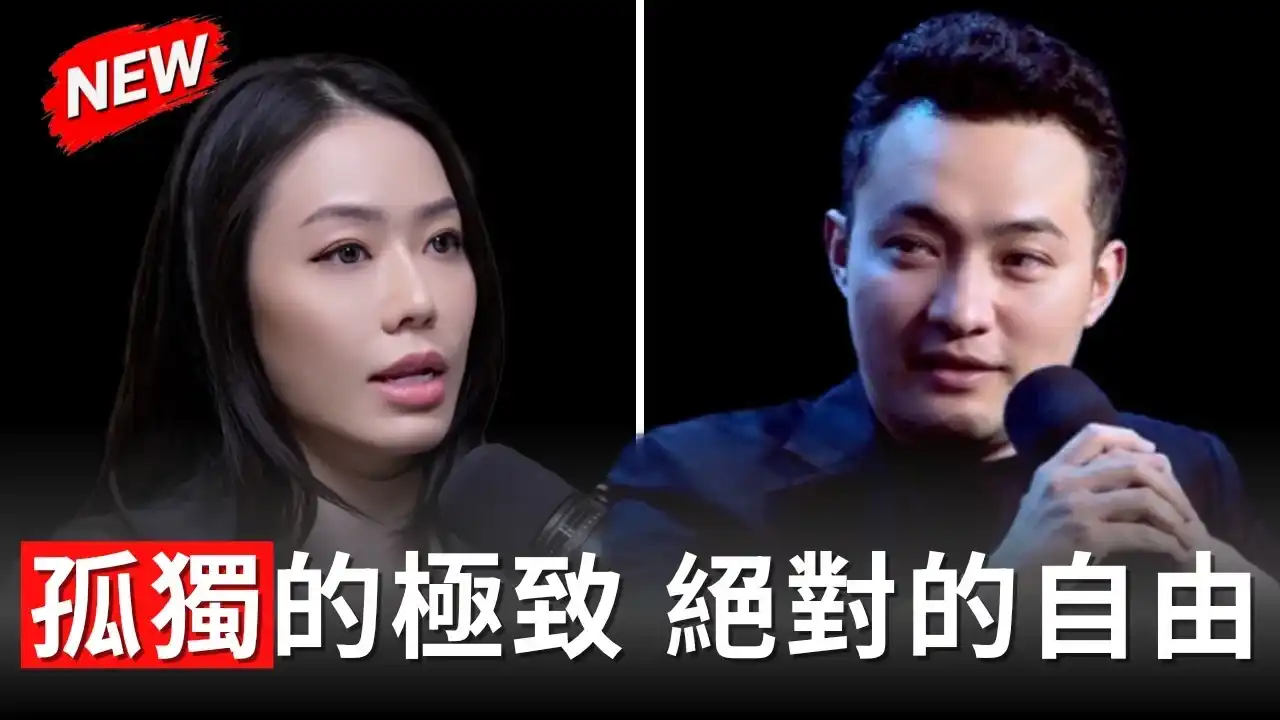
Podcast Notes|A Conversation with Justin Sun: Ultimate Loneliness, Also a Form of Freedom

Podcast Notes: A Conversation with Justin Sun - Extreme Loneliness is Also a Form of Freedom Guest: Justin Sun, founder of TRON. Host: Bonnie Blockchain. Podcast Source: YouTube, aired October 14, 2026. Key Summary: Sun warns that the "Quantum Threat Day (Q-Day)" is severely underestimated by Wall Street. A quantum computer or advanced AI could potentially breach the early public keys of Satoshi Nakamoto, threatening approximately 1 million Bitcoin and causing catastrophic impact. TRON is already deploying NIST post-quantum cryptography standards on its testnet. TRON's dominance is reinforced by over $94 billion in USDT circulation (more than half the market), over 400 million real users, and ~500,000 new daily users, creating a network effect "moat" akin to Facebook. It plans to launch tokenized U.S. stocks (like QQQ and S&P 500) in Q4. Sun established a million-dollar "Justin Sun Prize," modeled on bug bounties, to accelerate academic awards in the AI era. It rewards formal proofs of mathematical breakthroughs using systems like Lean, regardless of whether the solver is human or AI. OpenAI has already won one award. Reflecting on investing in the Trump-family project World Liberty Financial (WLFI), Sun states it was a decision made out of necessity ("helpless") with insufficient prior commitments. Sun's childhood, marked by being sent to a Go boarding school in Wuhan at age nine and his parents' subsequent divorce, shaped his worldview that "extreme loneliness is also a form of freedom." This early independence gave him the courage for extraordinary ventures like signing for a moon mission. His high-profile actions—spending $6.2 million on a banana, auctioning a lunch with Warren Buffett, meeting Elon Musk, signing up for space travel—are not marketing stunts but "priceless, ultimate life experiences" he actively seeks.

marsbit10/15 12:11

Podcast Notes|A Conversation with Justin Sun: Ultimate Loneliness, Also a Form of Freedom

marsbit10/15 12:11

How Much Cash Should We Really Hoard?

Title: How Much Cash Should We Actually Hold? From an asset allocation perspective, experts hold starkly different views on how much cash or cash equivalents one should hold. Legendary investor Charlie Munger advised keeping a large cash reserve for opportunities, while Ray Dalio famously calls cash "trash" due to currency debasement. Warren Buffett suggests a 90/10 split between the S&P 500 and short-term treasuries for his heirs. Nassim Taleb’s "Barbell Strategy" proposes allocating 90% to ultra-safe assets (cash/T-bills) and 10% to highly speculative, high-upside bets, creating an "antifragile" portfolio resilient to shocks while capturing extreme gains. The article argues the correct strategy depends entirely on the individual. For a young professional with health, time, and future earning potential, the "safe" left side of the barbell is already substantial. They can afford to allocate more savings to volatile, long-duration assets (like tech stocks, bitcoin) or self-investment (education, side hustles). For a mid-career professional, the calculus changes. With potentially limited career upside and higher vulnerability to job loss, building a substantial cash safety net (the barbell's left side) becomes paramount. This cushion serves dual purposes: weathering crises and providing the psychological "oxygen" to endure volatility in risk assets without being forced to sell at lows. Ultimately, personal finance is deeply personal. The size of the safe "left side" must be sufficient to cover expenses in a worst-case scenario, tailored to one's unique life stage, risk tolerance, and obligations. As the author notes, unspent money grants the freedom of choice and the power to say "no"—it’s your "F*ck You Money" that buys independence.

marsbit10/14 09:20

How Much Cash Should We Really Hoard?

marsbit10/14 09:20

Everyone Thinks Cryptocurrency is Dead, But He Says It's About to Explode

Title: A Bullish Case Amidst Doubt: Bitcoin's Path for Ordinary Investors While many declare crypto dead, Scott Melker argues the opposite. In a wide-ranging interview, he reflects on the industry's evolution into a more institutionalized landscape in 2026. Dismissing the myth of trading success, Melker advocates for "boring" investment as the key to financial freedom for the average person. His core advice is straightforward: buy Bitcoin, consistently dollar-cost average, and hold. He warns against trying to time the volatile market, calling it a dangerous path where most lose out. Melker shares his journey from a DJ and trader to a media entrepreneur, highlighting the importance of building a durable brand based on reputation rather than hype. He acknowledges the structural shifts in the market, noting that many tokens fail to accrue value to holders, while assets with real institutional adoption, like Bitcoin, Ethereum, and Solana, will thrive. The lessons from the 2022 bear market are clear: avoid unrealistic yield traps and focus on hard assets. For investors, he recommends an 80% Bitcoin, 10% Ethereum, 10% Solana portfolio, using strategies to generate cash flow to buy more Bitcoin. Melker's ultimate goal is promoting Bitcoin to the mainstream, viewing it as the most critical financial asset for escaping the inflationary "rat race." His philosophy for 2026 and beyond is simple: "Bitcoin and chill." He urges investors to stay the course, emphasizing that the current market, with its institutional adoption and ETFs, represents the industry's best era yet.

marsbit08/10 18:42

Everyone Thinks Cryptocurrency is Dead, But He Says It's About to Explode

marsbit08/10 18:42

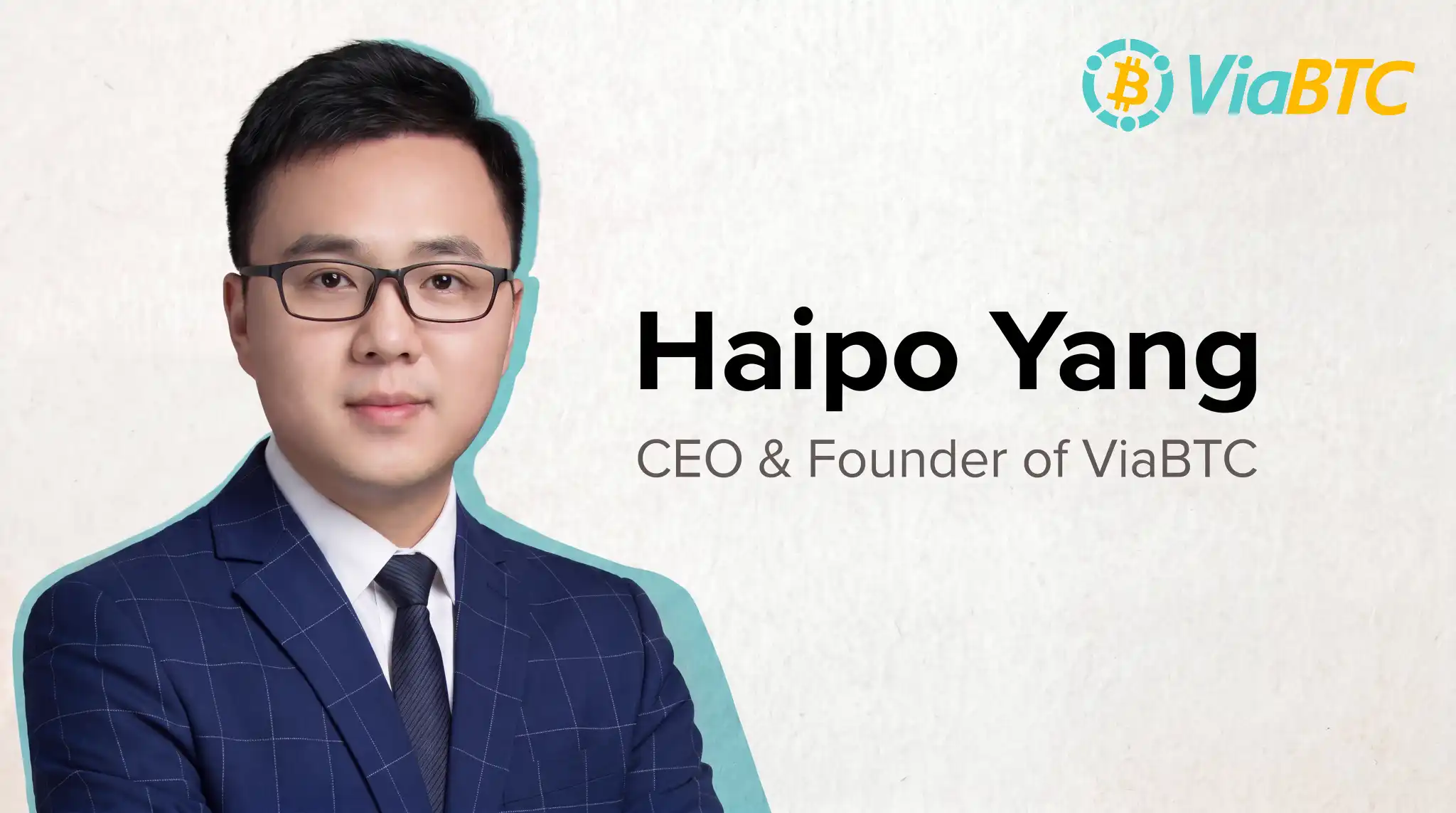
Dialogue with ViaBTC CEO Yang Haipo: Is the Essence of Blockchain a Libertarian Experiment?

"ViaBTC CEO Yang Haipo: Blockchain as a Hardcore Libertarian Experiment" In a deep-dive interview, ViaBTC CEO Yang Haipo reframes the essence of blockchain, arguing it is not merely a new technology or infrastructure but a hardcore libertarian experiment. This experiment, born from the 2008 financial crisis and decades of cypherpunk ideology, tests a fundamental question: to what extent can freedom and self-organization exist without centralized trust? The discussion highlights the experiment's verified outcomes. On one hand, it has proven its core value of censorship resistance, providing critical financial lifelines for entities like WikiLeaks and individuals in hyperinflationary or sanctioned countries via tools like stablecoins. However, Yang points out a key paradox: the most successful product, USDT, is itself a centralized compromise, showing users prioritize a less-controlled pipeline over pure decentralization. On the other hand, the experiment has exposed the severe costs of this freedom—a "dark forest" without safeguards. Events like the collapses of LUNA, Celsius, and FTX, resulting in massive wealth destruction and prison sentences for founders, underscore the system's fragility and the inherent risks of an unregulated environment. Yang observes that despite decentralized protocols, human nature inevitably recreates centralized power structures, speculative frenzies, and narrative-driven cycles (from ICOs to Meme coins), where emotion and belonging often trump technological substance. Looking forward, he believes blockchain's future is significant but niche. Its real value lies in serving specific, real-world needs for financial sovereignty and bypassing traditional controls, not as a universal infrastructure replacing all centralized systems. For the average participant, Yang's crucial advice is to cultivate independent judgment. True freedom is not holding a crypto wallet, but possessing a mind resilient to groupthink and narrative hype in a high-risk, often irrational market.

marsbit04/23 11:00
Dialogue with ViaBTC CEO Yang Haipo: Is the Essence of Blockchain a Libertarian Experiment?

marsbit04/23 11:00

Deciphering the Dispute Between Anthropic and the War Department: What Does Trump Intend?

The article reflects on the decline of the American republic, drawing a metaphor between the gradual process of death—observed during the author’s father’s passing—and the slow erosion of democratic institutions. It examines the recent conflict between AI company Anthropic and the U.S. Department of War (DoW) as a symptom of this decay. Under both Biden and Trump administrations, Anthropic’s Claude AI was approved for use in classified environments, subject to two policy restrictions: no mass surveillance of Americans and no use in fully autonomous lethal weapons. The Trump administration later reversed its stance, opposing the idea of a private company imposing policy limits on military technology and threatening to designate Anthropic a "supply chain risk"—a move typically reserved for foreign-adversary companies. The author argues that this response reflects a broader breakdown in governance: the increased use of arbitrary state power, the decline of legislative process, and the erosion of property rights and predictable rule-of-law order. The confrontation raises fundamental questions about who should control advanced AI—private actors, the state, or yet-to-be-defined public mechanisms. While not causing institutional decline, the episode signals deeper dysfunction: the state’s willingness to coerce private entities and the blurring line between democratic oversight and government overreach. The author warns against equating "democratic control" with "government control" and calls for vigilance to protect civil liberties as AI and governance continue to evolve.

marsbit03/03 14:08

Deciphering the Dispute Between Anthropic and the War Department: What Does Trump Intend?

marsbit03/03 14:08

Once Laughed at as Crazy, Now Studied Frame by Frame: Justin Sun and the Decade-Long Comeback of 'Sun Studies'

The article chronicles the decade-long transformation of Justin Sun's public perception from being ridiculed to becoming a subject of intense study, known as "Sun Studies" or "Sun Xue." In early 2026, his decade-old book, *The World is Both Cruel and Tender*, surged to the top of WeRead's bestseller list, sparking widespread discussion on social media about his methods and philosophy. The core of "Sun Studies" is summarized as the "essence of winning." Despite an ordinary background, Sun made high-risk, high-reward bets throughout his career, from leveraging Bitcoin and Tesla stock to entering the crypto world. He consistently stayed at the table through regulatory shifts, market crashes, and public criticism, exemplified by his strategic acquisition of Huobi HTX. His investment philosophy centers on "doing what is correct from the future's perspective." This was demonstrated by his early bets on disruptive trends, founding the TRON blockchain, acquiring Steemit, purchasing and tokenizing a Picasso painting, and promoting concepts like the HTX DAO and decentralized platforms. The article draws a parallel between Sun and Elon Musk, describing Sun's tactics as a form of "dimensional reduction attack" from an outsider's perspective. His headline-grabbing stunts, like the record-breaking巴菲特午餐 (Buffett lunch) and eating a $6.2 million artwork banana, were calculated moves to capture global attention and reshape value perception through consensus and narrative. A key tenet of "Sun Studies" is the rejection of traditional stability. Sun advocates embracing uncertainty as the true incubator of wealth and freedom, allowing one to avoid compromising values for money. The article concludes by highlighting his most formidable, and perhaps inimitable, trait: an unyielding will and resilience that allowed him to thrive under immense pressure and constant scrutiny. Ultimately, "Sun Studies" represents a clear-eyed realism—acknowledging the world's cruelty while recognizing it rewards those who understand its rules and are willing to face the consequences.

marsbit01/30 13:49

Once Laughed at as Crazy, Now Studied Frame by Frame: Justin Sun and the Decade-Long Comeback of 'Sun Studies'

marsbit01/30 13:49

活动图片