# Data Centers Related Articles

HTX News Center provides the latest articles and in-depth analysis on "Data Centers", covering market trends, project updates, tech developments, and regulatory policies in the crypto industry.

Nvidia turmoil tests Bitcoin miners’ AI funding plans

Jensen Huang’s departure from Nvidia comes as Bitcoin miners commit billions to risky AI infrastructure pivots, raising investor questions about whether large AI contracts can generate cash flows to justify construction costs, support debt service, and yield a sustainable business model. The pivot replaces Bitcoin exposure with construction, financing, and customer credit risks, so companies with already-funded projects, usable power, and enforceable payment commitments may deliver sharply different returns than peers still dependent on additional capital and regulatory approvals. Huang’s departure affects miners through Nvidia’s overlapping roles as supplier, customer, and financier: IREN signed a five-year, $3.4 billion cloud services contract with Nvidia in May, and Nvidia invested $2 billion in CoreWeave in January. IREN and Applied Digital fell during the Nov. 12 AI selloff after Huang’s departure; for companies seeking equity financing, lower share prices mean issuing more shares to raise the same amount. JPMorgan credit analyst Erica Spear said new deals could take longer or require more compensation, and a slowdown in Nvidia investments, guarantees, or capacity purchases could raise financing costs and delay construction, while tighter funding for cloud-provider tenants could weaken demand for additional capacity. A financing retreat has not been confirmed, and Nvidia’s board said it expects operations, customer commitments, and its product roadmap to continue uninterrupted. The AI data center industry also comprises diverse business models—leasing powered land, operating colocation facilities, and owning GPUs to sell computing services—each with different construction requirements, operating responsibilities, and equipment replacement exposure.

cointelegraphYesterday 02:16

Nvidia turmoil tests Bitcoin miners’ AI funding plans

cointelegraphYesterday 02:16

Global Chip Stocks Retreat Nearly 40% from Peak: Has the AI Bubble Burst?

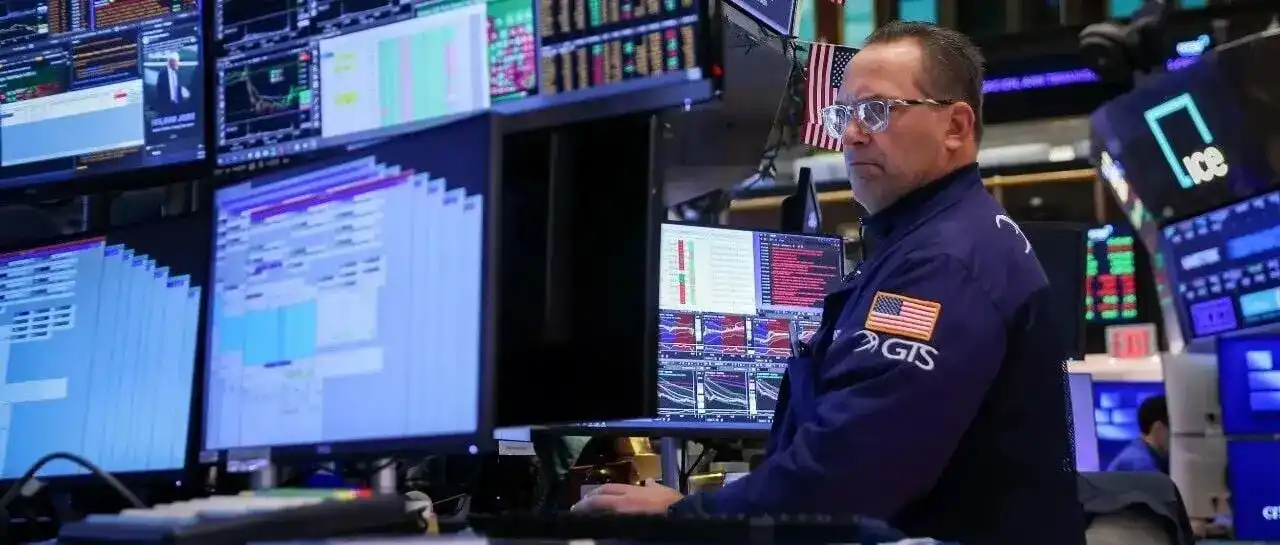
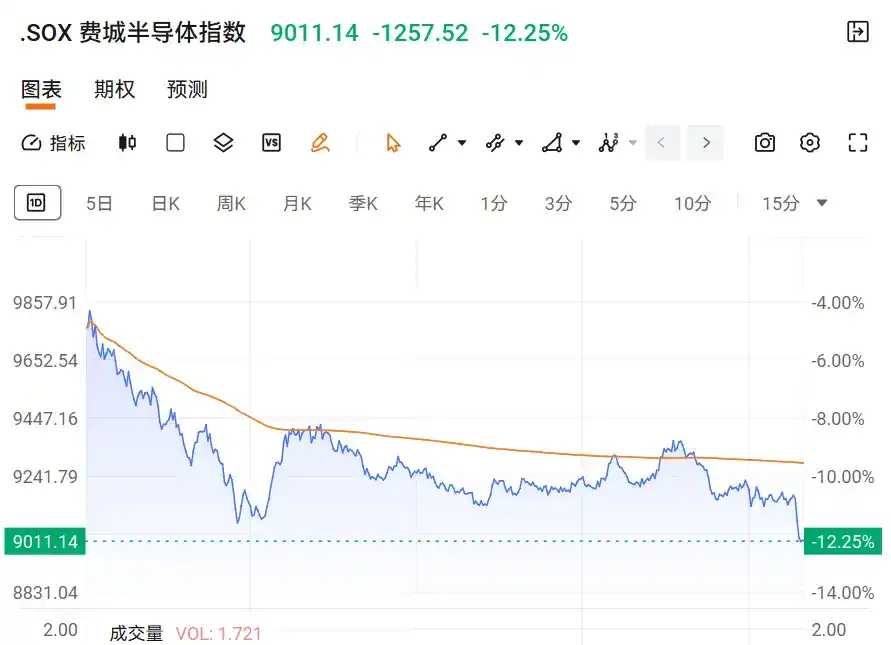
Nvidia is set to report its fiscal Q3 2027 earnings after market close on November 17, but the call will be led by interim CEO and CFO Colette Kress, not Jensen Huang, who resigned as president, CEO, and board member effective November 12 following an apology letter to employees admitting infidelity and a board investigation into reports that he was a target of foreign intelligence activity. The report comes as investors question whether massive AI capital expenditures will pay off. On November 5, the Philadelphia Semiconductor Index plunged 12.25%, its worst single-day drop since March 2020, with Nvidia falling 9.3% and losing about $447 billion in market value; Seoul's KOSPI triggered a circuit breaker the next day. Over the past month, Nvidia has shed nearly $1.4 trillion in market value from its early-October peak, the semiconductor index has pulled back nearly 40% from its June 22 peak of 14,634, Oracle is down over 30% year-to-date, and CoreWeave has retreated about 70% from its June 2025 high. Yet the broader market looks calm: the Nasdaq is only about 12% off its high, and the equal-weighted S&P 500 hit a record during the selloff week—the crash is concentrated in AI. The timeline shows early warnings in Korea in June, with memory stocks falling first; Goldman's AI memory basket is down 51% from its June peak, the largest drawdown since ChatGPT launched. The selloff layered by proximity to end cash flow: memory worst, then leveraged neoclouds like CoreWeave, then power, chips, and optics, while cash-rich cloud giants held up, with the seven giants still up about 9.6% year-to-date before the crash. Nvidia's roughly 14x P/E isn't necessarily cheap—its revenue is others' capex, low multiples on cyclicals often mark peak profits, and chip index declines historically lead semiconductor sales drops by 6-9 months, suggesting real estimate cuts may not appear until Q1 2027. Meanwhile, orders are full but stocks still fall: Lumentum says data center optics are sold out for years, SanDisk beat for six straight quarters yet is down over 60% from its high, and CoreWeave's Q3 beat and $132.5 billion backlog didn't stop a 32% year-to-date decline. Hyperscaler capex guidance for 2026 totals $720-745 billion, up nearly 80% from 2025, but the market's reaction has turned cold—Google fell 12.6% on October 29, its worst day ever. Free cash flow is turning negative: the five biggest players spent $556.9 billion in the first nine months versus $542.9 billion in operating cash flow, with four of the seven giants seeing negative FCF for the first time in a decade, funded by debt—US cloud companies issued about $225 billion in bonds in the first nine months, up 973.7% year-over-year. Oracle's CDS spread widened from about 58 basis points a year ago to 295, and CoreWeave's exceeded 1,000, with bond yields near 15%. The bond market is already pricing default risk while stocks debate bubbles. Politics adds a second layer: Democrats won both chambers in the November 3 midterms, and of 41 local data center ballot measures in 10 states, 40 went against data center construction. Texas, which holds 27% of planned US capacity, elected a governor promising a moratorium. Goldman estimates 45% of planned US data center capacity faces short-term pause risk. Buffers exist—the new Congress seats in January 2027, any restrictions face a presidential veto, and UBS estimates only about 30% of planned 2028 capacity would be affected. Demand hasn't broken; what broke is the belief that spending alone lifts stocks—AI is moving from storytelling to audit. Whether the pullback becomes a collapse depends on three readings: whether cloud giants' free cash flow turns positive, whether Oracle and CoreWeave credit spreads keep widening, and whether state-level data center restrictions take effect.

marsbit2 days ago 13:31

Global Chip Stocks Retreat Nearly 40% from Peak: Has the AI Bubble Burst?

marsbit2 days ago 13:31

The AI Bills of the Magnificent Seven: Who Can Still Afford to Pay?

After the U.S. midterm elections, Wall Street's optimism about AI reversed sharply. On November 5, the "Magnificent Seven" lost about $1.04 trillion in market value in a single day, with Nvidia plunging 9.26% and shedding over $440 billion—far worse than its chip buyers Microsoft, Google, and Amazon. The selloff was triggered by fears that the new Congress could tighten AI regulation and slow data center construction. Despite strong fundamentals—Nvidia's revenue doubled year-over-year, and cloud and advertising businesses kept growing—investors worry that massive AI capex has not yet translated into equivalent profits. The four major buyers (Microsoft, Google, Amazon, Meta) are spending more than their operating cash flow can support: a year ago they had a $61.7 billion surplus, but in Q3 this became a $26.4 billion deficit. Companies are increasingly relying on debt, with the five largest cloud providers issuing about $121 billion in dollar bonds in 2025—over four times the previous five-year average. Nvidia is most exposed because over 90% of its revenue depends on data centers, and 40 of 41 local data center-related ballot measures in 10 states leaned toward restricting development, with 27 restrictive proposals passing. Texas alone accounts for nearly 30% of planned 2028 U.S. computing capacity. Analysts note that projects already under construction for 2027 are largely safe, but 2028 plans face real risk. Apple is relatively insulated due to its phone and services profit base, while Tesla fell the most, also hurt by Musk's political spending. The key question remains who will pay the next massive bill—and whether buyers can keep building fast enough to sustain Nvidia's growth.

marsbit11/07 22:06

The AI Bills of the Magnificent Seven: Who Can Still Afford to Pay?

marsbit11/07 22:06

Isolated Trump, Uncontrolled AI

The article examines how the 2026 U.S. midterm elections, in which Republicans lost control of both chambers of Congress, have weakened President Trump's political position and complicated his AI-driven economic agenda. Styled as "Mr. Veto" and armed with a red VETO hat, Trump can block Democratic legislation but cannot easily advance his own priorities, making economic results—especially in AI—his key remaining card. The White House's 2025 AI Action Plan and push to fast-track data center approvals reflect this bet, with Microsoft, Alphabet, Amazon and Meta spending roughly $202 billion on capital projects in a single quarter. However, the article argues AI expansion is now hitting social and resource constraints. Residents in San Jose and Santa Clara—the heart of Silicon Valley—are protesting data centers over electricity, water and noise concerns; data centers already consume about 54% of Santa Clara's power. Wall Street has also turned cautious, with the Nasdaq dropping sharply after the election and UBS estimating about 30% of planned 2028 U.S. data center capacity faces construction risk. The piece concludes that AI is shifting from a capital-intensive tech race to a resource-intensive industrial competition, constrained by energy, land, local approval and cost-sharing. Trump's veto power can answer Congress but not these challenges; AI growth is no longer his alone to decide. The deeper bottleneck, the article suggests, is not computing power but time—technology advances monthly, data centers take years, grids take decades, and politics runs on election cycles.

marsbit11/06 14:16

Isolated Trump, Uncontrolled AI

marsbit11/06 14:16

Rare! Is the panic in US AI stocks over?

The article discusses a rare panic in US AI stocks, with the Nasdaq falling 5.52%, the S&P 500 dropping 4.36%, and the Dow down 3.44%, while the tech giants lost about $1 trillion in market value in a single day. The Philadelphia Semiconductor Index fell over 12%, with SanDisk down 22%, Micron and AMD down around 17%, and Nvidia down more than 9%. The selloff had three main triggers. First, the midterm elections' "blue wave" sparked fears of AI regulation: Democrats won both chambers of Congress and made breakthroughs in key data-center states like Texas and Georgia, raising concerns about stricter environmental, power, and land-use approvals—UBS estimates about 30% of planned new US data-center capacity could be affected. Second, anxiety over AI investment returns shifted from sentiment to earnings pressure, as Google, Amazon, and Meta face free-cash-flow strain and Intel's guidance disappointed. Third, semiconductor and computing-chain valuations were too high with crowded positioning, so programmatic stop-losses and leveraged unwinding amplified the decline. A rising VIX, hawkish Fed signals, higher oil prices, and pressure from the dollar and Treasury yields also weighed on high-valuation growth stocks. The article argues the Democratic negative is not simply priced in. Markets have only completed the first layer of pricing—the election outcome itself—while the real impact on AI valuations depends on subsequent policy implementation, which remains uncertain and hard to quantify into profit, cash-flow, and valuation models. Short-term policy uncertainty is underpriced. Nvidia's earnings on the 17th may offer data and views. Qualitatively, AI is not being banned, but expansion may slow—moving from a green light to waiting at certain intersections. Chip, storage, optical module, data-center operator, and power-equipment names are most sensitive to construction pace, while cloud giants with large operating compute have more buffer. Some institutions see a reverse logic: firms may rush capex before rules land, and existing compute could become scarcer. Overall, the shock reveals prior high expectations and valuations; a brake isn't necessarily bad, and the AI industry trend remains clear. For investors, it's catching a falling knife—avoid until clarity emerges. Watch Democratic officials' remarks and AI companies' views, plus earnings, especially Nvidia on the 17th and Micron next month.

marsbit11/06 11:21

Rare! Is the panic in US AI stocks over?

marsbit11/06 11:21

A Counter-Consensus Logic: The Anti-AI Movement Won't Make Demand Disappear, But It Gives the Industry More Time to Absorb the Bubble

The article discusses an unexpected variable in the AI industry following the US midterm elections: the rise of anti-data-center politics. Democrats won key states like Texas and Georgia, with some candidates pledging to pause or tighten approvals for new data center construction. This has raised market concerns about slower AI infrastructure expansion, affecting chip stocks such as Samsung and SK Hynix. However, tech author Derek Thompson offers a counterintuitive view: while anti-AI politics may hurt AI stocks in the short term, it could help the industry avoid a bubble in the medium to long term. His logic rests on a common lesson from tech history—many bubbles burst not because the technology lost value, but because infrastructure investment ran far ahead of real demand, as seen with 1870s railroads and fiber networks after the dot-com crash. Unlike those cases, AI compute supply remains tight and demand is growing fast. The real risk may be capital deployed too quickly, creating future oversupply if AI commercialization disappoints. If political resistance slows data center construction, supply growth could decelerate while demand keeps rising, allowing the gap to narrow. Thus anti-AI activism might unintentionally act as a brake on capital enthusiasm, giving the industry time to absorb existing infrastructure. Short term, projects face delays and AI stocks may come under pressure; long term, slower supply expansion could reduce the risk of infrastructure glut. Economist Adam Tooze ironically noted that anti-AI regulation could benefit AI by "managing the bubble," making it an unwitting agent of capital's collective interest. The view remains a hypothesis, depending on how much supply is actually restricted, whether demand keeps growing, and whether compute investment translates into real revenue.

marsbit11/05 23:26

A Counter-Consensus Logic: The Anti-AI Movement Won't Make Demand Disappear, But It Gives the Industry More Time to Absorb the Bubble

marsbit11/05 23:26

Can decentralized phone networks power the AI revolution?

The article explores whether decentralized networks of everyday smartphones could help power AI, reducing reliance on energy- and water-intensive data centers. With an estimated 7.68 billion mobile connections worldwide and billions of idle smartphones, projects like Acurast and Phase aim to turn these devices into distributed infrastructure. Acurast claims over 335,000 onboarded smartphones, with about 40,000 active daily, providing capacity for tasks like web scraping, cybersecurity, AI inference, and agent hosting. It says its active phones match roughly 2,340 high-end data-center servers. Phase Proxy uses users' mobile and residential connections as proxies for AI agent traffic, with plans for a router directing tasks based on complexity and cost. However, coordination remains difficult: phones disconnect, overheat, run out of battery, and vary in power, making predictable service challenging. Some experts argue decentralized networks may be better suited to collecting and verifying real-world data than running AI models. Economically, using existing hardware avoids data-center capital costs, but connectivity, coordination, and incentives still matter. Acurast rewards participants from an inflation-funded pool based on uptime, hardware performance, staking, and compute demand, while Phase plans to use service revenue to buy and distribute tokens to node operators. Ultimately, running AI on phones is technically feasible; making the economics work while coordinating tens of thousands of devices like a reliable cloud service is the real challenge.

cointelegraph11/05 21:36

Can decentralized phone networks power the AI revolution?

cointelegraph11/05 21:36

Circuit Breaker Again! US Midterms Spark Market Storm, Why Is South Korea's Stock Market Hit First?

US midterm elections delivered a historic "blue sweep" for Democrats, who won control of both chambers of Congress and governorships in key data-center states such as Texas, Ohio and Georgia. The result triggered sharp fears of tighter regulation and permitting delays for new AI data centers, sending shockwaves through Seoul's markets. On November 5, KOSPI opened down 1.82% and widened losses throughout the day, triggering a sell-sidecar circuit breaker before noon. By 2:25 p.m., KOSPI had fallen 5.50% to 5,371.41, while KOSDAQ dropped 5.11% to 678.4, marking a rare same-day triggering of market stabilization mechanisms on both indices. Samsung Electronics and SK Hynix plunged 7.8% and 9.81% respectively. Because the two chipmakers account for over half of KOSPI's market capitalization, semiconductor sentiment has an outsized effect on the benchmark index. Texas governor-elect Gina Hinojosa pledged to immediately pause approvals for all new data centers, and DataCenterWatch analysis cited by the Texas Tribune found that 43% of 74 gubernatorial candidates across 36 states supported pausing or banning new data-center construction. The selloff was amplified by the prior US session's divergence: while the S&P 500, Dow and Nasdaq rose, large tech names gained over 5% while semiconductor stocks such as Nvidia, Micron and Intel fell 3-8%, and the Philadelphia Semiconductor Index hit a six-month low. Korean semiconductor and power-equipment shares bore the brunt. Samsung Electronics fell 5.39%, SK Square 6.56% and Samsung Electro-Mechanics 10.31%. KOSDAQ equipment makers Jusung Engineering, Simmtech and EO Technics dropped 10.23%, 13.90% and 11.72%. Transformer makers Hyosung Heavy Industries, HD Hyundai Electric and Sanil Electric fell 10.10%, 7.53% and 12.84% on concerns that delayed data-center construction will cut demand. Analysts noted that Democratic wins in data-center hubs raised worries over grid access, permitting and power-cost regulation, and that heavily indebted data-center builders face higher financing costs and profit pressure if projects slip. Tighter AI regulation could disrupt Big Tech capex plans, delaying revenue realization from compute commitments to OpenAI and Anthropic and weighing on demand for high-bandwidth memory and advanced chips. Some analysts were more sanguine. The Bank of Korea's New York office said the results are unlikely to shift the Trump administration's overall policy direction, with only limited impact on AI regulation and investment pace. Professor Yang Jun-seok noted Democrats lack the two-thirds majority needed to override presidential vetoes, limiting real policy scope, though clearer restrictive stances plus existing pressures—public concern over jobs, energy bills and water use, and tech debt from AI spending—could become a meaningful additional drag. NH Investment's Jo Yeon-ju argued Democrats understand AI's strategic importance and will likely compensate locals rather than impose sweeping delays, calling the impact "a storm in a teacup." Renewable-energy shares were seen as potential beneficiaries, with solar, wind, nuclear and ESS stocks expected to gain as support policies revive.

marsbit11/05 16:21

Circuit Breaker Again! US Midterms Spark Market Storm, Why Is South Korea's Stock Market Hit First?

marsbit11/05 16:21

Musk Spends Nearly $500 Million on Election Support but Loses, Net Worth Shrinks by $60 Billion Overnight

US midterm elections dealt a double blow to Elon Musk. After Democrats won control of Congress and key races in Texas, Tesla and SpaceX shares fell (about 5.7% and 7.6% premarket), cutting Musk's paper wealth by over $60 billion. Musk had donated at least $474 million in the 2026 cycle, roughly $224 million of it to Texas races, backing Republican Senator Ken Paxton and hoping to keep Republican control of Congress and Texas. Instead, Democrat James Talarico won the Texas Senate seat and Gina Hinojosa defeated incumbent Governor Greg Abbott. The outcome matters because Tesla and SpaceX are headquartered in Texas and have major manufacturing and infrastructure investments there. Market concerns center on three areas: AI investment, government contracts and regulation. New Texas Governor Hinojosa is cautious about large data center projects, favoring a pause on new approvals until rules on power and water use and community protections are in place, and opposing excessive tax breaks for big tech—potentially delaying Tesla's AI, robotics and autonomous driving expansion and SpaceX's AI infrastructure plans. With Democrats controlling Congress, Musk's companies may face stricter scrutiny of SpaceX government contracts, federal workforce cuts and national security issues, though contracts are unlikely to be automatically terminated. The results could also add uncertainty to a potential Tesla-SpaceX merger, with Congress able to raise obstacles through hearings and investigations. Musk joked that space data centers now look more attractive. The key question for investors is whether the impact stays a short-term market fluctuation or affects long-term valuation through Texas regulation, congressional oversight and AI capex prospects.

marsbit11/05 14:46

Musk Spends Nearly $500 Million on Election Support but Loses, Net Worth Shrinks by $60 Billion Overnight

marsbit11/05 14:46

活动图片