# Cash Related Articles

HTX News Center provides the latest articles and in-depth analysis on "Cash", covering market trends, project updates, tech developments, and regulatory policies in the crypto industry.

How Much Cash Should We Really Hoard?

Title: How Much Cash Should We Actually Hold? From an asset allocation perspective, experts hold starkly different views on how much cash or cash equivalents one should hold. Legendary investor Charlie Munger advised keeping a large cash reserve for opportunities, while Ray Dalio famously calls cash "trash" due to currency debasement. Warren Buffett suggests a 90/10 split between the S&P 500 and short-term treasuries for his heirs. Nassim Taleb’s "Barbell Strategy" proposes allocating 90% to ultra-safe assets (cash/T-bills) and 10% to highly speculative, high-upside bets, creating an "antifragile" portfolio resilient to shocks while capturing extreme gains. The article argues the correct strategy depends entirely on the individual. For a young professional with health, time, and future earning potential, the "safe" left side of the barbell is already substantial. They can afford to allocate more savings to volatile, long-duration assets (like tech stocks, bitcoin) or self-investment (education, side hustles). For a mid-career professional, the calculus changes. With potentially limited career upside and higher vulnerability to job loss, building a substantial cash safety net (the barbell's left side) becomes paramount. This cushion serves dual purposes: weathering crises and providing the psychological "oxygen" to endure volatility in risk assets without being forced to sell at lows. Ultimately, personal finance is deeply personal. The size of the safe "left side" must be sufficient to cover expenses in a worst-case scenario, tailored to one's unique life stage, risk tolerance, and obligations. As the author notes, unspent money grants the freedom of choice and the power to say "no"—it’s your "F*ck You Money" that buys independence.

marsbit10/14 09:20
How Much Cash Should We Really Hoard?

marsbit10/14 09:20

Andeli Cross-Border M&A: 793 Million in Cash Takes Over 'Disappointing Target', Two Regulatory Letters in Three Months Hint at Risks丨M&A Frontline

Chinese concentrated juice leader Anda Li (605198.SH) is rapidly pursuing a cross-border acquisition, agreeing to acquire a 62.06% stake in semiconductor materials firm Ningbo Yongqiang Technology for 793 million yuan in cash. The deal, valuing Yongqiang at approximately 1.278 billion yuan, marks a significant shift for Anda Li into the electronics sector. This transaction follows closely after Yongqiang's failed acquisition by another listed company, Yanjiang Co., Ltd., just three months prior, with valuation and performance guarantee terms cited as key disagreements. The swift progression and all-cash nature of Anda Li's deal have drawn scrutiny. The Shanghai Stock Exchange has issued two regulatory letters within three months regarding this acquisition, highlighting core concerns. These include the stark contrast between Yongqiang's recent financial performance—reporting a net loss of 43.27 million yuan in 2025 and minimal profit in Q1 2026—and its ambitious performance guarantees of 23 million, 42 million, and 70 million yuan in net profit for 2026-2028. Additional risks flagged are the high valuation premium and the challenges of integrating a business in an unfamiliar, technology-intensive industry for a traditional juice manufacturer. The article positions this move as Anda Li's attempt to cultivate a second growth curve amid potential bottlenecks in its core business, while underscoring the significant execution and integration risks inherent in such a cross-industry merger.

marsbit09/21 20:45

Andeli Cross-Border M&A: 793 Million in Cash Takes Over 'Disappointing Target', Two Regulatory Letters in Three Months Hint at Risks丨M&A Frontline

marsbit09/21 20:45

Quarterly Loss Nears $100M, Cash Surges 52%: Tool Seller Forced to Dig, Canaan Struggles for Survival

Canaan, a leading cryptocurrency mining hardware manufacturer, reported a brutal second quarter with revenue plunging nearly 70% and a net loss of $97.6 million. Confronted by a frozen market for its core mining rig business, the company executed a dramatic strategic pivot to survive the industry's severe downturn. The most significant shift was Canaan transitioning from primarily selling hardware to generating over half its revenue from self-operated mining. It deployed its own unsold inventory, boosting its proprietary hashrate to 10.05 EH/s and mining 243 Bitcoin. A key to profitability was slashing its average electricity cost to $0.043/kWh. The company also demonstrated pragmatic asset management, selling portions of its cryptocurrency holdings for approximately $13.9 million to boost liquidity and fund stock repurchases. Facing a steep 67% drop in mining rig sales to $13.6 million, Canaan took a $25.3 million inventory write-down to clear old stock valuations. Despite these challenges, it showcased resilient cash management, increasing its cash reserves by 52% to $66 million by quarter-end. While continuing R&D for next-generation miners, the company acknowledged ongoing pressure, forecasting low Q3 revenue. The market valuation has turned severely punitive, with Canaan's stock down roughly 85% from its peak, trading near its net asset value. Investors are weighing whether its $184 million in hard assets and operational mining infrastructure can sustain it until the next market cycle. Canaan's survival strategy of becoming a major miner itself is a high-stakes, capital-intensive gamble to outlast the crypto winter.

marsbit09/10 00:21

Quarterly Loss Nears $100M, Cash Surges 52%: Tool Seller Forced to Dig, Canaan Struggles for Survival

marsbit09/10 00:21

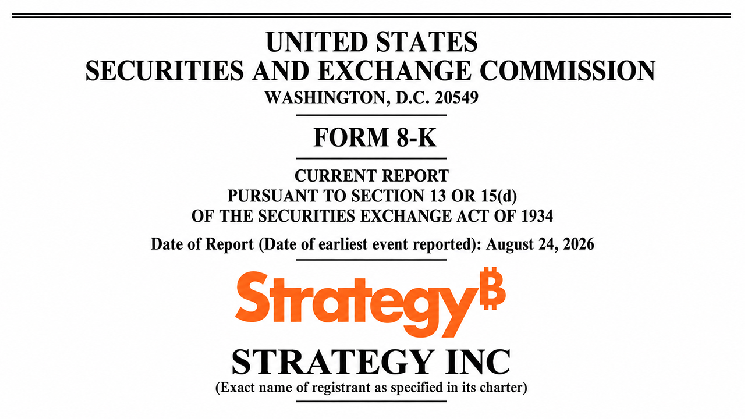
Strategy Repays Its Costs and Starts Hoarding US Dollar Cash Again

The article details a strategic shift by MicroStrategy, the world's largest corporate Bitcoin holder, as it pivots from aggressive Bitcoin accumulation to building substantial cash reserves. Following a 13% weekly Bitcoin rally above $78,000—which brought its massive 840,447 BTC holding back above its average cost basis of $75,385 per coin—MicroStrategy took no new Bitcoin purchases. Instead, the company raised approximately $2 billion by selling shares. It allocated these funds into two new US dollar pools: a restricted "USD Reserve" for debt/股息 payments (now holding $5.1B) and a flexible "USD Cash" pool ($1.59B) for potential market opportunities. This move marks a departure from CEO Michael Saylor's long-held narrative that cash is "melting ice." The primary driver is the need to meet fixed financial obligations, like the 12% dividend on its STRATeGY Preferred Shares (STRC), which have traded below their $100 face value. To support STRC's price, MicroStrategy has sold Bitcoin and used equity proceeds to repurchase these shares under a $1 billion buyback program. Analysts note this shift addresses immediate liquidity needs but highlights challenges in MicroStrategy's famed "flywheel" model. The model, which relied on issuing premium-priced stock to buy more Bitcoin, is impaired as the company's stock premium has evaporated. While the new cash reserves provide flexibility and time, they do not eliminate the underlying financial obligations. The article frames this囤积 of the once-scorned "melting ice" as a pragmatic adaptation to market pressures and a bid for operational flexibility amidst Bitcoin's volatility and regulatory scrutiny.

marsbit08/25 09:50

Strategy Repays Its Costs and Starts Hoarding US Dollar Cash Again

marsbit08/25 09:50

活动图片