Solving a 20-Year Math Problem, Microsoft Open-Sources Argus, Using Evidence-Driven Automatic Research for 1,548 Hours

marsbitPublished on 2026-09-07Last updated on 2026-09-07

Abstract

Microsoft, in collaboration with institutions like Shanghai Jiao Tong University, has open-sourced Argus, a general-purpose Agent reasoning runtime designed for long-term research tasks. The system addresses a key bottleneck in current AI agents: while they can execute actions (through "Harness"), they lack autonomous, long-term decision-making ("Driving") for projects spanning days. Argus introduces an "Evidence-Driven" approach, where the agent's next steps are determined by accumulated evidence rather than a rigid initial goal. This enables sustained, multi-day operation with minimal human intervention, averaging one human request per 40.7 hours over 1,548 hours of wall-clock time tested. The runtime architecture organizes work into Campaigns and Missions, employing a multi-agent loop with Manager, Planner, Engineer, and Reviewer roles. This separation of planning, execution, and validation improves efficiency and prevents local optimization. Argus is designed with a decoupled core and vertical components, allowing domain experts to customize workflows for fields like mathematics, GPU optimization, and chip design. In less than a month, Argus has delivered concrete research outcomes across AI4AI, GPU kernels, AI4Science, chip design, AI4Math, and AI4System tasks. These results demonstrate its ability to autonomously drive projects from execution to exploration of open-ended research questions, effectively transitioning the human role from a constant driver to a superviso...

From 'Capable of Execution' to 'Capable of Steerage': What Do Long-Horizon Agents Still Lack?

In the rapidly evolving field of Agents, Harness technology has already enabled large language models to interact with the real world, allowing them to call tools, modify code, and run experiments. However, when tasks extend from tens of minutes to several days, systems still require a human to remain at the screen long-term, judging where to go next.

The key bottleneck is not merely insufficient model capabilities, but that most existing Agents have automated "execution" but not truly automated the "steering" above execution. Harness grants the model the ability to act, while humans grant the model decision-making. Once the human leaves, the project stops. Moreover, without dense reward feedback, the Agent's execution and reactions can appear slow and clumsy.

To address this issue, Microsoft, Shanghai Jiao Tong University, and other institutions have open-sourced Argus, a general Agent reasoning runtime for long-horizon research tasks, and released a technical report. Through designs such as evidence-driven operation, self-evolution, multi-agent collaboration, and decoupling of core and vertical domains, the system enables Agents to extend research over multiple domains for days, even without dense standard feedback.

The report covers 27 Campaigns and 1,548 hours of wall-clock time. On average, it requested human intervention once every 40.7 hours; the working duty cycle was 95.1% to 98.7%. What Argus delivers is not just high benchmark scores, but a complete production-grade portfolio of results. The team presents achievements across a wide range of tasks including AI4AI, GPU Kernel, model training, AI4Science, chip design, AI4math, and AI4System, demonstrating Argus's generality and real research-grade intelligence.
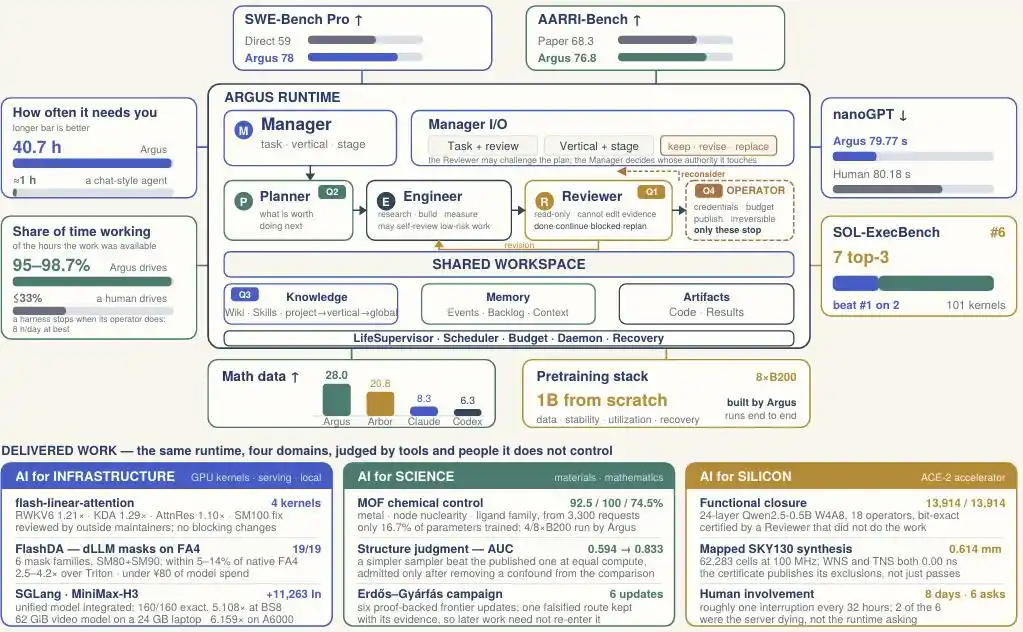
Figure 1: Overview of Argus runtime, capability benchmarks, and delivered results.
  • Paper Title: Argus: Who Drives the Harness for Days?
  • Paper: https://arxiv.org/abs/2608.05144
  • Code: https://github.com/lbx154/Argus
  • Project Homepage: https://argusbot.cn/
  • Project Results Repository: https://github.com/Argus-AiTeam
  • Project Math Problem Solving Live Stream: https://open.argusbot.cn/#counterexample-live

01

Shifting from Goal-Driven to Evidence-Driven:

Who Decides the Agent's Next Step?

Over the past two years, major progress in Agent engineering has centered on Harness: using the analogy of self-driving FSD, the model is like the engine, Harness is like the drivetrain, but the one truly deciding where the vehicle goes is still the person sitting at the screen. For short tasks, like standard automated parking, the task itself can still provide clear feedback; once tasks extend over days, research problems often lack both stable rewards and clearly defined goals from the start. Existing Agents thus reveal the true bottleneck: they can execute, but they still cannot make continuous judgments under uncertainty.
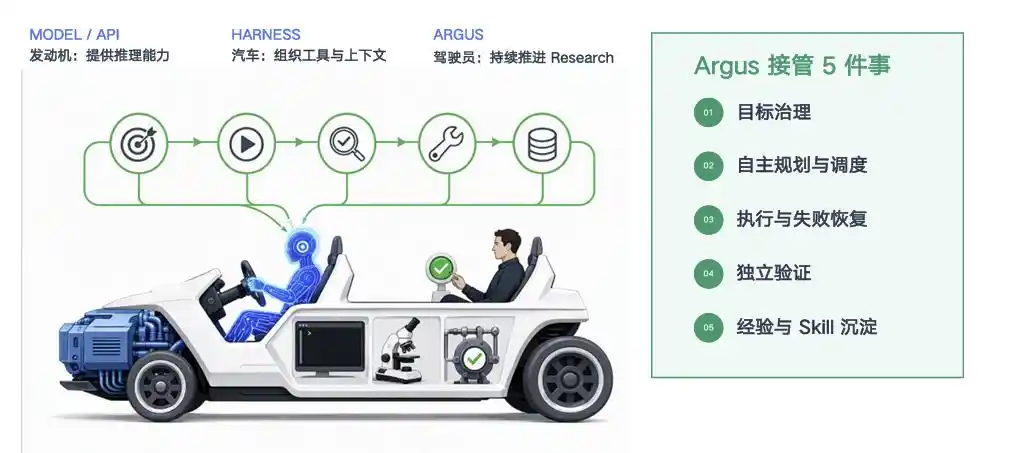
Figure 2: Argus transforms the human role from the ongoing driver's seat to a co-pilot by achieving auto-research for autonomous scientific inquiry.

Argus refers to the previously unautomated position above Harness as the Driver. Its job is to keep steering based on evidence even when plans conflict with reality. The goal written at the start of research is merely the initial hypothesis at the information-poorest stage; if the Agent can only chase preset endpoints in a Goal-Driven manner, or even repeatedly waste tokens on impossible goals, it leads to goal fixation. Evidence-Driven, however, inverts the control logic: the next step is determined by existing evidence, not by the initial hypothesis of the plan. All results during operation are valid evidence that can change the route; the system is precisely driven by evidence. Specifically, the Driver needs to repeatedly answer the following four questions based on current evidence:

1. Is this work already complete, and is the quality sufficient?

2. Based on current evidence, what is the most worthwhile thing to do next?

3. How should the experience gained in this round alter the system's subsequent behavior?

4. Does the remaining problem involve decisions that only humans can make?

02

Building a General, Customizable Long-Horizon Runtime

Argus organizes long-term projects into persistent Campaigns, which are then broken down into a series of well-bounded Missions. Its fundamental loop is: Manager → Planner → Engineer ⇄ Reviewer → Manager:

Using OpenAI Codex's /goal mode as a reference helps clarify Argus's design orientation. /goal extends a single agent's single-turn loop into a persistent loop with a goal state; Argus organizes research projects as a multi-role, multi-harness, knowledge-persisting long-horizon runtime. The former answers "how to keep the agent from stopping," the latter answers "once the agent doesn't stop, how to work effectively." This is precisely the structural difference at the runtime level corresponding to the shift from Goal-Driven to Evidence-Driven.

1. Manager controls phase transitions, process approvals, and global strategy;

2. Planner formulates specific tasks based on current evidence;

3. Engineer enters real codebases, experiments, and executes;

4. Reviewer independently audits artifacts, evaluates novelty and effectiveness, reports to the Manager, or sends tasks back to the Engineer.

The key here is not multi-role itself, but splitting the context—multiple roles collaborate to prevent the agent from becoming a simple local hill climber. Each role has its own unique context but shares a workspace, avoiding entrusting planning, execution, and validation entirely to a single agent, improving token efficiency. This also allows Argus to simultaneously enable different harnesses like Pi, Codex, Claude Code, DeepSeek Harness etc., within a single task, ensuring high customizability.

The system saves a complete set of artifacts; only experiences that pass the evidence threshold enter the Wiki and Skill, and are reused in subsequent tasks within Project, Vertical, or Global scopes.

Simultaneously, Core and Vertical remain decoupled: Core is responsible for role permissions, evidence submission, and human boundaries. Vertical, defined by domain experts, determines what constitutes valid evidence in tasks like mathematics, GPU, materials, etc., along with related human skills and knowledge. Vertical can significantly improve the delivery quality of research tasks and also provides an interface for human experts and agents to co-evolve and customize workflows.
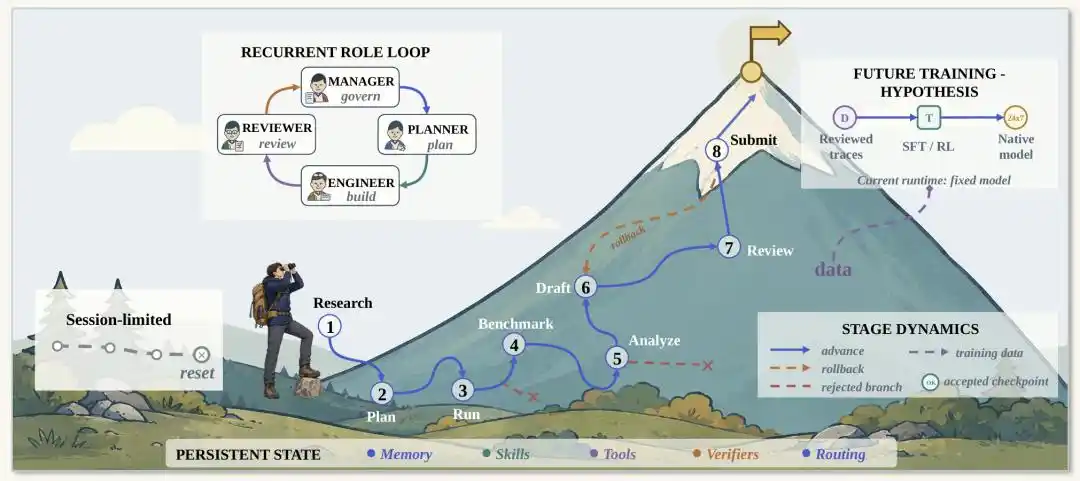
Figure 3: Argus's long-horizon runtime mechanism. Four role types cycle around persistent state; Campaigns can advance or roll back between eight research phases.

03

After 1,548 Hours, What Has Argus Left Behind?

What truly determines the validity of a long-horizon Agent is whether time can be translated into genuine research outcomes. Within less than a month of its open-source release, Argus has already made outstanding contributions in infrastructure, materials, chips, mathematics, and AI system research. The team is also the first to publish complete end-to-end logs for solving mathematical conjecture screening, opening all running trajectory sessions, etc. The following is a summary of Argus's achievements since its open-source release:
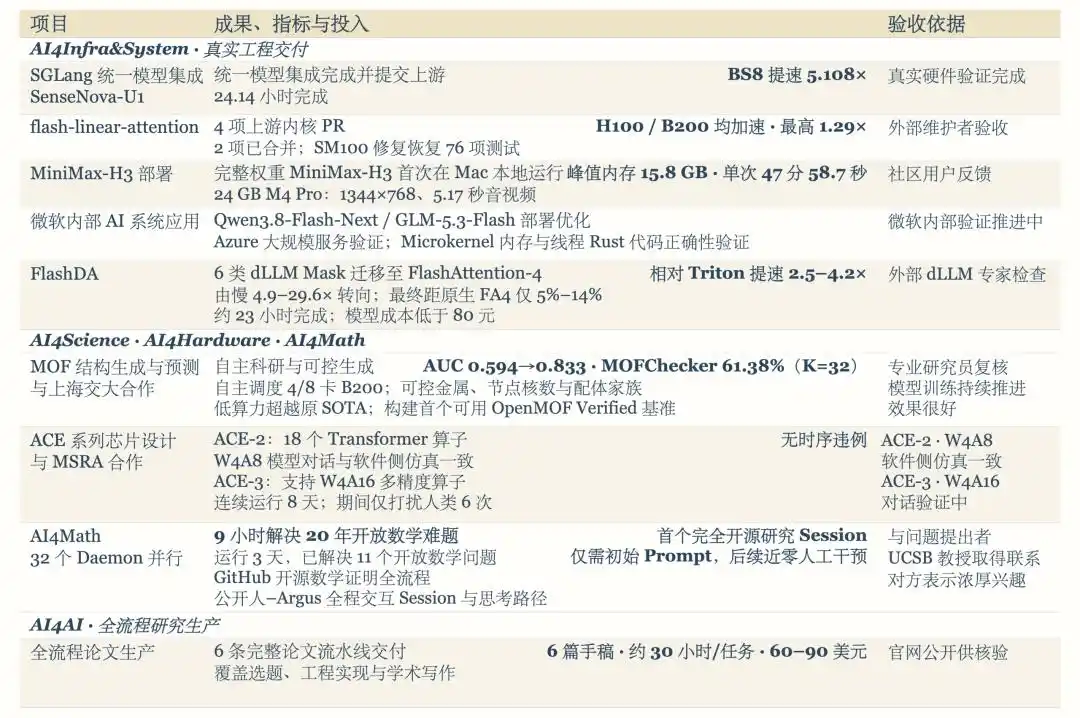
Figure 4: Argus's representative research results, key metrics, and acceptance criteria.

As shown in the table above, Argus first translated continuous operation into verifiable real-world deliverables in AI4System & Infra, achieving the first step from automated execution to autonomous research with clear engineering outcomes. Subsequently, tasks expanded from AI infrastructure to AI4Science, AI4Hardware, and AI4Math, and the evaluation criteria shifted accordingly from "whether the assigned task is completed" to "whether unresolved real-world research problems can be explored." Auto-research thus progressed further from automated delivery to automated exploration. Building on this, Argus extended from point achievements to complete research workflows in the AI4AI direction, continuously driving task progression with evidence without requiring humans to remain at the screen, forming a progressive path from real-world delivery, cross-domain exploration, to full-process autonomous research.
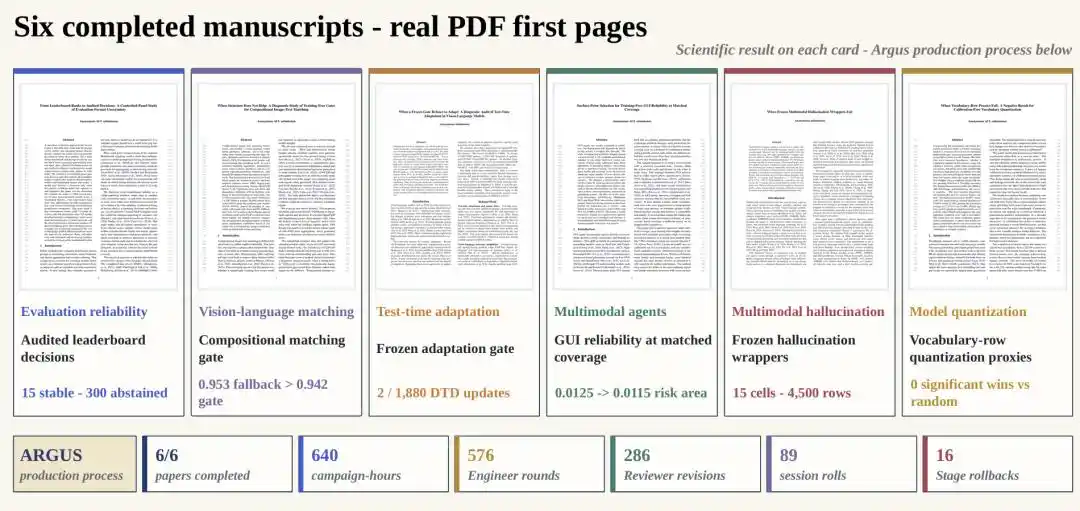
Figure 5: Argus's delivery results in the full-process paper production.

All the above results were achieved within 1 month. Stringing these outcomes together, Argus represents a gradually deepening value chain: the object of automation expands from a single execution to evidence-driven research progression, greatly accelerating research progress. This is the most direct answer to "who steers the Agent after the human leaves the screen."

Conclusion

After the Screen Goes Dark, the Project Doesn't Reset to Zero

Long-horizon intelligence is about transforming tokens into intelligence, then using that intelligence to continuously advance a research project, generating real value. Argus organizes previously disjointed model calls into a continuously operating research system, letting Evidence-Driven control the direction, and then solidifying experience into capability through self-evolution.

Argus demonstrates not just a longer-running Agent, but a new way of organizing research: Harness addresses how the model acts, the Driver determines how the system continuously moves forward, and research speed is no longer constrained by human work and leisure hours. This may signal the arrival of an era of accelerated research. The screen can go dark, but the research continues.

About the Authors

Argus was led by researchers from Microsoft and Shanghai Jiao Tong University, with contributions from researchers at multiple universities.

This article is from the WeChat public account "机器之心" (Almost Human)

Related Questions

QWhat is the core problem that the Argus system aims to solve in long-term AI agent research?

AArgus aims to solve the problem that most existing AI agents automate 'execution' but not the higher-level 'driving' or decision-making required for long-term research tasks. These tasks often lack dense, immediate feedback, causing progress to stall without constant human supervision.

QWhat is the key design shift in Argus's approach compared to traditional agent systems?

AArgus shifts from a 'Goal-Driven' approach to an 'Evidence-Driven' approach. Instead of rigidly following an initial goal, Argus uses evidence gathered during execution to continuously decide the next steps, adapting its course based on real-time results.

QWhat are the four main roles within the Argus runtime's basic operational loop?

AThe four main roles are: Manager (handles phase transitions and global strategy), Planner (creates specific tasks based on current evidence), Engineer (executes tasks in codebases and experiments), and Reviewer (independently reviews work products for validity and innovation).

QAccording to the article, what is a significant outcome demonstrated by Argus in its testing?

AIn testing across 27 campaigns and 1,548 hours of wall-clock time, Argus demonstrated high autonomy with an average of only one human intervention request every 40.7 hours and a work duty cycle of 95.1% to 98.7%, while delivering tangible research results across multiple fields.

QHow does the Argus system architecture separate general and domain-specific functionalities?

AArgus's architecture keeps the Core (handling role permissions, evidence submission, and human boundaries) decoupled from Verticals. Verticals are defined by domain experts to specify what constitutes valid evidence and relevant skills/knowledge for fields like mathematics, GPU programming, or materials science.

Related Reads

Coinbase and PNC Bank Launch USDC Collection: Can Stablecoins Become the New Gateway for Enterprise Payments?

Coinbase and PNC Bank have expanded their partnership to launch a USDC collection service for enterprise and institutional clients. Eligible customers can receive USDC via the Ethereum network, which is then converted 1:1 into USD and deposited into their designated PNC bank account. The service uses Coinbase's Payment APIs integrated with PNC's existing treasury management systems, embedding the stablecoin collection process within the traditional banking framework. The collaboration highlights a complementary relationship between stablecoins and banks rather than pure competition. Banks provide client relationships, compliance, and deposit accounts, while blockchain offers round-the-clock value transfer. Coinbase supplies the stablecoin infrastructure and payment APIs, while PNC handles account and traditional financial services. For businesses, the appeal is gaining a new payment channel without overhauling their existing financial systems or managing wallets and private keys themselves. The partnership builds on earlier collaboration announced in July 2025, when the two firms began integrating crypto trading capabilities into PNC's services, followed by Bitcoin spot trading for eligible private banking clients in December. The USDC service extends the focus from wealth management into enterprise payments and treasury management. Coinbase has pursued similar integrations with Citigroup and payment technology firm Moov, signaling a strategic shift from a trading platform toward payment infrastructure. However, questions remain about fees, settlement times, compliance requirements, and actual adoption scale. The service is still in a pilot phase with limited eligibility, and full fee structures and processing times have not been disclosed. The key question is whether enterprises will adopt stablecoin collection in daily operations and whether the funds can be reliably converted, deposited, and used without adding excessive operational cost. The real competitive frontier may be integrating digital dollars into everyday corporate cash flows rather than simply accumulating on-chain assets.

marsbit6m ago

Coinbase and PNC Bank Launch USDC Collection: Can Stablecoins Become the New Gateway for Enterprise Payments?

marsbit6m ago

Crypto Stocks Weekly丨Strategy Adds 1,036 BTC but Holdings Fall Below Cost Basis; Bitmine Holds 4.97% of ETH Supply (November 10)

The article begins by noting that Democrats swept both chambers of Congress, ushering in a divided-government phase, after which markets shifted focus to AI regulation and capex payback cycles, with Anthropic's IPO seen as a bellwether for AI stocks. US equities fell sharply (Nasdaq -5.52% and Philadelphia Semiconductor Index -12.24% on Nov 5) before a Monday rebound driven by falling oil prices and oversold buying—characterized as a repair, not a new high. Macro data showed October nonfarm payrolls +165k and unemployment at 4.1%, keeping 10-year Treasury yields near 4.86% and rate-hike expectations alive. Citi cut US equities and global tech to neutral while upgrading Europe ex-UK, citing unstable AI sentiment; Goldman noted AI stocks are ~40% of the S&P 500 versus ~15% of STOXX 600. Crypto diverged from the equity rebound: US spot Bitcoin ETFs saw $1.282B in weekly net outflows (BlackRock's IBIT -$12.09B... actually $1.209B), Ethereum ETFs -$365M for a sixth straight weekly outflow, with continued outflows on Nov 9. NYSE-affiliated tokenized securities platform chose Avalanche for settlement infrastructure. Corporate treasury updates: Strategy bought 1,036 BTC at ~$79,012 (total 850,364 BTC, average cost ~$75,456, now above spot), funded partly by ATM share sales, with most proceeds used to repurchase STRC preferred shares. Strive added 29 BTC (total 43,153). Listed companies now hold over 6% of Bitcoin's supply (1.2664M BTC across 199 firms). Bitmine added 9,587 ETH, holding 6,070,092 ETH (~4.97% of supply, ~99% of its 5% goal). DeFi Development Corp's SOL rose to 2,609,829. Hyperliquid Strategies raised $911M in Q3, bought ~9.1M HYPE (holdings up to 38.5M, ~16% of circulating supply), and repurchased ~2.7M PURR shares.

marsbit27m ago

Crypto Stocks Weekly丨Strategy Adds 1,036 BTC but Holdings Fall Below Cost Basis; Bitmine Holds 4.97% of ETH Supply (November 10)

marsbit27m ago

When Will the Chip Stock 'Capitulation-Style Selling' End? BofA: Perhaps in Early 2027, Stock Price Pullbacks Typically Lead Fundamental Inflection Points by 6-9 Months

The SOX semiconductor index has fallen 38% (from 14,634 to 9,011) since its June 22, 2026 peak, over 136 days—exceeding the average historical peak-to-trough decline of 32% but less than half the average 253-day duration of past downturns (2011, 2015, 2018, 2022). BofA analyst Vivek Arya expects this "indiscriminate selling," driven by AI capex slowdown fears, to end around early 2027. Historically, SOX declines lead actual semiconductor sales declines by 6–9 months, implying real EPS cuts may emerge from Q1 2027, with capex reductions reflected in H2 2027—though stocks may already price in much of the bad news. SOX currently trades at 13.7x forward P/E versus 17.7x for the S&P 500 (a 22% discount, down from a 15% premium at the AI peak), leaving roughly 12% downside to the historical trough valuation of ~12x. US cloud capex runs at ~$300B/quarter (~$1.2T annualized) versus $1.555T consensus for 2027—about 23% below expectations if spending holds steady, equating to ~30 GW of compute deployment versus BofA's 40+ GW base case. A 20% capex cut would pressure AI semiconductor revenue by 20%+ and EPS by 35–40%. BofA outlines three scenarios: base case ( ~10% downside, bottoming Q1 2027, favor segment leaders), bear case (pressure into mid-2027, favor EDA, high-FCF analog, low-AI-exposure names), and bull case (favor memory, optics, quantum, CPUs). Potential stabilizers include policy clarity in Q1 2027, buybacks (Lam $25B, Nvidia, Micron starting Dec 9), and slower capex extending the upcycle.

marsbit46m ago

When Will the Chip Stock 'Capitulation-Style Selling' End? BofA: Perhaps in Early 2027, Stock Price Pullbacks Typically Lead Fundamental Inflection Points by 6-9 Months

marsbit46m ago

Trading

Spot
活动图片