Satoshi-Era Bitcoin Wakes Up After 16 Years: 600 BTC Moved

cryptonews.ruPublished on 2026-09-07Last updated on 2026-09-07

Abstract

Bitcoins mined in 2010, totaling 600 BTC worth approximately $48 million, were moved from long-dormant addresses after over 16 years of inactivity, sparking speculation about a potential link to Bitcoin's pseudonymous creator, Satoshi Nakamoto. On-chain analysis tracked the coins to mining rewards from 12 blocks processed in March 2010, when the block subsidy was 50 BTC. Blockchain tracking platform Whale Alert stated its investigation found no connection between these specific blocks and Nakamoto, dampening the speculation. The movement is notable because the coins originate from the period when Nakamoto was still actively involved in Bitcoin's development. Whale Alert suggested one of the transfers may have been a test transaction before the bulk of the coins were moved.

Bitcoins mined in 2010 were moved from long-dormant addresses after more than 16 years, sparking renewed speculation about a potential connection to Satoshi Nakamoto.

According to on-chain analytics reviewed by Cointelegraph, on Saturday, coins were moved from 12 addresses that held a total of 600 Bitcoin ($BTC) worth approximately $48 million, after more than 16 years of inactivity.

Whale Alert, a blockchain transaction tracking platform, stated that the 600 $BTC were received as rewards for mining 12 Bitcoin blocks, and its investigation found no link to Nakamoto.

"According to our research, none of the blocks can be linked to Satoshi," a Whale Alert representative told Cointelegraph, tempering speculation about the origin of the coins mined during the period when Bitcoin's creator, known by the pseudonym, was still active.

Whale Alert Traced All 12 Bitcoin Block Rewards

Whale Alert traced all 12 rewards back to Bitcoin blocks mined in March 2010, when the subsidy per block was 50 $BTC. The subsidy size has been halved four times since; the last time was in April 2024, when it dropped from 6.25 $BTC to the current 3.125 $BTC per block.

These findings add to Whale Alert's previous analysis, which covered seven rewards. In a Sunday post on X, the service stated that those seven rewards originated from blocks that, by its definition, were not mined by Nakamoto.
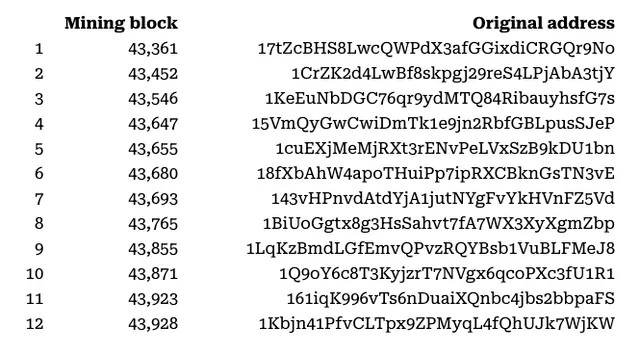
Mining blocks and addresses of the 12 dormant Bitcoin rewards. Source: Whale Alert

On-chain analytics platform Lookonchain also initially identified seven miner wallets that transferred 350 $BTC after 16.5 years of dormancy. According to the platform, these wallets received the coins from mining in March 2010.

Satoshi Era Doesn't Mean Bitcoin Belonged to Satoshi

The movement attracted attention partly because the coins date back to the period when Nakamoto was still actively involved in Bitcoin's development.

Nakamoto continued to participate in Bitcoin's development and communications throughout 2010 before gradually stepping away from the project; their last known message dates back to April 2011.
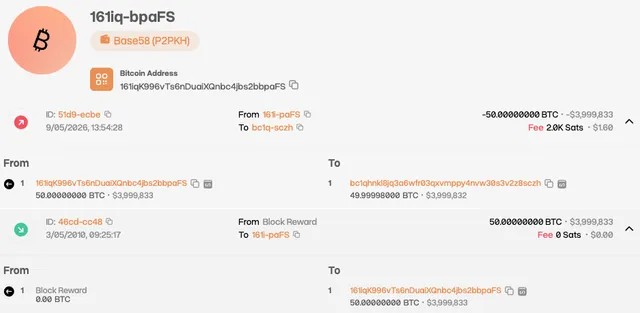
One of the 12 addresses received a 50 $BTC mining reward on March 5, 2010, and transferred the coins to a new address on September 5, 2026. Source: Blockchain.com

Whale Alert noted that one of the rewards was transferred several blocks earlier than most of the others, stating that this sequence fit with a test transaction prior to the remaining transfers.

Magazine: $BTC will reach $1 million by 2030... but Arthur Hayes is buying ETH instead

end-content
Trending Cryptos

Related Questions

QAccording to the article, what caused speculation regarding the 600 Bitcoin moved from inactive addresses?

AThe movement of 600 BTC that were mined in 2010 from addresses inactive for over 16 years caused speculation about a potential link to Bitcoin's creator, Satoshi Nakamoto.

QWhat did the blockchain analysis platform Whale Alert conclude about the origin of the 600 BTC?

AWhale Alert concluded that its research found no link between any of the 12 block rewards and Satoshi Nakamoto, dispelling the speculation that the coins belonged to the creator.

QIn which month and year were the Bitcoin blocks that generated these 600 BTC originally mined?

AThe 12 block rewards, each of 50 BTC, were originally mined in March 2010.

QHow many times has the Bitcoin block subsidy been halved since the blocks containing these 600 BTC were mined, and what is the current subsidy?

AThe block subsidy has been halved four times since March 2010. The current subsidy is 3.125 BTC per block, following the latest halving in April 2024.

QWhat reason did Whale Alert suggest for one of the 12 rewards being moved slightly earlier than the others?

AWhale Alert suggested that the earlier movement of one of the rewards likely served as a test transaction before the bulk of the transfers were executed.

Related Reads

Racing to Secure Seats Before the Senate Flips: Trump Nominates Four SEC and CFTC Commissioners, Ushering in a New Era for Crypto Regulation

On November 12, Trump submitted four nominations for SEC and CFTC commissioner positions—one Republican and one Democrat for each agency—as time runs short before Republicans lose their Senate majority in January. The seats have been vacant for months: SEC has only Chair Paul Atkins and Commissioner Mark Uyeda since Hester Peirce departed in October, while CFTC has only Chair Michael Selig. Even if all four are confirmed, SEC would have four commissioners and CFTC three—still short of full five-member slates—so the significance lies in adding voting participants rather than announcing new policy. Both CFTC nominees, Nathan Anonick and Matthew Rowland, worked on the CLARITY Act, which would authorize CFTC oversight of digital commodity spot intermediaries, platform registration, customer fund segregation and conflict-of-interest rules; it failed a procedural Senate vote in September. If confirmed, they would join Selig in voting on rules such as the event-contract draft proposed in June. SEC nominee Kristin Johnson, a former CFTC commissioner and law professor, publicly supported CFTC enforcement against three DeFi operators in 2023, arguing regulators should examine whether platforms concentrating clearing or settlement off-chain effectively act as intermediaries. The other SEC nominee, Levine, served as deputy chief of staff to acting Chair Uyeda during the agency's early crypto framework overhaul and would fill Peirce's seat. The bipartisan list responds to calls for restoring two-party representation and seeks broader support for confirmation. Senate hearings will be the first key window into the nominees' regulatory intentions.

marsbit11m ago

Racing to Secure Seats Before the Senate Flips: Trump Nominates Four SEC and CFTC Commissioners, Ushering in a New Era for Crypto Regulation

marsbit11m ago

Revenue Becomes This Year's Hardest Crypto Narrative

The article argues that "revenue" is becoming crypto's most durable narrative in 2026, as the industry matures and institutional allocators shift from speculation toward sustainable business models. Crypto protocols generated $11.68B year-to-date, on pace for ~$13.9B by year-end—only slightly below 2025 despite a much weaker market. The author contends the real opportunity lies not just in profitable protocols but in those with mechanisms converting business success into tokenholder value, primarily token buybacks backed by real revenue. Four criteria define a "good" buyback: revenue-funded, established product-market fit, transparent execution, and sustainable capital allocation. Context matters: Jupiter's $70M+ buyback failed amid a Solana-wide downturn, and buybacks can be swamped by new token emissions. Still, 2026 data is compelling—among the 16 top-revenue protocols with tradeable tokens, the 12 with active buybacks averaged +62.2% YTD (median +32.6%) versus −31.6% for those without, a 93.8-point gap, achieved despite crypto's total market cap falling ~19%. Buyback tokens also outperformed direct revenue-distribution tokens (190% vs 29% market-cap-weighted). The author highlights opportunities in stablecoins/RWA lending, World Liberty Financial's USD1 buyback linking stablecoin economics to WLFI, Venice's AI platform ($100M+ annualized revenue, VVV up 1,200%), Bittensor subnets using revenue for alpha-token buybacks, and Robinhood Chain's LONG 500 model combining buybacks with tokenized stock accumulation. The piece concludes the revenue narrative is still early, and in a true bull market, revenue-funded buybacks could act as accelerant rather than life raft.

marsbit20m ago

Revenue Becomes This Year's Hardest Crypto Narrative

marsbit20m ago

LBank exchange listed VJRA (Vajra Coin)

LBank Exchange listed VJRA (Vajra Coin) at 10:00 am on Nov 13, 2026 (UTC), with trading available via the VJRA/USDT pair. Vajra Coin (VJRA) is a Real-world Asset (RWA) token backed by senior tranches of the Vajra Fund, an alternative investment fund focused on art and antiques. VJRA is issued by Vajra Issuance Limited through a proof-of-reserve mechanism, providing partial liquidity, 24/7 liquidity, and on-chain transparency for alternative fund assets within the Solana ecosystem. All antique artworks are museum-quality, nationally recognized, and professionally appraised and authenticated by authoritative institutions, and fully insured by AA-rated professional insurance companies. VJRA is notable for combining RWA tokenization with high-value art investments. Built on Solana, it focuses on tokenizing traditional alternative investment assets, particularly ancient Chinese artworks and historical artifacts, connecting conventional art investment funds with on-chain financial markets. VJRA is integrated with the Jupiter trading ecosystem, aiming to enhance investment accessibility, trading efficiency, and market liquidity through blockchain technology. As the RWA sector expands into non-traditional asset classes such as art and collectibles, VJRA represents a differentiated use case for bridging real-world assets with the DeFi ecosystem. Tokenomics: Token Name: Vajra Coin; Token Symbol: VJRA; Total Supply: 12,200,000. Learn More: Website: https://vajracoins.com/; X: https://x.com/Vajracoins; Whitepaper: https://xfunds.fi/whitepaper About LBank: Founded in 2015, LBank is a leading global cryptocurrency exchange serving over 30 million registered users in 160 countries and regions, with daily trading volume exceeding $23.81 billion and 11 years of safety with zero security incidents. LBank has listed over 300 mainstream coins and more than 50 high-potential gems, ranked No. 1 in 100x Gems, Highest Gains, and Meme Share, leading the market with the fastest altcoin listings, unmatched liquidity, and industry-first trading guarantees.

cointelegraph1h ago

LBank exchange listed VJRA (Vajra Coin)

cointelegraph1h ago

Jensen Huang's Scandal, Nvidia's Nightmare

The article argues that the real danger to Nvidia from the Huang Renxun scandal is not criminal liability but securities litigation and governance risk. Criminal charges require proving knowledge and intent, a high bar. Far more threatening is the 10b-5 class action, which hinges on whether statements like "no evidence of chip diversion" and calling the relationship "normal and not unusual" were misleading when made. Plaintiffs need only show the company lacked adequate basis for such confident characterizations—a much lower threshold than criminal intent. The "no evidence found" statement is especially vulnerable: if discovery reveals the company didn't seriously look or ignored anomalies, it becomes misleading. The nightmare scenario is the discovery phase, where internal emails, compliance records, and board minutes must be handed over, exposing governance gaps that fuel further lawsuits, congressional hearings, and regulatory scrutiny. Board investigations cut both ways: a narrow scope looks perfunctory, while a broad one may uncover new disclosure obligations. The article also highlights a regulatory shift from item-based export controls to relationship-based controls, meaning executives' personal networks are now part of compliance monitoring. This raises structural costs across the entire AI chip supply chain and could lead to industry-wide compliance discounts. Key indicators to watch: whether congressional briefings escalate to subpoenas or public hearings, whether the class action focuses on disclosure-control failures, whether the board investigation covers Megaspeed and export compliance, and whether customer contracts add "no-diversion" audit and indemnity clauses. The ultimate nightmare isn't a fine—it's a rule change.

marsbit1h ago

Jensen Huang's Scandal, Nvidia's Nightmare

marsbit1h ago

The Failure of 'First Principles': When AI Entrepreneurship Falls into the Trap of Physics Worship

This article critiques the misapplication of "first principles" thinking in AI entrepreneurship, arguing that while Elon Musk's physics-based approach succeeds in hardware (a "convergent system" governed by physical laws and measurable variables), it fails in software and AI ecosystems, which are "divergent systems" defined by emergence, network effects, path dependency, and unpredictable human behavior. The author contends that many founders treat first principles as a universal cure-all, ignoring existing industrial structures, user habits, and collaboration networks, leading to failure. OpenAI's evolution—marked by trial, error, and adaptation rather than a perfect blueprint—serves as a counterexample. In China, complexity is compounded by strong regulation, unique user habits, and entrenched supply chains, making "from-scratch" thinking especially risky. The article proposes upgrading from reductionist physics thinking to complex adaptive systems thinking, centered on three shifts: seeking a viable ecological niche rather than a perfect solution, embracing co-evolution over unilateral disruption, and accepting emergent adaptation over full upfront design. It introduces a four-layer decision framework—environment sensing, ecosystem analysis, path design via a Minimum Viable Ecosystem (MVE), and adaptive organizational mechanisms—plus China-specific tools like government-market dual drivers, industrial clusters, and semi-open data ecosystems. Practical paths include avoiding direct competition with tech giants, prioritizing scenario embedding over technical purity, ecosystem compatibility over disruptive features, and iterative feedback over complete top-down design. Future trends favor vertical small models over general large models, ecosystem affinity as the key competitive edge, regional specialization (AI+manufacturing in the Yangtze River Delta, AI+services in the Greater Bay Area), and SOE digitalization as a major second growth curve. Ultimately, success in China's AI sector depends on precise embedding and co-evolution within complex business ecosystems rather than isolated technical excellence.

marsbit1h ago

The Failure of 'First Principles': When AI Entrepreneurship Falls into the Trap of Physics Worship

marsbit1h ago

Trading

Spot

Hot Articles

What is $BITCOIN

DIGITAL GOLD ($BITCOIN): A Comprehensive Analysis Introduction to DIGITAL GOLD ($BITCOIN) DIGITAL GOLD ($BITCOIN) is a blockchain-based project operating on the Solana network, which aims to combine the characteristics of traditional precious metals with the innovation of decentralized technologies. While it shares a name with Bitcoin, often referred to as “digital gold” due to its perception as a store of value, DIGITAL GOLD is a separate token designed to create a unique ecosystem within the Web3 landscape. Its goal is to position itself as a viable alternative digital asset, although specifics regarding its applications and functionalities are still developing. What is DIGITAL GOLD ($BITCOIN)? DIGITAL GOLD ($BITCOIN) is a cryptocurrency token explicitly designed for use on the Solana blockchain. In contrast to Bitcoin, which provides a widely recognized value storage role, this token appears to focus on broader applications and characteristics. Notable aspects include: Blockchain Infrastructure: The token is built on the Solana blockchain, known for its capacity to handle high-speed and low-cost transactions. Supply Dynamics: DIGITAL GOLD has a maximum supply capped at 100 quadrillion tokens (100P $BITCOIN), although details regarding its circulating supply are currently undisclosed. Utility: While precise functionalities are not explicitly outlined, there are indications that the token could be utilized for various applications, potentially involving decentralized applications (dApps) or asset tokenization strategies. Who is the Creator of DIGITAL GOLD ($BITCOIN)? At present, the identity of the creators and development team behind DIGITAL GOLD ($BITCOIN) remains unknown. This situation is typical among many innovative projects within the blockchain space, particularly those aligning with decentralized finance and meme coin phenomena. While such anonymity may foster a community-driven culture, it intensifies concerns about governance and accountability. Who are the Investors of DIGITAL GOLD ($BITCOIN)? The available information indicates that DIGITAL GOLD ($BITCOIN) does not have any known institutional backers or prominent venture capital investments. The project seems to operate on a peer-to-peer model focused on community support and adoption rather than traditional funding routes. Its activity and liquidity are primarily situated on decentralized exchanges (DEXs), such as PumpSwap, rather than established centralized trading platforms, further highlighting its grassroots approach. How DIGITAL GOLD ($BITCOIN) Works The operational mechanics of DIGITAL GOLD ($BITCOIN) can be elaborated on based on its blockchain design and network attributes: Consensus Mechanism: By leveraging Solana’s unique proof-of-history (PoH) combined with a proof-of-stake (PoS) model, the project ensures efficient transaction validation contributing to the network's high performance. Tokenomics: While specific deflationary mechanisms have not been extensively detailed, the vast maximum token supply implies that it may cater to microtransactions or niche use cases that are still to be defined. Interoperability: There exists the potential for integration with Solana’s broader ecosystem, including various decentralized finance (DeFi) platforms. However, the details regarding specific integrations remain unspecified. Timeline of Key Events Here is a timeline that highlights significant milestones concerning DIGITAL GOLD ($BITCOIN): 2023: The initial deployment of the token occurs on the Solana blockchain, marked by its contract address. 2024: DIGITAL GOLD gains visibility as it becomes available for trading on decentralized exchanges like PumpSwap, allowing users to trade it against SOL. 2025: The project witnesses sporadic trading activity and potential interest in community-led engagements, although no noteworthy partnerships or technical advancements have been documented as of yet. Critical Analysis Strengths Scalability: The underlying Solana infrastructure supports high transaction volumes, which could enhance the utility of $BITCOIN in various transaction scenarios. Accessibility: The potential low trading price per token could attract retail investors, facilitating wider participation due to fractional ownership opportunities. Risks Lack of Transparency: The absence of publicly known backers, developers, or an audit process may yield skepticism regarding the project's sustainability and trustworthiness. Market Volatility: The trading activity is heavily reliant on speculative behavior, which can result in significant price volatility and uncertainty for investors. Conclusion DIGITAL GOLD ($BITCOIN) emerges as an intriguing yet ambiguous project within the rapidly evolving Solana ecosystem. While it attempts to leverage the “digital gold” narrative, its departure from Bitcoin's established role as a store of value underscores the need for a clearer differentiation of its intended utility and governance structure. Future acceptance and adoption will likely depend on addressing the current opacity and defining its operational and economic strategies more explicitly. Note: This report encompasses synthesised information available as of October 2023, and developments may have transpired beyond the research period.

5.2k Total ViewsPublished 2025.05.14Updated 2025.05.14

What is $BITCOIN

Discussions

Welcome to the HTX Community. Here, you can stay informed about the latest platform developments and gain access to professional market insights. Users' opinions on the price of BTC (BTC) are presented below.

活动图片