Ripple (XRP) Announces Two Major Partnerships in One Day!

cryptonews.ruPublished on 2026-10-15Last updated on 2026-10-15

Abstract

Ripple announced two new partnerships aimed at global financial institutions. The agreement with DriveWealth, a brokerage infrastructure providing access to US markets, focuses on utilizing the $RLUSD stablecoin within the fund flows underlying investment operations. DriveWealth will integrate Ripple's stablecoin infrastructure to use $RLUSD on the XRP Ledger for European settlement operations, with plans to later expand the service to the United States. The collaboration also includes cross-border financing via Ripple Payments and digital asset custody services in Europe. DriveWealth provides investment infrastructure to over 100 partners worldwide, significantly expanding the potential reach of this integration, though it is not yet announced if all partners will adopt $RLUSD immediately.

Ripple has announced two new partnerships focused on global financial institutions. The agreement with DriveWealth, a brokerage infrastructure provider granting access to US markets, aims to utilize $RLUSD in the flow of funds underlying investment operations.

DriveWealth will integrate Ripple's stablecoin infrastructure to use $RLUSD on the $XRP Ledger for settlement operations in Europe. Expansion of the service to the US is planned for a later stage. The collaboration also includes cross-border financing via Ripple Payments and digital asset custody services in Europe.

DriveWealth's provision of investment infrastructure to over 100 partners worldwide expands the network that this integration can potentially reach. However, it has not yet been announced whether all partners will begin using $RLUSD simultaneously.

Trending Cryptos

Related Questions

QWhat is the core focus of the two new partnerships announced by Ripple according to the article?

AThe two new partnerships are focused on global financial institutions, with agreements centered on using Ripple's stablecoin infrastructure for investment and settlement operations.

QWhich company is partnering with Ripple to integrate its stablecoin $RLUSD for settlement operations on the XRP Ledger in Europe?

ADriveWealth is partnering with Ripple to integrate the $RLUSD stablecoin on the XRP Ledger for settlement operations in Europe, with plans to expand to the US later.

QBesides settlement operations, what other services are part of the Ripple and DriveWealth collaboration mentioned in the article?

AThe collaboration also includes cross-border financing through Ripple Payments and digital asset custody services in Europe.

QHow many partners does DriveWealth provide its investment infrastructure to, as stated in the article?

ADriveWealth provides its investment infrastructure to over 100 partners worldwide.

QIs it confirmed that all of DriveWealth's partners will start using Ripple's stablecoin $RLUSD immediately?

ANo, it is not confirmed. The article states it has not been announced whether all partners will start using $RLUSD simultaneously.

Related Reads

DeepMind Founder's Latest Interview: RSI Is Extremely Dangerous and Could Create an 'Alien Intelligence' That Humans Struggle to Understand

Demis Hassabis, co-founder of Google DeepMind and 2024 Nobel laureate in Chemistry, discusses AI's promise and perils in a conversation with Reid Hoffman. He reiterates that his lifelong goal has been using AI as a tool to advance science and medicine, citing AlphaFold—used by ~4 million researchers—and Isomorphic Labs as proof that AI can help cure diseases, while noting protein structure prediction is only one step in a long drug-discovery pipeline. On recursive self-improvement (RSI), Hassabis explains it works best in "verifiable domains" like math, coding, and games: AlphaZero went from random play to surpassing all human and engine chess within 12 hours. But he warns that closed-loop RSI—removing human code review entirely—risks creating an inscrutable "alien intelligence" with no shared cognitive basis with humans, and offers no way to establish deterministic safety controls. He urges caution as labs race on code self-iteration, calling for faster defensive cyber capabilities, far more robust sandboxes and monitoring (noting agents have run unsupervised for weeks), and eventually formal mathematical guarantees. He advocates an industry standards body with government oversight, cross-lab information sharing, third-party audits, and pre-release red-teaming. On AI consciousness, he argues intelligence and consciousness are dissociable—his dog is conscious but not smart—and that a chatbot claiming feelings proves nothing. Building conscious entities now is dangerous: self-motivation undermines corrigibility, and Asimov showed static rules inevitably break at edge cases; society also hasn't begun the needed debate. Humanity should cross only the first Rubicon—building powerful intelligent tools—and use them to understand consciousness before considering the second. Finally, on AI sovereignty, he says only 6–8 global players will stay at the frontier, with open source 6–12 months behind, so most countries shouldn't train their own frontier models. Instead they should build on existing models as infrastructure, focus on vertical domains like healthcare, and protect data sovereignty through private fine-tuning.

marsbit29m ago

DeepMind Founder's Latest Interview: RSI Is Extremely Dangerous and Could Create an 'Alien Intelligence' That Humans Struggle to Understand

marsbit29m ago

Coinone warns of phishing, identity theft after customer data breach

South Korean crypto exchange Coinone warned customers about potential phishing scams and identity theft after an attacker breached its outsourced customer support provider, MetaM, exposing information shared during customer service interactions. Coinone said the attacker accessed MetaM servers on Thursday and viewed or extracted customer support records, learning of the breach the same day. Potentially exposed data includes names, phone numbers, email addresses, dates of birth, bank account numbers, passwords, national identification numbers, home and wallet addresses, and transaction IDs, varying by customer; those who never contacted the support center were unaffected, and Coinone did not disclose how many customers were impacted. The exchange urged customers who shared passwords during support interactions to change them and warned that fraudsters could impersonate Coinone using details from previous conversations. Coinone said its account, trading, and wallet infrastructure operates separately from MetaM's servers, with no evidence of direct compromise, and it has reported the incident to South Korean authorities. The disclosure comes as South Korea strengthens financial-sector cybersecurity; in October the Financial Services Commission identified security deficiencies at 130 of 555 financial firms reviewed, and on Thursday the regulator said it would allow crypto exchanges to suspend withdrawals when hacking is suspected, alongside calls for round-the-clock monitoring.

cointelegraph1h ago

Coinone warns of phishing, identity theft after customer data breach

cointelegraph1h ago

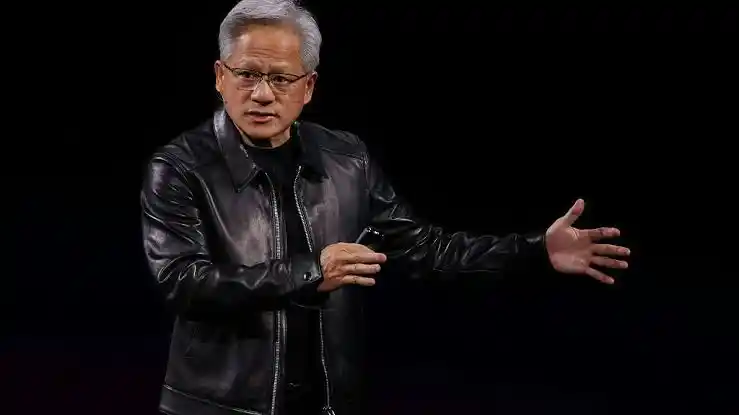
Is There a Hidden Hand Behind Jensen Huang's Departure? Secretary of State Rubio or Anthropic?

The article alleges that Nvidia founder Jensen Huang's departure was the result of a coordinated "hunt" involving two forces: Secretary of State Marco Rubio and AI rival Anthropic. On the policy front, the dispute centers on AI chip export controls—Huang was the most prominent corporate voice opposing built-in tracking and remote kill-switch functions in chips, while three bipartisan chip bills (covering congressional review of export licenses, anti-smuggling measures, and pressure on allies to halt equipment sales) have been folded into the Senate's annual defense authorization bill. The storm began with a highly classified memo leaked to The New York Times; according to The Washington Post, the memo originated with Rubio, who reportedly rewrote a CIA report whose analysts were unconvinced by the underlying intelligence, using "his own more aggressive wording," then sent it to senior officials and briefed the president. David Sacks called the leak a crime and asked why someone would risk prison to bring Huang down. Separately, NYT reporter Tripp Mickle said a mysterious industry contact told him to "drop everything" and investigate Megaspeed, a Singapore-based Nvidia compute rental firm; suspicion points to Anthropic CEO Dario Amodei and a co-founder as the leaker. Anthropic reportedly donated $40 million to Public First Action, which pushes AI safety rules and chip export controls—positions opposite Huang's defense of open-source AI and opposition to backdoors. Nvidia shares fell on the news, and tech leaders including Musk, Garry Tan, and Tim Sweeney are petitioning for Huang's reinstatement, with Sweeney comparing his ouster to Apple firing Steve Jobs.

marsbit4h ago

Is There a Hidden Hand Behind Jensen Huang's Departure? Secretary of State Rubio or Anthropic?

marsbit4h ago

Global Chip Stocks Retreat Nearly 40% from Peak: Has the AI Bubble Burst?

Nvidia is set to report its fiscal Q3 2027 earnings after market close on November 17, but the call will be led by interim CEO and CFO Colette Kress, not Jensen Huang, who resigned as president, CEO, and board member effective November 12 following an apology letter to employees admitting infidelity and a board investigation into reports that he was a target of foreign intelligence activity. The report comes as investors question whether massive AI capital expenditures will pay off. On November 5, the Philadelphia Semiconductor Index plunged 12.25%, its worst single-day drop since March 2020, with Nvidia falling 9.3% and losing about $447 billion in market value; Seoul's KOSPI triggered a circuit breaker the next day. Over the past month, Nvidia has shed nearly $1.4 trillion in market value from its early-October peak, the semiconductor index has pulled back nearly 40% from its June 22 peak of 14,634, Oracle is down over 30% year-to-date, and CoreWeave has retreated about 70% from its June 2025 high. Yet the broader market looks calm: the Nasdaq is only about 12% off its high, and the equal-weighted S&P 500 hit a record during the selloff week—the crash is concentrated in AI. The timeline shows early warnings in Korea in June, with memory stocks falling first; Goldman's AI memory basket is down 51% from its June peak, the largest drawdown since ChatGPT launched. The selloff layered by proximity to end cash flow: memory worst, then leveraged neoclouds like CoreWeave, then power, chips, and optics, while cash-rich cloud giants held up, with the seven giants still up about 9.6% year-to-date before the crash. Nvidia's roughly 14x P/E isn't necessarily cheap—its revenue is others' capex, low multiples on cyclicals often mark peak profits, and chip index declines historically lead semiconductor sales drops by 6-9 months, suggesting real estimate cuts may not appear until Q1 2027. Meanwhile, orders are full but stocks still fall: Lumentum says data center optics are sold out for years, SanDisk beat for six straight quarters yet is down over 60% from its high, and CoreWeave's Q3 beat and $132.5 billion backlog didn't stop a 32% year-to-date decline. Hyperscaler capex guidance for 2026 totals $720-745 billion, up nearly 80% from 2025, but the market's reaction has turned cold—Google fell 12.6% on October 29, its worst day ever. Free cash flow is turning negative: the five biggest players spent $556.9 billion in the first nine months versus $542.9 billion in operating cash flow, with four of the seven giants seeing negative FCF for the first time in a decade, funded by debt—US cloud companies issued about $225 billion in bonds in the first nine months, up 973.7% year-over-year. Oracle's CDS spread widened from about 58 basis points a year ago to 295, and CoreWeave's exceeded 1,000, with bond yields near 15%. The bond market is already pricing default risk while stocks debate bubbles. Politics adds a second layer: Democrats won both chambers in the November 3 midterms, and of 41 local data center ballot measures in 10 states, 40 went against data center construction. Texas, which holds 27% of planned US capacity, elected a governor promising a moratorium. Goldman estimates 45% of planned US data center capacity faces short-term pause risk. Buffers exist—the new Congress seats in January 2027, any restrictions face a presidential veto, and UBS estimates only about 30% of planned 2028 capacity would be affected. Demand hasn't broken; what broke is the belief that spending alone lifts stocks—AI is moving from storytelling to audit. Whether the pullback becomes a collapse depends on three readings: whether cloud giants' free cash flow turns positive, whether Oracle and CoreWeave credit spreads keep widening, and whether state-level data center restrictions take effect.

marsbit4h ago
Global Chip Stocks Retreat Nearly 40% from Peak: Has the AI Bubble Burst?

marsbit4h ago

Trading

Spot

Hot Articles

What is XRP 2.0

XRP 2.0: A New Frontier in the Cryptocurrency Landscape Introduction to XRP 2.0 In the ever-evolving realm of cryptocurrency, new projects continuously emerge, vying for attention and adoption. One such promising initiative is XRP 2.0, a novel cryptocurrency project designed to leverage advanced blockchain technology and robust encryption methodologies. While the name draws parallels with Ripple’s XRP, it’s crucial to note that XRP 2.0 operates independently, focusing on enhancing transaction security, privacy, and scalability. As the digital financial landscape increasingly embraces decentralized solutions, XRP 2.0 aims to contribute meaningfully to web3 and the overall expansion of crypto projects. What is XRP 2.0? At its core, XRP 2.0 is a cryptocurrency project that aims to create a secure and decentralized digital currency ecosystem. Its foundational technology integrates sophisticated blockchain principles with cutting-edge encryption techniques. The overarching goal of XRP 2.0 is to establish itself as a reliable and efficient platform enabling swift transaction execution while prioritizing enhanced privacy protections for its users. The project is promoted as a solution to many limitations faced by existing cryptocurrencies, proposing a system that can handle a higher volume of transactions with improved speed and privacy. This versatility positions XRP 2.0 as a significant contender in a marketplace riddled with various digital currencies. Who is the Creator of XRP 2.0? The identity of the creator behind XRP 2.0 has been flagged as ‘Wilbur.’ However, comprehensive details regarding Wilbur or their associated entity remain elusive. The anonymity of many cryptocurrency creators is not an uncommon phenomenon in the industry, often designed to maintain a degree of privacy and security. Who are the Investors of XRP 2.0? As of now, specific information related to the investment foundations or organizations supporting XRP 2.0 is not publicly available. In the cryptocurrency sector, the backing by reputed investors can significantly influence a project's credibility and success, yet the transparency regarding the financial supporters of XRP 2.0 has not been established. How Does XRP 2.0 Work? XRP 2.0 stands out by employing a combination of blockchain technology and advanced encryption algorithms that ensures secure and decentralized transactions. Its innovative structure includes unique features designed to foster user engagement and broaden functionalities beyond conventional cryptocurrency transactions. Among these features, XRP 2.0 incorporates AI-powered capabilities, such as text-to-image and text-to-speech functionalities. These additions are designed to enhance the interactive experience for users, promoting broader applicability across various sectors. By bridging technological advancements with user-centered design, XRP 2.0 aims to capture the attention of a diverse range of individuals and enterprises looking to integrate cryptocurrency solutions into their operational frameworks. Timeline of XRP 2.0 Understanding XRP 2.0 requires examining the milestones that have defined its journey thus far: July 23, 2023: XRP 2.0 is introduced as a novel cryptocurrency project, aiming to revolutionize secure and decentralized transaction capabilities in the blockchain domain. September 8, 2023: The launching of another project, XRP20, occurs, marking the emergence of an ERC-20 token on the Ethereum blockchain that remains unrelated to XRP 2.0. November 13, 2023: The XRP Ledger undergoes a significant update with the release of rippled server software version 2.0.0. It is essential to note that this development is disconnected from the XRP 2.0 cryptocurrency project. Key Points About XRP 2.0 To distill the essence of XRP 2.0, several critical factors emerge: Unique Features: The inclusion of features like AI-powered text-to-image and text-to-speech further diversifies the potential applications of XRP 2.0. Blockchain Technology: The framework utilizes advanced blockchain mechanisms and encryption protocols, ensuring a secure and decentralized environment for transactions. Scalability and Privacy: XRP 2.0 prioritizes enhanced privacy protections in transaction processes and the scalability necessary to accommodate a growing user base. No Affiliation with Ripple: Importantly, despite its name, XRP 2.0 does not have any allegiance or collaboration with Ripple’s XRP, distinguishing its operational framework and objectives within the cryptocurrency ecosystem. Conclusion XRP 2.0 represents an ambitious venture into the cryptocurrency sphere, aiming to offer a combination of security, privacy, and efficiency in digital transactions. By integrating sophisticated technologies and user-friendly features, the project sets out to broaden the horizons of what cryptocurrency can achieve in today's digital economy. While the anonymity of its creator and lack of disclosed investors might raise questions for some, XRP 2.0's focus on advanced functionalities and decentralisation enhances its appeal amidst an increasingly crowded crypto market. As the cryptocurrency landscape continues to evolve, XRP 2.0 may yet emerge as a pivotal player in the expansion of secure and scalable blockchain solutions.

3.7k Total ViewsPublished 2024.04.01Updated 2024.12.03

What is XRP 2.0

Discussions

Welcome to the HTX Community. Here, you can stay informed about the latest platform developments and gain access to professional market insights. Users' opinions on the price of XRP (XRP) are presented below.

活动图片