Just Now, Claude 5.1 Released! The World's Most Powerful Model Is Here

marsbitPublished on 2026-09-02Last updated on 2026-09-02

Abstract

Anthropic has launched two new AI models: Claude Fable 5.1 and Claude Mythos 5.1. Fable 5.1 is described as one of the most powerful publicly available models, optimized for complex reasoning, long-term tasks, and agent workflows. It offers significantly improved performance over its predecessor, Fable 5, across various benchmarks—notably more than doubling scores in scientific research agent tests. Despite these gains, costs have been reduced by lowering cache read prices by 75%, leading to an estimated 25-45% cost reduction for typical and highly agentic workloads, respectively. The model demonstrates enhanced capabilities in debugging, scientific research (e.g., protein design, processing NASA data), and business automation. Mythos 5.1 shares the same base capabilities but operates under stricter safety controls and is available only to vetted partners for higher-risk domains like advanced cybersecurity and life sciences. Both models feature improved safety mechanisms with reduced false block rates. Fable 5.1 is now accessible via Anthropic's platforms and major cloud providers, while new anti-distillation measures and invisible watermarking for EU compliance have been introduced.

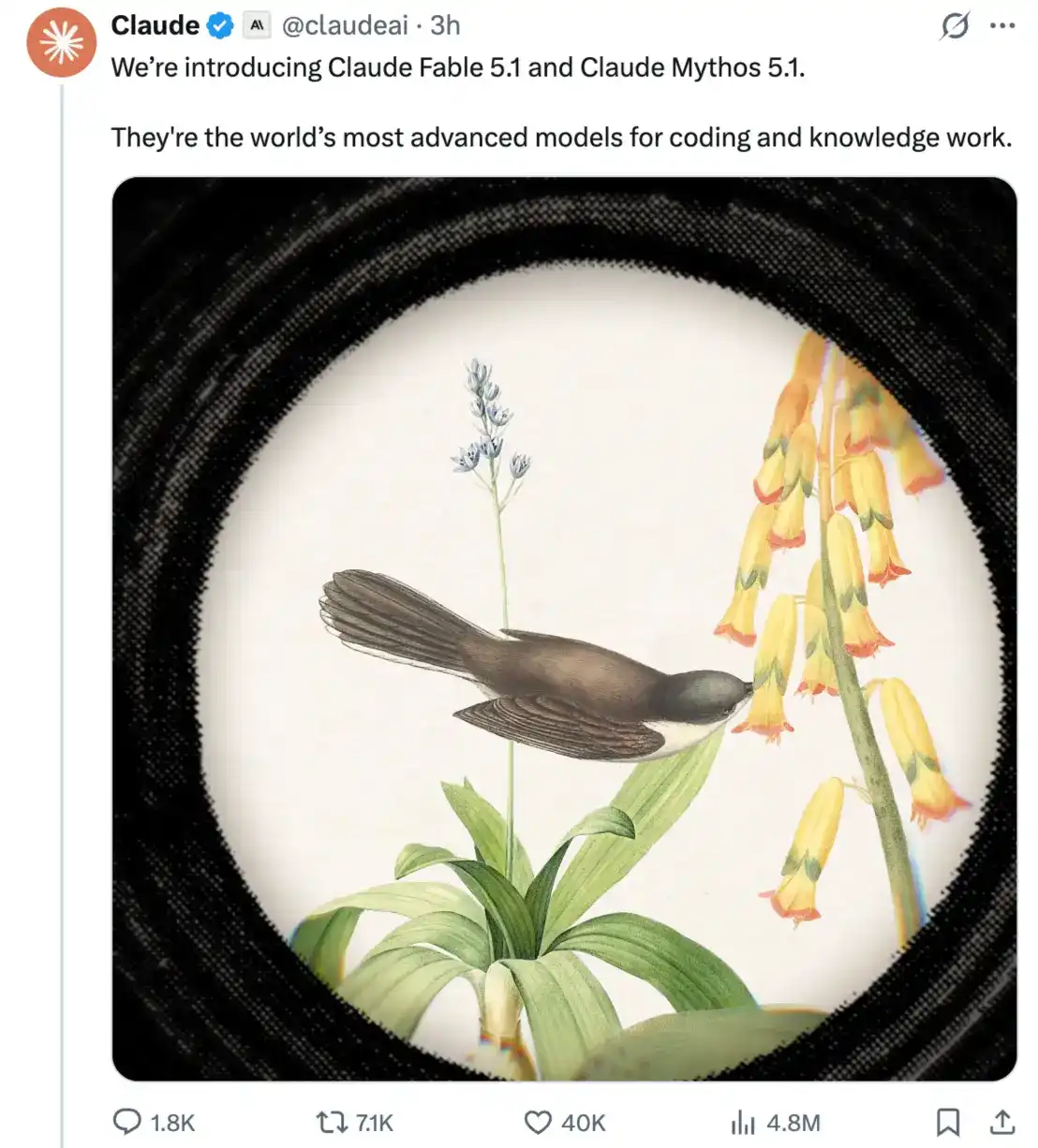
Just now, Anthropic has launched the new generation models Claude Fable 5.1 and Claude Mythos 5.1.

Anthropic claims that Claude Fable 5.1 is currently one of the most powerful publicly available models, designed for complex reasoning, long-cycle tasks, and Agent workflows. Claude Mythos 5.1, on the other hand, represents the higher boundary of their exploration.

It is important to note that while both share the same foundational model capabilities, they employ different safety measures tailored for different usage scenarios.

Fable 5.1 is open to general users, developers, and enterprises. Mythos 5.1 is available to vetted partners in high-risk fields, maintaining stricter access controls.

In other words, one is tasked with entering the real world to work, while the other is kept in a more strictly controlled environment. This might also be Anthropic's exploration of a future AI product form: the most powerful model may not be provided to everyone in the same form.

Officially, they state that these two models represent significant progress in the Claude series' capabilities and demonstrate how they continue to advance safe deployment while enhancing model performance.
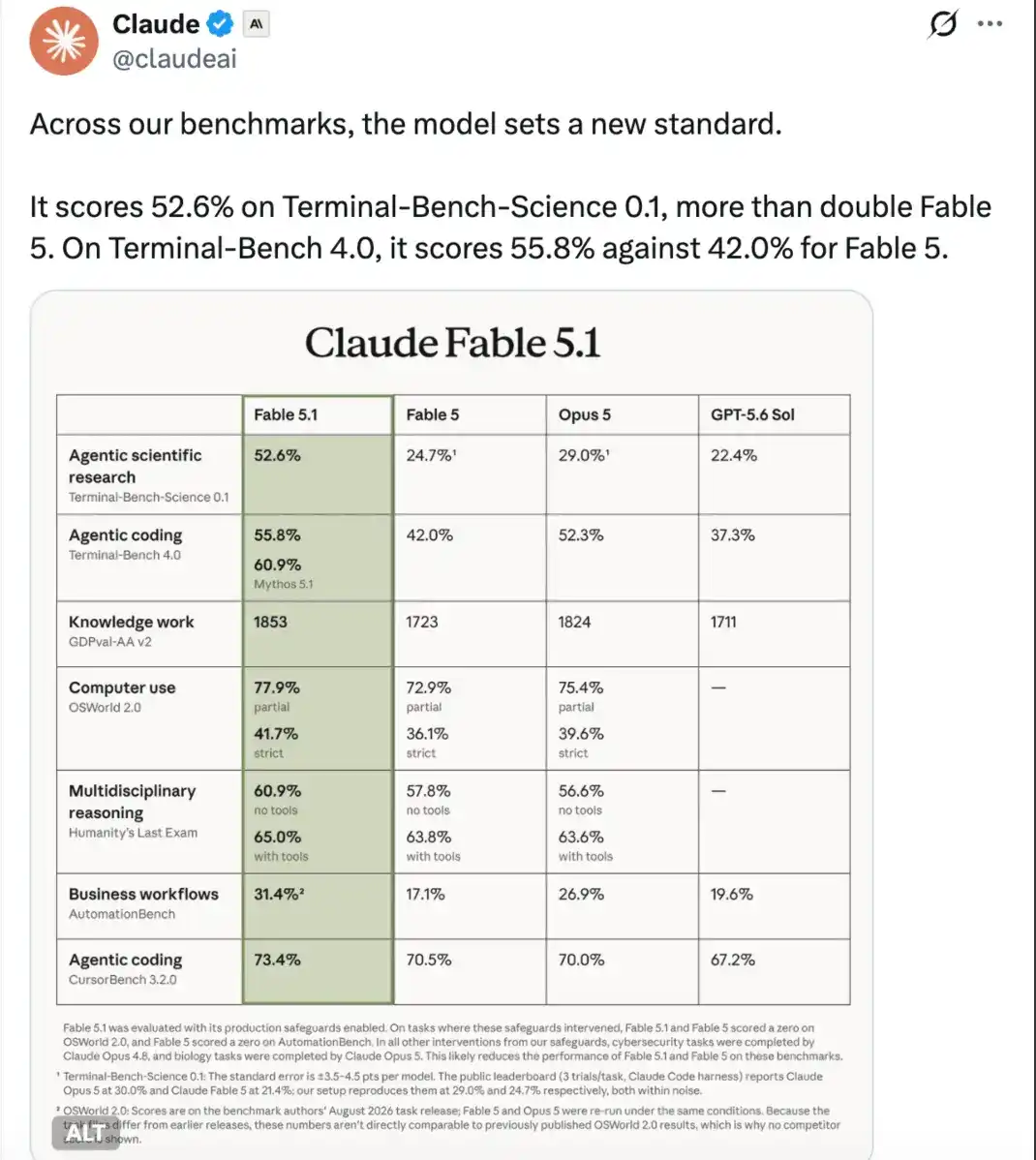
As the "world's most powerful" model, Fable 5.1's performance remains impressive. Official data shows that Fable 5.1 outperforms the previous flagship Fable 5 in multiple benchmark tests.
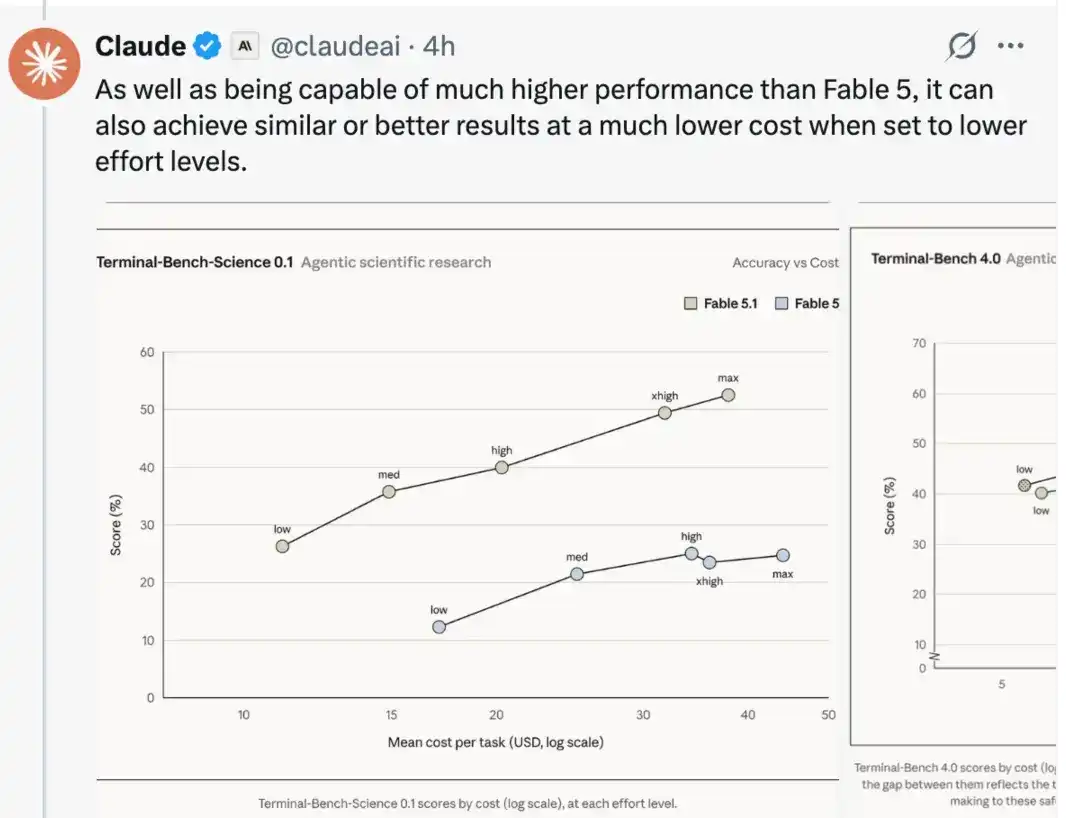
But with greater power comes a cheaper price. Anthropic states that Fable 5.1 maintains the same base price, while cache read costs are reduced by 75% compared to Fable 5. In practical use, this reduces the overall cost of the model by about 25% for typical workloads; for highly agentic workloads, costs can be reduced by up to 45%.
It seems even the most powerful models are now emphasizing cost-effectiveness.

Let's take a closer look.

Lower Tiers Match the Previous Generation, Fable 5.1 Focuses on "Cost-effectiveness"

Compared to simply topping the leaderboards, Anthropic this time emphasizes more: Fable 5.1 can complete tasks that previously required Fable 5's higher inference tiers at lower inference costs.

According to official tests, Fable 5.1 at low and medium inference strengths can already achieve performance close to or even surpassing Fable 5. Claude Code defaults to high inference strength, while Claude Cowork and Claude . ai default to medium strength. Users can also adjust between speed, cost, and effectiveness based on task complexity.

Specifically, Fable 5.1 achieved 52.6% on the scientific research-oriented Agent benchmark Terminal-Bench-Science 0.1, more than double the 24.7% of Fable 5; on Terminal-Bench 4.0, Fable 5.1 reached 55.8%, and Mythos 5.1 with more capabilities unlocked further reached 60.9%.

In knowledge work, computer operations, and business process tests, the new models also show improvements. AutomationBench scores increased from 17.1% for Fable 5 to 31.4%, and CursorBench 3.2.0 improved from 70.5% to 73.4%.
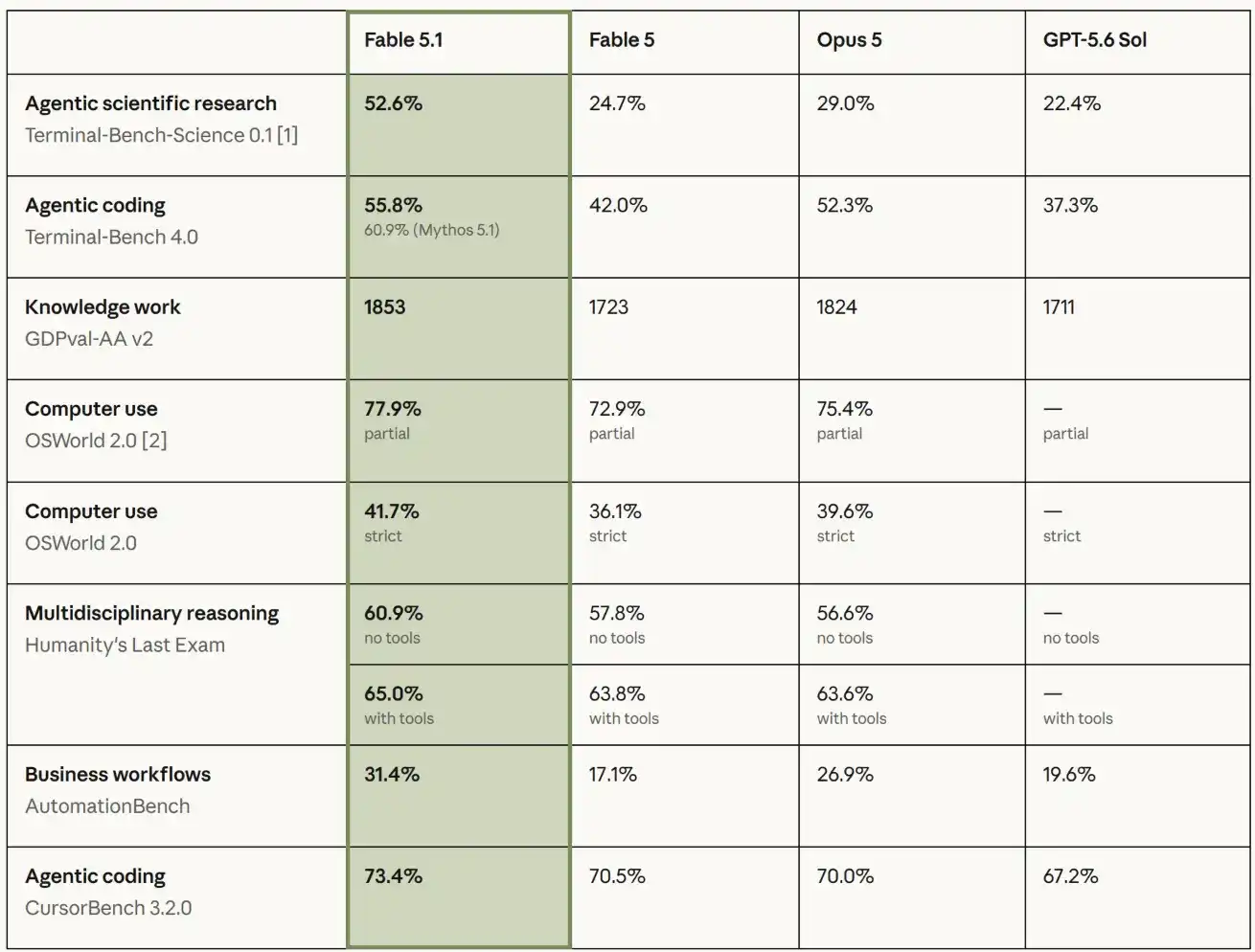
In multiple benchmark tests, Fable 5.1's scores surpassed Fable 5, with the most significant improvements in scientific research Agent and business workflow capabilities.
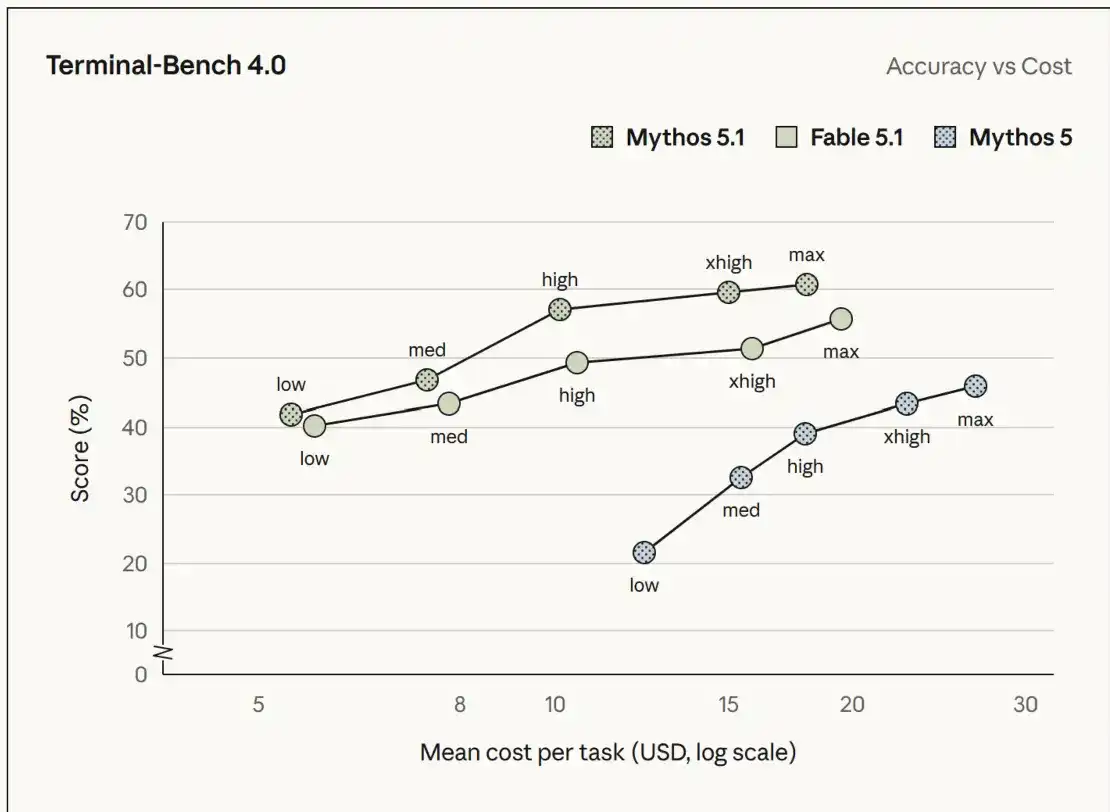
In the Terminal-Bench 4.0 test, both Fable 5.1 and Mythos 5.1 exceeded the previous generation Mythos 5 at different inference strengths.
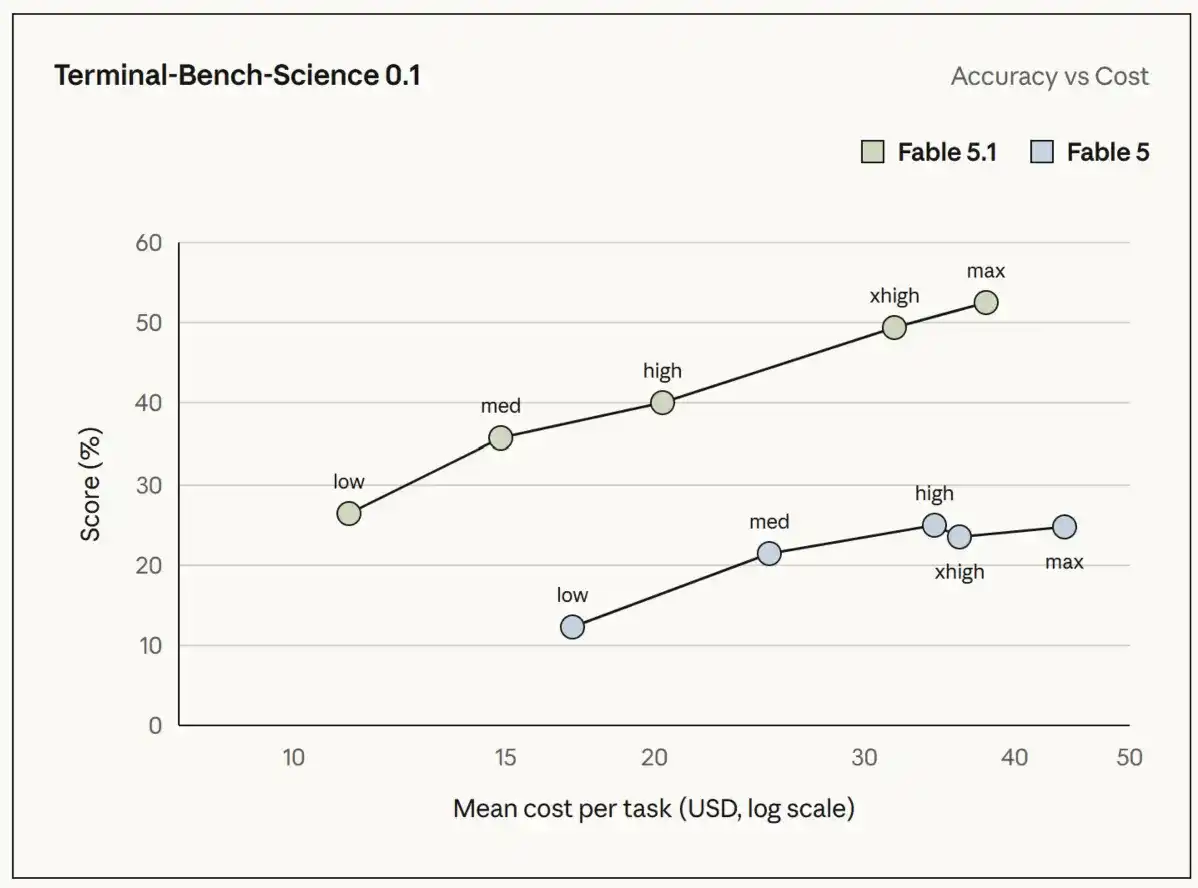
In the Terminal-Bench-Science 0.1 test, Fable 5.1's highest score reached 52.6%, more than double that of Fable 5.

Anthropic believes an important change in Fable 5.1 is its greater willingness to track the root causes of problems, making it more suitable for executing complex tasks lasting hours or even tens of hours.

Investment firm Millennium discovered during testing that an internal piece of code would crash about once every million runs. This problem had troubled the engineering team for four or five years, and other models couldn't find the cause. Fable 5.1, however, by disassembling an external vendor's library and comparing core dump files, ultimately pinpointed the issue to a bug in the third-party library.

Ramp also had Fable 5.1 run continuously for 38 hours. After discovering that original machine learning results were affected by labeling errors, the model corrected the problem, launched six sets of experiments, and finally compiled new results and follow-up recommendations.

From Writing Code to Conducting Scientific Research

In this release, Anthropic dedicates considerable space to introducing the performance of Fable 5.1 and Mythos 5.1 in scientific research.

In a protein design experiment, researchers had Mythos 5.1 call open-source protein design and folding tools, then sent the generated designs to two external institutions for experimental validation.

On three target proteins, the affinity of the binders designed by Mythos 5.1 was 10 times that of the best solutions in the Adaptyv Bio related protein design competition. When targeting 12 proteins, the model's effective binder hit rate approached 50%, while Anthropic cites the common industry level as 10% to 15%.

Fable 5.1 also used radar images collected over 30 years ago by NASA's Magellan probe to generate a new high-resolution elevation map for about one-third of Venus's surface.
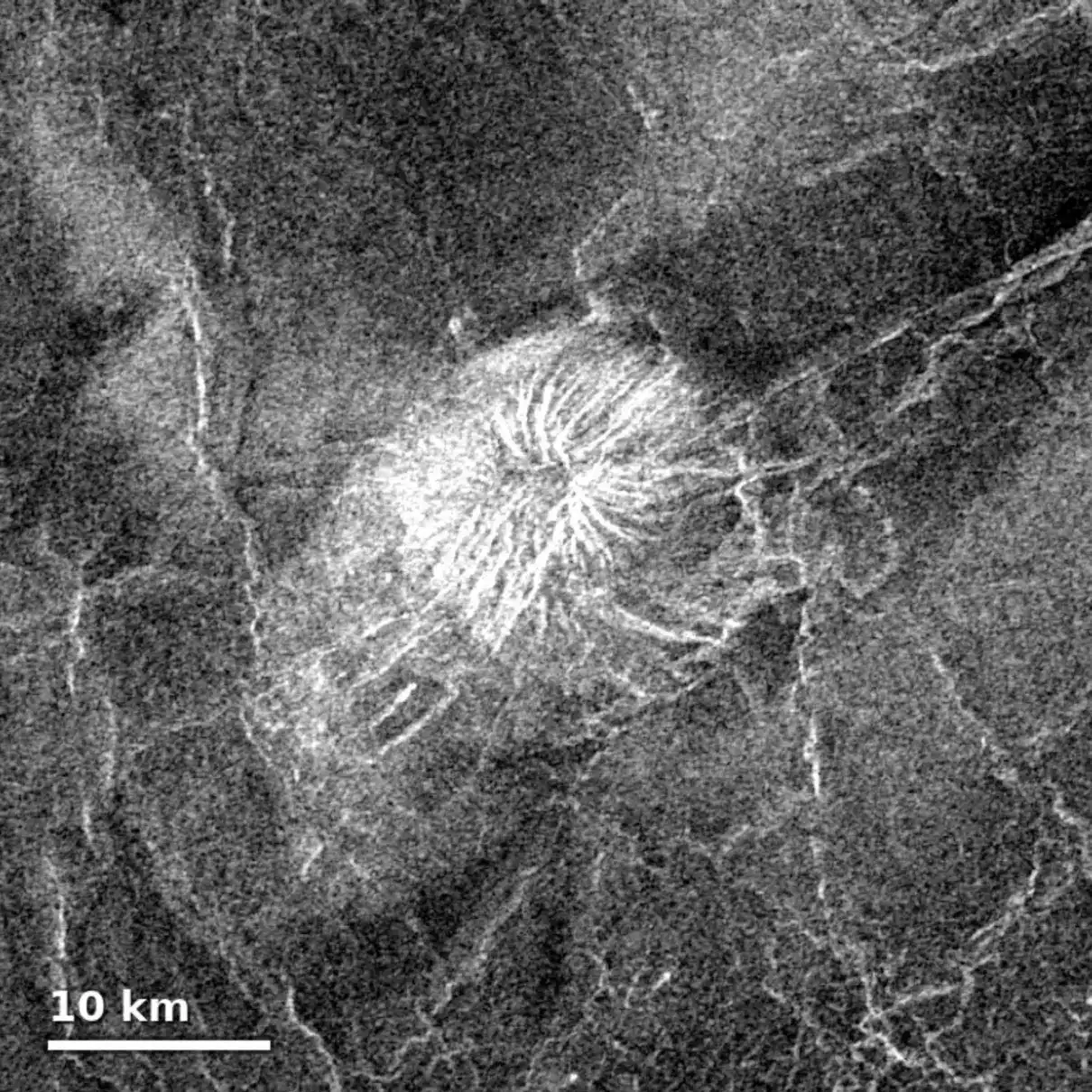
NASA Magellan probe radar image of Venus, showing a small shield volcano about 15 km in diameter at the center.

The original map could only show details at a scale of 10 to 20 kilometers. The new map improves the resolution capability to 2 to 3 kilometers, with elevation measurement accuracy improved by up to 25%. Anthropic plans to release this map under a Creative Commons license for reference by follow-up missions like NASA's VERITAS and the European Space Agency's EnVision.

In computational biology, Mythos 5.1 increased the runtime speed of 7 open-source protein and genome deep learning models by up to 2.5 times by writing custom GPU kernels and caching intermediate results, while maintaining consistent output. For some whole-genome analysis tasks, GPU costs are projected to be reduced by 30% to 60%.
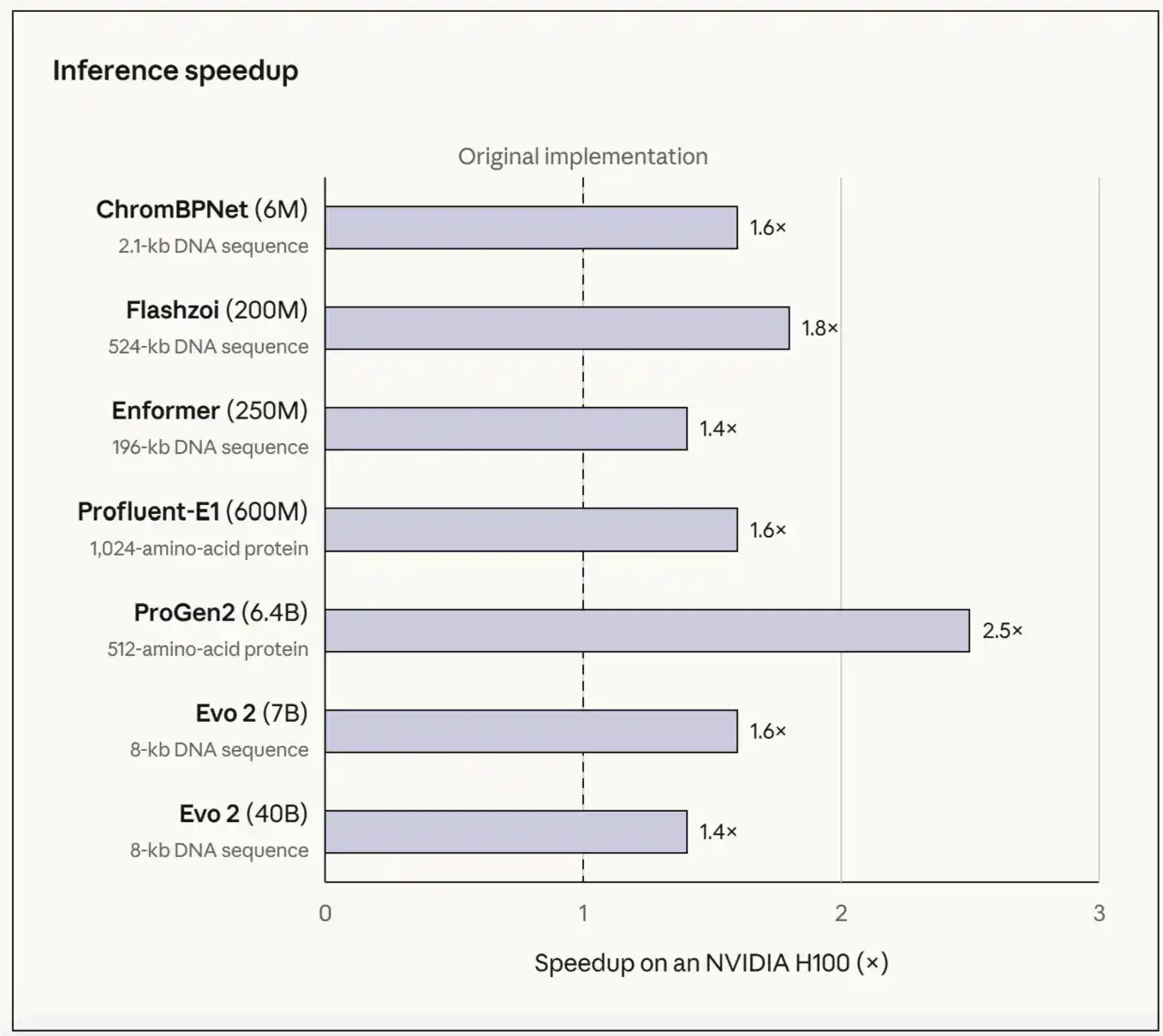
After Mythos 5.1 optimized 7 open-source protein and genome models, inference speed increased by 1.4 to 2.5 times.

Anthropic wants to use these cases to demonstrate that models are moving from organizing materials and writing code to proposing solutions, running tools, and delivering scientific results ready for experimental validation.

Cache Prices Drop 75%, Agent Tasks Up to 45% Cheaper

Beyond performance, pricing is the most direct change for Fable 5.1.

The input and output prices for Fable 5.1 remain unchanged at $10 and $50 per million tokens, respectively. However, the cache read price has been reduced by 75% from previous levels to $0.25 per million tokens.

Cache reading refers to the model reusing already processed context. Its proportion might be limited in simple Q&A, but in Agent tasks that require repeatedly reading codebases, conversation history, and tool results, cache often constitutes the main cost.

Based on Anthropic's calculations from actual usage data in August 2026, the overall cost of running typical tasks with Fable 5.1 is about 25% lower than with Fable 5; for complex Agent tasks with long contexts and frequent tool calls, the cost reduction can reach up to about 45%.
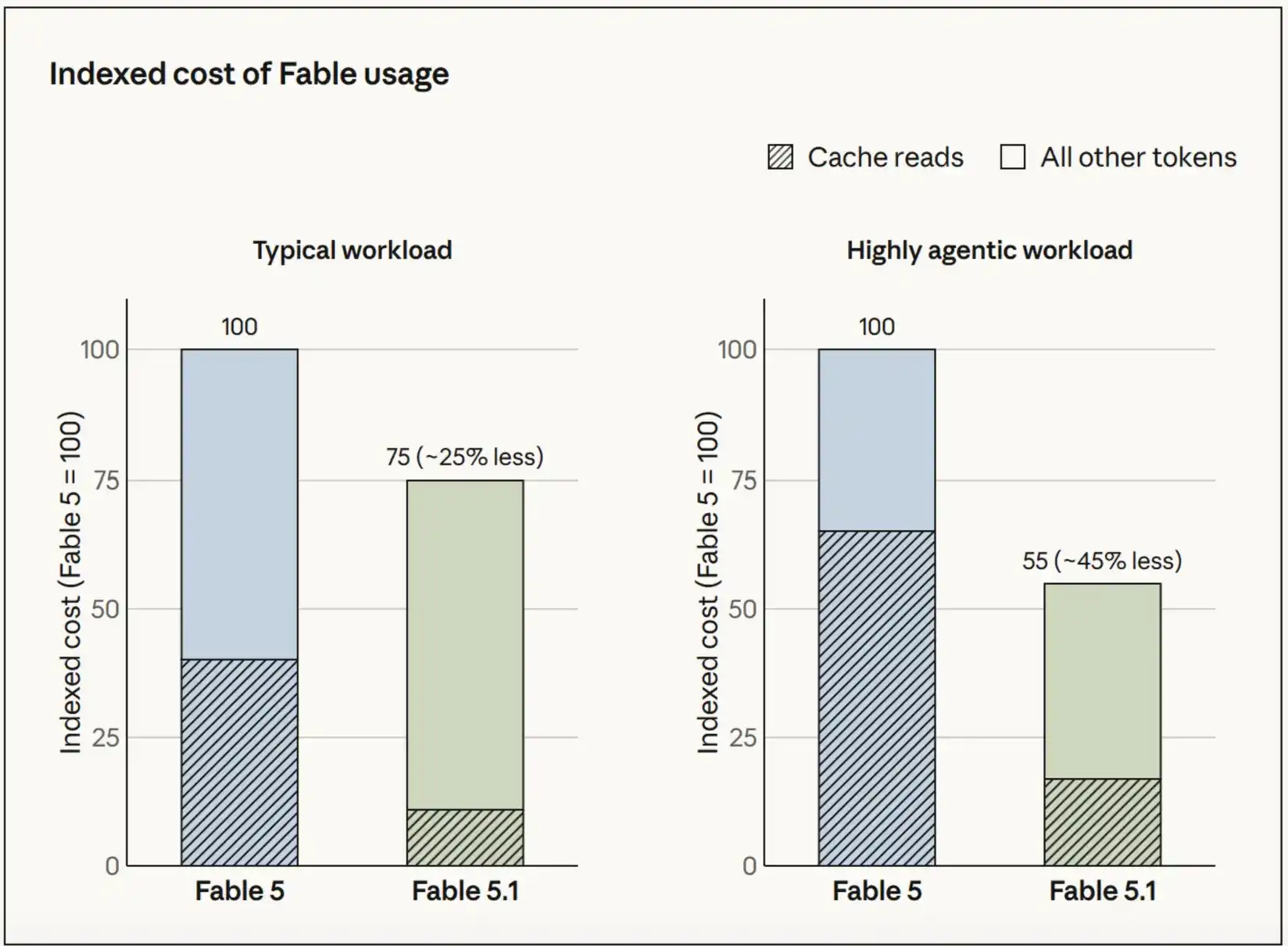
After the cache read price reduction, typical task costs for Fable 5.1 decreased by about 25%, with highly agentic task costs reduced by up to about 45%.

Fable 5.1 is now available on Claude . ai, Claude Code, and the Claude API, and is also offered through AWS, Google Cloud, and Microsoft Azure. Developers can call the new model via claude-fable-5-1.

Anti-Distillation Mechanisms Strengthened

Fable 5.1 and Mythos 5.1 actually use the same underlying model. Their main difference lies in safety restrictions.

Fable 5.1 is fully open to general users and enterprises. Mythos 5.1 has looser cybersecurity and life sciences restrictions and is currently only available to vetted individuals and institutions.

In cybersecurity, Fable 5.1 can already help users discover software vulnerabilities but still cannot directly generate exploit code. Dual-use tasks like penetration testing, exploit generation, and vulnerability scanning based on binary files may still be handed over to more restricted models.

After adjustments, the new cybersecurity protection mechanism's false positive rate is reduced by about 60% compared to Fable 5. The biosafety mechanism's false positive rate for basic biology and medical questions is also reduced by 85%, while advanced capabilities involving life sciences R&D are mainly opened through Mythos 5.1's vetting program.

Anthropic has also introduced Enterprise Frontier Safeguards. Enterprises can keep data in their own controlled cloud infrastructure, with the enterprise responsible for default human review, thereby achieving privacy effects close to "zero data retention" while retaining safety monitoring capabilities. This mechanism is planned to roll out in phases starting this fall.

For large-scale model distillation, Fable 5.1 has also added new restrictions. For API accounts created after today, it will no longer be possible to retain Claude's historical thinking records while manually modifying previous context in multi-turn conversations. Anthropic states this change primarily aims to block a publicly known capability extraction method.

Furthermore, to meet the requirements of the EU AI Act, Fable 5.1's text output will contain invisible watermarks. Anthropic has also begun small-scale testing of a detection API, initially open to regulators, media, fact-checking organizations, and research institutions.

Finally, as netizens say, the early bird gets to use 5.1.

Related Questions

QWhat are the two new models announced by Anthropic, and what are their primary purposes?

AAnthropic announced Claude Fable 5.1 and Claude Mythos 5.1. Claude Fable 5.1 is designed for complex reasoning, long-horizon tasks, and Agent workflows, and is available to general users, developers, and businesses. Claude Mythos 5.1 represents a higher capability frontier and is offered to vetted partners in higher-risk domains under stricter access controls.

QWhat are the key performance and cost improvements of Claude Fable 5.1 compared to its predecessor, Fable 5?

AClaude Fable 5.1 shows significant performance gains in benchmarks like Terminal-Bench-Science 0.1 (52.6% vs 24.7%) and Terminal-Bench 4.0 (55.8% vs lower scores for Fable 5). Crucially, while maintaining the same base price, its cache read cost is reduced by 75%, leading to an overall cost reduction of about 25% for typical workloads and up to 45% for highly agentic workloads.

QHow does the new model demonstrate capabilities in scientific research, according to the article?

AThe models show advanced scientific research capabilities. Mythos 5.1 designed protein binders with 10x higher affinity than competition winners and achieved a near 50% hit rate. Fable 5.1 created a new high-resolution elevation map of Venus from old NASA data, improving resolution from 10-20 km to 2-3 km. Mythos 5.1 also optimized seven open-source bioinformatics models, speeding them up by 1.4x to 2.5x.

QWhat are the main differences in safety and access between Claude Fable 5.1 and Claude Mythos 5.1?

ABoth models share the same base capabilities but differ in safety measures. Fable 5.1 is broadly available with standard safety restrictions. Mythos 5.1 has looser restrictions in areas like cybersecurity and life sciences, allowing tasks like exploit generation or advanced bio-research, but access is strictly controlled and granted only to vetted partners after review.

QWhat new security and compliance features are introduced with the Fable 5.1 release?

AKey new features include: 1) Enhanced anti-distillation measures preventing manual context modification in multi-turn conversations for new API accounts. 2) 'Enterprise Frontier Safeguards' for data control and near-zero data retention. 3) Reduced false positive rates for cybersecurity (by ~60%) and biosafety (by 85%) mechanisms. 4) Inclusion of invisible watermarks in text outputs for EU AI Act compliance, alongside a detection API for authorized entities.

Related Reads

Singapore Blockchain Week 2026 Returns This November, Puts Singapore and Johor, Malaysia Cross-Border Digital Economy Opportunities in the Spotlight

Singapore Blockchain Week (SBW) 2026 will take place from 13 to 17 November 2026 as a government-supported flagship event bringing together regulators, financial institutions, sovereign entities, family offices, founders, investors, enterprises, and ecosystem builders. The event features prominent speakers including H.E. Justin Sun (TRON), Jose Fernandez da Ponte (Stellar Development Foundation), representatives from VISA, J.P. Morgan, SAP, the United Nations Development Programme, Société Générale-Forge, Paxos, World Bank, and others. SBW 2026 is positioned as the world's first cross-border blockchain week, connecting Singapore and Malaysia's Johor-Singapore Special Economic Zone (JS-SEZ) to accelerate innovation, investment, and technology collaboration across Southeast Asia. It is supported by partners including Singapore Global Network – Economic Development Board, Singapore Tourism Board, Malaysia Digital Economy Corporation, Iskandar Regional Development Authority, and Johor Corporation. The week-long programme includes: Special Economic Zone Immersion (13 Nov), Tech-Enabled Sports (14 Nov), Learnathon (15 Nov), Inner Circle (16 Nov), and Institution Summit (17 Nov). The event focuses on the convergence of AI, DeFi, Real World Assets (RWA), and Venture Capital, positioning Singapore and ASEAN at the forefront of global digital transformation. Sebastian Zilliacus, Chair of the Advisory Committee, emphasised that the event aims to move beyond headlines so traditional finance and emerging technology "start building together." CK Ong of SBI Digital Markets noted that tokenisation's key question is now market viability, requiring alignment of regulatory clarity, distribution, custody, and commercial viability. Kiran Mistry of SAP highlighted the importance of interoperability between blockchain and enterprise systems, while Rahul Bhargava of the World Bank and Contour Network discussed addressing the $2.5 trillion trade finance gap through digital documentation and multi-rail settlements. Raymond Ngan of Singapore Innovation Centre noted the event strengthens Singapore and Southeast Asia's position, particularly as Singapore prepares for ASEAN Chairmanship in 2027.

TheNewsCrypto38m ago

Singapore Blockchain Week 2026 Returns This November, Puts Singapore and Johor, Malaysia Cross-Border Digital Economy Opportunities in the Spotlight

TheNewsCrypto38m ago

BIT CCO Cynthia Wu Deconstructs Digital Asset Industry Pain Points: Buying Is Only the Starting Point; Holding It Properly Is the Real Competitive Edge

BIT CCO Cynthia Wu spoke at an FTAHK roundtable in Hong Kong on November 3, 2026, alongside Xapo Bank's Belle Leung and Anthea's Alex Pei, discussing the evolution of digital asset wealth management. She noted that after a full market cycle, family clients have shifted focus from prices to operational safety—asking not "can I buy it" but "can I hold it properly." Concerns center on custody, asset segregation, counterparty risk, and inheritance planning, with many families preferring familiar instrument types such as BIT's Swiss-listed spot bitcoin ETF (BBIT). On yield, Wu argued that yield itself is never the problem—unexplained yield is. Real yield is compensation for time and risk, so the key questions are whether risk is isolated, quantified, and capped. She advised families to ask every institution what risk their return corresponds to and where its boundaries lie. Regarding structured products like tokenized funds, RWA, and principal-protected notes, she stressed that structure can reallocate risk but cannot eliminate protocol-level or market risk; tokenization even adds smart-contract risk. Structures mainly change who bears the risk—citing SIX exchange's collateralized issuance since the Lehman crisis—while uncollateralized notes and buffer/income ETFs merely transfer risk at the cost of upside. The biggest red flag is a product promising protection against risks no structure can remove. On AI agents, Wu invoked equal rights and responsibilities: models are software without balance sheets, licenses, or duties of care, so liability rests with whoever deploys the agent and defines its limits, with attribution assessed over the long term as with human managers. "You can delegate trades, but not responsibility." Looking ahead three years, she predicted the first regulated, AI-agent-managed digital asset fund fully running on blockchain, with agents paid in bitcoin. BIT, founded in 2019 and headquartered in Singapore, manages over $6 billion in assets with licenses across multiple jurisdictions.

marsbit44m ago

BIT CCO Cynthia Wu Deconstructs Digital Asset Industry Pain Points: Buying Is Only the Starting Point; Holding It Properly Is the Real Competitive Edge

marsbit44m ago

Just Now, Gemini Omini 1.2 Tops the Leaderboard, 360p Video at $0.07 per Second, with Upscaling to 4K

Google DeepMind has released Gemini Omni 1.2 Flash, a new video generation model that ranks first on Arena.ai for both text-to-video and image-to-video, and third for video editing. It scored 1541 in text-to-video, up 27 points from Gemini Omni 1.1 Flash, with Google's Omni series now holding the top three spots. Key updates include: text-to-video duration extended to 15 seconds, with editing of source clips up to 15 seconds; native audio support; editing of 3–15 second source videos with up to 7 reference images; clip extension of 3–10 seconds per call up to 30 seconds total; re-editing of any output via videoId in later calls; and support for 360p, 720p, 1080p and 4K in 16:9 or 9:16 aspect ratios. Unlike prior waitlist approaches, it is fully available in Google AI Studio and the Gemini API. Pricing is 30% lower than the previous generation. The model introduces a "draft-then-refine" workflow: users generate quick 360p or 720p drafts at about $0.07 per second (roughly 5 cents USD), make multi-turn conversational edits to fix details without regenerating whole clips, then upscale the best draft to 1080p or 4K. This drastically cuts trial-and-error costs for ad agencies, e-commerce sellers and indie filmmakers. Other features include multimodal reference adherence (face portraits, character sheets, product images, motion reference clips up to 3 seconds, audio cues), enhanced cinematic camera control with stable perspective in complex 3D spaces, and improved multi-character dialogue with accurate lip-sync and speaker distinction. Early hands-on tests show 1.2 Flash outperforming 1.1 in FPV camera moves through the Colosseum without flicker or distortion, generating convincing wildlife documentary footage from a single prompt, and maintaining character consistency across dancing and parkour clips, including mixed art styles (stop-motion, realistic 3D, comic, anime) interacting in one scene. The release marks AI video's shift into a third phase focused on cost, deliverability and workflow integration.

marsbit48m ago

Just Now, Gemini Omini 1.2 Tops the Leaderboard, 360p Video at $0.07 per Second, with Upscaling to 4K

marsbit48m ago

Three Harvard Girls Venture into the AI Startup World, She Raised Over $100 Million

This article contrasts the first generation of "Harvard girls"—epitomized by Liu Yiting, whose 1999 full-scholarship admission to Harvard became a bestselling parenting-book phenomenon—with a new wave of Harvard-educated Chinese women who are choosing AI entrepreneurship over traditional elite career paths. Three profiles stand out. Guo Wenjing, a "genius girl" admitted early to Harvard from Hangzhou No. 2 High School, earned degrees in math and computer science, interned at Meta AI, Microsoft, Google Brain and Epic Games, then dropped out of her Stanford PhD in 2023 to co-found Pika Labs, an AI video generation startup. Pika raised $135 million within about a year, reaching a valuation above $470 million. Her father's A-share listed company briefly surged on the "daughter concept stock" hype. Christine Zhang, 19, took a gap year from Harvard to co-found Veil, a GEO (generative engine optimization) startup helping brands become visible when consumers query AI chatbots. Veil raised a $1 million seed round within three months, serving nearly 500 clients with a six-person team. Avery Pan co-founded Class Companion, an AI education company that gives teachers AI-generated personalized feedback while retaining grading authority. It raised a $4 million seed round led by Index Ventures with OpenAI Startup Fund participation, and was acquired by Panorama Education in 2025, just two years after founding. The article notes this "Harvard + Chinese + dropout + AI startup" narrative is spreading beyond Harvard to Stanford and MIT, citing Jessica Wu (MIT dropout, Sola Solutions, ~$21 million raised) and Hong Letong (Stanford PhD dropout, Axiom Math, $200 million Series A, valuation over $1 billion). The generational shift is clear: the earlier narrative centered on being chosen by Harvard as proof of success, while the new one centers on refusing to be defined by Harvard—dropping out, taking gap years, and proving value through ventures and results. Both generations share a belief that timing, not just credentials, changes destiny—and AI provides the opportunity.

marsbit1h ago

Three Harvard Girls Venture into the AI Startup World, She Raised Over $100 Million

marsbit1h ago

Trading

Spot
活动图片