Hunter Biden confirms LAPTOP token ‘not a rug pull,’ just trolling Trumps

cointelegraphPublished on 2026-10-08Last updated on 2026-10-08

Abstract

Hunter Biden, son of President Joe Biden, has released data confirming the LAPTOP memecoin, based on his infamous laptop, was not a "rug pull." Blockchain records show the 300 million tokens allocated to founders have remained locked since the coin's September 9 launch. Biden stated the price chart initially mirrored a typical celebrity rug pull, with two hired market makers profiting significantly—one making $686,000 and the other $2.18 million—by withdrawing liquidity seconds after the price peak. A report by consultancy Groom Lake corroborated the rapid withdrawal of selling liquidity. Biden explained his motivation was to troll "max extraction" projects like former President Donald Trump's TRUMP memecoin by being transparent, locking team tokens, and publishing disclosures. He also aimed to support charities. He added the project continued partly to provoke Trump's sons and critics. The LAPTOP token references the laptop that became a contentious issue in the 2020 election. Biden has criticized the Trump family's crypto ventures as corrupt. Amid this, President Trump plans a dinner for top TRUMP tokenholders on November 22. An advocacy group estimates TRUMP investors have lost $3.2 billion since its 2025 launch.

Hunter Biden, son of former US President Joe Biden, released a full accounting of the memecoin he helped launch last month based on the reports of his infamous laptop.

In a series of X posts on Wednesday, Biden provided blockchain data confirming that 300 million tokens in wallets associated with the founders of the $LAPTOP memecoin “haven’t moved since launch.”

Biden added that charts tracking the price of the memecoin “looked like every celebrity rug ever” shortly after launch on Sept. 9, and the ones to benefit most were unnamed market makers — referred to as “two professional trading firms” hired by the project — that pulled their funds seconds after the peak price of about $317.

According to Biden’s posts, one market maker made $686,000 from liquidity positions on decentralized exchanges, while the other “took in about $2.18 million more than it spent“ through trading.

Similar data was published in a “launch report” prepared by Delaware-based intelligence consultancy Groom Lake and posted on the memecoin’s website.

“The money for sellers was pulled right after the peak,” said the report on $LAPTOP. “Eighty-four seconds after the price topped out, Market Maker 1 withdrew its money. The cash available to people trying to sell near the current price dropped from $16,157 to zero.”

Biden added:

“Here’s why I did this. Trump’s coin was max extraction, and I wanted to troll every grift like it. So we were transparent, committed the team to a lock up and published a MiCA disclosure. And I hoped it could help some charities I care about too.”
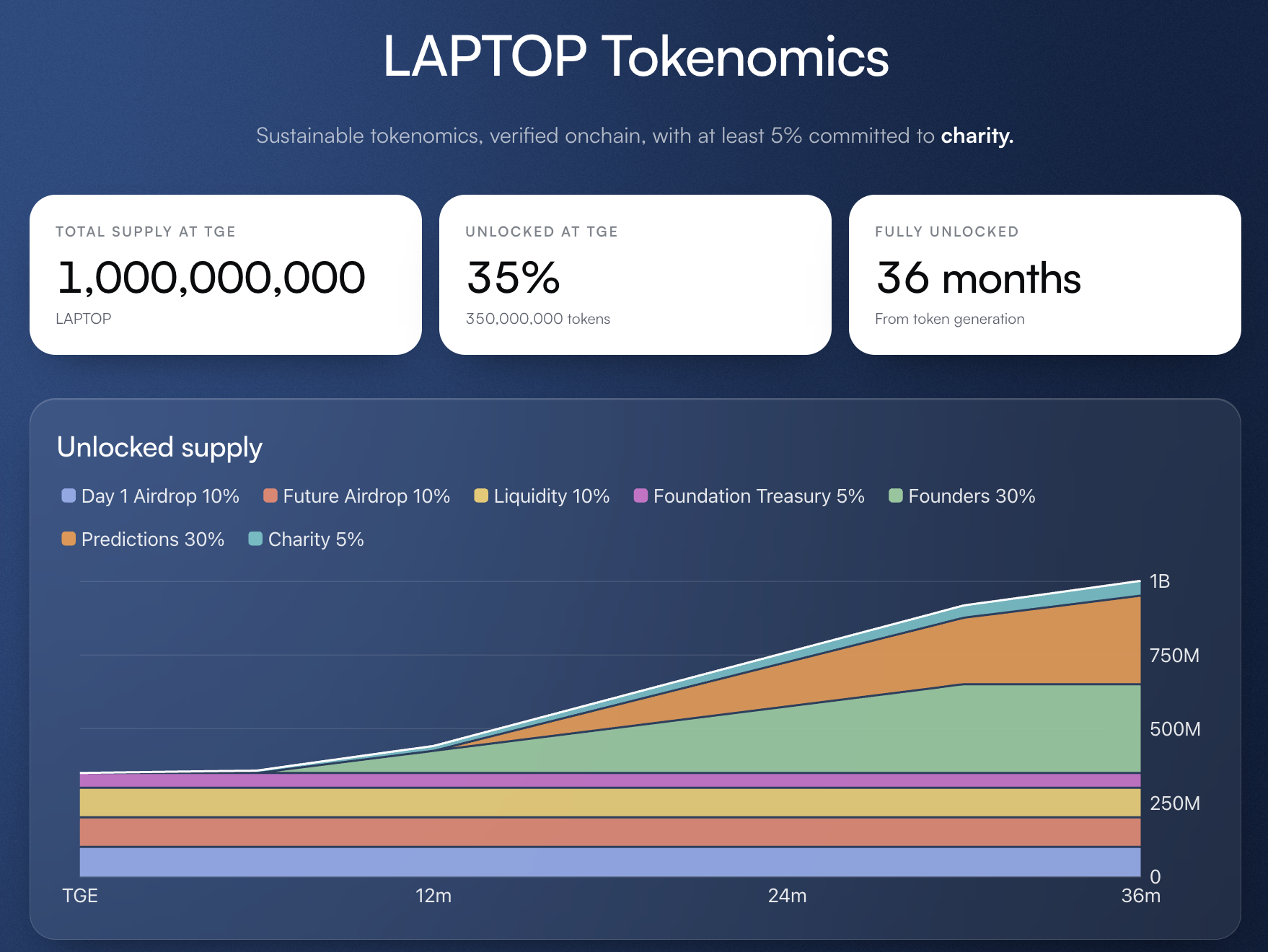
Data on Hunter Biden memecoin. Source: laptoptoken.com

While Biden said he intended to commit 5% of the tokens for charity, he added that he was incentivized to continue the project “just to piss off Don and Eric,” referring to Donald Trump Jr. and Eric Trump, sons of US President Donald Trump, and “every [Key Opinion Leader] who called it a scam because we refused to pay them.”

The basis for the memecoin’s namesake is Biden’s laptop computer, whose existence and contents were subject to intense media scrutiny ahead of the 2020 US Presidential election, in which Trump was running against his father. The laptop continues to be invoked by many right-wing figures and was the subject of two lawsuits filed by Biden over privacy laws.

Related: Hunter Biden’s laptop controversy gets a memecoin afterlife

Biden has been a vocal critic of the Trump family crypto company World Liberty Financial, calling it “corruption at a scale we’ve never seen” in August. The president also faces criticism for launching his memecoin, Official Trump (TRUMP) shortly before taking office in January 2025, which faces its own rug pull and corruption accusations.

According to Biden, the $LAPTOP founder memecoins will remain locked for six months after launch and the team will continue burning unclaimed tokens from airdrops.

President to host another memecoin event amid controversy

Biden’s token, whether launched to hold up a mirror for rug pull projects, a joke, or trolling the Trump family, could shine a spotlight on the president’s crypto ventures as he prepares to speak at another event for his memecoin holders.

Last week, the group behind the $TRUMP memecoin announced that the president will appear at his gold club in Washington, DC alongside three unnamed speakers and the top 185 tokenholders for a Nov. 22 dinner.

The nonprofit consumer advocacy organization Public Citizen estimated that $TRUMP memecoin investors lost $3.2 billion since its 2025 launch.

Magazine: Capital starting to rotate back to crypto from AI: Raoul Pal

Related Questions

QAccording to Hunter Biden, what was the main reason for launching the LAPTOP memecoin?

AHe stated that the main reason was to troll every 'grift' like Trump's coin, which he considered to be 'max extraction.' He also mentioned transparency, committing the team to a token lock-up, publishing a disclosure, and the hope of helping some charities he cares about.

QWhat did the launch report from Groom Lake indicate happened shortly after the $LAPTOP token's peak price?

AThe report indicated that the money for sellers was pulled right after the peak. Eighty-four seconds after the price topped out, a major market maker withdrew its money, causing the cash available for people trying to sell near the current price to drop from $16,157 to zero.

QHow does the article connect the launch of the LAPTOP memecoin to President Trump's crypto activities?

AThe article states that Hunter Biden is a vocal critic of the Trump family's crypto company, World Liberty Financial. It also mentions that President Trump launched his own memecoin, Official Trump (TRUMP), which faces its own rug pull and corruption accusations. Biden's coin is framed partly as a response to or trolling of Trump's crypto ventures.

QWhat upcoming event related to the $TRUMP memecoin is mentioned in the article?

AThe article mentions that the group behind the $TRUMP memecoin announced that President Trump will appear at his gold club in Washington, DC, alongside three unnamed speakers and the top 185 tokenholders for a dinner on November 22.

QWhat did Hunter Biden confirm about the 300 million tokens associated with the $LAPTOP founders' wallets?

AHe provided blockchain data confirming that 300 million tokens in wallets associated with the $LAPTOP founders 'haven’t moved since launch,' which he presented as evidence that the project is not a 'rug pull.'

Related Reads

Goldman Sachs 2027 Macro Outlook: Global Economy to Pick Up Slightly but Path Will Be Bumpy, Downside Risks Not to Be Ignored

Goldman Sachs' 2027 macro outlook, led by chief economist Jan Hatzius, projects global GDP growth rising modestly from 2.7% in 2026 to 2.8% in 2027—slightly above potential—describing the outlook as "solid but bland." Energy price normalization (Brent falling to $78/barrel by end-2027) and booming AI capital expenditure (global nominal AI investment rising from $1.1 trillion to $1.8 trillion, contributing ~0.4pp to global growth) will support expansion, while tighter financial conditions and fading fiscal stimulus weigh against it. The US is forecast at 2.4%, Europe at 0.9%, and China at 4.5%. The report flags three key downside risks: renewed escalation of the Iran conflict (possibly pushing oil to $132/barrel without the policy buffers available in 2026), bond market turmoil (a ~0.5% GDP drag from higher yields, with French fiscal risk especially acute), and an earlier-than-expected peak in the AI investment cycle, with hyperscaler stock reactions to capex signals turning negative and early signs of AI-related labor market impacts. Inflation should cool as tariff pass-through and war-related energy effects fade, with US core PCE slowing from 3.2% to 2.4% by end-2027, though near-term stickiness persists. On monetary policy, Goldman expects the Fed to hike in December and next March before cutting from December 2027 (terminal rate 3.25–3.5%), the ECB to finish hiking in December and cut in Q4 2027 (2.25% terminal), and the BoJ to keep hiking to 2.0%. Goldman's rate forecasts are more dovish than market pricing—a potential positive for stocks and bonds. For markets, Goldman forecasts positive returns for both equities and bonds, near-zero commodity returns, and rising volatility as the cycle matures. S&P 500 earnings growth slows from 36% to 11%, credit spreads widen, the 10-year Treasury yield falls to 4.6% by end-2027, and the dollar weakens modestly. It recommends overweight US and Japan, underweight Europe, and hedging via out-of-the-money puts, long-dated calls, and European gas options.

marsbit11m ago

Goldman Sachs 2027 Macro Outlook: Global Economy to Pick Up Slightly but Path Will Be Bumpy, Downside Risks Not to Be Ignored

marsbit11m ago

"All the Bad News Hit at Once," Yet US Stocks Rebounded Against the Trend: Wall Street Stages a "Nothing Left to Sell" Short Squeeze

In a week packed with bad news—Nvidia founder Jensen Huang's scandal-driven resignation, a third straight CPI upside surprise, PPI at a four-year high, and Fed officials floating a 50bp December hike—US stocks defied gravity, with the S&P 500 up 2% and the Philadelphia Semiconductor Index posting its best week since April. The explanation: shorts had no cards left to play. A classic "no inventory to sell" squeeze unfolded as hedge funds cut leverage to five-year lows, leaving few sellers to absorb the bad news. Meanwhile, bonds bore the entire macro shock, with 2-year yields surging 35bp (the biggest weekly jump since October 2024) and 10-year yields breaking 5.15%. Nvidia fell about 11% for the week, but retail buying hit a record 41x normal levels, and capital rotated into AMD (+30%) and Broadcom (+24%) rather than leaving AI. By Friday, equities began "reading the bond market's mail," with the S&P 500 hitting resistance at its 100-day moving average. Goldman's Rich Privorotsky warned the market needs oil to stabilize and rates to fall—neither of which happened. The bond selloff was driven by real rates, not inflation expectations, with TIPS yields up 90bp year-to-date. Credit markets showed no panic at the index level, but cracks are widening: chip-sector CDS spreads exceeded hyperscaler spreads for the first time, and CCC spreads widened 270bp in three months. Geopolitically, hopes for Iran de-escalation died as Trump closed the diplomatic door, and oil rebounded after the Strait of Hormuz saw daily tanker mine strikes. Global equity funds drew $51 billion, the largest weekly inflow since late September, though US inflows slowed. Next week's tests include Nvidia earnings on November 17 (Colette Kress's first as interim CEO), Anthropic's IPO seeking up to a $1 trillion valuation, Treasury supply and foreign demand, and Fed speakers. As Privorotsky put it: "The AI trade survived Huang's departure, but Waller is a different kind of trouble—because he won't resign."

marsbit30m ago

"All the Bad News Hit at Once," Yet US Stocks Rebounded Against the Trend: Wall Street Stages a "Nothing Left to Sell" Short Squeeze

marsbit30m ago

OpenAI and Meta Join Forces, Bridging the "Last Mile" of Agent Commerce

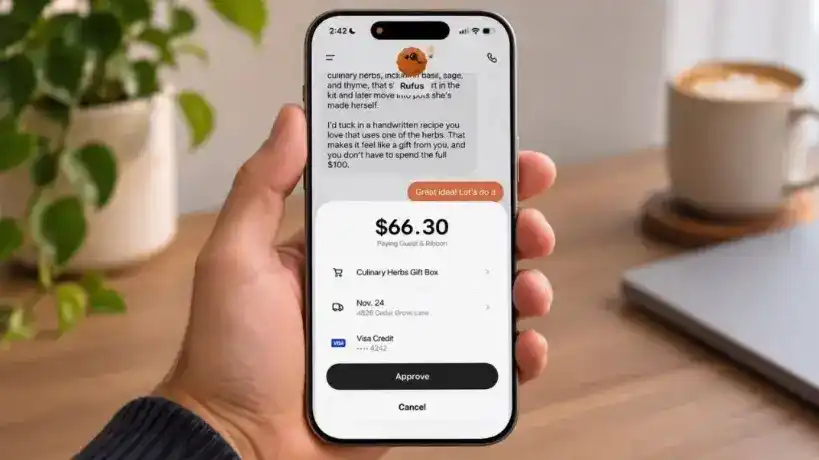
On November 13, 2026, two major announcements landed the same day, together addressing the "last mile" of agent commerce: how AI assistants get through the door, and how they pay. Sierra and Meta released Poppy v1.0, a Personal Agent Protocol built on OAuth, HTTPS, OpenAPI, and the Model Context Protocol. Poppy lets businesses cryptographically verify three things: which assistant is making a request, which user it represents, and what permissions it holds. Companies publish a discovery file at /.well-known/poppy describing endpoints and allowed actions, while both user and business must consent to each interaction via two-way authorization. Shopify automatically enabled Poppy discovery files for merchants in 175+ countries, giving the protocol immediate scale, with over 100 design partners including Delta, 1Password, Okta, and Cloudflare. Separately, OpenAI launched ChatGPT Wallet for its personal assistant dots. The assistant can search, compare, and fill a cart, but must stop at checkout—users confirm via biometric authentication. Neither the assistant nor the merchant ever sees the real card number; card networks issue a one-time payment credential instead. Built with Amex, Mastercard, and Visa, the wallet runs entirely on traditional fiat rails—explicitly not crypto or stablecoins. It initially opens only to US Pro subscribers aged 18+. Notably, Visa and Mastercard span both initiatives, and OpenAI itself appears among Poppy's design partners—despite dots and Meta's Muse competing for the consumer entry point. The shared logic: consumer-facing competition, but shared infrastructure on the business side. The common bottom line is "human in the loop"—agent autonomy stops at the shopping cart. Open questions remain: liability when an assistant errs or is manipulated by malicious prompts, coverage beyond Shopify and US Pro users, and whether mandatory biometric confirmation for every small purchase will become friction that undermines the convenience promise.

marsbit10h ago

OpenAI and Meta Join Forces, Bridging the "Last Mile" of Agent Commerce

marsbit10h ago

Has the Time Come to Buy the Dip on Nvidia?

Nvidia announced on November 12 that Jensen Huang resigned as President, CEO, and Director, effective immediately. Shares fell as much as 14% intraday to $148.8, down nearly 40% from October highs, with over $600 billion in market value briefly erased. The founder's departure triggered the selloff, but the market is repricing the entire company rather than reacting to a single risk. Nvidia now trades at roughly 12x forward PE, its lowest in 15 years and below the S&P 500's ~18x, despite strong fundamentals: FY2026 revenue of $215.9 billion (+65%), data center revenue of $62.3 billion in a single quarter, ~75% gross margins, and Q2 FY2027 revenue of $96.2 billion with $21.3 billion free cash flow. Most investment banks cut targets but maintained Buy/Overweight ratings (Barclays $210, Goldman $220, Citi $225, RBC $230), implying ~20% upside, while Truist downgraded to Hold at $174. The consensus: the business is intact, but its valuation multiple needed resetting. Supporting demand, Huang forecast at GTC 2026 that Blackwell and Rubin AI chip demand would reach at least $1 trillion by 2027, double the prior 2026 estimate. However, risks remain beyond CEO succession. CUDA's lock-in effect is eroding on the inference side—Anthropic disclosed that its Claude Mythos Preview autonomously ported core GPU kernels to AMD flagship GPUs in three days with minimal human intervention, prompting investor Marcelo P. Lima's widely cited claim that "Nvidia's CUDA moat no longer exists." Supply bottlenecks lie in HBM and packaging, not wafers: TSMC can cut over 400 million GPU dies annually, but Nvidia ships only ~10 million GPUs yearly, constrained by HBM capacity (~3.75EB globally, ~70% allocated to Nvidia, ~260GB per GPU) and tight packaging, with HBM4 adjustments possibly delaying Rubin. Huang also leaves behind highly personalized assets—strategic technology judgment, supply chain negotiation with TSMC and SK Hynix, and direct channels to customers and governments—that interim CEO Colette Kress, the long-time CFO, may not fully replace. In short, the business remains, but the "faith premium" is being systematically stripped away. At 12x forward PE, much pessimism is priced in, offering a favorable risk-reward window if AI capex holds and demand materializes. Yet cheapness alone isn't sufficient: CUDA's erosion is slow but irreversible, HBM and packaging limit revenue upside, and succession uncertainty means the founder premium may not be fully removed. As Bernstein noted, "if you see two ants in the kitchen, there are more than two," warning that chains from scandal to governance vacuum to government probes could trigger further selloffs. Until the dust settles, what a Jensen-less Nvidia is worth remains an open question.

marsbit11h ago

Has the Time Come to Buy the Dip on Nvidia?

marsbit11h ago

AI Bull Market Trap? The Big Short Seller Strikes Again

Recent signals from Goldman Sachs, the Federal Reserve, and prominent short-seller Michael Burry are converging on concerns about the AI trade. Goldman warns that AI capital expenditure growth will likely peak in early 2027, with the boost to S&P 500 earnings falling from a 12-point peak in 2026 to a 5-point drag by 2028, shifting the market from a one-way rally to two-way volatility. The Fed has flagged AI as a potential threat to asset valuations and financial stability. Burry has doubled his Nasdaq 100 put options and rebuilt short positions in a semiconductor ETF, calling this a "bull market trap" analogous to the 2000 dot-com bubble, with Nvidia's influence a key worry. Four pressures weigh on the AI narrative: peaking capex growth, high interest rates that hit long-duration AI assets and leveraged GPU cloud providers like CoreWeave and Nebius, circular financing risks among interconnected tech firms, and tighter regulation under Democrats affecting data center energy, land, and permitting. Nvidia-related turmoil has shaken the pricing anchor for the entire supply chain. However, a valuation bubble bursting does not mean the AI industry is declining. Goldman notes US cloud giants trade at just 19.7x forward P/E, below their 20-year historical range and even below defensive staples, suggesting much pessimism is already priced in. Opportunities are shifting from upstream hardware "shovel sellers" toward fairly valued cloud giants with improving free cash flow, AI application companies delivering real ROI, and deeply discounted cyclical names like Korean memory. Conversely, GPU cloud providers dependent on Nvidia orders and cash-burning startups without products are most vulnerable. Investors should diversify, hedge, and focus on assets that convert spending into stable returns.

marsbit11h ago

AI Bull Market Trap? The Big Short Seller Strikes Again

marsbit11h ago

Trading

Spot
活动图片